 Everett
 Deck Repair Built for Forest Park's Climate
Forest Park sits among some of Everett's more established, tree-covered residential streets, and that shade is a mixed blessing for a wood or composite deck. Overhanging trees keep a deck cooler in summer, but they also keep it wetter, longer, into fall and winter. Combine that shade with Snohomish County's long, wet stretch of the year, plus the salt air that drifts in off Puget Sound, and you get a specific set of failure patterns: moss and algae on walking surfaces, slow-drying joints that never fully dry between rain events, and fasteners that corrode faster than the manufacturer's spec sheet assumes. A deck repair here isn't just cosmetic touch-up — it has to account for how this particular microclimate attacks a structure over years, not just what's visible today.
We've repaired decks throughout Everett and Snohomish County long enough to know that a deck built or last repaired 10-15 years ago, before some of the current code requirements and hardware standards were common, often needs more than a board swap. The goal of this page is to walk through what actually goes wrong with decks in a neighborhood like Forest Park, what a correct repair looks like, and how to tell the difference between a deck that needs a repair and one that's telling you it's done.
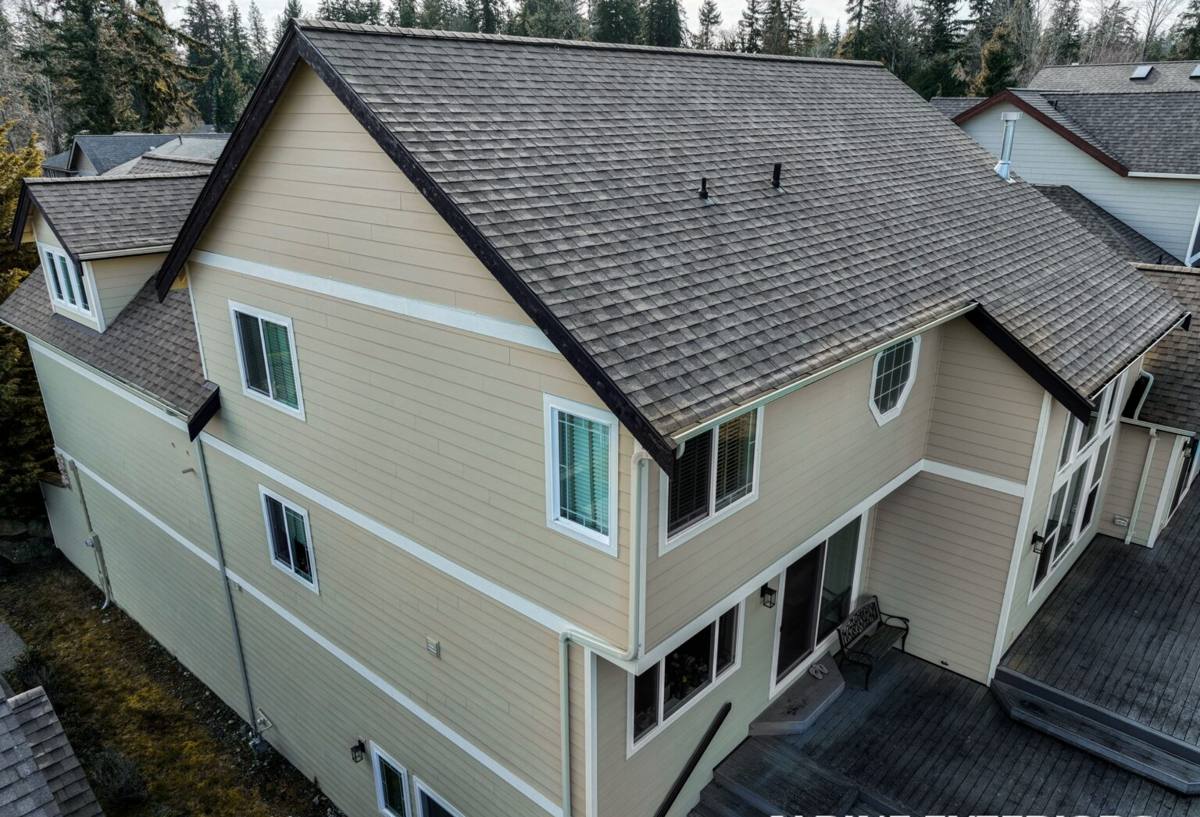
Signs Your Deck Needs Repair — Not Just a Fresh Coat of Stain
Some deck problems are obvious. Others hide underneath boards or behind railings until they're serious. Before you decide between a repair, a resurface, or a full rebuild, walk your deck and check for the following:
- Boards that feel spongy, springy, or noticeably softer than the boards next to them
- Persistent green or black staining that comes back within weeks of cleaning, especially in shaded corners
- Gaps between decking boards that have closed up or disappeared, trapping debris and moisture
- Rust streaks running down from screws, nails, or joist hangers
- Railings or posts that wiggle, flex, or feel less solid than they should when you lean on them
- Stair stringers or the bottom few inches of posts that look discolored or feel soft to a screwdriver test
- Gaps or separation where the deck ledger board meets the house
- A musty smell coming from underneath the deck, which usually points to trapped moisture below the surface boards
Any one of these on its own might be a simple fix. Several of them together, especially anything involving the ledger board or the framing underneath, usually means it's time for a proper structural look before more decking gets replaced on top of a problem that's still there.
Where Forest Park Decks Tend to Fail First
Shaded, moss-prone surfaces
Decks tucked under tree canopy or on the north side of a home dry slower than decks in open sun. Moss and algae aren't just a slip hazard — they hold moisture against the wood or composite surface, which accelerates rot in real wood decking and can degrade the fastener connections even on composite systems. A deck that never fully dries between storms is on a different maintenance timeline than one that gets full afternoon sun.
The ledger board connection
The ledger is the board that attaches the deck to the house, and it's one of the most common failure points on older decks anywhere in western Washington. Water that gets behind an improperly flashed ledger has nowhere to go, and it will quietly rot both the ledger and the rim joist behind it for years before anyone notices. This connection also carries a significant share of the deck's structural load, so it's not an area where shortcuts are acceptable.
Fasteners and hardware
Salt-laced air moving inland from Puget Sound accelerates corrosion on standard fasteners and joist hangers. Nails, screws, and hangers that were adequate a couple hours further from the water often aren't rated for the exposure decks see here. Once a fastener corrodes, it loses grip strength well before it looks obviously "rusted out," which is part of why hardware condition should be checked directly, not assumed from age alone.
Stairs, posts, and grade contact
Any post, stringer, or framing member that touches or sits close to soil, mulch, or a concrete surface that holds water is at elevated risk. This is where we most often find rot that isn't visible from a casual walk-through — it starts at the base and works upward, hidden by a post wrap or trim board.
What a Correct Deck Repair Actually Involves
A repair that only replaces what's visibly damaged on the surface, without checking what's underneath, tends to come back as a repeat call within a few years. A repair done right starts with an honest structural assessment:
- Checking the ledger board attachment and flashing, not just the decking surface
- Probing joists, beams, and posts with an awl or screwdriver at moisture-prone points, not just eyeballing them
- Confirming joist hangers and structural fasteners are corrosion-rated for this climate — hot-dip galvanized or stainless, depending on the connection
- Verifying guard rail height, baluster spacing, and stair rail requirements meet current code, since older decks were often built to standards that have since changed
- Restoring proper board spacing so water sheds instead of pooling
- Matching or properly transitioning new decking material to the existing deck so the repair doesn't create a new weak seam
Depending on what Snohomish County or the City of Everett requires for the scope of work, some structural repairs — particularly anything touching the ledger, framing, or guard rails — may need a permit. We handle that as part of the process rather than leaving it for the homeowner to sort out after the fact.
Repair, Resurface, or Rebuild: How to Tell Which One You Need
Not every deck problem calls for the same level of work. The table below outlines how we typically sort a deck's condition into one of three categories, and roughly what each involves.
| Scope | What's Involved | Typical Sign It's Needed | Rough Cost Factor |
|---|---|---|---|
| Spot Repair | Replace individual boards, tighten or replace hardware, re-flash a localized ledger section, fix a wobbly railing section | Isolated soft boards or loose hardware; framing underneath is sound | Lowest — scoped to specific components |
| Resurface | Remove and replace all decking boards and railings while keeping the existing structural frame, upgrading fasteners as part of the work | Surface is worn or moss-stained throughout, but joists and beams probe solid | Moderate — driven mostly by decking material choice and square footage |
| Structural Rebuild | Replace framing members, ledger, posts, or footings in addition to the surface | Soft or rotted joists, failing ledger connection, posts compromised at grade | Highest — scales with how much of the substructure is affected |
The only way to know which category a given deck falls into is a hands-on inspection. A deck that looks rough on the surface can have a perfectly sound frame underneath, and a deck that looks fine can be hiding a compromised ledger. We tell homeowners the honest answer either way — we'd rather do a smaller repair that's actually needed than sell a rebuild that isn't.
How We Approach a Deck Repair
1. Inspection
We walk the full deck, check the ledger and flashing, probe framing at moisture-prone points, and check railings, stairs, and posts. We tell you what we find in plain terms — what's cosmetic, what's structural, and what can wait.
2. A clear scope and plan
Before any work starts, you get a straightforward plan: what's being replaced, what hardware and materials we're using, and whether the scope requires a permit. No surprise change orders for problems we should have caught up front.
3. The repair itself
We remove and replace only what needs it, correct any flashing or drainage issues we find along the way, and upgrade fasteners and hangers to hardware rated for this area's exposure — even if that wasn't part of the original ask, because a repair built on corroding hardware doesn't hold.
4. Cleanup and a straight answer on maintenance
We clean up the job site and walk you through what will help the repair last — mainly around moisture and moss management, covered below.
Materials We Use for Deck Repairs
Matching material to the repair matters as much as the labor. For structural framing, we use pressure-treated lumber rated for ground contact where the application calls for it. For decking surfaces, the right choice depends on the existing deck and the homeowner's priorities:
- Pressure-treated wood — the most common match for older decks, cost-effective, but requires periodic cleaning and re-sealing to perform well in a shaded, wet environment
- Cedar — a natural fit stylistically for many Everett homes, naturally moisture-resistant, but still benefits from regular maintenance in a moss-prone spot
- Composite decking — higher upfront cost, but resists rot and doesn't need staining, which can make sense for a shaded deck where moisture exposure is a recurring issue
We don't push composite as a blanket answer for every repair — on a deck where only the framing needs work and the existing wood decking is in good shape, replacing sound material for the sake of upselling a different product isn't a fit we'll recommend. The honest trade-off is maintenance now versus upfront cost, and that's a decision for the homeowner, not us.
For hardware, we use fasteners and joist hangers rated for the corrosion exposure this area sees — typically hot-dip galvanized or stainless steel depending on the connection — rather than standard-grade hardware that wasn't built for salt-influenced air.
Why a Crew That Already Works Forest Park Matters
A deck repair contractor who mostly works drier, sunnier parts of the state can miss what's routine here: how fast moss returns on a north-facing, tree-shaded deck, which framing connections corrode first this close to the Sound, and what Everett and Snohomish County actually expect for permitting on a given scope of work. Working this neighborhood regularly means we're not guessing at any of that — we're applying what we've seen hold up, and what hasn't, on homes with the same exposure as yours.
After the Repair: Keeping Moss and Moisture From Coming Back
A good repair buys you years, but a shaded deck in this climate still needs some upkeep to get the most out of it:
- Sweep debris and leaves off the deck regularly, especially in fall, so organic matter doesn't sit and hold moisture
- Rinse or gently clean moss and algae off walking surfaces before it builds up and becomes a slip hazard
- Keep an eye on the ledger board area and gutters above the deck, since misdirected runoff is a common repeat cause of rot
- Re-seal or re-stain wood decking on the schedule appropriate to the product, rather than waiting until it visibly needs it
If you're noticing soft spots, persistent moss, loose railings, or you just haven't had your deck looked at in a few years, we're glad to come take a look. We offer free, no-pressure estimates for deck repair in Forest Park and the surrounding Everett area — use the form below to get started.