 Everett
 Why Forest Park Windows Wear Out Differently
Forest Park sits close enough to Puget Sound and the Port Gardner shoreline that salt-laden air is a constant, low-grade factor in how building materials age here. Add Snohomish County's long rainy season, the mature tree canopy that shades much of the neighborhood, and the moss and algae growth that shade and moisture produce, and you get a set of conditions that are genuinely harder on windows than a drier, sunnier climate would be. None of this is dramatic — it's slow. Frames swell and stick before they visibly rot. Seals fail quietly, one winter of condensation at a time. By the time a homeowner notices a problem, the underlying damage is usually a year or two old already.
We've worked enough homes in and around Forest Park to know the pattern: older single-pane or early double-pane windows installed decades ago, wood trim that's taken on moisture from shaded, moss-covered siding, and aluminum frames that have started to pit or discolor from years of salt exposure. None of that means every window needs replacing tomorrow. It means the ones that do need it should be replaced correctly, with the regional climate actually factored into the materials and the installation — not treated like a generic swap.
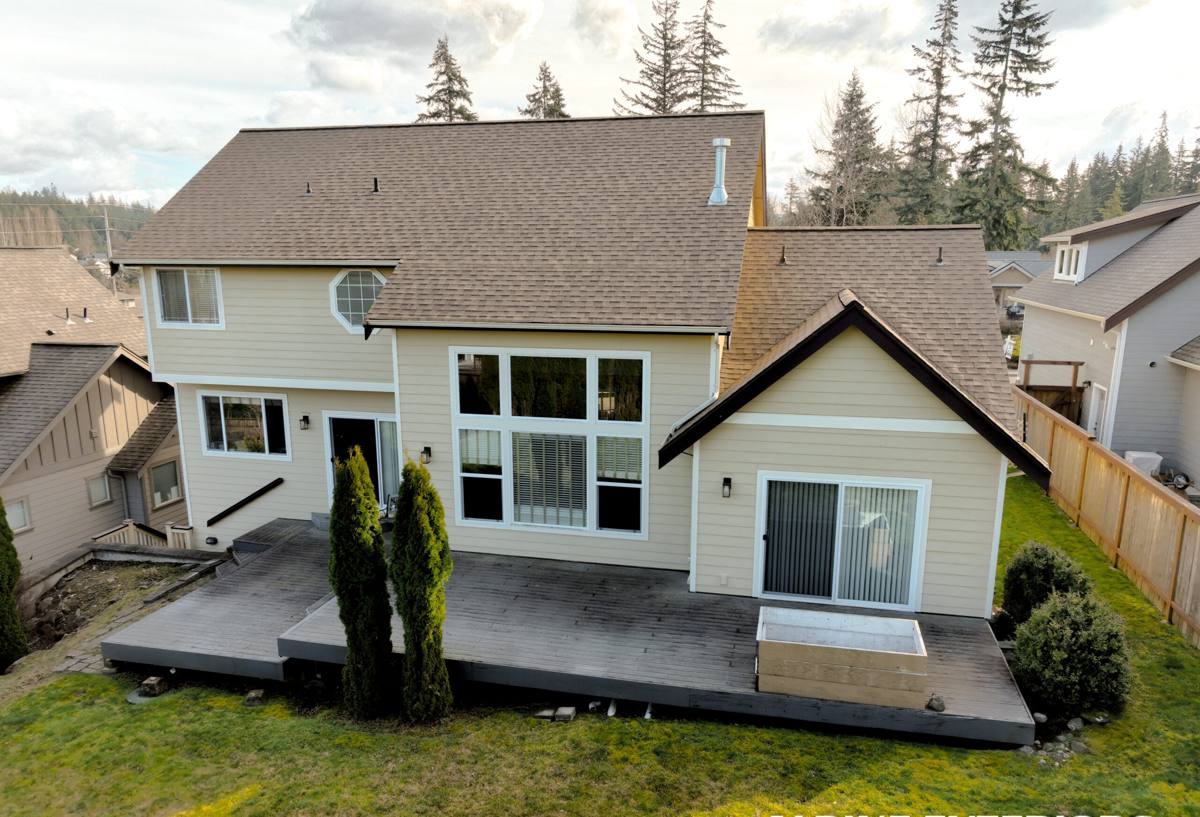
Signs Your Windows Are Losing the Battle
Most homeowners don't call us because a window broke. They call because something's been bothering them for a while and they finally want an honest opinion. Here's what we look for, and what you can check yourself before you even pick up the phone:
- Fogging or a hazy film between the panes — the seal has failed and the gas fill (if there was one) is gone
- Drafts you can feel with a hand near the frame on a windy, rainy day
- Soft, spongy, or discolored wood at the sill or the bottom corners of the frame
- Windows that are hard to open, close, or lock — often a sign the frame has swollen or shifted
- Moss, algae, or black staining building up on the sill, exterior trim, or the frame itself
- A noticeable jump in heating costs with no other explanation
- Condensation forming on the inside of the glass regularly through fall and winter
Any one of these on its own might just mean a repair or a re-caulk. Several of them together, especially on windows that are original to the house or on the north and west sides that catch the most weather, usually mean it's time to talk about replacement.
What a Correct Window Replacement Job Actually Involves
Window replacement looks simple from the street — old window out, new window in — but the work that actually protects a house happens where you can't see it. This is the part that separates a job that lasts fifteen-plus years from one that starts leaking again in three.
Flashing and Water Management
Every window opening needs a proper water management system: a sloped sill pan so any water that gets past the glass drains back outside instead of into the wall cavity, flashing tape integrated with the house wrap in the correct shingle-lap order (so water sheds downward and outward, never inward), and sealant used only where it belongs — not as a substitute for proper flashing. In a climate with as much driving rain as Forest Park sees, this step matters more than the window itself. A great window installed with sloppy flashing will still leak.
Fit and Insulation
The new window has to be shimmed level, plumb, and square, then insulated around the perimeter with a low-expansion foam or backer rod — not stuffed with fiberglass batting, which does little to stop air movement. A window that's slightly out of square will bind, won't seat its locks properly, and will develop drafts within a year or two even if everything else was done right.
Matching Your Siding and Trim
Replacement windows change the opening's dimensions slightly more often than people expect, especially when moving from an old aluminum frame to a modern vinyl or fiberglass unit. That means trim, brick mold, or siding around the window may need to be adjusted or replaced to keep the transition weathertight and looking clean — not just caulked over and hoped for the best.
Choosing the Right Frame Material for This Climate
There's no single "best" window material for every house — it depends on your budget, your home's style, and how much maintenance you want to take on. Here's how the common options actually perform in a salt-air, high-rainfall environment like Forest Park:
| Material | Salt Air / Moisture Resistance | Maintenance | Typical Cost Tier | Best Fit |
|---|---|---|---|---|
| Vinyl | Very good — won't corrode or rot | Low; occasional cleaning | Lower to mid | Most homes prioritizing value and low upkeep |
| Fiberglass | Excellent — dimensionally stable, resists moisture and salt | Low | Mid to higher | Homes wanting durability and a slimmer frame profile |
| Wood-clad | Good on the exterior clad face; interior wood still needs care | Moderate to higher | Higher | Homes wanting a traditional wood interior look |
| Aluminum | Poor in salt air without upgraded coatings — prone to pitting and corrosion over time | Moderate | Lower to mid | Limited use; we recommend it sparingly here |
We don't push one brand or material on every job. Our standard is simply this: in a coastal, high-moisture area, we lean toward vinyl or fiberglass for most replacements because they hold up with the least fuss, and we're straightforward with clients about the extra maintenance that wood or bare aluminum will require here.
Our Window Replacement Process
We keep the process the same on every Forest Park job because consistency is what prevents callbacks:
- On-site assessment — we check the actual condition of each opening, not just the glass, including the sill, framing, and any signs of past moisture intrusion
- Product selection — we walk through material, glass package, and grille options based on your home, your budget, and which direction the window faces
- Careful removal — old windows come out without damaging surrounding siding or trim any more than necessary
- Waterproofing and flashing — sill pan, flashing tape, and house wrap integration done in the correct order before the new unit ever goes in
- Installation and insulation — leveled, shimmed, and insulated to spec, then sealed on the exterior with the appropriate sealant
- Trim and cleanup — exterior trim reinstalled or replaced as needed, interior finished, job site cleaned
- Final walkthrough — every window opens, closes, and locks properly before we consider the job done
Why a Crew That Already Works Forest Park Matters
A window installer who's never worked this neighborhood is guessing at things a local crew already knows: which sides of a house take the worst of the driving rain, how much shade a given lot has and what that means for moss and algae control, and what condition older housing stock in this part of Everett tends to be in behind the trim. That familiarity shows up in small decisions — recommending fiberglass instead of aluminum on a west-facing wall, flagging hidden sill rot before it becomes a surprise change order, knowing which sealants actually hold up through a Snohomish County winter instead of just the manufacturer's marketing claims.
It also means we're not disappearing after the invoice is paid. We're working in this area regularly, which matters if a question comes up during the first heavy rain after installation or if trim settles slightly and needs a look.
Permits, Timing, and Working Around Our Weather
Window replacement in the City of Everett may require a permit depending on the scope of the work, especially if structural framing is altered or the change affects egress requirements in a bedroom. We handle that conversation with you up front rather than after the fact. On timing, we plan around the weather rather than fighting it — openings aren't left exposed during an active storm, and we sequence multi-window jobs so no house sits with unprotected openings overnight. In a neighborhood that sees as much rain as Forest Park does, that kind of scheduling discipline isn't optional.
Get a Straight Answer About Your Windows
If your windows are original to the house, fogging, sticking, or showing moss and staining around the frames, it's worth having someone look at them who actually knows what this climate does to a window over time. We offer free, no-pressure estimates for Forest Park homeowners — we'll tell you honestly whether you need a full replacement, a repair, or nothing at all right now. Fill out the form below and we'll set up a time to take a look.