 Everett
 Roof Repair Built for Glenhaven's Climate, Not a Generic Checklist
Glenhaven homes deal with a specific combination of punishment: salt-tinged air drifting in off Puget Sound, long stretches of driving rain, and a moss season that can run from October clear into May. A roof repair that ignores any one of those three factors tends to fail again within a couple of years. Our approach starts with understanding how those conditions actually damage a roof in this part of Everett, then matches the repair to that reality instead of running a one-size-fits-all patch job.
Snohomish County's marine climate means roofs here rarely fail from a single dramatic event. More often it's slow, cumulative moisture intrusion — a lifted shingle tab that lets wind-driven rain track sideways under the field, a valley that's been quietly holding moss and debris, or flashing that's corroded just enough to open a hairline gap. By the time it shows up as a stain on a ceiling, the damage has usually been building for a season or two.
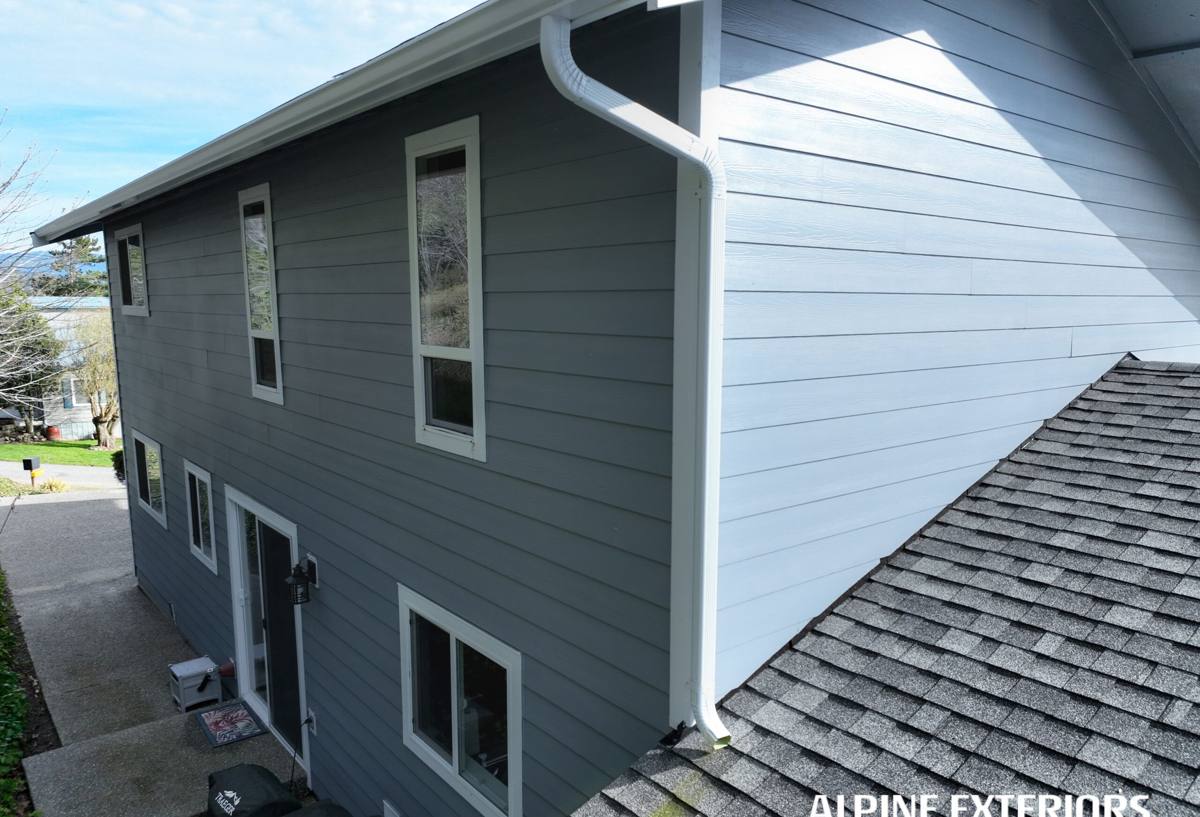
What Glenhaven's Weather Does to a Roof
Salt Air and Metal Fatigue
Even a few miles inland from the water, airborne salt accelerates corrosion on exposed metal — nail heads, flashing, vent boots, and gutter hardware. Galvanized fasteners that would last decades in a dry inland climate can start rusting through their coating in a fraction of that time here. That's why we pay close attention to fastener and flashing condition on every repair, not just the shingles or panels themselves.
Driving Rain and Wind-Driven Moisture
Everett gets rain that doesn't fall straight down — storms off the Sound push it sideways, which means water finds its way under shingle tabs, around chimney flashing, and into any gap that would stay dry in a calmer climate. A repair that only addresses the visible symptom (a stain, a soft spot) without checking upslope for the actual entry point usually gets revisited within a year or two.
Moss and the Long Wet Season
Glenhaven's tree cover and consistent moisture give moss a long runway to establish itself, especially on north-facing slopes and in valleys that stay shaded most of the day. Moss doesn't just look bad — it holds water against the roofing material, lifts shingle edges as it grows, and works its root structure into seams over time. A roof with active moss growth is often losing granule protection and structural integrity faster than the homeowner realizes.
What a Correct Repair Actually Involves
A proper roof repair is a diagnostic process before it's a materials process. Skipping the diagnosis is the single biggest reason repairs don't hold up.
Step 1 — Find the Real Entry Point
Interior stains are almost never directly above the actual leak. Water travels along the underlayment, rafters, or sheathing before it shows up inside, sometimes several feet from where it entered. We trace the path from the interior evidence back up to the roof surface rather than patching the first thing that looks worn.
Step 2 — Assess the Surrounding Material, Not Just the Damaged Spot
If shingles a few feet from the failure point are already brittle, granule-bald, or moss-compromised, patching only the worst area just relocates the next leak. We check the condition of the surrounding field, the underlayment where it's exposed, and the decking underneath for soft spots or rot before deciding how far the repair needs to extend.
Step 3 — Address Flashing and Penetrations First
A large share of roof leaks in this climate trace back to flashing — around chimneys, skylights, plumbing vents, and roof-to-wall transitions — rather than the shingles themselves. Flashing is often the cheapest part of a repair to get right and the most consequential to get wrong, so we treat it as its own line item, not an afterthought.
Step 4 — Match Materials and Fastening for Wind and Wet Exposure
We use fasteners and flashing rated for coastal/marine exposure where the original build didn't, and we follow manufacturer nailing patterns rather than shortcuts, since under-fastened repairs are a common cause of repeat wind and rain intrusion in this area.
Repair Checklist We Work Through On Every Visit
- Trace interior staining or damage back to its actual entry point upslope
- Inspect and clear moss, debris, and standing organic matter from valleys and shaded slopes
- Check all flashing (chimney, vent, skylight, roof-to-wall) for corrosion or gaps
- Inspect fasteners for rust or backing-out, especially on older galvanized hardware
- Confirm decking underneath the damaged area is sound before re-covering it
- Check gutter and downspout function near the repair area — poor drainage compounds roof issues
- Match shingle or panel type, color, and exposure to the existing roof where possible
- Re-inspect the completed repair after the next significant rain when practical
Repair vs. Replacement: How We Help You Decide
Not every roof issue in Glenhaven needs a full replacement, and not every issue should be patched indefinitely. The honest answer depends on the roof's age, how widespread the damage is, and whether the underlying decking is still sound.
| Factor | Leans Toward Repair | Leans Toward Replacement |
|---|---|---|
| Roof age | Under roughly two-thirds of expected material lifespan | Near or past expected lifespan for the material |
| Extent of damage | Isolated to one section or penetration | Spread across multiple slopes or recurring in different spots |
| Decking condition | Sound, no soft spots found on inspection | Soft, delaminating, or showing rot in multiple areas |
| Moss/algae history | Recent growth, surface-level, removable without damage | Long-term growth that's degraded granules or lifted seams broadly |
| Flashing condition | Localized corrosion, replaceable in place | Widespread corrosion across multiple penetrations |
We'll tell you plainly which category your roof falls into. If a repair is the honest answer, that's what we'll recommend — we don't push replacement on a roof that has years of service life left.
Why a Crew That Already Works Glenhaven Matters
A repair crew that regularly works this part of Everett already knows which slopes tend to hold moss longest, how the local rain pattern drives water into valleys and flashing, and which building styles common to the area have recurring trouble spots. That familiarity shortens the diagnostic phase and reduces the chance of missing a secondary problem.
It also means faster response. Roof issues in a wet climate don't wait politely — a small leak found during a fall storm can become a ceiling repair by the next one if it sits on a schedule. A crew already routed through Snohomish County can typically get to a Glenhaven property faster than one dispatching from farther out, which matters most when weather is actively making things worse.
Questions Worth Asking Before You Hire Anyone
- Will you trace the leak to its actual source, or just patch what's visible?
- Do you check flashing and fasteners, or only the shingles/panels?
- What's your plan if the decking underneath turns out to be soft?
- Are you licensed and insured to work in Washington, and can you show it?
- What does your repair warranty actually cover, and for how long?
Moss Prevention: A Repair Isn't Finished Without It
In Glenhaven's climate, fixing the immediate leak without addressing moss and drainage is an incomplete repair. Trimming back overhanging branches that keep a section of roof shaded and damp, keeping gutters clear so water isn't backing up under the lower courses, and periodic gentle moss treatment all extend the life of both the original roof and the repair itself. We'll flag these factors when we see them, even when they're outside the immediate scope of the repair, because ignoring them just brings us back to the same spot in a year or two.
What to Expect From Our Process
- Inspection and diagnosis — We identify the actual cause, not just the symptom, including a check of surrounding material condition.
- Clear explanation and options — You get a plain-English breakdown of what's wrong, what it'll take to fix it correctly, and a repair-vs-replace opinion if it's relevant.
- The repair itself — Matched materials, correct flashing work, proper fastening for coastal wind and rain exposure, and decking replacement if needed.
- Cleanup and check-in — Debris and old material hauled off, and a straightforward explanation of what was done and why.
We don't upsell services a roof doesn't need, and we don't disappear after the invoice — if something about the repair doesn't look right after the next hard rain, we want to hear about it.
Cost Factors Homeowners Should Understand
Roof repair costs in this area vary widely based on a handful of specific factors, and we'd rather explain them than quote a number that doesn't fit your situation.
| Factor | Why It Moves the Price |
|---|---|
| Roof pitch and access | Steeper or harder-to-access roofs take longer and require more safety setup |
| Extent of decking damage | Rotted or soft decking has to be cut out and replaced before re-covering |
| Material match | Matching an older or discontinued shingle/panel color can take longer to source |
| Number of penetrations involved | Each vent, chimney, or skylight flashing point adds labor |
| Moss/debris removal needed | Heavy buildup adds cleanup time before the repair can even start |
Most straightforward single-area repairs land in a modest range; anything involving significant decking replacement or multiple flashing points naturally costs more. We'll give you a real number after we've actually seen the roof, not a phone estimate.
If you're dealing with a leak, a suspicious stain, or just want an honest read on how much moss season has taken out of your roof, we're happy to come take a look. The estimate is free, there's no pressure to book anything on the spot, and you'll get a straight answer either way — use the form below to get started.