 Everett
 Why Edmonds Homes Need a Different Siding Conversation
Edmonds sits close enough to Puget Sound that salt-laden air is a real factor in how exterior materials age, and it gets the same long, wet Snohomish County winters as the rest of the Everett area. That combination — salt exposure, driving rain off the water, and a moss season that can run half the year on shaded north- and west-facing walls — is harder on siding than most manufacturers' marketing admits. Homeowners here aren't just picking a color and a price point. They're picking a material that has to survive repeated wet-dry cycling, resist moisture intrusion at every seam and fastener, and hold a finish without chalking, streaking, or feeding moss growth for fifteen-plus years.
This page is specifically about James Hardie fiber cement siding installed on homes in and around Edmonds — what the local climate demands from the material, what a correct installation actually involves, and why the crew doing the work matters as much as the product itself.
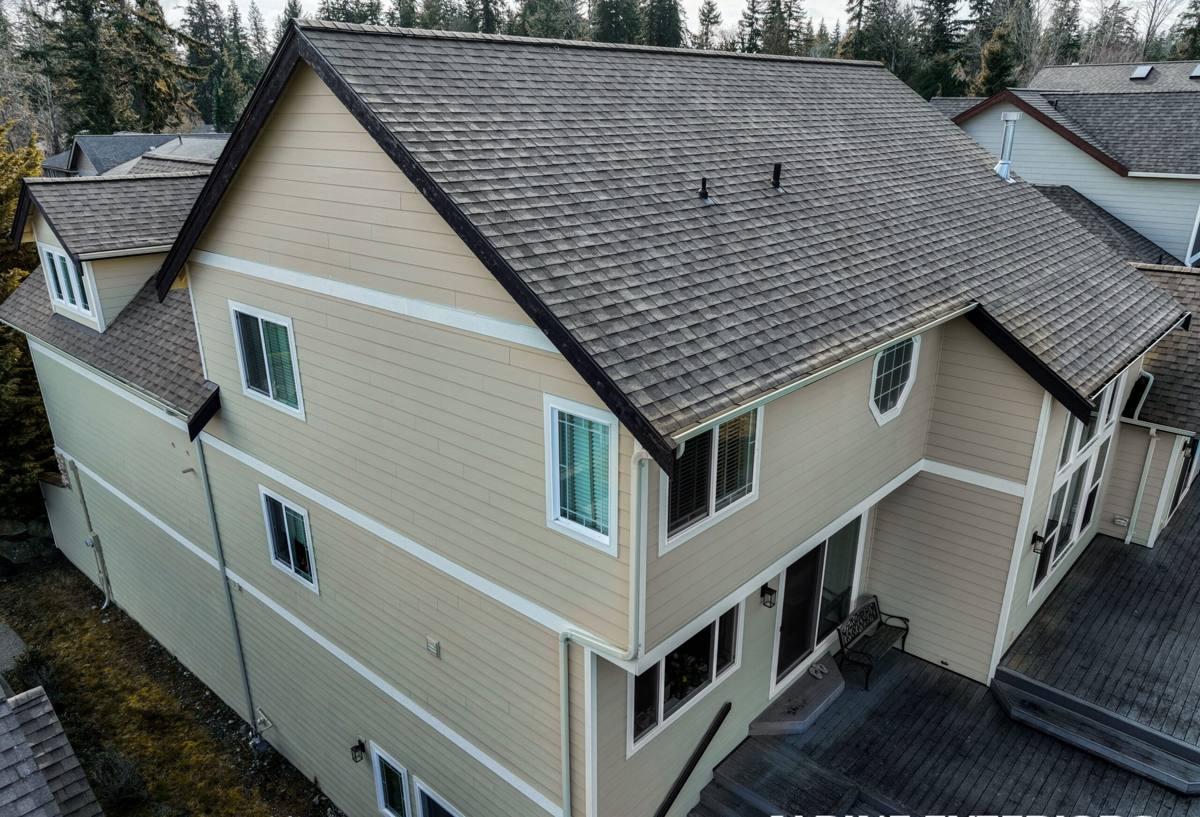
What Edmonds' Climate Actually Does to Siding
Salt air
Proximity to the Sound means airborne salt settles on exterior surfaces, especially on homes with any elevation or direct exposure to onshore wind. Salt accelerates corrosion on exposed metal fasteners and trim, and it can degrade lower-quality paint finishes faster than inland exposure would. It doesn't harm fiber cement itself the way it can compromise some metals, but it makes fastener choice and finish quality non-negotiable.
Driving rain
Wind-driven rain off the water pushes moisture sideways into siding laps, trim joints, and butt seams — areas that stay dry in calmer climates but get tested constantly here. Any gap in flashing, caulking, or lap coverage becomes a path for water to reach the sheathing behind the siding.
Moss season
Shaded, north-facing, and tree-covered walls in Edmonds can stay damp for months at a stretch. Moss and algae need sustained moisture to establish, and they'll colonize any siding surface that holds water or has a porous, absorbent finish. Once established, moss holds even more moisture against the wall, which compounds the problem over time.
None of this is unique to any one product — it's physics. What differs is how well a given material and installation handle it.
Why We Only Install James Hardie
We standardized on James Hardie fiber cement for every home we side, including in Edmonds, because it's engineered to handle exactly the conditions described above better than the alternatives we chose not to carry:
- Non-combustible core: fiber cement doesn't feed a fire the way wood-based products can, which matters for insurance and long-term risk regardless of climate.
- Dimensionally stable in wet-dry cycling: Hardie board doesn't swell, warp, or delaminate from repeated moisture exposure the way engineered wood products can if a seal fails.
- ColorPlus factory finish: a baked-on finish applied under controlled conditions holds color and resists fading, chalking, and peeling far better than field-applied paint, which matters on a home taking direct salt air and UV.
- HZ5 product engineering: James Hardie makes climate-specific formulations, and the HZ5 line is built for the Pacific Northwest's wet, freeze-thaw-adjacent conditions rather than a one-size-fits-all mix.
- Strong transferable warranty: a warranty that survives a change of ownership matters on resale, and it's backed by a manufacturer with a long track record rather than a newer entrant.
We don't install LP SmartSide, vinyl, Cemplank, Allura, primed spruce, or cedar. Each of those has legitimate strengths, but they also carry trade-offs — moisture sensitivity, maintenance burden, finish durability, or warranty structure — that we're not willing to put our name behind on a home that has to stand up to Edmonds weather for decades. Hardie is what we install because it's what we're confident about defending ten and twenty years out.
What a Correct Hardie Installation Requires Here
Fiber cement siding is only as good as the installation behind it. In a high-moisture, salt-exposed area like Edmonds, a handful of details separate a job that lasts from one that fails early:
Rainscreen or drainage gap
A furring strip or engineered drainage mat behind the siding creates an air gap that lets any moisture that does get past the cladding drain and dry out instead of sitting against the sheathing. On a home this close to the Sound, we treat this as standard, not optional.
Flashing at every horizontal intersection
Window heads, door tops, deck ledgers, and roof-to-wall transitions all need proper flashing, not just caulk. Caulk is a maintenance item; flashing is the actual water management system.
Correct fastener spec
Given the salt air, we use fasteners rated for coastal exposure and follow James Hardie's fastening schedule exactly — spacing, penetration depth, and placement all affect both weather performance and warranty validity.
Factory-cut edges kept sealed
Any field cut exposes the raw core of the board. Those cut edges need to be sealed per manufacturer spec before installation, especially at inside corners and butt joints where water tends to collect.
Proper clearance from grade and hardscape
Siding installed too close to soil, concrete, or roofing keeps the bottom courses perpetually damp — a direct contributor to moss and rot at the base of a wall. We hold manufacturer-minimum clearances even when it means adjusting trim details.
Our Process for an Edmonds Job
- On-site assessment: we walk the home, note sun/shade exposure on each elevation, existing moisture damage, and any problem areas (north walls, tree cover, low clearance spots) that need extra attention.
- Tear-off and sheathing check: we remove existing siding and inspect the sheathing underneath for rot or damage before anything new goes up — no siding job should cover up a problem.
- Weather barrier and drainage plane: a proper water-resistive barrier goes on first, followed by the drainage gap system appropriate to the wall assembly.
- Flashing installation: all windows, doors, and horizontal transitions get flashed before siding starts.
- Hardie installation to spec: boards, panels, or trim installed per James Hardie's published fastening and clearance requirements, not shortcuts.
- Final inspection and cleanup: we check laps, seams, and fastener lines, then walk the job with the homeowner.
Product Lines That Fit Edmonds Homes
| Product | Best Fit | Why It Works Here |
|---|---|---|
| HardiePlank lap siding | Most single-family homes | Traditional look, HZ5 formulation handles PNW moisture cycling |
| HardiePanel vertical siding | Modern builds, accent walls | Clean lines, fewer horizontal laps for water to test |
| HardieTrim boards | Corners, window/door casing | Matches durability of field siding at high-exposure edges |
| HardieShingle | Accent gables, Craftsman-style homes | Textured look without the maintenance of real wood shingle |
Cost Factors Specific to a Salt-Air, High-Rain Job
Every siding estimate depends on square footage and home complexity, but a few factors tend to move the number specifically on Edmonds-area homes:
- Existing damage: homes that have gone years with a failing moisture barrier or old caulk-only detailing often need sheathing repair before siding goes on.
- Drainage system upgrade: adding a proper rainscreen gap where none existed is worth the cost on exposed elevations, but it does add labor and material.
- Trim and corner detail: homes with more window/door openings and architectural detail have more flashing and cut-edge sealing to do correctly.
- Elevation exposure: walls facing prevailing wind and rain off the Sound sometimes warrant upgraded flashing or fastener specs even within the same house.
Why Hiring a Crew That Already Works Edmonds Matters
A crew that regularly works this specific stretch of Snohomish County has already seen which details fail on real homes here — which elevations grow moss first, which flashing shortcuts show up as rot five years later, which fastener choices hold up against salt air and which don't. That's not something a manufacturer spec sheet alone teaches; it comes from doing the work repeatedly in this exact climate. It also means the crew understands local permitting and typical home construction in the area, so the job moves without surprises.
Signs Your Current Siding Isn't Handling the Climate
- Moss or algae establishing on north- or west-facing walls within a year or two of cleaning
- Visible caulk failure or gapping at butt joints and trim
- Soft or discolored siding near the ground line or under windows
- Paint chalking, streaking, or fading unevenly across elevations
- Rust staining running down from fasteners or trim
If you're seeing any of these on a home in Edmonds, it's worth having someone look at what's happening behind the siding, not just the surface.
If you'd like an honest look at your home's siding and what it would take to do it right with James Hardie, we offer a free, no-pressure estimate — use the form below to get started.