 Everett
 Siding in Glenhaven Has a Specific Job to Do
Glenhaven is a residential pocket of Everett, and like the rest of Snohomish County it sits inside a climate that is genuinely hard on exterior building materials. Homes here deal with salt-laden air drifting in off Puget Sound, long stretches of driving rain that comes in sideways during winter storms, and a moss and algae season that can run most of the year in shaded, damp spots. Siding that looks fine in a showroom in a dry climate does not automatically hold up here. The material, the finish, and the installation all have to be matched to what this specific corner of Western Washington actually throws at a house.
That is the lens we use on every Glenhaven project: not "what siding looks good," but "what siding, installed correctly, will still look good and still be doing its job in fifteen or twenty years under these conditions."
What Glenhaven's Climate Actually Does to Siding
Salt Air and Moisture
Coastal and near-coastal air carries fine salt particles that accelerate corrosion on fasteners, trim, and any exposed metal, and that also draw moisture into porous materials. Wood-based products are especially vulnerable — salt-laden moisture gets into end grain and seams and stays there longer than it would in a dry inland climate.
Driving Rain
Everett doesn't just get rain, it gets wind-driven rain that hits siding at an angle instead of running straight down. That means water finds its way behind poorly lapped panels, under-caulked trim, and any gap in the water-resistive barrier that a fair-weather installation might get away with in a drier region. The weak point is rarely the siding material itself — it's the flashing, the laps, and the transitions.
Moss and Algae Season
Shaded north- and west-facing walls, tree cover, and the region's long damp stretches from fall through spring give moss, algae, and mildew a long runway to take hold on exterior surfaces. Some materials are more porous and give organic growth something to grip onto and feed from. A siding surface that resists moisture absorption is far less hospitable to that growth in the first place.
None of this is unique to Glenhaven — it's Everett and Snohomish County in general — but it's worth spelling out because it explains almost every decision below, from the product we install to how we detail the flashing.
Why We Install Only James Hardie
We do not install LP SmartSide, vinyl, Cemplank, Allura, primed spruce, or cedar. That is a deliberate standard, not a lack of options. James Hardie fiber cement is non-combustible, dimensionally stable, and manufactured with HZ5 product engineering specifically for the wetter, more temperate climate zones the Pacific Northwest falls into. The factory-applied ColorPlus finish is baked on under controlled conditions rather than field-applied, which matters directly for a climate with this much moisture exposure — a factory finish resists fading, chipping, and moisture intrusion at the surface far better than a coating applied on-site in variable weather.
Fiber cement does not have the wood fiber content that gives moss and rot something to feed on the way untreated or primed wood products can, and it holds paint and finish far longer than vinyl, which becomes brittle and can warp with temperature swings and UV exposure over time. Hardie also carries a strong transferable warranty on both the substrate and the ColorPlus finish when installed to manufacturer specification — which is the other half of the equation, because a great product installed wrong voids that protection regardless of the label on the box.
Hardie Product Lines That Fit Glenhaven Homes
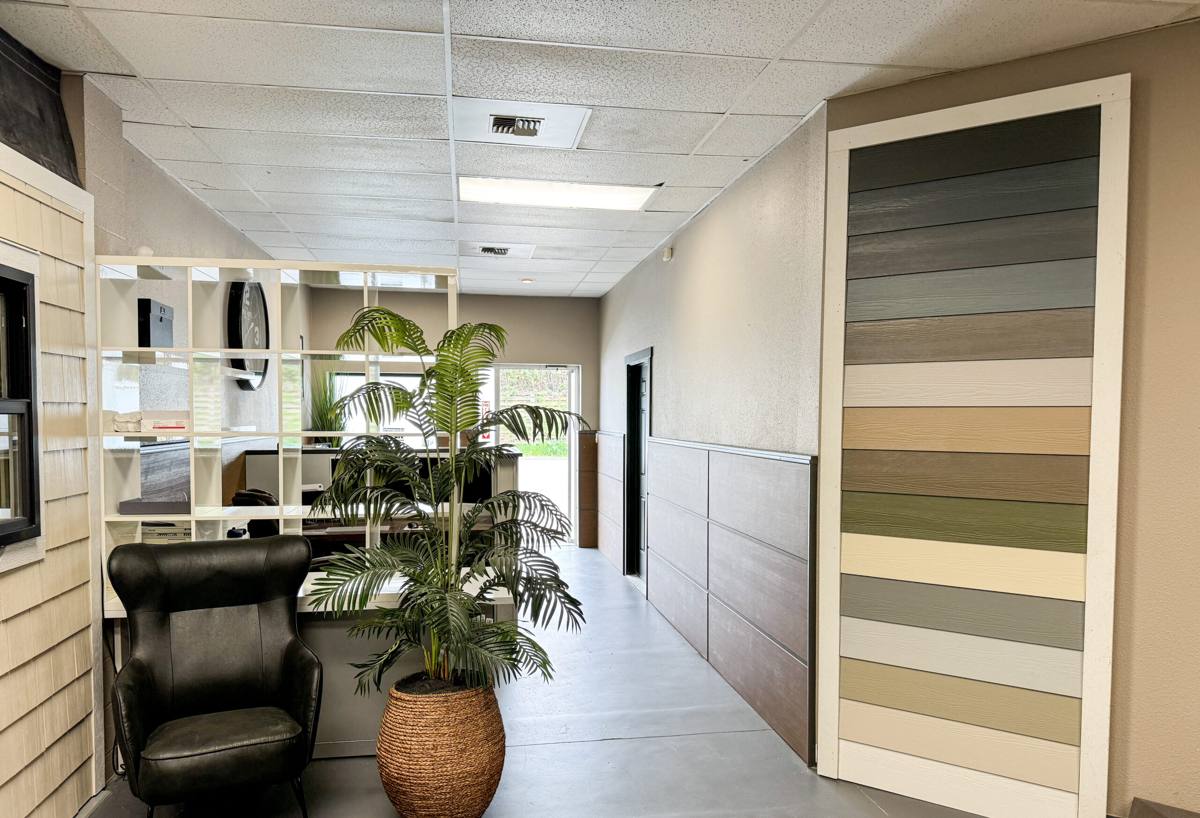
Glenhaven's housing stock, like much of Everett, is a mix of mid-century ranch homes, split-levels, and newer infill construction. James Hardie's lineup covers all of it without forcing a home into a look that doesn't fit its era:
- HardiePlank lap siding — the standard horizontal lap look for traditional and ranch-style homes, available in smooth or cedar-textured finish.
- HardiePanel vertical siding — often used as an accent on gables, entries, or modern-style facades.
- HardieTrim — matched trim boards for corners, window and door casing, and fascia so the whole exterior reads as one system instead of mismatched materials.
- HardieShingle — a straight-edge or staggered shingle profile for homes that want a more textured, traditional look without using cedar shingle.
What a Correct Installation Actually Involves
The single biggest factor in how siding performs in a climate like this isn't the product line — it's whether the installation was done to spec. Most siding failures we get called out to inspect in the Everett area trace back to installation shortcuts, not the material itself. In a climate with this much wind-driven rain, the details matter more than they would somewhere drier.
| Detail | Done Correctly | Common Shortcut |
|---|---|---|
| Water-resistive barrier | Continuous, properly lapped house wrap behind the siding with taped seams | Gaps, missed seams, or reused old barrier under new siding |
| Flashing at windows/doors | Integrated flashing that directs water out and away at every penetration | Caulk used as a substitute for proper flashing |
| Panel gaps and clearance | Manufacturer-specified gaps at butt joints and a clearance gap above decks, patios, and grade | Panels butted tight or run down to grade, trapping moisture |
| Fastening | Correct fastener type, spacing, and depth per Hardie's published instructions | Over-driven or under-driven nails that crack panels or leave them loose |
| Caulking and sealant | Used only where specified, with the right sealant for the joint | Caulk relied on to seal gaps that should have been flashed or gapped |
Every one of those "done correctly" details exists specifically because of what happens when driving rain and long damp seasons find a weak spot. A crew that treats these as optional steps is building in a callback — it just won't show up for a year or two.
Our Process on a Glenhaven Home
1. Assessment and Tear-Off
We start by inspecting the existing siding, sheathing, and any trim for moisture damage before a single new panel goes up. In a climate like this, hidden rot behind old siding is common enough that we plan for it rather than being surprised by it. Full tear-off lets us actually see the wall assembly instead of guessing what's underneath.
2. Repair and Weather Barrier
Any damaged sheathing gets replaced, not patched over. We install a continuous water-resistive barrier with properly lapped and taped seams, sized for the amount of wind-driven rain this area sees.
3. Flashing and Trim
Flashing goes in at every window, door, and roofline transition before siding — not after, and not substituted with caulk. HardieTrim gets installed to match the panel lines so the whole system sheds water the way it's designed to.
4. Siding Installation to Spec
Panels go up with correct fastener spacing, proper gaps, and manufacturer clearance at grade and hard surfaces. This is where following Hardie's published installation instructions — not shortcuts — actually protects both the home and the warranty.
5. Final Inspection
We walk the finished exterior and check caulking, trim lines, and clearances before calling the job done, so the details that matter in this climate aren't left to chance.
What Drives the Cost
Every Glenhaven home is different, and pricing depends on the specifics of the project, but the same factors tend to move the number up or down on most jobs in this area:
| Factor | Why It Matters |
|---|---|
| Home size and wall area | More square footage means more material and labor, straightforwardly |
| Existing siding condition | Hidden moisture damage found during tear-off adds sheathing repair |
| Trim and architectural detail | Multiple gables, dormers, and window trim add labor beyond flat wall runs |
| Story height and access | Two-story walls and difficult access require more scaffolding and time |
| Product line and profile | Lap, panel, shingle, and trim combinations price differently |
We give straight, itemized estimates rather than vague ballpark numbers, because a homeowner comparing quotes should be able to see exactly what they're paying for.
Living With Hardie Siding in This Climate
One advantage of fiber cement in a moss- and moisture-heavy climate like Everett's is how little upkeep it demands compared to wood-based sidings. It doesn't need repainting on the schedule that primed wood does, and its resistance to moisture absorption means it doesn't feed algae and moss growth the way more porous materials can. That said, a few habits keep any siding performing well here:
- Rinse siding periodically, especially on shaded north- and west-facing walls where moss tends to establish first.
- Keep gutters clear so overflow doesn't run down the wall face repeatedly.
- Trim back vegetation and tree cover that keeps a wall surface damp and shaded longer than it needs to be.
- Have caulking and trim joints checked every few years, since sealant is the one component that does wear out over time even on a well-installed job.
- Address any cracked or loose panel promptly — a small gap in a climate with this much rain doesn't stay small for long.
Why It Matters That We Already Work in Glenhaven
A crew that regularly works in and around Glenhaven and greater Everett already knows the local permitting process, has a feel for how the neighborhood's mix of home styles and ages tends to be built, and has seen firsthand what this climate does to siding that wasn't installed correctly the first time. That's not a marketing point — it's the difference between a contractor guessing at flashing details and one who has already dealt with the wind-driven rain and moss issues specific to Snohomish County dozens of times over.
If you're weighing a siding replacement or repair on a Glenhaven home, we're happy to come take a look and give you a straightforward, no-pressure estimate — no guesswork about whether the product and the installation are actually suited to this climate.