 Everett
 Why North Everett Siding Takes a Different Approach
North Everett sits close enough to Port Gardner Bay and the Puget Sound shoreline that salt-laden air is a real factor in how exterior materials age here, not a theoretical one. Add Snohomish County's long wet season, driving rain that comes in sideways off the water during winter storms, and the shaded, moisture-heavy conditions that let moss and algae take hold on north-facing walls and tree-covered lots, and you have a climate that is genuinely tough on siding. Products that perform fine in a dry inland climate often struggle here. That's the lens we use on every North Everett project: not "what siding looks good going up," but "what siding is still doing its job in fifteen years."
This page is specifically about James Hardie fiber cement siding as it applies to North Everett homes — what the local climate demands, what a correct installation actually involves, and how we approach the work in this part of Everett.
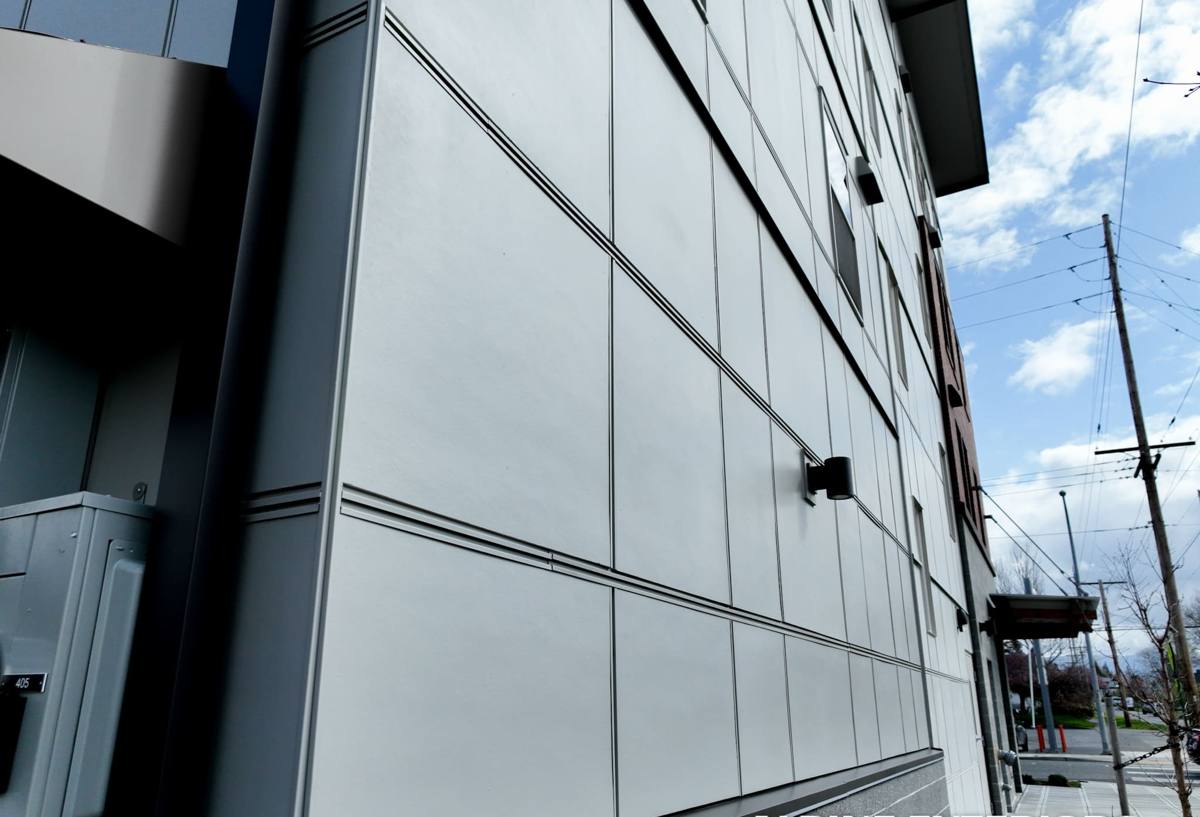
What Salt Air, Rain, and Moss Actually Do to Siding
Salt Air
Airborne salt from the Sound doesn't just affect waterfront homes — it travels on wind and settles on siding, trim, and fasteners well inland from the shoreline. Over years, it accelerates corrosion in unprotected metal fasteners and flashing, and it can degrade certain paints and coatings faster than manufacturers' inland test data would suggest. Siding systems that rely on site-applied paint or thin factory coatings tend to show chalking, fading, and coating failure sooner in this kind of environment.
Driving Rain
Everett's winter storms don't just drop rain straight down — wind-driven rain gets pushed sideways into wall assemblies, testing every seam, joint, and penetration in the siding. A siding system is only as good as its weakest lap joint or the caulk bead around a light fixture. Materials that swell, cup, or absorb water at cut edges are especially vulnerable to this kind of exposure.
Moss and Algae (the Long Moss Season)
Shaded lots, tree cover, and months of damp weather give moss and algae a long runway to establish themselves on siding, especially on north- and west-facing walls that don't get much direct sun. Organic material holding moisture against a wall surface is one of the more common paths to hidden rot behind siding that looks fine from the street.
Why We Only Install James Hardie
We made a deliberate decision as a company to install James Hardie fiber cement exclusively — not vinyl, not LP SmartSide, not Cemplank or Allura, not primed spruce or cedar. That's not a marketing position; it's a standard we hold because of what we've seen happen to other materials in exactly this kind of coastal, wet, shaded climate. Wood-based products (including engineered wood like LP SmartSide) depend on their moisture-resistant coating staying intact at every cut edge and fastener hole; once that coating is compromised, the wood fiber core is exposed to a climate that gives it every opportunity to swell, delaminate, or invite rot. Vinyl doesn't rot, but it becomes brittle in cold snaps, has no structural rigidity of its own, and its appearance is limited compared to Hardie's factory-finished lines. James Hardie is non-combustible, dimensionally stable, and manufactured with climate zones specifically in mind — which matters in a place where the siding has to shed rain, resist salt exposure, and stay clean-looking through a genuinely long wet season.
James Hardie's Climate Engineering for This Zone
James Hardie manufactures its HardieZone products in two formulations, HZ5 and HZ10, engineered for different climate exposures across the country. Western Washington, including Everett and Snohomish County, falls into the zone where Hardie's HZ5 formulation is specified — engineered for the freeze-thaw cycles, moisture exposure, and humidity patterns typical of the Pacific Northwest. This isn't a marketing detail; it affects the actual composition of the board and how it performs against moisture over decades. Using the correct HZ formulation for our climate is a non-negotiable part of every quote we write.
On top of the substrate itself, Hardie's ColorPlus factory finish is baked on and cured under controlled conditions, rather than field-painted after installation. That finish is backed by its own finish warranty separate from the product warranty, and it holds color and resists the chalking and fading that site-applied paint is more prone to — a meaningful advantage in an environment with persistent damp and salt exposure.
What a Correct Installation Involves
The single biggest factor in how long siding lasts isn't the brand on the box — it's whether it was installed to spec. James Hardie publishes detailed installation requirements, and skipping steps is where most siding failures we get called out to inspect actually originate. For North Everett homes specifically, the details that matter most include:
- Correct starter strip and minimum clearance from grade, decks, and roof lines so the bottom edge of the siding never sits in standing water or splash-back
- Proper flashing at every window, door, and roof-to-wall intersection — the majority of hidden moisture damage we find traces back to a missing or undersized flashing detail, not the siding material itself
- A water-resistive barrier installed and lapped correctly behind the siding, so any moisture that does get past the cladding has a drainage path instead of a place to collect
- Correct fastener type, spacing, and depth — over-driven or under-driven nails are one of the most common defects in fiber cement installs and directly affect how the board holds up under wind-driven rain
- Field-cut edges properly sealed, since an unsealed cut edge is the one place factory-finished siding loses its moisture protection
- Appropriate gaps at butt joints and trim per manufacturer spec, allowing for expansion without trapping water
Every one of these is invisible once the job is finished and painted-looking. That's exactly why it matters who does the install, not just what material goes up.
Our Process on a North Everett Project
We start with an on-site assessment of the existing wall assembly, not just the visible siding — checking for signs of trapped moisture, soft sheathing, or prior water intrusion around windows and penetrations, since those issues need to be corrected before new siding goes up, not covered over. From there we plan the tear-off, confirm the water-resistive barrier and flashing details are addressed at every opening, and install using the HZ5-appropriate James Hardie products with fastening and clearances to manufacturer spec. We finish with a walk-through inspection of joints, trim, and caulking before calling the job complete. Because we specialize in this one product and don't split attention across half a dozen siding systems, our crews are working from the same install standard on every job, in the same climate, week after week.
Comparing Siding Options for a North Everett Climate
| Factor | James Hardie Fiber Cement | Vinyl | Wood / Cedar | LP SmartSide |
|---|---|---|---|---|
| Salt air / coastal exposure | Strong — factory finish resists chalking and fade | Moderate — can become brittle over time | Weak — finish breakdown exposes wood to salt and moisture | Moderate — depends entirely on coating staying intact |
| Wind-driven rain performance | Strong when installed with correct flashing and laps | Moderate — thin panels can flex and gap | Weak — prone to swelling and cupping at joints | Moderate — vulnerable at unsealed cut edges |
| Moss / algae resistance | Good — dense fiber cement doesn't feed organic growth like wood | Good on the surface, but doesn't breathe | Weak — wood is an organic growth medium itself | Weak to moderate — wood-fiber core is vulnerable if coating fails |
| Fire resistance | Non-combustible | Combustible, can melt/deform | Combustible | Combustible |
| Typical maintenance | Occasional wash, repaint on a much longer cycle | Low, but limited repair options if damaged | Regular refinishing/sealing required | Regular inspection of coating and caulked seams |
Signs Your North Everett Home's Siding Needs Attention
- Soft or spongy spots when you press on the siding, especially near the bottom courses or below windows
- Persistent moss or dark streaking on north- or west-facing walls that comes back soon after cleaning
- Visible cupping, warping, or separation at panel joints
- Peeling or bubbling paint, or chalky residue that rubs off on your hand
- Gaps or cracked caulk around windows, doors, or trim
- Rusty streaks below fasteners or flashing
- Rooms with musty odors along exterior walls, which can indicate moisture getting behind the siding
Why Local Experience in This Part of Everett Matters
A crew that regularly works North Everett knows which walls take the worst of the winter wind off the Sound, which lots hold shade and moisture long enough to grow moss fast, and how the local permitting and inspection process runs in Everett and Snohomish County. That local pattern recognition shows up in small decisions — where to add extra flashing attention, which elevations need the most careful joint sealing, how to sequence a tear-off around our wet season — that don't show up on a spec sheet but do show up in how the siding performs five and ten years later.
If you're weighing a siding replacement or repair on a North Everett home, we're happy to take a look and walk you through what we're seeing and what it would take to do it right. Reach out for a free, no-pressure estimate using the form below.