 Everett
 Building a Deck That Actually Holds Up in Lake Stevens
Lake Stevens homeowners live with a specific set of outdoor conditions: long stretches of gray, wet weather, humidity that lingers under tree cover and near the lake itself, and a moss and algae season that can run from fall through spring. A deck built with generic, one-size-fits-all methods will show its age fast here — soft spots in the decking, streaking and staining, slick surfaces in winter, and rail posts that loosen years before they should. A deck built for this specific climate, with the right materials and the right framing details, will still look and perform well a decade from now.
This page focuses on one thing: custom deck construction for Lake Stevens properties, and what it actually takes to get it right in Snohomish County's climate. Not a generic overview of decks everywhere — the details that matter for homes here.
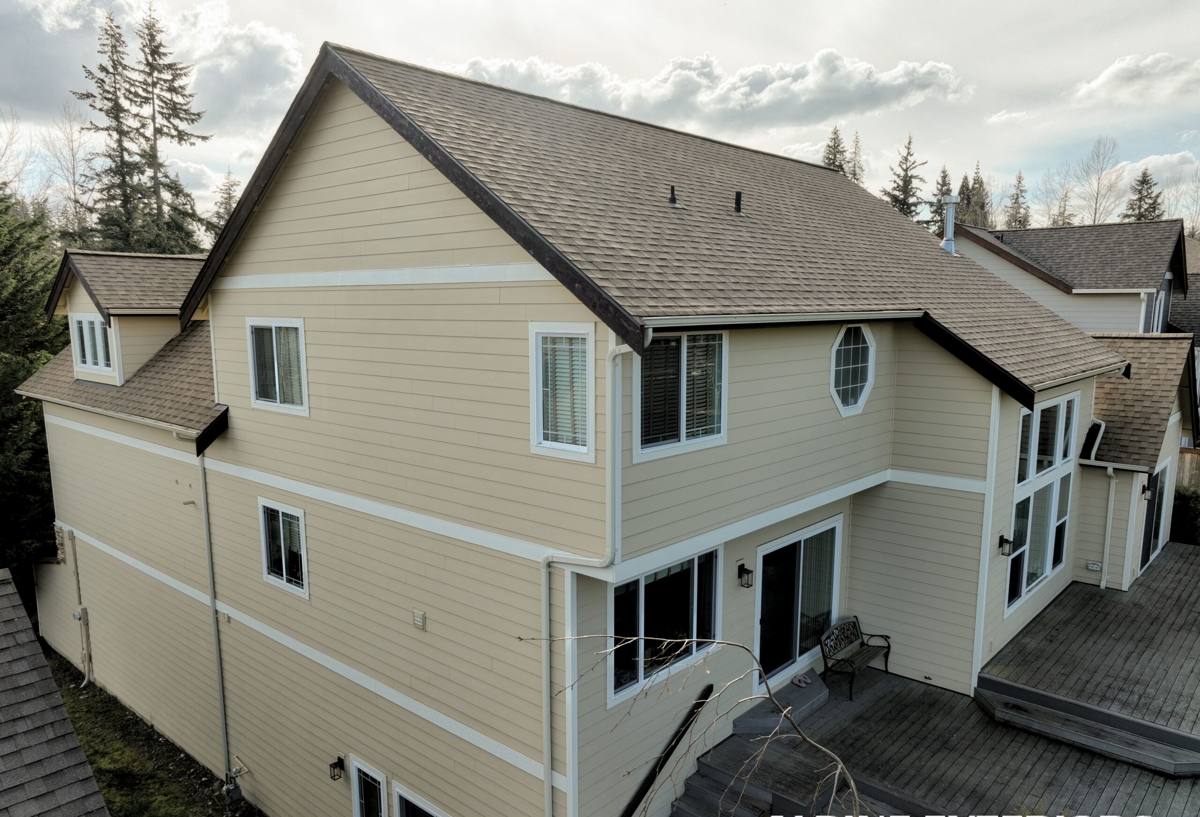
What Our Climate Does to a Deck Over Time
Snohomish County doesn't get extreme weather, but it gets persistent weather, and persistence is what wears a deck down. A few things stand out around Lake Stevens specifically:
- Driving rain gets pushed sideways by wind more often than people expect, soaking ledger boards, rail posts, and stair stringers even under an eave.
- Moisture-laden air off Puget Sound and the lake itself keeps humidity elevated for much of the year, which slows drying between rain events and gives fungus and algae more time to establish.
- Tree cover and shaded north sides of many Lake Stevens lots create damp microclimates where moss gets a real foothold — not just cosmetic, but slick and slowly damaging to wood fibers and coatings.
- Freeze-thaw cycles, while mild compared to inland climates, still happen enough in winter to work moisture into small cracks in fasteners, footings, and end grain, widening them year over year.
None of this is dramatic on its own. The problem is cumulative — a deck that's damp more often than it's dry, for more months than not, needs materials and detailing that account for that reality from day one.
Choosing the Right Decking Material
There's no single "best" decking material — there's a best material for your budget, your maintenance appetite, and how much shade and moisture your specific lot deals with. Here's how the common options actually compare for a Lake Stevens property:
| Material | Moisture Behavior | Maintenance | Typical Lifespan Here |
|---|---|---|---|
| Pressure-treated wood | Absorbs and releases moisture readily; prone to cupping and checking if not sealed regularly | Annual cleaning and re-sealing recommended | 10–15 years with upkeep |
| Cedar | Naturally rot-resistant but still needs sealing to fight moss and graying | Sealing every 1–2 years, regular cleaning | 15–20 years with upkeep |
| Composite decking | Doesn't rot, but lower-quality composites can hold surface moisture and grow algae without a textured, capped surface | Periodic washing; no sealing or staining | 25–30 years |
| PVC decking | Fully moisture-resistant, best resistance to mold and moss staining | Occasional washing | 30+ years |
For shaded, damp lots — which describes a good number of properties around Lake Stevens — we steer homeowners toward capped composite or PVC decking more often than wood, simply because the maintenance burden of keeping wood moss-free in full shade is significant. That said, plenty of homeowners want the real wood look and are willing to keep up with sealing, and we build that just as carefully.
A Note on Cheaper Composite Products
Not all composite decking is built the same. Lower-cost, uncapped composite boards can absorb surface moisture at the cut ends and in scratches, which gives algae and mold something to grow on despite the "low maintenance" label. Our standard is to use fully capped boards with a manufacturer warranty that specifically covers moisture and mold performance, not just structural integrity — it's a small cost difference upfront that avoids a disappointing deck five years in.
Framing and Substructure: Where Most Failures Start
The decking surface is what you see, but the substructure is what determines whether the deck is safe and long-lasting. Most deck problems we get called out to fix in this region didn't start with the boards on top — they started underneath.
Ledger Attachment
Where the deck attaches to the house is the single most important connection on the whole structure, and it's also the spot most exposed to water running down siding during driving rain. We flash this connection properly with a sloped drip cap and moisture barrier behind the ledger board, not just lag bolts and caulk, which is a common shortcut that fails quietly behind the scenes for years before it shows up as rot.
Joists and Beams
We use joist tape or a comparable moisture barrier on top of every joist before the decking goes down, which stops water from sitting in the fastener holes and wicking into the wood grain — a detail that matters far more in a climate this wet than in drier parts of the country.
Footings
Snohomish County soil holds water, and undersized or shallow footings are a common source of deck movement over time. We set footings to local frost depth and size them for the actual load of the deck, not a minimum guess.
Railings, Fasteners, and Hardware That Actually Hold Up
Hardware failure is one of the most common — and most preventable — problems on older decks in this area. Standard steel fasteners corrode faster in our humidity than most homeowners expect, especially in contact with pressure-treated lumber, which contains chemicals that accelerate corrosion in the wrong metal.
- Stainless steel or hot-dip galvanized fasteners rated for ground contact and treated lumber contact
- Structural screws or through-bolts at rail posts, not just deck screws, since post connections take the most lateral stress
- Composite or metal rail systems where moss and mildew staining on wood balusters would otherwise be a recurring maintenance headache
- Concealed fastening systems on decking boards where possible, which reduces the number of penetration points where water can enter the board
None of this is optional upgrading — it's the baseline we consider necessary for a deck to perform in this climate rather than just look good on installation day.
Design Considerations Specific to Lake Stevens Lots
Lake Stevens has a mix of lakefront, view, and wooded lots, and the site itself changes what a well-built deck needs.
Slope and Drainage
Many lots around the lake have grade changes that affect how a deck sheds water and how footings need to be engineered. We assess drainage on-site and grade around footings so water moves away from the structure rather than pooling against it.
Tree Cover and Shade
Homes tucked under mature trees get less direct sun to dry the deck surface after rain, which extends the window for moss and algae to take hold. On these lots we lean harder toward capped composite or PVC decking and design gaps and airflow beneath the deck to help it dry faster.
Proximity to the Water
Lakefront and near-lake properties deal with more ambient moisture and, at times, breezier conditions than more sheltered inland lots. Railing hardware and fastener selection matter even more here, and we adjust specs accordingly.
Our Process, Start to Finish
- On-site assessment — we look at your slope, shade, sun exposure, and existing structure (if replacing a deck) to understand what your specific lot demands.
- Design and material selection — we walk through decking, railing, and structural options honestly, including trade-offs in cost and maintenance, so you're picking with full information.
- Permitting — we handle the Snohomish County or applicable local permitting process for you where required.
- Framing and substructure — footings, ledger flashing, joists, and moisture barriers go in first, and this stage is not rushed.
- Decking, railing, and finish work — surface materials, hardware, and any stairs or lighting are installed to the spec we agreed on.
- Final walkthrough — we review the finished deck with you and go over any maintenance specific to the materials you chose.
Maintenance Checklist to Protect Your Investment
Even a well-built deck needs some seasonal attention in this climate. Here's what we recommend to Lake Stevens homeowners regardless of which material they chose:
- Sweep leaves and debris off the deck surface regularly in fall — trapped organic matter holds moisture against the boards and speeds moss growth
- Rinse or wash the deck surface at least once or twice a year to remove pollen, moss spores, and grime before they take hold
- Check railing posts and stair connections annually for looseness, especially after the first hard freeze of the season
- For wood decking, plan on resealing or staining on the schedule appropriate to your wood species — don't wait until graying and checking are already visible
- Keep gutters and downspouts near the deck clear so runoff isn't concentrated onto the structure or footings
- Trim back overhanging branches where possible to improve sun exposure and airflow across the deck surface
Why Hiring a Crew That Already Works in Lake Stevens Matters
A deck built to a generic national spec sheet will meet code, but code is a minimum, not a target for longevity in a climate like ours. A crew that regularly works Lake Stevens and the wider Snohomish County area already knows which details to over-build relative to that minimum — the flashing behind the ledger, the fastener grade, the drainage path around footings — because we've seen what happens when those details are skipped in exactly this kind of weather. That local pattern recognition is the difference between a deck that needs real repair work in eight years and one that's still solid in twenty-five.
If you're planning a new deck or replacing an aging one in Lake Stevens, we're happy to walk your property, talk through material options honestly, and give you a straightforward, no-pressure estimate. There's a form below — reach out and we'll set up a time to take a look.