 Everett
 Why Lynnwood Decks Wear Out Faster Than the Instructions Say They Should
A deck built to code in Lynnwood is not fighting the same battle as one built in a dry inland climate. Between the Puget Sound's salt-laden air, the sheer volume of rain Snohomish County sees over a typical year, and the shade cover from mature evergreens that keeps decks damp long after a storm passes, the structure underneath a deck ages differently here than the manufacturer's warranty paperwork assumes. Add in a moss season that can run from early fall through late spring, and you have a set of conditions that quietly work against fasteners, framing lumber, and even the ledger board attaching the deck to the house.
None of this means a deck in Lynnwood is doomed. It means the repair work has to account for how this specific climate degrades decks, not just patch what's visibly broken. That's the difference between a repair that buys you two or three more good years and one that lasts as long as the rest of the structure.
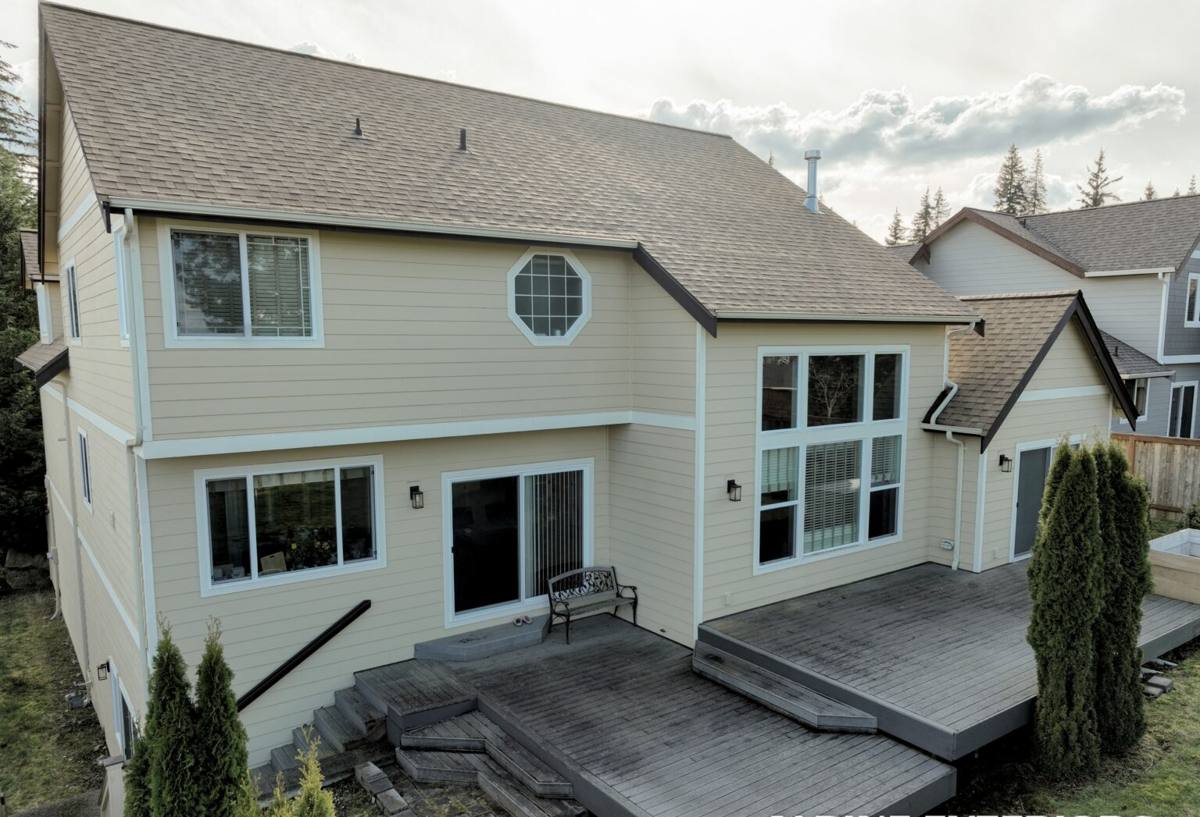
The Early Warning Signs Homeowners Usually Miss
Most deck failures don't happen suddenly. They build for a season or two while the visible surface still looks fine. Knowing what to check for lets you catch problems while they're still a repair instead of a full rebuild.
- Boards that feel spongy or flex more than they used to, especially near the house or stair landing
- Persistent moss or dark green-black staining that keeps returning within weeks of cleaning
- Rust streaks running down from fasteners, hardware, or joist hangers
- A ledger board gap or visible daylight where the deck meets the siding or house rim joist
- Railings or stair stringers that feel loose or wobble under normal weight
- Standing water that doesn't drain within an hour or two after rain stops
- A musty smell coming from underneath the deck, particularly in enclosed skirted areas
Any one of these on its own might be minor. Two or three together usually means moisture has been getting into the framing for a while, not just sitting on the surface.
What a Correct Deck Repair Actually Involves
A lot of "deck repair" in this region amounts to replacing a few obviously rotten boards and calling it done. That approach treats the symptom, not the cause, and on a deck exposed to Snohomish County's rain patterns, the same failure usually comes back within a season or two in the exact same spot.
What we actually check before touching a board
A proper repair starts underneath the deck, not on top of it. That means inspecting the ledger board connection to the house, checking joists for soft spots with a probe rather than just a visual look, confirming that flashing is directing water away from the house framing instead of behind it, and checking every post base for rot where wood meets concrete or grade. Surface boards get replaced last, once we know the structure underneath them is sound.
The parts most homeowners never see
Hardware matters as much as lumber. In a coastal-influenced climate, standard fasteners corrode faster than inland installations, and corroded fasteners lose holding strength long before they show visible rust on the surface. We use hot-dip galvanized or stainless connectors and fasteners rated for treated lumber contact, which costs a little more up front but avoids a repeat repair in a few years when the original hardware lets go.
Problem Areas We See Repeatedly in This Area
Every region has its own deck failure patterns. In Lynnwood and the surrounding Everett-area neighborhoods, a handful of issues show up far more often than others, and they're almost always tied back to moisture and moss.
Ledger board rot
The board bolted to the house is the hardest-working, least-inspected part of most decks. Poor flashing or a missing water-resistant barrier behind it lets rain wick into the rim joist for years before anyone notices sagging.
Moss on the deck surface and roof runoff areas
Decks positioned under tree cover or near a roofline that sheds water directly onto the deck build up moss faster than open, sun-exposed decks. Moss holds moisture against the wood surface, which accelerates rot even on boards that otherwise look intact.
Fastener and hardware corrosion
Older decks built before galvanized or stainless hardware became standard practice often show corrosion at joist hangers, post caps, and structural screws well before the wood itself is compromised.
Stair stringer and post base rot
Stairs take the brunt of splashback and standing water at the base, and post bases set in or near grade without a proper standoff tend to wick moisture up from the soil.
Repair or Replace: How to Tell the Difference
Not every deck problem calls for a full rebuild, and not every deck is worth repairing indefinitely. The table below covers the factors that actually drive that decision, rather than guessing based on the deck's age alone.
| Factor | Leans Toward Repair | Leans Toward Replacement |
|---|---|---|
| Framing condition | Joists and ledger are solid when probed | Structural rot found in multiple joists or the ledger |
| Extent of damage | Isolated to a few boards or one section | Spread across most of the deck surface |
| Age of structure | Under 15-20 years, built to a reasonable standard | Original construction is older or was built without permits |
| Hardware condition | Connectors and fasteners still structurally sound | Widespread corrosion at load-bearing connections |
| Code compliance | Railings, stairs, and spacing already meet current code | Guardrail height, baluster spacing, or footings don't meet code |
When in doubt, an honest inspection is worth more than a guess. We'll tell you directly if a repair is the right call or if you'd be paying to patch a structure that's better off replaced.
Our Deck Repair Process
- On-site inspection. We check the deck from the framing up, including areas that are hard to see from ground level, and test suspect boards and joists by hand rather than relying only on a visual pass.
- Written scope and estimate. You get a clear breakdown of what needs to be repaired, what's optional, and what it costs before any work starts. No surprise change orders for problems we should have caught during inspection.
- Structural repairs first. Ledger, joists, hardware, and flashing get addressed before any cosmetic decking work begins.
- Decking, railing, and stair repair. Damaged boards, balusters, and stringers get replaced with materials matched as closely as possible to what's already there, or upgraded if you want a different look or material.
- Final walkthrough. We check the completed repair with you, including drainage and any areas we flagged for future monitoring.
Materials: What We Use and Why
Material choice matters more on a deck exposed to regular rain and salt-influenced air than it does in drier climates. A few honest trade-offs to know before deciding:
Pressure-treated lumber
Still the standard for framing because it's affordable and holds up well when properly flashed and fastened. It's not maintenance-free, though, and needs periodic sealing on exposed surfaces to perform as expected over the long run.
Composite decking
Composite boards resist moss and moisture damage better than wood on the walking surface, which makes them a reasonable upgrade during a repair if the framing underneath is sound. The trade-off is a higher upfront cost and the fact that composite doesn't solve a framing problem underneath it — it just changes what's on top.
Fasteners and hardware
This is not a place to cut corners in this climate. We use hardware rated for the lumber and exposure it's going into, matched to avoid galvanic corrosion between dissimilar metals, which is a real issue when different hardware types get mixed on the same structure over multiple repairs.
Keeping a Repaired Deck From Needing the Same Fix Again
A good repair extends a deck's life, but the climate here keeps working on it every season. A little seasonal maintenance goes a long way toward not calling us back for the same problem in three years.
- Sweep leaves and debris off the deck surface regularly, especially in fall
- Clean moss off with a soft-bristle brush and a deck-safe cleaner rather than a pressure washer alone, which can drive moisture into the wood grain
- Check that gutters and downspouts near the deck aren't dumping water directly onto it
- Reseal or re-stain exposed wood surfaces on the manufacturer's recommended schedule, not just when it looks faded
- Walk the deck once or twice a year and press on boards near the house and stairs to catch soft spots early
- Keep vegetation trimmed back so airflow can dry the deck surface between rain events
Why Hiring a Crew That Already Works in Lynnwood Matters
Deck repair looks like a straightforward trade until you're the homeowner trying to figure out whether a contractor's estimate accounts for what's actually happening under the boards. A crew that regularly works Snohomish County jobs already knows which ledger connections tend to fail first in this rainfall pattern, which hardware holds up and which corrodes early, and how local permitting and inspection requirements apply to structural deck repairs versus cosmetic ones. That local pattern-recognition is the difference between a repair that's really a guess and one built on what actually fails here, and it usually shows up in fewer repeat calls, not a flashier sales pitch.
If your deck is showing any of the warning signs above, or you just want an honest read on whether it needs repair now or can wait a season, we're happy to take a look. Reach out for a free, no-pressure estimate using the form below — we'll walk the deck with you, tell you what we find, and lay out your options plainly.