 Everett
 Why Lynnwood Siding Has to Work Harder Than Siding Inland
Lynnwood sits close enough to Puget Sound that homes here deal with a mix of weather problems that drier parts of Washington simply don't have. Salt-tinged air moving inland off the Sound accelerates corrosion on fasteners and trim. Winter and spring storms come in sideways more often than straight down, driving rain up under laps and around trim if the install isn't tight. And because Snohomish County gets long stretches of overcast, damp weather with limited direct sun, moss and algae get a real foothold on north-facing walls, under eaves, and anywhere tree cover keeps a wall shaded and wet longer than it should be.
None of that is exotic — it's just what siding in this part of Western Washington has to stand up to, year after year. The problem is that a lot of siding installed here wasn't detailed for it. It was installed to a generic spec, on a schedule, by a crew that installs the same way whether the house is in Lynnwood or somewhere with half the rainfall. Siding that looks fine going up can still fail early if the flashing, fastening, and joint details weren't built for sustained moisture exposure.
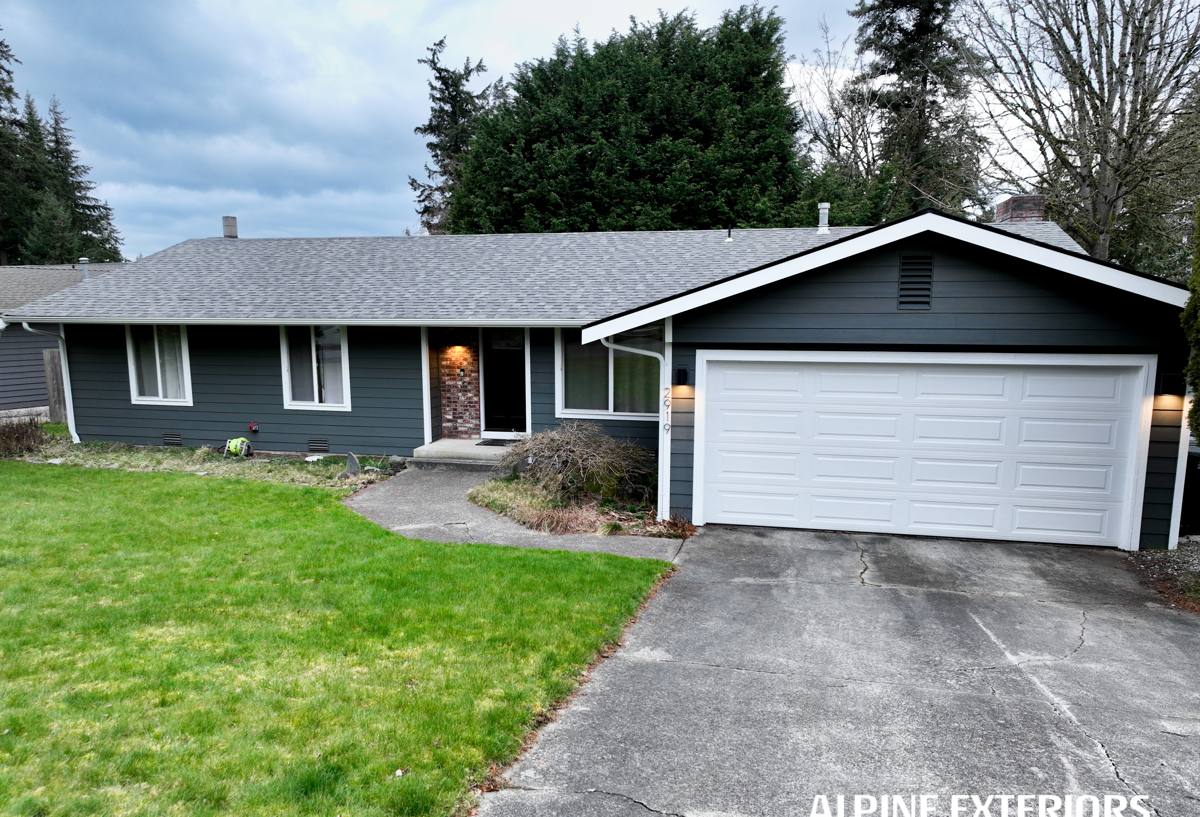
What "Correct" Siding Installation Actually Means
Siding installation is often talked about like it's just cutting boards and nailing them up. The material matters, but the installation details determine whether that material performs for 30+ years or starts failing in five. For a Lynnwood home, a handful of details matter more than most:
Weather-Resistive Barrier and Flashing
Every wall needs a continuous drainage plane behind the siding — a weather-resistive barrier lapped correctly, with flashing at every window, door, and penetration that directs water back out instead of behind the cladding. In a climate with this much sustained rain, gaps or shortcuts here are what eventually show up as rot in the sheathing, not just a cosmetic issue on the siding itself.
Fastener Schedule and Placement
Fiber cement siding has a specific nailing pattern for a reason — fastener spacing, placement relative to the panel edge, and nail type all affect how the board handles wind load and expansion. Under-fastened or incorrectly placed nails are a common source of call-backs, and they're invisible from the ground until a board starts to work loose.
Joints, Butt Seams, and Caulking
Butt joints are where wind-driven rain finds its way in if they aren't detailed properly — either shiplapped, backed with flashing, or sealed with the right sealant rated for the exposure. On a house that takes rain from the side more than straight down, this is not a place to cut corners.
Clearances
Siding installed too close to grade, decking, or roof lines traps moisture against the bottom edge of the board. Maintaining proper clearance is one of the simplest things a crew can get right and one of the most commonly ignored.
Why We Install Only James Hardie Fiber Cement
We made a decision a long time ago to install one siding system — James Hardie fiber cement — and not offer vinyl, LP SmartSide, or other engineered wood products as alternatives. That's a deliberate standard, not a sales pitch, and it comes down to how those materials actually perform under sustained moisture exposure like Lynnwood sees.
Fiber cement is cement, sand, and cellulose fiber — it doesn't absorb water the way an OSB-based product can, and it won't soften, swell, or delaminate at cut edges and joints the way engineered wood siding can if a seam isn't perfectly sealed and stays wet for extended periods. It's also non-combustible, which matters more every year given wildfire smoke and ember exposure across the Pacific Northwest, even for homes not near a fire-prone treeline.
James Hardie also builds region-specific product lines — its HZ5 formulation is engineered for cold, wet climate zones like ours, as opposed to a one-size-fits-all board. The factory-applied ColorPlus finish is baked on and warrantied against fading and peeling, which matters on a house that's going to sit under gray Western Washington skies for most of the year — touch-up painting on job-site-finished siding is not something most homeowners want to deal with every few years. Combined with a strong transferable warranty, it's the system we're comfortable standing behind on every job.
Moss, Moisture, and Material Choice
Moss doesn't just grow on roofs. On shaded walls and under eaves in Lynnwood, it will colonize any siding surface that stays damp long enough, and how a material handles that exposure varies a lot.
| Material | Moisture Behavior | Moss/Algae Resistance | Long-Term Maintenance |
|---|---|---|---|
| Vinyl | Doesn't absorb water, but panels can warp or bow with heat and don't stop moisture from reaching sheathing at seams | Textured/matte finishes trap grime and moss spores | Low-cost cleaning, but panels fade and become brittle over time |
| LP SmartSide / engineered wood | Wood-strand core can swell or delaminate if water reaches a cut edge or seam | Organic wood content is more hospitable to moss and mildew if kept damp | Requires vigilant caulk/paint maintenance to keep water out |
| Cedar | Absorbs and releases moisture naturally; prone to cupping and checking | High — organic surface, needs regular treatment | Ongoing staining/sealing required |
| James Hardie fiber cement | Dimensionally stable, doesn't swell or rot from moisture exposure | Factory finish resists staining; smooth surface sheds moss more easily than textured wood-look products | Occasional gentle washing; no repainting needed under warranty |
No siding is moss-proof — anything on a shaded, damp wall will eventually need washing. The difference is what happens underneath the surface after years of that exposure, which is where fiber cement holds up better than wood-based or vinyl systems.
Our Installation Process for Lynnwood Homes
- On-site assessment — we look at sun/shade exposure, tree cover, drainage around the foundation, and the condition of the existing wall assembly before we talk product or price.
- Tear-off and sheathing check — old siding comes off and we inspect the sheathing underneath for rot or existing moisture damage, especially on north- and west-facing walls that see the most sustained dampness.
- Weather-resistive barrier and flashing — a new drainage plane goes on with flashing detailed at every window, door, and penetration before a single piece of siding is hung.
- Hardie installation to manufacturer spec — correct fastener schedule, proper clearances at grade and roof lines, and sealed or shiplapped butt joints throughout.
- Trim and detail work — corners, fascia, and transitions finished to shed water rather than collect it.
- Final walkthrough — we go over the finished job with the homeowner before calling it done.
What Drives Cost on a Lynnwood Siding Project
Every house is different, but a few factors consistently move the price on a siding job in this area:
| Cost Factor | Why It Matters |
|---|---|
| Extent of sheathing repair | Homes with prior moisture damage often need sheathing replaced before new siding goes on — this isn't known until tear-off |
| Home size and wall complexity | More corners, dormers, and trim detail means more labor and cut waste |
| Siding profile | Lap siding, panel siding, and shingle-style Hardie products have different material and labor costs |
| Access | Steep lots, tight side yards, or multi-story walls affect scaffolding and labor time |
| Existing material removal | Removing and disposing of old siding (especially if it's asbestos-era product) adds cost and requires proper handling |
Signs Your Lynnwood Home May Need New Siding
- Persistent moss or dark streaking on north-facing or shaded walls that keeps coming back after cleaning
- Soft spots, bubbling, or visible warping in the siding itself
- Paint that's failing or peeling faster than it should between repaints
- Visible gaps at trim, corners, or butt joints where light or drafts get through
- Rising energy bills without another clear cause, which can point to a failing weather barrier
- Siding that's original to a home built more than 20–25 years ago, especially older wood-based or first-generation composite products
Why Hiring a Crew That Already Works Lynnwood Matters
A lot of siding problems in this area aren't material failures — they're installation shortcuts that didn't matter in a drier climate but matter a lot here. A crew that regularly works Snohomish County homes already knows which walls in a given neighborhood take the worst weather exposure, how local permitting works, and where past crews have historically cut corners on flashing and clearances. That familiarity shows up in fewer surprises during tear-off and a finished job that's actually built for what Lynnwood weather does to a house, not just what a spec sheet says on paper.
If you're weighing a siding replacement or just want a straight answer on whether your current siding is holding up, we're happy to take a look. Fill out the form below for a free, no-pressure estimate on your Lynnwood home.