 Everett
 Why Lynnwood Roofs Take a Different Kind of Beating
Lynnwood sits close enough to Puget Sound and far enough into the Snohomish County lowlands that its roofs deal with a mix of problems most drier climates never see. Wind off the Sound drives rain sideways during winter storms, working it up under shingle tabs and around flashing that would stay dry in a straight-down rain. Salt-tinged air moving inland accelerates corrosion on exposed fasteners, flashing, and vent caps faster than homeowners expect. And because the wet season here runs long — often October through May with only short breaks — roofs rarely get a real chance to dry out between storms.
That combination matters when you're dealing with storm damage specifically. A missing shingle or a bent flashing piece that might sit fine for a season in a dry climate becomes an active leak path in Lynnwood within a few storm cycles, because the next round of driving rain is never far off. Repairs here need to account for that reality, not just patch the visible damage and move on.
Common Signs of Storm Damage in This Area
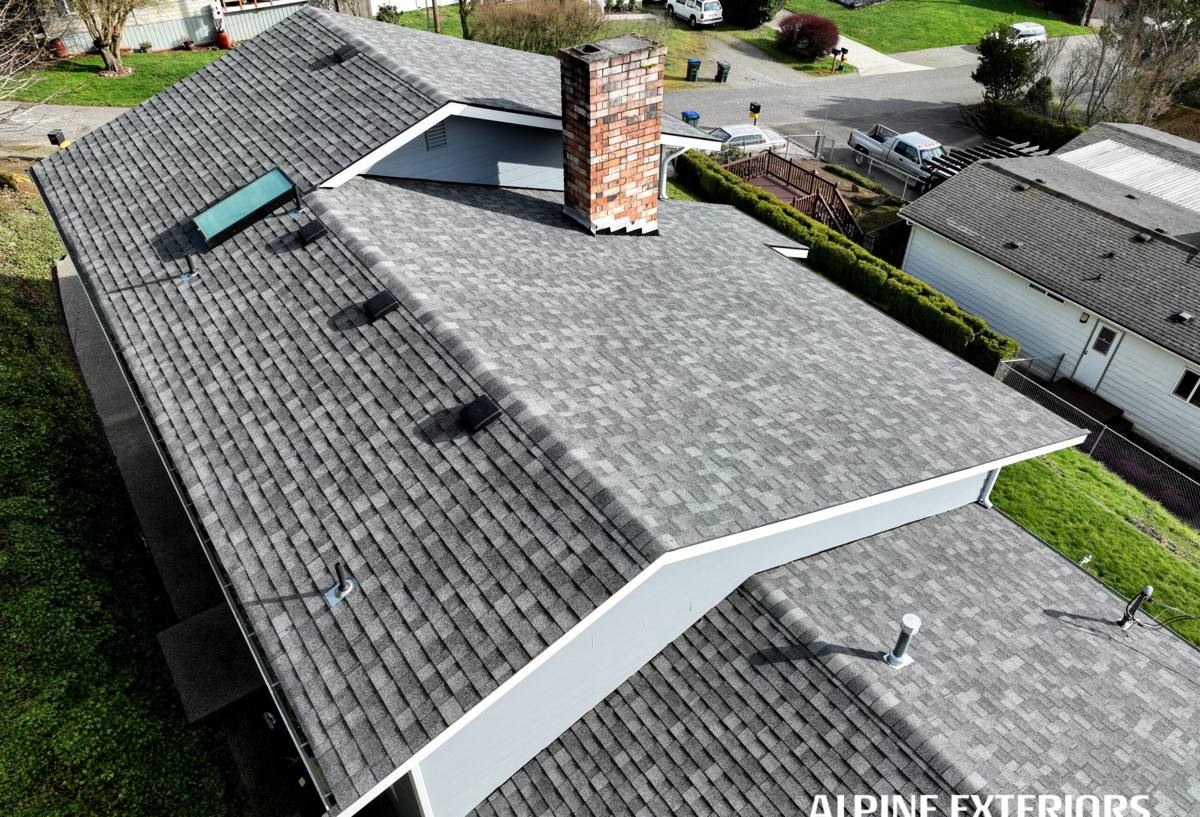
After a windstorm or a heavy rain event, most storm damage isn't dramatic. It's rarely a roof torn open — it's smaller, easier-to-miss failures that turn into bigger problems if they sit through another storm or two. Homeowners in Lynnwood should walk the property (from the ground — we don't recommend getting on a wet, sloped roof yourself) and look for:
- Shingles that look lifted, curled, or creased differently than the surrounding roof
- Granules collecting in gutters or at downspout outlets after a storm
- Bent, lifted, or missing flashing around chimneys, skylights, and roof-to-wall transitions
- New or worsening water stains on interior ceilings, especially near exterior walls
- Debris — branches, moss clumps, blown-in material — sitting in valleys or against the roof edge
- Gutters pulled away from the fascia or sagging after heavy wind
- Visible daylight through the attic decking at soffits or ridge vents
Any one of these on its own might be minor. Several at once, or any sign of interior water intrusion, means it's worth having someone look before the next system moves through.
What a Correct Storm Damage Roof Repair Actually Involves
It starts with the decking, not the shingles
A repair that only replaces the surface shingles and ignores what's underneath is a repair that fails again in the next storm. Wind and driving rain damage often affects underlayment and, in worse cases, the roof decking itself — especially where water has been sitting under lifted shingles for a while. A proper repair means pulling back the damaged area far enough to check the decking for soft spots or delamination before anything new goes down.
Flashing gets real attention, not a bead of sealant
A lot of storm-related leaks trace back to flashing, not shingles — around chimneys, skylights, dormers, and wall intersections. It's common for a quick fix to caulk over a flashing problem instead of correcting it. Caulk is not a permanent flashing repair; it degrades, especially with the UV and moisture cycling typical here, and the leak comes back. Correct work means re-forming or replacing the flashing itself so water sheds the way it's supposed to.
Matching materials matters more here than it looks
Because of the long wet season, mismatched or incompatible repair materials show up faster as a problem — different shingle profiles, incompatible underlayment, or fasteners that don't hold up to the moisture and salt-air exposure. We match the repair to the existing roofing system's specifications where possible, and we're upfront when an older roof's materials are discontinued or degraded enough that a patch won't blend or perform well, so you can make an informed call rather than be surprised later.
Our Storm Damage Repair Process
Storm repair work goes better with a consistent process, especially when insurance is involved. Here's how we approach it:
- Inspection and documentation. We assess the full roof, not just the obvious damage point, and photograph what we find. Wind and rain damage is often more widespread than the leak that prompted the call.
- Written scope and estimate. You get a clear explanation of what's damaged, what needs to be repaired versus replaced, and why — before any work starts.
- Temporary protection if needed. If there's an active leak or exposed decking, we can address immediate water intrusion risk while the full repair is scheduled, particularly if another storm is on the way.
- The repair itself. Decking, underlayment, flashing, and shingles or roofing material addressed in that order — surface last, not first.
- Cleanup and final check. Debris, old material, and fasteners cleared from the roof, gutters, and yard, with a final walkthrough so you know exactly what was done.
Repair or Replace? How We Help You Decide
Not every storm-damaged roof needs a full replacement, and not every roof is a good candidate for another patch. The right call depends on the roof's age, the extent of the damage, and how many prior repairs it's already carrying. Here's generally how we think through it:
| Factor | Repair usually makes sense | Replacement is worth considering |
|---|---|---|
| Roof age | Roof is under roughly two-thirds of its expected lifespan | Roof is already near or past its expected service life |
| Extent of damage | Damage is localized to one section or a handful of spots | Damage is spread across multiple slopes or the whole roof |
| Decking condition | Decking underneath is sound once exposed | Decking shows soft spots, rot, or repeated water staining |
| Repair history | This is the first or second repair on the roof | The roof already has several past patches or repairs |
| Material availability | Matching shingles or materials are still available | Existing material is discontinued and won't blend |
We'll walk you through where your roof lands on these factors and give you an honest recommendation — including telling you when a repair is genuinely the smarter, cheaper choice rather than upselling a full replacement.
Working With Your Insurance Company
Many storm damage repairs in this area go through homeowners insurance, and the process goes more smoothly when the documentation is solid from the start. We provide detailed photos, a written scope of damage, and a clear repair estimate that your adjuster can review. We're glad to meet an adjuster on-site if that's useful, and we'll answer questions about the scope of work directly.
What we won't do is inflate a scope or claim damage that isn't there to help push a claim through — that approach tends to create problems for homeowners later, and it's not how we operate. If a claim is denied or only partially covered, we'll still give you a straight answer about what needs to happen and what it costs to do it right, so you can decide how to proceed.
Preventing the Next Round of Damage
Because Lynnwood's wet season is long and storms come through repeatedly rather than as one-off events, a repair holds up much better with a few preventive steps addressed at the same time:
Moss and organic growth
Moss holds moisture against the roof surface and can work its way under shingle edges, which is a common contributor to the kind of localized decking damage that shows up as a "storm" leak but has really been building for a while. Clearing moss and addressing the conditions that let it establish — usually shade and poor drainage — helps a repair last.
Gutters and drainage
A gutter system that's clogged or pulling away from the fascia sends water back up under the roof edge during heavy rain instead of away from the house. If your gutters took damage in the same storm as your roof, it's worth having both addressed together rather than separately.
Attic ventilation
Poor attic ventilation traps moisture, which weakens decking from underneath over time and makes it more vulnerable the next time wind or rain finds a way in. It's a detail that doesn't show up from the ground but matters for how long a repair actually holds.
Why a Crew That Already Works Lynnwood Matters
Storm damage repair isn't generic work. A crew that regularly works Snohomish County roofs knows what driving rain off the Sound does to flashing details, how long moss takes to become a real problem in this climate, and which materials hold up to the salt air and near-constant wet-dry cycling here versus which ones look fine on paper but underperform locally. That local pattern recognition is often the difference between a repair that gets the damage you can see and one that catches the damage you can't — the kind that turns into a bigger leak two storms from now.
It also matters for response time. After a significant windstorm, roofing crews across the region get busy fast. A contractor already working in and around Lynnwood can typically get to an inspection sooner than one dispatching from further away, which matters when there's active water intrusion.
Ready for an Honest Look at the Damage?
If your Lynnwood home has visible storm damage — or you're just not sure whether what you're seeing needs attention — we're happy to take a look. Use the form below to request a free, no-pressure estimate, and we'll give you a straight answer about what's going on and what it takes to fix it right.