 Everett
 Storm Damage Roof Repair in Marysville: What Homeowners Need to Know
Marysville sits close enough to Puget Sound and the Snohomish River delta that homes here take a specific kind of weather punishment year-round: salt-tinged marine air drifting in off the water, wind-driven rain that gets pushed sideways and up under roof edges rather than falling straight down, and a moss season that can run nine months or longer on shaded, north-facing slopes. Add in the occasional windstorm that comes through the Snohomish County lowlands strong enough to lift shingles, snap branches onto a roof, or drive rain sideways under flashing, and you have a climate that's genuinely harder on a roof than the brochure photos of the Pacific Northwest suggest.
Storm damage repair isn't just patching whatever is visibly broken. It's identifying everything the storm actually compromised — including damage that won't show up as an active leak for months — and fixing it in a way that holds up through the next storm, not just the next dry spell. This page walks through what that looks like for a Marysville home specifically.
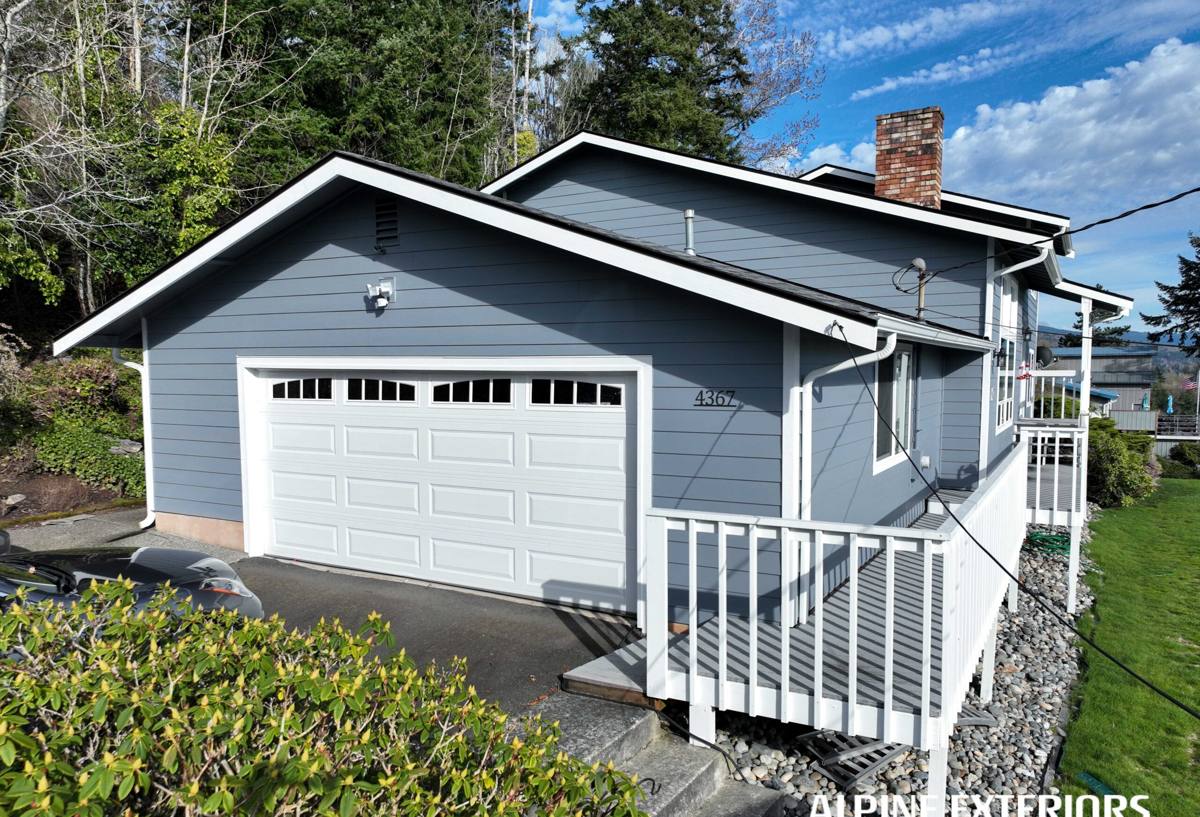
What Counts as Storm Damage on a Marysville Roof
Storm damage covers more than the obvious stuff. After a windstorm or heavy rain event, the damage on a local roof typically falls into a few categories:
- Wind-lifted or missing shingles: Gusts can break the seal strip on asphalt shingles or tear them loose entirely, especially on older roofs where the adhesive has already weakened from years of sun and moisture cycling.
- Flashing displacement: Metal flashing at chimneys, valleys, skylights, and wall intersections can work loose or bend under wind load, opening a gap that wind-driven rain finds almost immediately.
- Impact damage: Branches, debris, or hail can bruise or puncture shingles, crack tile, or dent metal roofing in ways that aren't always visible from the ground.
- Underlayment and deck exposure: Once shingles or flashing are compromised, the underlayment and roof deck underneath are exposed to moisture they were never meant to handle directly.
- Gutter and edge damage: Wind can pull gutters loose or dent drip edge, which changes how water sheds off the roof and can redirect it somewhere it shouldn't go.
The tricky part is that a lot of this damage doesn't announce itself with an obvious interior leak right away. Water can travel along the underlayment or framing for weeks before it shows up as a stain on a ceiling, by which point it's often caused more damage than the original storm did.
Why Delayed Damage Is Common Here
In a drier climate, a small gap in flashing might sit unnoticed for a long time without causing real harm. In Snohomish County's wetter climate, that same gap is exposed to rain far more often, so minor storm damage tends to turn into a real problem faster than homeowners expect. That's part of why a prompt post-storm inspection matters more here than it does in places that see less consistent rainfall.
Our Storm Damage Assessment Process
A useful storm damage repair starts with an honest, thorough look at the whole roof, not just the spot where a leak showed up inside the house.
1. Full Roof Walk and Documentation
We physically walk the roof rather than relying on a drive-by look or drone photos alone, because a lot of storm damage — lifted shingle tabs, cracked sealant, displaced flashing — is only visible up close. We document what we find so you have a clear record of the damage, which is useful whether you're paying out of pocket or filing an insurance claim.
2. Checking Beyond the Obvious Damage
We look at flashing, valleys, penetrations, and the roof edges specifically, because that's where storm damage most often starts even when the field of the roof looks fine. We also check the attic or roof deck from underneath where accessible, since that's often where early moisture intrusion shows up first.
3. A Written, Itemized Estimate
You get a clear explanation of what's actually damaged, what needs to be repaired versus what's cosmetic, and a written estimate before any work starts. If a full section needs replacement rather than a patch, we'll explain why — we don't pad scope, and we also won't talk you into a full re-roof when a targeted repair genuinely solves the problem.
What a Correct Storm Repair Actually Involves
A patch job that just covers the visible hole is a short-term fix, not a repair. Doing it right means addressing the damage and the conditions that let it happen.
| Repair Element | What It Involves | Why It Matters in Marysville |
|---|---|---|
| Shingle replacement | Removing and replacing damaged shingles with matching material, properly nailed and sealed | Improperly sealed replacement shingles are one of the most common repeat-leak points in wind-driven rain |
| Flashing repair or replacement | Re-securing or replacing bent, corroded, or displaced flashing at valleys, chimneys, and walls | Salt air accelerates corrosion on lower-grade flashing metal, and most roof leaks in this climate start at flashing, not the open field |
| Underlayment inspection | Checking exposed underlayment for saturation or damage once shingles are pulled back | Wet underlayment left in place traps moisture against the deck and speeds up rot |
| Deck repair | Replacing any water-damaged or soft roof decking found during the repair | Marysville's damp winters mean deck rot can spread further than the original storm damage before it's caught |
| Ventilation check | Confirming attic ventilation wasn't disrupted by the damage or repair | Poor ventilation traps moisture that accelerates both deck rot and moss growth from underneath |
| Gutter and drip edge correction | Re-securing or replacing damaged gutters and edge metal | Misdirected water from damaged gutters is a common secondary cause of siding and foundation moisture problems |
Skipping the underlayment and deck check to save time is the single most common shortcut we see on rushed storm repairs, and it's usually why a homeowner ends up calling about the same area of roof again a year or two later.
Insurance Claims: What's Worth Knowing
Many storm damage repairs are covered under a homeowner's insurance policy, though coverage details vary by policy and by what actually caused the damage. A few things are worth knowing going in:
- Document damage as soon as it's safe to do so — dated photos help support a claim.
- An itemized, written estimate from a local contractor is generally more useful to an adjuster than a vague verbal quote.
- We're glad to meet an insurance adjuster on-site and walk the roof with them, since we're often looking at the same damage from a contractor's perspective rather than a desk-review perspective.
- We won't inflate a scope of work to match an insurance payout — the repair should match what the roof actually needs, not the size of the check.
We're not a public adjuster and don't handle the claim itself, but we'll give you a straight, documented assessment you can bring to your insurer either way.
Why Local Experience Matters for Storm Repair
A crew that works Snohomish County roofs regularly has already seen how salt air corrodes lower-grade fasteners and flashing, how wind-driven rain finds its way under improperly lapped shingles, and which roof slopes hold moss longest through a wet Marysville winter. That's not something an out-of-area or storm-chasing crew picks up in a single job, and it directly affects whether a repair is done with the right materials and details for this specific climate.
It's also worth being cautious after any significant windstorm, when it's common for out-of-area crews to go door to door offering fast, cheap repairs. Some of that work is honest. A lot of it isn't built to last, and a crew that isn't local generally isn't the one you can reach a year later if the repair doesn't hold. Reasonable things to check before hiring anyone for storm repair work:
- Active Washington State contractor license, verifiable with the state
- Current general liability insurance and workers' compensation coverage
- A real, permanent local business address — not just a phone number that routes elsewhere
- Willingness to provide a written, itemized estimate before starting any work
- No pressure to sign same-day or claims of an "insurance deadline" that doesn't actually exist
- A workmanship warranty on the repair itself, not just a reference to the shingle manufacturer's material warranty
Repair vs. Replacement: Making the Right Call
Not every storm-damaged roof needs a full replacement, and not every damaged roof can be safely patched. The right call depends on the roof's age, how widespread the damage is, and what condition the rest of the roof is in.
When a Targeted Repair Makes Sense
If the damage is limited to a specific area — a section of lifted shingles, one damaged flashing run, an isolated impact spot — and the rest of the roof is in reasonably good condition, a targeted repair is usually the honest and cost-effective answer.
When Replacement Is the More Honest Recommendation
If the roof was already near the end of its service life, if storm damage is spread across multiple areas, or if repeated past repairs have left a roof with a patchwork of different materials and ages, a full replacement can end up being more cost-effective than chasing repairs on a roof that's already failing in multiple places. A contractor who's honest with you will tell you which situation you're actually in, rather than defaulting to whichever option is more profitable for them.
Get a Straightforward Storm Damage Assessment
If your Marysville home has visible storm damage — or you're just not sure after a recent windstorm and want a professional set of eyes on it before a small problem becomes a ceiling stain — we're happy to come take a look. We'll walk the roof, document what we find, and give you a clear, written estimate with no pressure to sign anything on the spot. The estimate is free, and there's no obligation either way.