 Everett
 Metal Roofing in North Everett: Built for the Weather This Neighborhood Actually Gets
North Everett sits close enough to Port Gardner Bay and Puget Sound that salt-laden air is a daily fact of life, and its mature tree canopy means shade, moisture, and organic debris stay on the roof longer than they would on an open lot. Add Snohomish County's long, wet winters and the driving rain that comes off the water during a windstorm, and you have a roofing environment that's genuinely harder on a home than it looks from the street. A lot of the neighborhood's housing stock is older too — craftsman bungalows and mid-century homes that were often built with roof systems never designed for this kind of sustained exposure.
Metal roofing holds up well against that combination when it's specified and installed correctly. It sheds heavy rain fast, it doesn't have the granule surface that moss and algae like to root into, and a quality finish resists the salt-air corrosion that eats away at cheaper fasteners and flashing over time. But "metal roofing" isn't one product — the profile, the metal, the coating, and the fastening method all matter, and getting any one of them wrong on a North Everett home means dealing with the same rain and salt exposure with the wrong tool for the job.
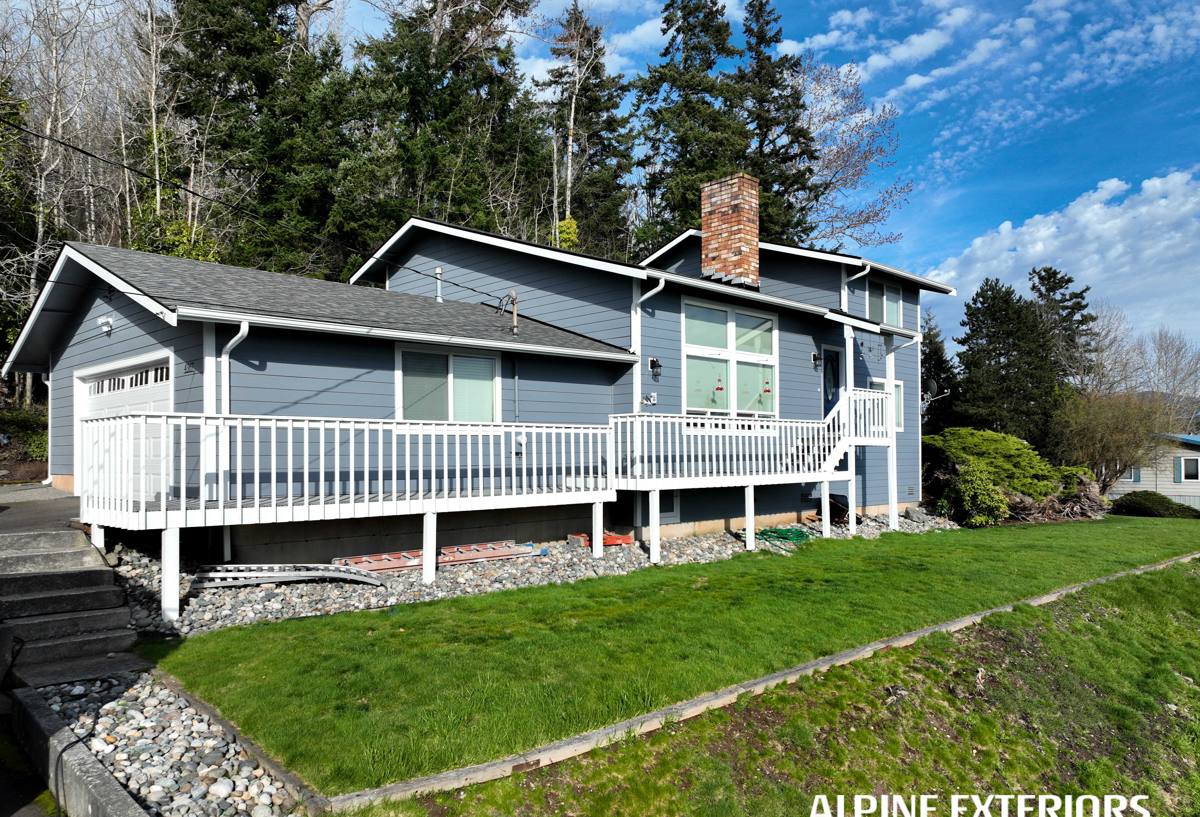
What Salt Air, Rain, and Moss Actually Do to a Roof Here
These three factors don't act alone — they compound each other, and understanding how helps explain why some roofing choices age gracefully in this area and others don't.
Salt Air and Corrosion
Airborne salt from the bay settles on every exterior surface, including the roof. On uncoated or poorly coated metal, and on the cheap fasteners sometimes used to save money, that salt accelerates corrosion at a rate you won't see further inland. Corrosion doesn't just look bad — it's usually where leaks start, because a corroded fastener or flashing seam stops sealing long before it fails outright.
Driving Rain
Wind off the water pushes rain sideways during storms, not just straight down. That means water finds its way under poorly lapped flashing, through fastener penetrations that aren't sealed correctly, and into any gap a calmer climate might get away with ignoring. Roof details that would be fine in a dry climate — a shallow flashing lap, a fastener without a proper washer — become leak points here.
The Long Moss Season
Tree cover keeps roof surfaces shaded and damp for extended stretches, especially on north-facing slopes that get less sun exposure. Moss and algae need exactly that combination to establish, and once moss roots into a granulated shingle surface, it lifts the edges and creates channels for water to travel under the shingle rather than over it. Metal doesn't give moss the same foothold, but it's not moss-proof — debris still needs to be cleared or growth will eventually take hold in seams, valleys, and against any adjoining wall or dormer.
Choosing the Right Metal Roofing System for This Climate
The biggest decision on a metal roof isn't the color — it's the panel profile, because that determines how the roof handles water and how long the fastening system will last.
| Feature | Standing Seam (Concealed Fastener) | Exposed-Fastener (Corrugated/Ribbed) |
|---|---|---|
| How panels attach | Hidden clips under raised seams — no fasteners penetrate the panel face | Screws driven through the panel face, typically with rubber washers |
| Long-term weak point | Seam quality and end-lap details | Washer degradation at each exposed screw over time |
| Salt-air durability | Very good — fewer penetrations exposed to corrosive air | Good, but washers and screw heads need eventual attention |
| Typical upfront cost | Higher | Lower |
| Best fit | Homes prioritizing lowest long-term maintenance and a cleaner architectural look | Budget-conscious projects, outbuildings, simpler rooflines |
Both systems can perform well in North Everett's climate when installed correctly. Standing seam is our default recommendation where salt exposure and low maintenance are the priority, since there's no exposed fastener washer to eventually fail. Exposed-fastener panels are a legitimate, more affordable option, but the tradeoff is that washer condition becomes something to check periodically rather than something you can forget about.
Metal Type and Coating
Steel and aluminum are both used successfully in this area. Aluminum has a natural resistance to salt-air corrosion since it doesn't rust the way steel can, which makes it a strong option for homes closer to the water. Steel, when properly galvanized or galvalume-coated and finished with a quality paint system, also performs well and is generally the more economical choice. Where we draw a hard line is on the paint finish: for a coastal climate like this one, we specify coatings built for long-term UV and salt exposure (PVDF/Kynar-type finishes) rather than a bargain paint system that chalks and fades within a handful of years. It costs more upfront and it's worth it here.
What a Correct Metal Roof Installation Actually Involves
A metal roof is only as good as what's underneath it and how it's flashed. The panels are the visible part; the details underneath are what actually keep water out.
- Deck inspection. On older North Everett homes especially, we check the roof deck for rot or soft spots before anything goes down — moisture that's been trapped under aging shingles for years is common and needs to be addressed, not covered over.
- Tear-off, not overlay. We don't install new metal roofing over old shingles. Overlaying traps moisture, hides deck problems, and voids most manufacturer warranties.
- Underlayment upgrade. A high-temperature synthetic underlayment goes down across the full roof, with self-adhered ice-and-water membrane at eaves, valleys, and any wall or chimney transition — the spots driving rain is most likely to reach.
- Drip edge and eave protection. Properly sized drip edge keeps wind-driven rain from wicking back under the panel edge, which is one of the most common leak points on a poorly installed metal roof.
- Panel installation. Panels are run and fastened to the manufacturer's spec for this wind and rain exposure, with attention to proper overlap and end-lap sealing.
- Flashing at every penetration. Chimneys, vents, dormers, and wall intersections get custom-fabricated flashing — not general-purpose trim pieces stretched to fit.
- Ridge and ventilation. Proper ridge venting keeps attic moisture moving out, which matters in a climate where trapped humidity is a year-round risk, not just a summer one.
Fasteners and Flashing: The Details That Actually Prevent Leaks
Most metal roof failures we see aren't panel failures — they're fastener and flashing failures. In a salt-air environment, that distinction matters more than usual.
- Fastener material: stainless steel fasteners hold up to salt exposure far better than standard coated screws, which is why we don't cut corners here.
- Galvanic corrosion: mixing incompatible metals — for example, certain fasteners or flashing against the wrong panel material — sets up a corrosion reaction that eats away metal from the inside. Matching compatible metals throughout the system is a basic requirement, not an upsell.
- Washer condition: on exposed-fastener panels, the rubber washer is the actual seal. It's a wear item, and it's the first thing we check on any maintenance visit.
- Valley and wall flashing: these are the highest-water-volume points on any roof and need generous overlap, especially given how much rain this area sheds in a single storm.
Moss, Debris, and What Ongoing Maintenance Actually Looks Like
Metal roofing is genuinely lower-maintenance than shingles in this climate, but "lower-maintenance" isn't "no-maintenance." With North Everett's tree cover, debris management is the main ongoing task.
- Clear leaves, needles, and moss buildup from valleys and against any wall or dormer transition at least once a year — more often on heavily shaded roof sections.
- Keep gutters clear so water has somewhere to go once it leaves the roof; a metal roof sheds water fast, and overflowing gutters undo that advantage quickly.
- Check exposed fastener washers periodically if the roof uses that system.
- Trim back tree limbs that overhang the roof to reduce shade, debris, and the risk of physical damage from falling branches during a windstorm.
- Have flashing and sealant at penetrations inspected every few years, since these are the components most likely to need attention before the panels themselves do.
Cost Factors on a North Everett Metal Roof
Every metal roof estimate is specific to the home, but these are the factors that actually move the number.
| Factor | Why It Affects Cost |
|---|---|
| Panel profile | Standing seam runs higher than exposed-fastener due to material and labor for concealed clips and seams |
| Metal type | Aluminum and premium steel coatings cost more upfront than basic galvanized steel |
| Roof complexity | Dormers, valleys, and multiple roof planes add flashing labor regardless of panel type |
| Deck condition | Rot repair found during tear-off is a common add on older homes and is priced once it's actually uncovered |
| Coating quality | A PVDF/Kynar-type finish costs more than a basic paint system but resists this climate's salt and UV exposure far longer |
| Roof access | Steep pitches, limited access, or mature landscaping around the home affect labor time |
How We Approach a Metal Roof Project
We walk the roof and attic in person before quoting anything, because deck condition and existing ventilation change the scope on a lot of North Everett's older homes. From there, we lay out panel and metal options with honest tradeoffs — we're not going to recommend the more expensive system if the simpler one genuinely fits the home and the budget. Once a project is scheduled, tear-off, deck repair (if needed), underlayment, and panel installation typically move through in a matter of days, weather permitting, since rain scheduling around Snohomish County's wetter months is a normal part of the plan, not an afterthought. We clean up thoroughly at the end, including magnetic sweeps for stray fasteners in the yard and driveway.
Why Hiring a Crew That Already Works North Everett Matters
A roofing crew that mostly works drier, inland areas doesn't think about salt-air fastener selection or moss-prone north-facing valleys by default — because they don't have to, most of the time. Working regularly in North Everett means those details aren't an afterthought; they're baked into how we spec every job from the start. We know which parts of a roof in this neighborhood take the worst of the wind-driven rain, which fastener and coating choices actually hold up near the water, and how the tree canopy here changes what a roof needs from its ventilation and flashing. That familiarity shows up in fewer callbacks and a roof that's actually built for the weather it's going to see, not a generic installation dropped into a specific climate.
If you're weighing metal roofing for a home in North Everett, we're happy to walk the roof, look at what you're currently dealing with, and put together a straightforward, no-pressure estimate — just fill out the form below.