 Everett
 Why Mukilteo's Waterfront Climate Is Hard on Siding
Mukilteo sits right on Possession Sound, and that waterfront location changes what a home's exterior has to deal with compared to houses further inland. Salt-laden air moves off the water and settles on exterior surfaces year-round, which accelerates corrosion on fasteners, trim, and any siding material that isn't built to handle it. Add in driving rain that comes in sideways during winter storms, plus a mild, damp climate that keeps north-facing and shaded walls wet for weeks at a stretch, and you have a set of conditions that will find every weak point in a siding system within a few years.
Snohomish County's long wet season — often stretching from October well into spring — means siding here doesn't get much of a chance to fully dry out between rain events. That extended moisture exposure is exactly the environment where moss, algae, and mildew take hold, and it's also where lower-grade materials start to show their limits: swelling, delamination, paint failure, or rot at the edges.
None of this means Mukilteo homes need something exotic. It means the siding and the installation both need to be matched to a coastal, high-moisture environment, not a generic install done the same way you'd do it in a dry inland climate.
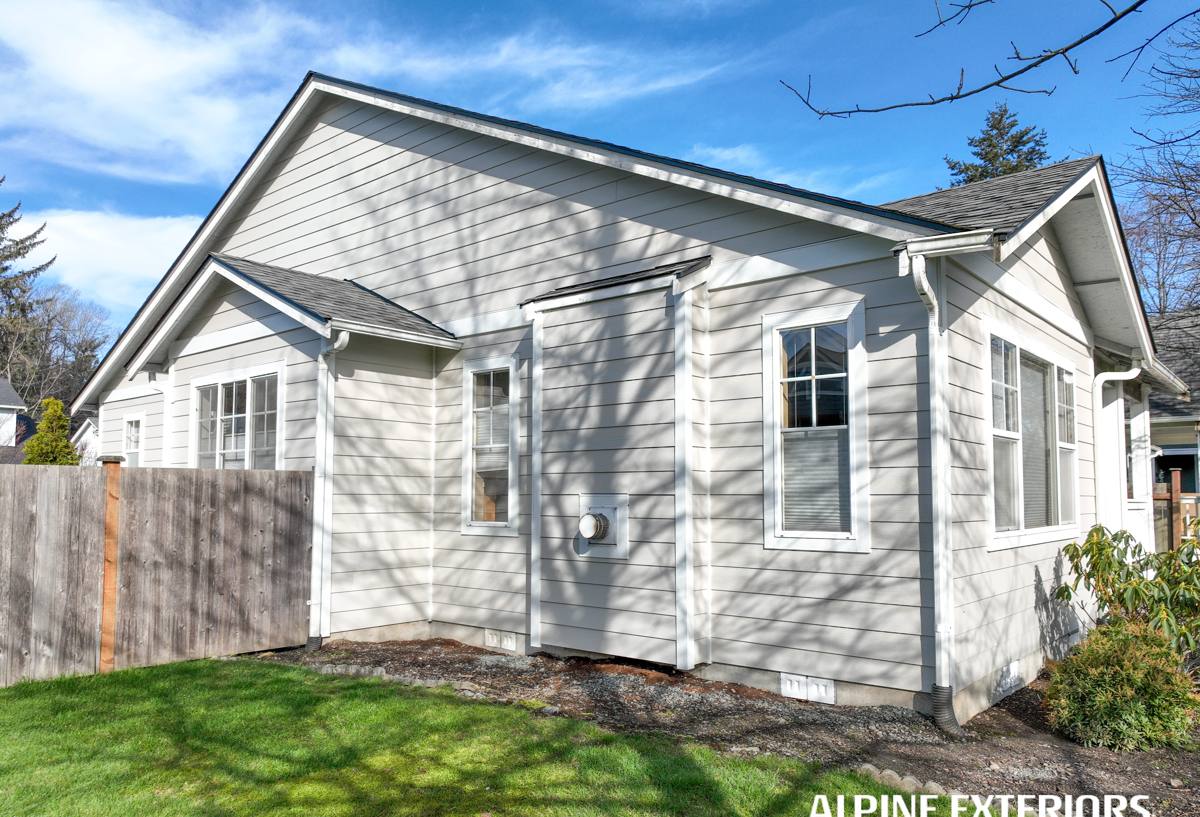
What Correct Fiber Cement Siding Looks Like for This Area
We install James Hardie fiber cement siding exclusively, and for a location like Mukilteo, the product specifics matter. Hardie manufactures its siding in climate-specific formulations under its HZ5 engineering, which is built for the wetter, harsher weather patterns found in the Pacific Northwest. That's a meaningful difference from a one-size-fits-all product — the board itself is engineered with this region's rain and humidity in mind, not just painted to look good.
Non-Combustible and Dimensionally Stable
Fiber cement is made from cement, sand, and cellulose fibers, which makes it non-combustible and far less prone to the swelling, warping, and moisture absorption that affect wood-based products. In a salt-air environment, dimensional stability matters — siding that expands and contracts unevenly opens up gaps at seams and fastener points, which is exactly where water and salt intrusion start causing long-term damage.
ColorPlus Factory Finish
James Hardie's ColorPlus finish is baked on in a controlled factory setting, not brushed or sprayed on-site. That finish is formulated to resist fading and hold up against UV exposure and moisture cycling, which reduces how often a homeowner near the water needs to think about repainting — a real consideration when salt air is already working against any exterior coating.
Fiber Cement vs. Other Siding Materials in a Coastal Environment
| Material | Behavior in Salt Air & Rain | Long-Term Maintenance |
|---|---|---|
| James Hardie Fiber Cement | Engineered for wet climates; resists moisture-driven warping and rot | Occasional washing; factory finish reduces repainting needs |
| Vinyl Siding | Can warp or become brittle with temperature swings; seams are a water entry point | Low upkeep but limited repair options if damaged |
| Cedar or Primed Wood | Absorbs moisture readily; prone to rot and pest issues in damp, shaded areas | Regular repainting/staining and sealant maintenance required |
| LP SmartSide (Engineered Wood) | Wood-based core is more sensitive to sustained moisture exposure than cement-based board | Depends heavily on caulking and finish upkeep to prevent edge swelling |
This is why we standardized on James Hardie rather than offering multiple product lines. We'd rather install one system correctly, matched to this climate, than offer a menu of products with different long-term risk profiles for homeowners who don't spend their days thinking about siding chemistry.
Installation Details That Actually Matter Here
Fiber cement siding performs well when it's installed to manufacturer spec — and it underperforms fast when it isn't. In a location like Mukilteo, a few installation details carry more weight than they would in a drier, more sheltered area:
- Rain screen or drainage gap: A ventilated gap behind the siding lets any moisture that gets past the cladding drain and dry out instead of sitting against the wall sheathing.
- Flashing at every penetration: Windows, doors, hose bibs, and vents all need proper flashing so wind-driven rain can't work its way behind the siding at those transition points.
- Correct fastener spacing and type: Corrosion-resistant fasteners, set to Hardie's specified spacing and depth, prevent the panel movement that leads to cracked caulk lines and water intrusion over time.
- Proper joint and butt seam treatment: Seams need the right gap and sealant approach — sealed too tight or too loose, either mistake creates a failure point.
- Clearance from grade and hardscape: Keeping the bottom edge of the siding at the manufacturer-recommended height above soil, decks, and patios prevents constant wicking moisture in a climate that's already damp most of the year.
None of these are unusual techniques, but they're the difference between siding that lasts decades near the water and siding that starts showing problems in five or six years.
Our Process for Mukilteo Projects
1. On-Site Assessment
We walk the exterior, check the condition of the existing siding and sheathing, and look specifically for the moisture and salt-exposure patterns common on waterfront and near-waterfront properties — north walls, areas under tree cover, and sections exposed to prevailing wind off the Sound.
2. Tear-Off and Substrate Check
Old siding comes off and we inspect the sheathing underneath for hidden rot or water damage before anything new goes up. Covering a compromised substrate with new siding just hides the problem — we address it first.
3. Weather Barrier and Drainage Plane
We install a proper weather-resistant barrier and drainage gap system before siding goes on, giving any incidental moisture a path to escape rather than sitting trapped against the wall.
4. Hardie Installation to Spec
Panels, fasteners, flashing, and joints are installed per James Hardie's published installation guidelines — the same guidelines that keep the product warranty intact.
5. Final Inspection
We walk the finished job checking caulk lines, fastener sets, and flashing details before calling it complete.
Moss, Algae, and Long-Term Maintenance in a Wet Climate
With Snohomish County's extended wet season, moss and algae growth on north-facing and shaded walls is a normal part of life here, not a sign that something was installed wrong. What matters is that the siding material and installation don't make that moisture problem worse. A properly installed Hardie system with good drainage behind it sheds surface growth without the underlying panel absorbing water the way untreated wood or engineered wood products can.
For upkeep, an occasional gentle rinse (avoid high-pressure washing directly into seams) keeps growth from building up, and checking caulking at trim and penetrations every couple of years catches small issues before they become bigger ones.
Cost Factors for a Mukilteo Fiber Cement Project
| Factor | Why It Affects Cost |
|---|---|
| Home size and wall complexity | More corners, gables, and trim detail mean more cutting, flashing, and labor time |
| Existing siding removal | Tear-off and disposal of old material adds time versus a bare-wall install |
| Substrate repair | Rotted or damaged sheathing found during tear-off needs to be replaced before siding goes on |
| Siding profile and accessories | Lap width, trim style, and accent details (e.g., board-and-batten sections) affect material and labor |
| Site access | Waterfront lots with limited access or steep grades can affect staging and labor time |
We give exact numbers only after seeing the specific home — anyone quoting a firm price without an on-site look isn't accounting for what your walls actually need.
Signs a Mukilteo Home May Need New Siding
- Visible warping, bubbling, or soft spots on exterior walls
- Paint that's peeling or blistering repeatedly, even after repainting
- Persistent moss or dark staining that returns quickly after cleaning
- Gaps or cracking at seams, corners, or around windows and doors
- Rising energy bills that may point to compromised insulation behind failing siding
- Visible rust streaking from corroded fasteners or trim
Why Local Experience in Mukilteo Matters
A crew that already works waterfront and near-waterfront homes in Snohomish County knows what salt air and sustained rain do to an exterior over time, and installs accordingly — from fastener choice to drainage detailing. That's different from a general contractor installing siding the same way regardless of where the house sits. For a Mukilteo home, that local pattern recognition is part of what keeps a siding job performing well ten and twenty years down the road, not just on install day.
If you're weighing siding options for a Mukilteo home, we're happy to take a look and walk you through what your specific walls need — no pressure, no obligation. Request a free estimate using the form below.