 Everett
 Why Mukilteo Roofs Wear Differently Than Roofs Further Inland
Mukilteo sits right on Puget Sound, and that waterfront location changes what a roof has to deal with compared to a home a few miles inland in Everett or elsewhere in Snohomish County. Homes on the bluffs and anywhere with an open water view get more direct exposure to wind-driven storms coming off the Sound. Add in the salt-laden air that comes with living near saltwater, and you've got a combination that ages roofing materials and hardware faster than a typical inland roof sees. Layer on the Pacific Northwest's long, wet moss season, and it's easy to see why a "one size fits all" roofing job doesn't hold up as well here as it should.
None of this means a Mukilteo roof needs to be exotic or overbuilt. It means the details that are easy to skip on an easier job — the flashing, the fastener choice, the ventilation balance — are the details that actually determine whether a new roof looks and performs well ten and twenty years down the road, not just on installation day.
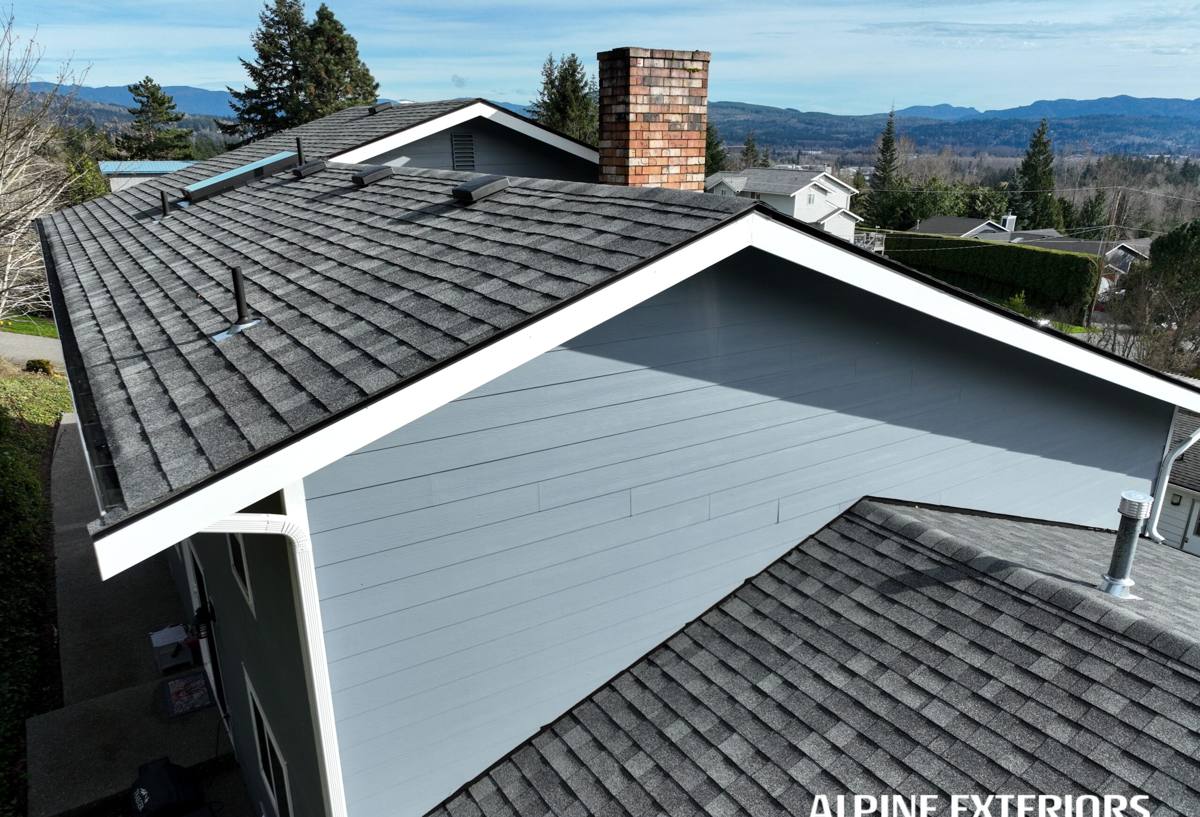
What Salt Air, Driving Rain, and Moss Actually Do to a Roof Over Time
Salt Air and Corrosion
Airborne salt from Puget Sound settles on every exposed surface of a roof, including the metal parts most homeowners never think about: nail heads, flashing seams, gutter hangers, and exposed fastener strips on metal panels. Standard galvanized hardware can start showing surface rust years before an equivalent roof inland would. It's not that the roofing material itself fails — it's that the small metal components holding it together corrode first, and once they go, leaks follow.
Wind-Driven Rain and Water Intrusion
Storms that roll through Snohomish County in fall and winter often bring rain sideways, not straight down. Wind-driven rain gets pushed uphill under shingle edges, into valleys, and around wall-to-roof transitions in ways that vertical rain never tests. A roof that would keep a house bone dry in a calm, steady rain can still leak during a wind event if the underlayment and flashing weren't installed with that kind of exposure in mind.
Moss, Shade, and Trapped Moisture
Mukilteo's long damp season, combined with shaded north-facing slopes and mature tree cover common in this part of Washington, gives moss months at a stretch to establish itself. Moss doesn't just look bad — it holds moisture against the roofing surface long after the rest of the roof has dried, and as it grows it works its way under shingle tabs and lifts them. Over several seasons, that lifting is what opens the door to water intrusion, even on a roof that's otherwise in decent shape.
Signs Your Mukilteo Home Needs a New Roof, Not Another Patch
Repairs make sense when a roof has isolated damage and years of life left. A full replacement makes sense when the roofing system as a whole is wearing out. Here's what tells us which situation we're looking at:
- Granules collecting in gutters and downspouts, especially after storms
- Shingles that are curling, cupping, or losing their tabs
- The roof is at or past the expected service life of its material
- Soft or spongy spots when walking the roof, or sagging visible from the ground
- Daylight visible through the roof deck from inside the attic
- Leaks that keep coming back in the same spot despite prior repairs
- Moss or algae established across a large share of the roof, not just isolated patches
- More than one layer of shingles already on the roof, limiting further repair options
If you're only seeing one or two of these, a repair may still be the right call. If several apply at once, patching usually ends up costing more over time than replacing the roof once and doing it right.
What a Correct New Roof Installation Includes in This Climate
Tear-Off and Deck Inspection
A proper job starts with removing the old roofing down to the deck, not layering over it. That's the only way to actually see the plywood or plank decking underneath, check for rot or soft spots from past leaks, and replace any damaged sections before new material goes down.
Underlayment and Water Barrier Detail
Given how much wind-driven rain this area sees, underlayment choice and placement matter more here than in a drier climate. A self-adhered ice-and-water barrier at eaves, valleys, and low-slope transitions gives an extra line of defense exactly where wind-blown rain is most likely to find a way in.
Flashing That's Built for Salt Air
Flashing around chimneys, walls, skylights, and valleys should be corrosion-resistant material, properly lapped and sealed rather than just caulked over gaps. This is one of the areas where cutting corners doesn't show up as a problem for a year or two — it shows up later, which is exactly why it's worth getting right the first time.
Fasteners and Hardware
In a salt-air environment, the fasteners and exposed hardware matter as much as the roofing material itself. We use corrosion-resistant fastener types appropriate to the material and exposure rather than defaulting to whatever is cheapest, because replacing rusted-out fasteners later means pulling roofing material to get back to them.
Balanced Ventilation
Intake at the eaves and exhaust at the ridge need to be sized to actually move air through the attic. Unbalanced ventilation traps moisture, which feeds both premature material wear and the kind of damp, shaded conditions moss thrives in.
Choosing a Roofing Material for Mukilteo Conditions
There's no single "best" material for every home — it depends on your roof's slope, your home's style, your budget, and how much long-term maintenance you want to take on. Here's how the common options stack up against the specific conditions Mukilteo homes face:
| Material | Salt Air / Corrosion Performance | Moss Resistance | Typical Lifespan |
|---|---|---|---|
| Architectural asphalt shingle | Good, when paired with corrosion-resistant flashing and fasteners | Moderate; benefits from zinc/copper strips and periodic cleaning | Roughly 25-30 years |
| Standing seam metal | Very good with quality coatings; hardware selection matters most | Good; smooth surface sheds moss more easily | Roughly 40-50+ years |
| Cedar shake | Fair; needs consistent maintenance in a damp climate | Lower without regular treatment and cleaning | Roughly 20-30 years with upkeep |
| Synthetic/composite shingle | Good; resists corrosion since the material itself doesn't rust | Moderate to good depending on product | Roughly 30-50 years |
For most Mukilteo homes, the deciding factor isn't which material is theoretically best — it's matching the material to your roof's exposure, your home's look, and how much upkeep you're realistically going to keep up with over the years.
Cost Factors for a Mukilteo Roof Replacement
We don't quote prices without seeing the roof, because too many variables affect the real cost. What we can tell you upfront is what actually moves the number up or down:
| Factor | Why It Matters Here | Effect on Price |
|---|---|---|
| Roof size and number of layers to remove | More tear-off labor and disposal, especially on older homes with multiple layers | Higher |
| Roof pitch and access | Steep or hard-to-access roofs near bluffs or tight lots take longer and need more safety setup | Higher |
| Deck condition underneath | Rot from long-term leaks or moss damage means replacing sections of decking before new roofing goes on | Higher |
| Material choice | Asphalt, metal, cedar, and synthetic products all carry different material and labor costs | Varies |
| Flashing and ventilation upgrades | Bringing older flashing and ventilation up to current standards adds labor but reduces future risk | Moderate |
Our Process, Start to Finish
- Free on-site inspection of your current roof, attic ventilation, and any signs of past leaks or moss damage
- Honest recommendation on repair versus replacement, with material options suited to your home and budget
- Written estimate before any work begins, with no pressure to decide on the spot
- Permitting handled before the crew shows up, so there are no surprises mid-project
- Tear-off, deck inspection, and repair of any damaged sheathing found underneath
- Installation of underlayment, flashing, ventilation components, and final roofing material
- Full site cleanup, including a magnetic sweep for stray fasteners
- Final walkthrough and warranty paperwork so you know exactly what's covered and for how long
Keeping Moss and Moisture Under Control After the New Roof Goes On
A new roof done right will resist moss and moisture far better than an old one, but this climate doesn't give any roof a free pass long-term. Zinc or copper strips near the ridge can help suppress moss regrowth as rainwater washes trace metal down the roof surface. Keeping nearby tree branches trimmed back reduces the shade and debris that give moss a foothold in the first place. Clean gutters matter too — a clogged gutter backs water up under the lowest course of roofing, which is exactly the kind of slow, hidden damage that's hard to catch until it's already a leak. None of this is complicated, but it does need to actually happen on a schedule, not just get mentioned at the time of installation.
Why It Matters to Hire a Crew That Already Works in Mukilteo
A roofing crew that only occasionally works this close to Puget Sound is guessing at some of these details. A crew that works Mukilteo and the surrounding Everett area regularly already knows which flashing details tend to fail first in this specific exposure, which fastener grades hold up and which don't, and how local permitting works before the first ladder goes up. That familiarity doesn't show up as anything flashy — it shows up ten years later as a roof that's still doing its job instead of one that's failing in exactly the spots this climate is hardest on.
It also means we're not disappearing after the invoice is paid. We're an Everett-based crew working this same stretch of Snohomish County year after year, which is a real accountability check that an out-of-area or storm-chasing outfit simply doesn't have.
If your Mukilteo home's roof is showing its age, or you just want an honest opinion on whether it's a repair situation or a replacement situation, we're glad to take a look. Use the form below to request a free, no-pressure estimate.