 Everett
 Mukilteo's Waterfront Climate Is Harder on Siding Than It Looks
Mukilteo sits right on the water, and that waterfront position is part of what makes it a great place to live — and part of what makes siding replacement here different from a job ten miles inland. Homes close to Possession Sound and the ferry crossing take on a steady mix of salt-laden air, wind-driven rain, and long stretches of shade and moisture that inland Snohomish County homes simply don't see as often. None of that is dramatic on any single day. It's the cumulative effect, year after year, that separates siding that lasts thirty-plus years from siding that starts failing in year twelve.
Salt air is corrosive to exposed metal fasteners and trim, and it accelerates the breakdown of paint films and caulk joints faster than a typical inland exposure. Driving rain off the water doesn't fall straight down — it hits siding at an angle, which means laps, seams, and butt joints that would stay dry on a sheltered wall take on real moisture load on a Mukilteo exterior. And the region's long, mild, wet fall-through-spring stretch keeps north- and west-facing walls damp for weeks at a time, which is exactly the environment moss, algae, and mildew need to take hold.
None of this means siding is doomed here. It means the product and the installation details matter more in Mukilteo than they do in a lot of places, and it's why we're specific about both.
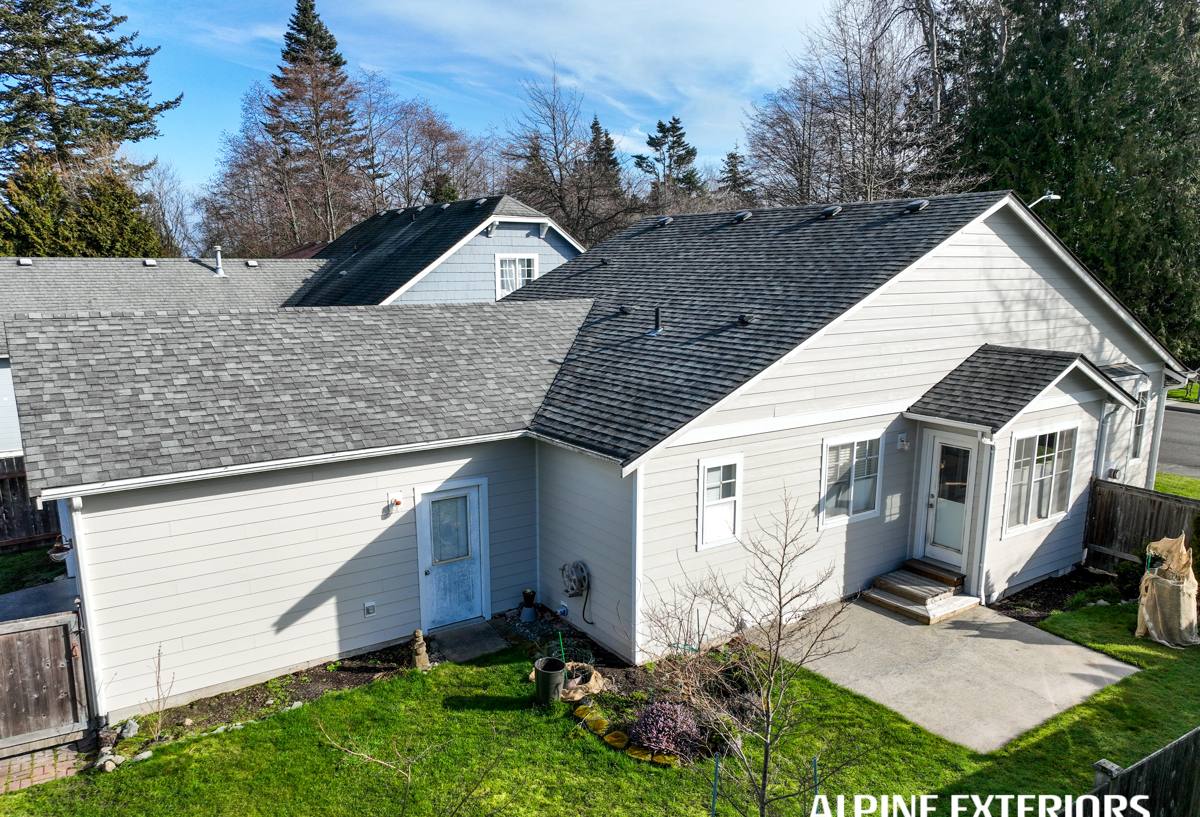
What "Correct" Siding Replacement Actually Involves
A siding replacement is not just stripping old material off a wall and nailing up new panels in the same pattern. Done right, it's a full envelope job. That distinction matters most in a climate that punishes shortcuts.
Tear-Off and Inspection
Old siding comes off in sections so the crew can inspect sheathing, framing, and existing flashing as they go, rather than guessing at wall condition from the outside. This is where hidden problems — soft sheathing around old window flashing, rot at deck ledgers, gaps in old house wrap — get found and fixed before anything new goes on. Covering up a wet wall with new siding is one of the most common ways a "new" exterior fails early.
Weather-Resistive Barrier and Flashing
A correctly lapped weather-resistive barrier (house wrap or equivalent), integrated flashing at every window, door, and penetration, and proper kick-out flashing where roof lines meet walls are what actually keep water out of the wall assembly. The siding itself is the second line of defense, not the first — a detail that's easy to shortcut and impossible to verify once the wall is closed up.
Rainscreen or Furring Where It Counts
On walls with heavy rain exposure — which describes a lot of Mukilteo waterfront and view-facing elevations — a drainage gap behind the siding gives bulk water a way out and lets the wall assembly dry between wet spells. This one detail does more for long-term moisture performance in this climate than almost anything else in the job.
Correct Fastening and Clearances
Manufacturer-specified nailing patterns, proper ground clearance, and gaps at inside/outside corners aren't cosmetic preferences — they're what keeps siding from trapping water, buckling, or cracking as the house moves seasonally.
Why We Install Only James Hardie Fiber Cement
We standardized on James Hardie fiber cement siding for every job we do, including in Mukilteo, and we won't install vinyl, LP SmartSide, or other fiber cement or wood-composite alternatives. That's a deliberate choice, not a brand preference.
Fiber cement is non-combustible, which matters in a region where wildfire smoke and ember exposure have become a real seasonal concern even west of the Cascades. It doesn't absorb water the way engineered wood products can, which matters a great deal in a climate with this much sustained moisture exposure. And Hardie's HZ5 product line is specifically engineered for the freeze-thaw and moisture conditions of the Pacific Northwest, with a factory-applied ColorPlus finish that's baked on rather than field-painted — which means better color and coating adhesion in a marine climate that's tough on paint film, and a longer stretch before repainting is ever needed.
Vinyl siding can warp and deform in direct sun exposure on south- and west-facing walls, and its seams and J-channels give wind-driven rain more places to work its way behind the cladding over time. Wood-composite products need diligent, ongoing maintenance of cut edges and joints to keep moisture out — maintenance that's easy to fall behind on. Fiber cement, installed correctly, holds its shape, holds its finish, and doesn't feed the moss and mildew that thrive in shaded, damp conditions the way some other claddings do. For a waterfront community with this much sustained moisture and salt exposure, that durability profile is the whole point.
How Siding Materials Actually Hold Up in This Climate
| Factor | James Hardie Fiber Cement | Vinyl Siding | Wood/Composite Siding |
|---|---|---|---|
| Salt air exposure | Resistant; factory finish holds up well | Can chalk and fade faster near water | Finish breaks down faster; needs recoating |
| Wind-driven rain | Dense material sheds water; seams engineered for laps | More seams/channels for water intrusion | Vulnerable at cut edges and joints if not sealed |
| Moss/algae growth | Low organic content resists growth; cleans up well | Can trap moisture behind panels, feeding growth | Organic material is a food source for moss/mildew |
| Fire exposure | Non-combustible | Combustible, can melt/deform near heat | Combustible |
| Long-term maintenance | Occasional wash; recoat on a long cycle | Low maintenance but limited repair options if damaged | Regular inspection/recoating of joints and edges |
The Everett Siding Replacement Process, Step by Step
When we take on a siding replacement in Mukilteo, the process follows the same sequence every time, because skipping steps is how callbacks happen.
- On-site assessment. We walk the exterior, check for soft spots, note sun and rain exposure by elevation, and look at existing flashing and trim condition.
- Scope and estimate. A written estimate that spells out material, prep work, flashing details, and timeline — no vague allowances.
- Tear-off and sheathing inspection. Old siding removed section by section; any rot or moisture damage addressed before moving forward.
- Weather barrier and flashing install. New house wrap, window and door flashing, and kick-out flashing installed to manufacturer spec.
- Rainscreen application where called for. Furring strips or a drainage mat on heavy-exposure elevations.
- Hardie siding installation. Panels, trim, and corners installed to James Hardie's fastening and clearance specifications.
- Caulking, trim, and final detailing. Paintable joints sealed, transitions finished, site cleaned up.
- Final walkthrough. We go over the finished work with the homeowner before calling the job done.
Signs Your Mukilteo Home May Need Siding Replacement
Some warning signs are obvious; others get written off as "just needs a wash." In this climate, it's worth taking a closer look at:
- Persistent moss or dark streaking on north- or west-facing walls that comes back within weeks of cleaning
- Soft or spongy spots when you press on the siding, especially near the bottom courses or around windows
- Paint that's peeling, bubbling, or chalking heavily rather than just fading evenly
- Visible warping, buckling, or gaps opening up between panels or at corners
- Rising interior heating bills with no other obvious cause, which can point to a compromised wall assembly
- Musty smell near exterior walls or visible staining on interior drywall near windows
- Cracked or missing caulk at trim, window, and door edges
Any one of these on its own might just need a repair. Several together, especially on a wall that takes direct wind and rain, are usually a sign the siding system itself is losing the fight against the climate.
Moisture Management Details That Matter Most Near the Water
On a typical inland job, a few flashing and drainage details are important. On a Mukilteo waterfront or view-lot property, they're the difference between siding that performs for decades and siding that fails at the seams within a handful of years.
Kick-out flashing where a roofline meets a wall is one of the most commonly missed details in siding work generally, and one of the most damaging to skip in a high-rain-exposure area — without it, roof runoff dumps directly down behind the siding at that intersection every time it rains. Window and door flashing needs to be lapped correctly, shingle-style, so water is always directed outward and down, never trapped behind the barrier. And a drainage plane behind the siding gives any moisture that does get past the cladding a path to drain and dry out, instead of sitting against the sheathing.
These aren't upgrades — they're baseline requirements for a wall to perform correctly in this kind of exposure. We treat them that way on every Mukilteo job, not just the ones on the water.
What Affects Siding Replacement Cost in Mukilteo
| Cost Factor | Why It Matters Here |
|---|---|
| Home size and wall elevations | Waterfront and view-lot homes often have more high-exposure wall area needing extra detailing |
| Sheathing/framing condition | Moisture-damaged wood found during tear-off adds repair scope before new siding goes on |
| Rainscreen requirement | Heavy rain-exposure elevations may need a drainage gap, adding labor and material |
| Trim and detail complexity | Corners, window surrounds, and multiple rooflines each add flashing and cutting time |
| Access and site conditions | Slopes, retaining walls, and tight waterfront lots can affect staging and scaffolding needs |
| Siding profile and color selection | Different Hardie profiles and ColorPlus colors carry different material costs |
We don't quote a job without walking the property first, because two homes with the same square footage can have very different scopes once you account for wall exposure and existing condition.
Why It Matters That We Already Work Mukilteo
A crew that's replaced siding on other homes in this specific stretch of Snohomish County isn't guessing at how much rain exposure a west-facing wall gets off the Sound, or how quickly moss comes back on a shaded north elevation here versus somewhere ten miles inland. That local pattern recognition shows up in small decisions — where to add extra flashing, which elevations need a rainscreen even if the rest of the house doesn't, how tight to run caulk joints given the humidity swings.
It also means we're not learning Snohomish County permitting and inspection expectations on your project. We know what inspectors here are looking for, and we build to that standard from the first day of tear-off, not just at the final walkthrough.
If your Mukilteo home's siding is showing signs of wear, or you're planning ahead for a replacement, we're happy to walk the property, look at your specific exposure and wall conditions, and put together a straightforward, no-pressure estimate using the form below.