 Everett
 Building New in Marysville: Why Window Choice and Installation Matter More Here
Marysville sits close enough to Puget Sound and the Snohomish River delta that new homes take on a specific mix of weather stress: salt-laden air drifting in off the water, long stretches of driving rain pushed sideways by wind, and a wet, shaded season that lets moss and algae take hold on anything that stays damp. None of that is dramatic on its own, but stacked up year after year it's exactly the kind of slow, cumulative exposure that finds every weak point in a window installation. On a new build, you only get one clean shot at doing this correctly before siding, trim, and interior finishes close everything up. That's the case for treating new-construction windows as a system decision, not a fixture pick.
New-construction windows differ from replacement windows in one key way: they come with a nailing fin and are installed into a rough opening before the weather-resistive barrier and siding go on, rather than being retrofitted into an existing frame. That gives us full access to flash the opening properly, which is the single biggest factor in whether a window leaks in year one or stays dry for decades. In a climate like Snohomish County's, that flashing detail is not optional trim work — it's the actual waterproofing.
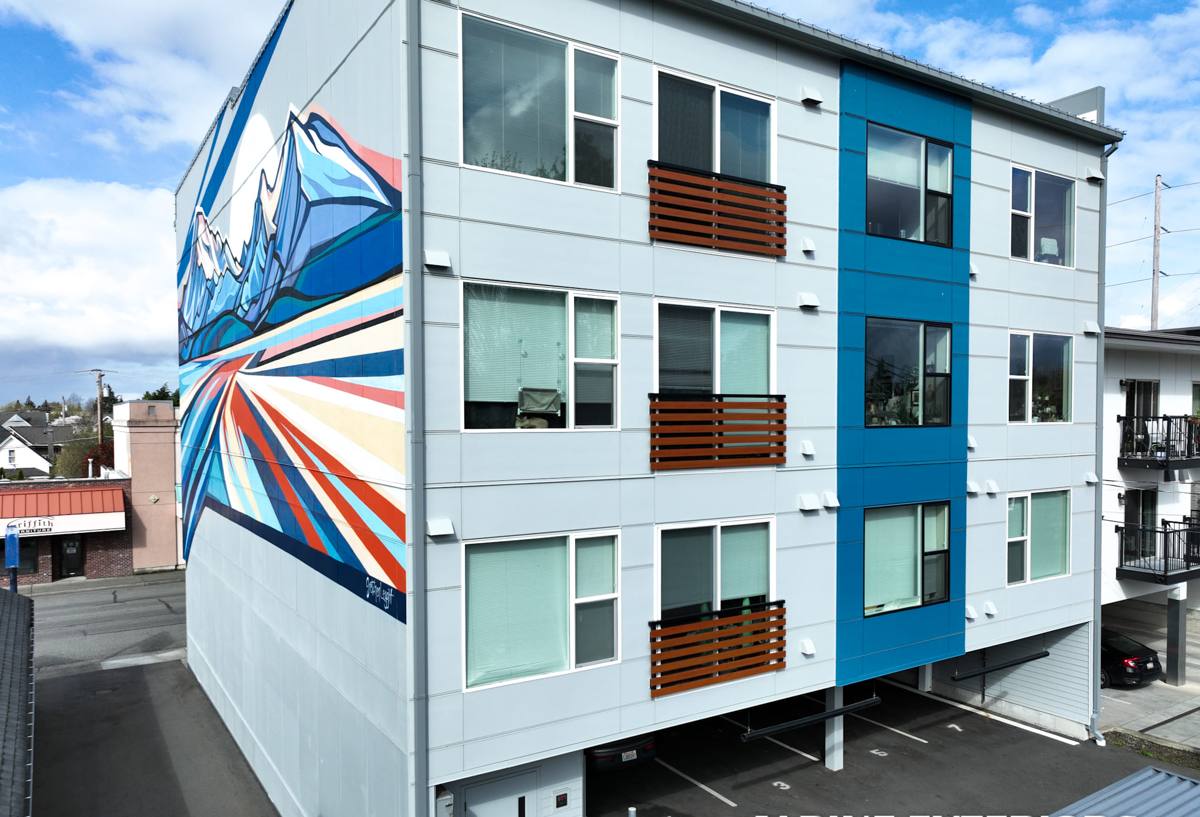
What Marysville's Climate Actually Demands From a New Window
Salt Air and Corrosion
Homes closer to the water, tideflats, and lower river areas around Marysville see more airborne salt than inland Snohomish County. Salt exposure accelerates corrosion on unprotected fasteners, cheap hardware, and lower-grade aluminum components. It won't destroy a window quickly, but over ten or fifteen years it will pit hardware, streak finishes, and stiffen locks and rollers if the components weren't specified for coastal-adjacent exposure.
Driving, Wind-Driven Rain
Rain in this region rarely falls straight down for long. Wind off the Sound and the open flats around Marysville pushes rain sideways into wall assemblies, which means water pressure at the window opening isn't just gravity — it's wind load too. A flashing detail that would be fine in a calmer climate can fail here if it relies on gravity alone instead of layered, lapped drainage.
Moss, Algae, and a Long Wet Season
Marysville gets a long stretch of overcast, damp months where anything that holds moisture stays wet for days at a time. That's what feeds moss and algae growth on sills, trim, and shaded elevations. It's mostly a cosmetic and maintenance issue on the window itself, but it's a real problem if water is allowed to pool on a sill or sit against wood trim, because sustained dampness is also what accelerates rot at any point the assembly wasn't sealed correctly.
What a Correct New-Construction Window Installation Involves
On a new build, the window installation is really a sequence of small decisions that either work together or leave a gap. We follow this order on every opening, regardless of window brand:
- Rough opening check. Confirm the opening is square, level, and sized correctly before the window ever shows up on site — fixing framing after the fact is expensive and it's the root cause of a lot of bad installs.
- Sill pan flashing. A sloped, sealed pan under the window opening so any water that gets past the window has a built-in path back out, rather than sitting on raw sheathing.
- Weather-resistive barrier integration. The house wrap or building paper is lapped and taped so it sheds water down and over the window flanges, not behind them — this is where most leaks actually originate if it's rushed.
- Window set and fastening. Shimmed plumb, level, and square, fastened per the manufacturer's schedule so the frame doesn't rack or bind over time.
- Flashing tape at the flanges. Sides first, then top, in the correct shingle-lap order so every layer drains onto the one below it.
- Interior and exterior sealant. Backer rod and sealant at the right joints — sealing everything, including spots that need to stay open for drainage, traps water instead of releasing it.
- Final operation and air-seal check. Every sash opens, closes, and locks cleanly, and the perimeter is air-sealed on the interior side before insulation and drywall close it up.
Skip or rush any one of those steps and the window itself becomes almost irrelevant — even a premium unit will leak if it's flashed into the wall incorrectly. That's why we treat installation sequencing as the actual product, with the window as one component of it.
Choosing Window Specs for a Marysville Build
| Factor | Why It Matters Locally | What We Recommend |
|---|---|---|
| Frame material | Salt-adjacent air and constant moisture cycling stress lesser hardware and finishes over time | Vinyl or fiberglass frames with corrosion-resistant, marine-rated hardware |
| Glazing / gas fill | Consistent cool, damp temperatures make efficient glazing worth the upfront cost over the home's life | Dual-pane, low-E, argon-filled as a baseline for new construction |
| Sill design | Long wet seasons mean water needs to shed, not pool, on horizontal surfaces | Sloped sills with clear weep paths, kept clear during and after install |
| Weatherstripping | Wind-driven rain tests the seal at every seam, not just the glass | Multi-point compression seals rated for wind-driven rain exposure |
| Exterior finish | Shaded, damp elevations grow moss and algae fastest | Finishes and colors that are easy to rinse and don't trap grime in texture |
Common Mistakes We See on New Builds — and Avoid
- Skipping or shortcutting sill pan flashing because "the window has its own weep system"
- Taping the weather-resistive barrier out of sequence so water is directed behind the flange instead of over it
- Over-sealing a window perimeter and blocking the drainage path it was designed to have
- Using general-purpose fasteners instead of corrosion-resistant hardware near the water or tideflats
- Setting a window slightly out of square because the rough opening wasn't checked first
- Letting sills sit against wood trim with no gap, which traps moisture and speeds rot and moss growth
Our Process for Marysville New-Construction Projects
We work directly with builders, general contractors, and owner-builders on new construction, and the process is straightforward:
- Plan review. We look at window schedules and rough opening sizes before framing is finalized, so there are no surprises when windows arrive.
- Coordination with the framing and siding timeline. Window installation happens at a specific point in the build sequence — too early and the opening isn't ready, too late and it holds up siding and interior trades.
- Flashing and install per manufacturer spec. We follow the window manufacturer's documented installation instructions, which is also what keeps the manufacturer's warranty valid.
- Walkthrough before closing the wall. Every opening gets checked for square, seal, and operation before insulation and siding cover it up — this is the last easy chance to catch a problem.
- Punch list and final check. Once siding and trim are complete, we do a final pass on operation, locks, and visible sealant lines.
Why Hire a Crew That Already Works Marysville
Window installation on paper looks the same everywhere, but the failure points shift with the climate. A crew used to drier inland conditions may not think twice about a shortcut that's genuinely fine in that environment — but the same shortcut on a Marysville lot exposed to Sound-driven wind and rain can turn into a leak two winters later. We work new-construction and siding projects across Everett and Snohomish County, including Marysville, so the flashing sequence, hardware choices, and sill details we use aren't generic — they're set up for what actually happens to a window here over a Pacific Northwest winter and a mossy, damp spring. That local repetition is what keeps callbacks low and keeps builders coming back to us for the next phase.
Maintenance After Move-In
A correctly installed new-construction window in this climate is largely maintenance-free, but a few habits extend its life:
- Rinse sills and tracks periodically, especially on shaded north- or west-facing elevations prone to moss and algae buildup
- Keep weep holes clear of debris so water can drain as designed
- Check exterior sealant lines yearly for cracking or separation, particularly after a hard winter
- Operate locks and hardware a few times a season so moving parts don't seize from disuse in the damp months
If you're planning a new build or major addition in Marysville and want windows installed by a crew that treats flashing and sequencing as seriously as the window itself, we're happy to walk the plans with you and put together a straightforward estimate — no pressure, no obligation. The form below gets you started.