 Everett
 Roofing in Forest Park's Marine Climate
Forest Park sits close enough to Puget Sound and the Snohomish River delta that homes here take a different kind of beating than roofs ten miles inland. The combination of salt-laden air off the water, long stretches of driving rain, and shaded tree cover means roofs in this part of Everett age differently — and often faster — than the manufacturer's warranty numbers suggest. If you're planning a new roof installation for a home in Forest Park, it pays to understand what the local climate actually does to roofing materials before you pick one.
We've installed and repaired roofs across Everett and Snohomish County long enough to know that a roof spec'd for a dry climate, or even a generic Pacific Northwest spec, isn't automatically right for a lot near the water and tree line. This page walks through what a correctly done roof replacement looks like for a Forest Park property specifically.
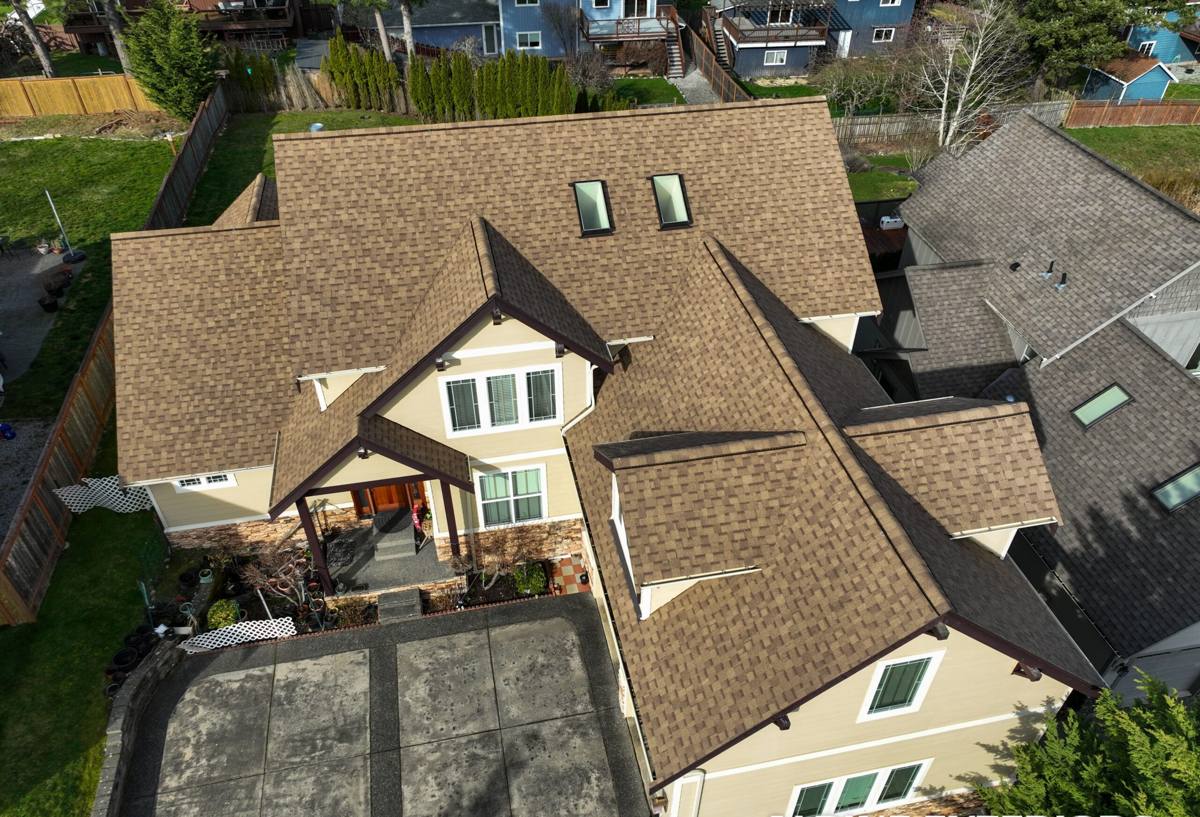
What Salt Air, Rain, and Moss Do to a Roof
Salt Air and Metal Corrosion
Airborne salt from the Sound accelerates corrosion on anything metal — nails, flashing, valleys, vents, and gutter hardware. Standard galvanized fasteners can start showing rust streaks years before an inland roof would. This isn't a defect in the roof; it's a predictable outcome of the environment, and it means fastener and flashing material choices matter more here than they would on a roof twenty miles east.
Driving Rain and Wind-Driven Water
Everett gets rain that doesn't just fall straight down — storms off the Sound push rain sideways under normal circumstances. That changes how underlayment, flashing laps, and roof-to-wall transitions need to be detailed. A roof that would shed water fine in a calm rain can still leak under wind-driven rain if the underlayment and flashing weren't installed with that in mind.
Moss and Shade
Forest Park's tree cover is part of what makes the neighborhood pleasant to live in, but shade means slower drying after every rain event, and slower drying means moss gets a foothold fast. Moss holds moisture against the roofing material, works into shingle laps and joints, and can lift shingle tabs over time. In a region with a moss season that runs most of the year, this is one of the biggest long-term threats to roof lifespan — more than sun exposure, which is rarely the limiting factor here.
What a Correct Roof Replacement Involves
A roof is only as good as what's underneath it. For Forest Park homes, we treat the following as non-negotiable parts of a proper installation, not upgrades:
- Full tear-off to the deck — no roofing over existing layers, so we can actually see and address deck damage from prior moss or moisture intrusion
- Deck inspection and repair of any soft, rotted, or delaminated sheathing before anything new goes down
- A synthetic or high-quality underlayment suited to wind-driven rain, not a minimum-spec felt
- Ice-and-water shield or self-adhered membrane at eaves, valleys, and roof-to-wall transitions — the spots where wind-driven rain actually gets in
- Corrosion-resistant flashing and fasteners at valleys, chimneys, skylights, and any roof penetration
- Proper ventilation balance between intake and exhaust, since trapped moisture under a shaded roof deck is a slow rot problem waiting to happen
- Clean, correctly lapped shingle or panel installation with attention to exposure and nailing pattern, not just "get it covered"
None of this is exotic. It's what a roof replacement should always include — it just matters more in Forest Park because the margin for error is smaller when the climate is actively working against a cut corner.
Choosing Materials for This Neighborhood
There's no single "best" roofing material for every home — the right choice depends on the roof's pitch, the home's exposure to wind and tree cover, and the homeowner's budget and maintenance appetite. What we do steer clients toward, for a shaded, salt-air, high-rain lot like a typical Forest Park property, is anything with a strong track record for moisture and algae resistance and corrosion-resistant hardware.
| Material | How It Handles This Climate | Maintenance Consideration |
|---|---|---|
| Architectural asphalt shingle (algae-resistant) | Good performance with proper ventilation; algae-resistant granules slow moss and algae growth on shaded roofs | Periodic moss removal still recommended; gutters need regular clearing |
| Standing seam metal | Sheds wind-driven rain very well; shorter dwell time for moisture means less moss buildup on the panel field | Use corrosion-resistant fasteners and coatings; check sealant at penetrations periodically |
| Composite/synthetic shake | Resists moisture absorption better than natural wood shake in a shaded, damp setting | Lower maintenance than wood shake, but still benefits from periodic debris clearing |
We're generally cautious about recommending untreated wood shake or shingle roofing for heavily shaded Forest Park lots. It's not that wood roofing is a bad product — it's that in a spot with this much shade and rainfall, it demands a level of ongoing maintenance (regular treatment, moss control, careful ventilation) that a lot of homeowners don't want to sign up for. That's a maintenance-burden judgment call on our part, not a claim that the material fails.
Our Process for a Forest Park Roof Replacement
- On-site assessment. We look at the existing roof, deck condition, ventilation setup, tree exposure, and drainage — not just from the ground, but on the roof itself.
- Written estimate. Material options, scope of work, and a clear price — no vague allowances that turn into surprise add-ons mid-project.
- Tear-off and deck repair. Old roofing comes off, the deck gets inspected, and any damaged sheathing is replaced before anything new goes on.
- Underlayment and flashing detail work. This is where wind-driven rain protection actually gets built in — it's the least visible part of the job and the most important.
- Installation. Shingles, panels, or shakes installed to manufacturer spec and proper exposure, with attention to valleys, penetrations, and edges.
- Ventilation check and final walk-through. We confirm intake and exhaust venting is balanced and walk the finished roof with the homeowner.
- Cleanup. Magnetic sweep for stray fasteners, debris hauled off, yard and gutters left clear.
Cost Factors for Forest Park Homes
Every roof is priced off its own specifics, so we won't quote a number without seeing the roof. What does move the price up or down on jobs in this area:
| Factor | Why It Matters Here |
|---|---|
| Roof pitch and complexity | Steeper or more cut-up roofs (valleys, dormers) take longer and use more flashing material |
| Deck condition | Hidden rot from years of moss or moisture intrusion means sheathing replacement, which isn't known until tear-off |
| Access and tree cover | Overhanging trees can add work for tarping, cleanup, and sometimes limb trimming before installation |
| Material choice | Metal and composite options generally cost more upfront than asphalt shingle but ask less in ongoing maintenance |
| Ventilation upgrades | Older Forest Park homes sometimes need added intake or exhaust venting brought up to a workable balance |
Why Local Experience in Forest Park Matters
A roofing crew that mostly works dry, open, inland roofs doesn't necessarily think about wind-driven rain at a roof-wall transition, or how much moss pressure a heavily shaded valley is going to see in year three. Working regularly in Everett and across Snohomish County means we've seen what actually fails on roofs like the ones in Forest Park — not in theory, but on real tear-offs — and we build the replacement to hold up against that specific set of conditions rather than a generic spec sheet.
That local familiarity also means we're not guessing at permitting requirements, typical roof pitches in the neighborhood, or how a given material has actually performed on similar homes nearby over time.
Signs It's Time to Replace, Not Repair
- Granule loss heavy enough that you're finding shingle grit in gutters and downspouts every season
- Moss established across multiple sections of the roof, not just isolated shaded patches
- Soft spots or visible sagging when walking the roof or viewing the deck from the attic
- Repeated leaks in different spots rather than one recurring, fixable point
- Shingles curling, cracking, or losing their seal in multiple areas
- The roof is past or near the end of its material's realistic service life for this climate
If only one or two of these apply, a repair may still make sense. If several do, a full replacement is usually the more cost-effective path — patch repairs on a roof that's broadly failing tend to just delay the same expense while water damage accumulates underneath.
If you're weighing a new roof for a Forest Park property, we're glad to come take a look and give you a straightforward, no-pressure estimate — just fill out the form below.