 Everett
 South Everett's Climate Puts Roofs to the Test
A roof in South Everett doesn't have an easy job. You're close enough to Puget Sound to deal with salt-laden air moving in off the water, you're in a part of Snohomish County that sees a long, wet fall-through-spring stretch of driving rain, and the tree cover and shade that make this area pleasant to live in are the same conditions that grow moss on a roof deck faster than almost anywhere else in the state. None of that is a reason to panic about your roof — it's just the baseline you're designing against. A roof that would hold up fine in a drier, sunnier climate can underperform here if it wasn't detailed for these specific conditions.
That's the lens we bring to every new roof installation in South Everett: not "install a roof," but "install a roof that's built for salt air, driving rain, and moss, in that order."
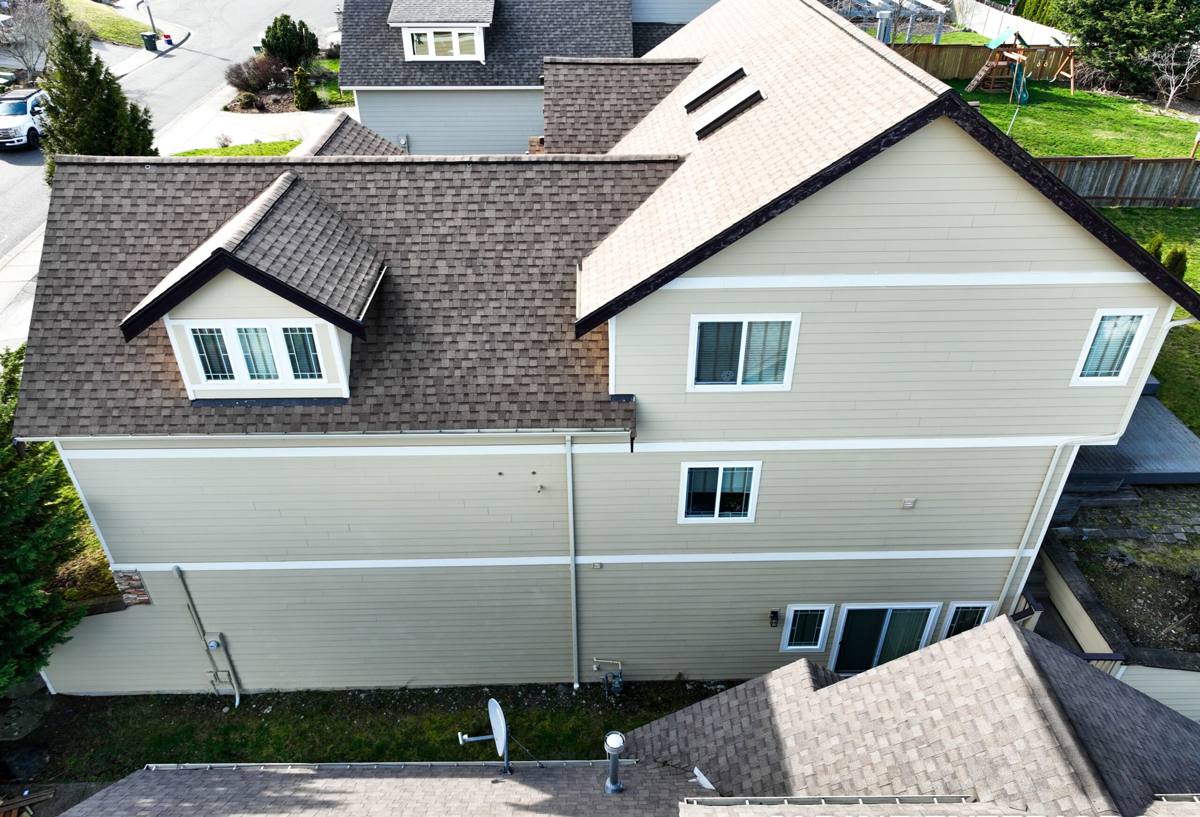
What Counts as a Correct New Roof Installation
A new roof is more than shingles nailed to plywood. The materials you can see are maybe a third of what actually keeps water out of your home. The rest is in the details most homeowners never see once the job is done — which is exactly why it matters who does the work.
Tear-Off and Deck Inspection
We remove the old roofing down to the deck rather than layering over it. That's the only way to actually see what's underneath — soft spots, rot around old plumbing boots or chimney flashing, and any sheathing that's been quietly absorbing moisture for years. In a wet climate like this one, a hidden soft spot in the decking is a much bigger long-term problem than most of the things people worry about with roofing.
Underlayment and Water Barrier
Underneath the finish roofing material, we install a synthetic or self-adhering underlayment sized to how much rain this area actually gets, with extra water-and-ice barrier protection at the eaves, valleys, and any low-slope transitions — the spots where standing water and wind-driven rain cause the most trouble. This layer is what keeps the house dry if wind ever drives rain up under the shingle tabs, which happens more often here than people expect.
Flashing at Every Penetration
Chimneys, skylights, vent pipes, and roof-to-wall transitions are where the overwhelming majority of roof leaks actually start — not out in the open field of shingles. Correct step flashing, counter-flashing, and pipe boots, properly lapped so water always sheds downhill and never gets a place to back up, is non-negotiable on every install we do.
Ventilation
A roof needs to breathe. Balanced intake at the eaves and exhaust at the ridge keeps attic moisture from condensing on the underside of the deck, which is one of the most common causes of premature rot and mold in this climate. Poor ventilation also accelerates moss growth from the inside out, since a damp, poorly vented deck holds moisture longer after every rain.
Choosing Roofing Materials for Salt Air, Rain, and Moss
There's no single "best" roofing material — there's the right material for your budget, your roof's slope and exposure, and how much maintenance you're willing to do. What we won't do is recommend a product just because it's cheaper up front if it's a poor match for South Everett's conditions; we'd rather explain the trade-offs honestly than have you dealing with algae streaking or curling shingles five years in.
| Material | How It Handles Salt Air & Rain | Moss/Algae Resistance | Typical Lifespan |
|---|---|---|---|
| Architectural asphalt shingle | Good when installed with proper flashing and ventilation; standard choice for this region | Algae-resistant (AR) granules recommended for shaded, damp lots | 25–30 years |
| Synthetic/composite shingle | Very good — resists moisture absorption better than standard felt-backed products | Generally strong resistance; check manufacturer specs | 30–50 years |
| Standing seam metal | Excellent — sheds water fast, minimal maintenance, holds up well near salt air with the right coating | Moss struggles to get a foothold on a smooth, steep metal surface | 40–60 years |
| Wood shake | Requires diligent maintenance in a wet, shaded climate | High moss/moisture risk without regular treatment | 20–30 years with upkeep |
For most South Everett homes, we lean toward architectural asphalt with algae-resistant granules or a synthetic/composite product as the sweet spot between cost and low-maintenance performance. Metal is a strong option for homeowners who want the lowest long-term maintenance and don't mind the higher upfront cost. We're generally cautious about wood shake in shaded, damp neighborhoods — it can look great, but it asks a lot of ongoing maintenance to stay ahead of moisture and moss, and we'd rather set that expectation up front than have it become a surprise.
Our Installation Process, Start to Finish
- On-site assessment: We walk the roof, check the attic for ventilation and moisture signs, and look at slope, shading, and exposure before recommending materials.
- Written estimate: A clear scope of work and material selection, so you know exactly what's being installed and why.
- Tear-off and disposal: Full removal of the old roofing, with the deck inspected and any damaged sheathing replaced before anything new goes down.
- Dry-in: Underlayment and water/ice barrier installed the same day the deck is exposed, so your home isn't left open to South Everett weather overnight.
- Flashing and ventilation work: All penetrations, valleys, and intake/exhaust ventilation installed before the finish material goes on.
- Roofing installation: Shingles, panels, or your chosen material installed to manufacturer spec — this is what actually keeps a warranty valid.
- Cleanup and magnetic sweep: Full site cleanup, including a nail sweep of the yard and driveway.
- Final walkthrough: We go over the finished roof with you before calling the job done.
Why a Crew That Already Works South Everett Matters
Roofing crews that mostly work drier, inland climates sometimes bring habits that don't translate here — skipping algae-resistant shingles because "it's just shingles," underventilating an attic because it passed in a different climate, or scheduling tear-offs without a real plan for a surprise rain system rolling in off the Sound. A crew that works this area regularly knows to check the local permitting requirements before starting, plans tear-off days around the weather window rather than the calendar, and has already seen what moss and driving rain do to roofs that weren't detailed for it. That local pattern-recognition is worth more than it sounds like — it's the difference between a roof that's technically installed and one that's actually built for where it sits.
Signs Your South Everett Home Needs a New Roof
Roofs rarely fail all at once — they give warning signs first. Worth a look if you notice:
- Shingles that are curling, cupping, or losing granules faster on one side of the roof (often the shaded, damp side)
- Dark streaking or thick moss growth, especially in valleys or under tree cover
- Daylight visible through the roof deck from inside the attic
- Soft or spongy spots when walking the roof, or sagging along the roofline
- Water stains on interior ceilings, especially near chimneys, skylights, or exterior walls
- Granules collecting in gutters after a heavy rain
- A roof that's approaching or past the manufacturer's expected lifespan for its material
- Flashing that's visibly rusted, lifted, or separated from the roof surface
Any one of these on its own isn't necessarily an emergency, but a few together are usually a sign it's time for an inspection rather than another patch.
What Drives Roofing Cost in This Area
| Factor | Why It Matters Locally |
|---|---|
| Roof size and slope | Steeper roofs and multiple valleys take longer to detail correctly, especially with the flashing work this climate requires |
| Deck condition | Rot from long-term moisture exposure sometimes isn't visible until tear-off, and replacing bad sheathing adds cost but isn't optional |
| Material choice | Standard asphalt, algae-resistant asphalt, synthetic, and metal all carry different upfront costs and different long-term maintenance costs |
| Ventilation upgrades | Adding proper intake/exhaust venting where an older roof lacked it protects the new roof's lifespan |
| Access and site conditions | Tree cover, steep lots, and tight access common in this area can affect labor time |
We don't publish blanket pricing because these variables genuinely change the number — a straightforward re-roof and a job that needs deck replacement and ventilation upgrades aren't the same project. What we do commit to is a written estimate that spells out exactly what's included, so there are no surprise line items after the tear-off starts.
Permits, Timing, and Weather Windows
Snohomish County and the City of Everett have their own permitting requirements for roof replacement, and pulling the right permit protects you if there's ever a question about the work down the road — it's not just paperwork. Timing matters too: we plan tear-offs around realistic weather windows rather than forcing a start date, and we keep the deck protected with dry-in materials the same day it's exposed. In a climate with as much driving rain as South Everett gets, that sequencing is what actually protects your home during the install, not just after it.
If your roof is showing its age or you're just planning ahead, we're happy to take a look and give you a straight answer — no pressure, no upsell. Use the form below to request a free estimate for your South Everett home.