 Everett
 Pinehurst Sits Right Where Puget Sound Weather Does the Most Damage
Pinehurst is a residential neighborhood on Everett's north end, close enough to Possession Sound and the broader Puget Sound waterway that salt-laden air is a constant, low-grade presence on every exterior surface in the area. Combine that with Snohomish County's long wet season, driving winter rain that comes in sideways off the water, and mature tree canopy that keeps large sections of many yards shaded most of the year, and you get a climate that is genuinely hard on siding. It's not one dramatic event that wears a house down out here — it's the accumulation of hundreds of soggy, gray days a year, season after season.
Siding in Pinehurst isn't just a cosmetic layer. It's the thing standing between that weather and your home's framing, sheathing, and insulation. When it's the wrong material, or installed without attention to how water actually moves across a wall, the failure usually isn't visible until it's already expensive.
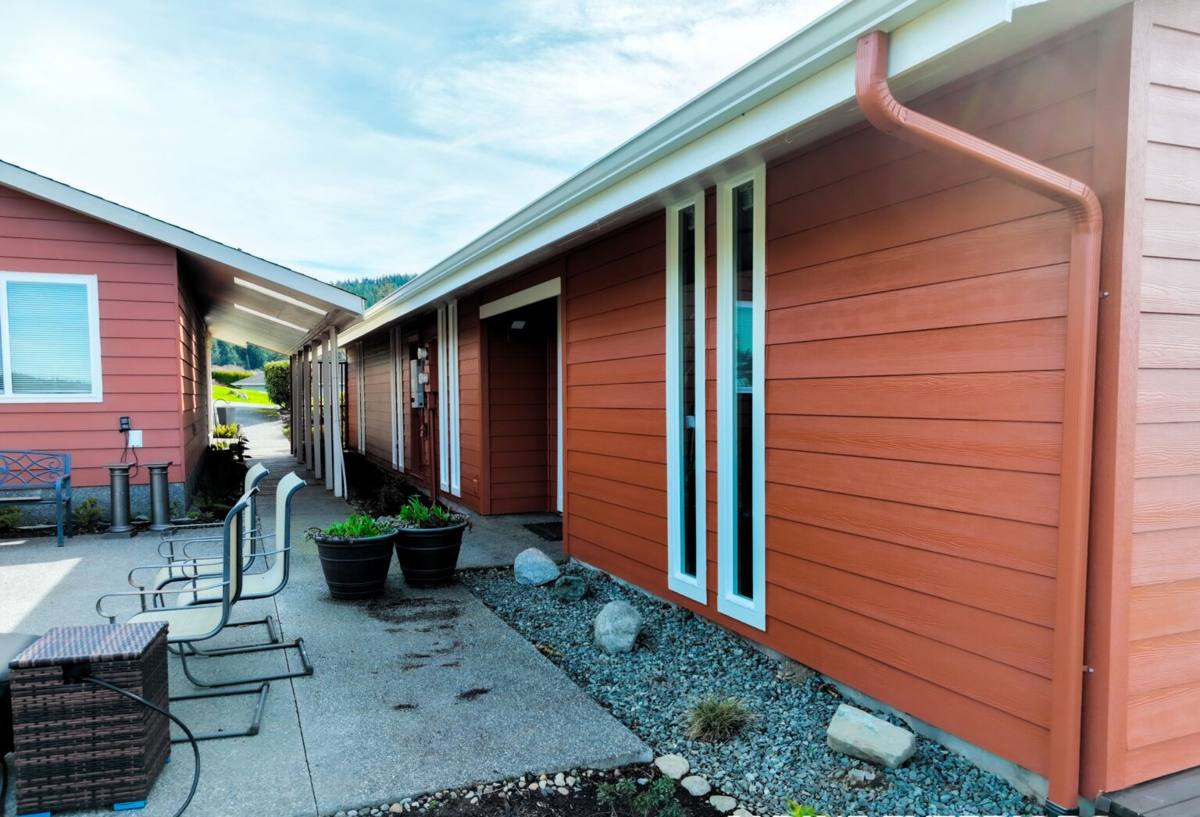
What Salt Air, Rain, and Moss Actually Do to a House
Salt Air
Airborne salt is corrosive to exposed metal fasteners, flashing, and trim, and it accelerates the breakdown of lower-grade paints and coatings. Over years, siding that isn't rated for a marine-influenced climate can chalk, fade unevenly, or start losing adhesion at seams and edges faster than the same product would inland.
Driving Rain
Wind-driven rain doesn't just fall — it gets pushed sideways into laps, seams, corner boards, and anywhere two building materials meet. If those transitions aren't flashed and sealed correctly, water finds its way behind the siding and into the sheathing, where it can sit for months without anyone noticing from the outside.
Moss and Algae
Shaded, damp surfaces in Everett hold moisture far longer than the same surfaces in a sunnier climate, which is exactly what moss, mold, and algae need to establish themselves. On porous or absorptive siding materials, that growth isn't just cosmetic — it holds water against the surface and can accelerate rot underneath if left unaddressed for years.
Why We Standardized on James Hardie for Homes Like These
We install James Hardie fiber cement siding exclusively. We don't install vinyl, LP SmartSide, Cemplank, Allura, primed spruce, or cedar, and that's a deliberate professional standard, not a sales pitch. Fiber cement is cement, sand, and cellulose fiber — it doesn't feed mold or moss the way wood-based products can, it doesn't warp or buckle the way vinyl can in temperature swings, and it's non-combustible, which matters more every year in the Pacific Northwest.
James Hardie also engineers specific product formulations for different climate zones through its HardieZone system. The Pacific Northwest, including Snohomish County, falls into HZ5, which is built around resistance to moisture-driven damage in wet, humid, and marine-influenced climates. That's not a marketing detail — it's the difference between a general-purpose siding product and one that was actually formulated for the weather Pinehurst gets.
The factory-applied ColorPlus finish is another piece of that decision. It's baked on and cured under controlled conditions rather than brushed on at the jobsite, which gives it better resistance to fading, chipping, and the kind of chalking that salt air and UV exposure cause over time. Field-painted siding depends entirely on the weather conditions and prep work on the day it's painted — ColorPlus removes that variable.
What a Correct Installation Actually Involves
Fiber cement siding is only as good as the installation behind it. A huge share of the siding failures we get called out to inspect in Everett aren't material failures — they're installation shortcuts that let water in behind a product that would otherwise have lasted decades. On a Pinehurst job, that means:
- A properly lapped and sealed weather-resistive barrier installed before any siding goes up, not patched around afterward
- Correct flashing at every window, door, and roof-to-wall transition — the spots where driving rain finds its way in first
- Fastener placement and spacing that follows James Hardie's published installation instructions for the specific product line, not generic carpentry habits
- Proper clearance between the bottom of the siding and grade, decks, and roof lines, so splash-back and standing water don't sit against the material
- Caulking and joint treatment using products compatible with ColorPlus, so the color and seal both hold long-term
- Ventilation behind the cladding where the wall assembly calls for it, so any incidental moisture can dry out instead of getting trapped
Skip any one of these steps and you can end up with a wall that looks perfect from the street for a year or two while moisture is already working on the sheathing behind it.
How Siding Choices Actually Compare in This Climate
We get asked fairly often why we don't offer options like vinyl or engineered wood siding as a lower-cost alternative. Here's the honest breakdown of how the main materials behave under Everett's specific combination of salt air, driving rain, and shade-driven moss:
| Material | Moisture & Rot Resistance | Moss/Algae Behavior | Typical Maintenance |
|---|---|---|---|
| James Hardie fiber cement | Cement-based, doesn't absorb and swell like wood fiber products | Non-organic surface resists sustained growth better than wood-based sidings | Occasional gentle wash; repaint only if not ColorPlus |
| Engineered wood (e.g. LP SmartSide) | Wood-strand core; treated, but still wood-based and moisture-sensitive at cut edges and seams | More susceptible to swelling and edge damage in prolonged damp shade | Edge sealing and caulk checks are important, especially at ground level |
| Vinyl | Doesn't rot, but can warp, buckle, or crack in temperature swings and impacts | Can hold surface algae/mildew film in shaded, damp spots | Periodic washing; damaged panels are hard to color-match years later |
| Cedar / primed wood | Natural material, needs consistent coating maintenance to resist rot | Most susceptible to moss and mildew without regular upkeep | Recoating on a recurring schedule; highest long-term labor cost |
None of these are "bad" products in the abstract — they all have a place somewhere. But for the specific combination of conditions a Pinehurst home deals with every winter, we think fiber cement is the material that holds up with the least ongoing maintenance burden on the homeowner, which is why it's the only thing we put on houses.
Signs Your Current Siding Is Already Behind on This Fight
On older homes in this part of Everett, we commonly see a handful of warning signs that siding is losing its battle with the local climate:
- Persistent moss or dark streaking on north-facing or tree-shaded walls that comes back within weeks of cleaning
- Soft or spongy spots when you press on siding near the bottom edge, around window sills, or below roof lines
- Paint that's chalking, peeling, or blistering faster on one side of the house than the others
- Visible gaps or separation at corner boards, trim, or lap joints
- Rust staining below fasteners or metal flashing, a sign salt air is already working on the hardware
Any one of these on its own isn't necessarily an emergency, but they're worth having looked at before the next wet season adds to the damage.
Why It Matters That We Already Work This Neighborhood
Pinehurst has its own mix of home ages, lot slopes, tree cover, and setback conditions, and a crew that's already worked in the neighborhood isn't guessing at how those factors interact. We know what drainage patterns tend to look like on north-Everett lots, how mature tree canopy affects which walls need extra attention for moss and shade-driven moisture, and how Snohomish County permitting and inspection typically runs for a re-side. That familiarity shows up in fewer surprises mid-project — not more upsells, just fewer change orders because we already know what to expect from a job in this area.
Our process on a Pinehurst home generally follows the same sequence every time:
- An on-site assessment of the current siding, sheathing condition where accessible, and any moisture or moss problem areas
- A written scope that specifies the James Hardie product line, HZ5-appropriate installation details, and color
- Removal of the old siding and inspection of the wall assembly underneath before anything new goes up
- Correct installation of the weather barrier, flashing, and Hardie siding to manufacturer specification
- A final walkthrough so you know exactly what was done and what maintenance, if any, to expect going forward
Living With Hardie Siding Through an Everett Winter
Once it's installed correctly, James Hardie siding in a climate like this is genuinely low-maintenance — but "low-maintenance" isn't "zero-maintenance." An occasional gentle rinse to keep organic buildup from establishing on shaded walls, a periodic look at caulking around windows and trim, and keeping gutters clear so water isn't sheeting down the siding face are the main things that keep it performing the way it's designed to over the long run. None of that compares to the recoating schedules or edge-sealing upkeep that wood-based products demand in this same environment.
Get a Straight Answer for Your Pinehurst Home
If you're dealing with moss that won't quit, siding that's showing its age, or you're just planning ahead before the next wet season, we're happy to take a look and give you an honest read on where things stand. There's no pressure and no obligation — just a straightforward assessment from a crew that installs one product, correctly, because we've seen what the alternative costs homeowners down the road. Request a free estimate using the form below and we'll get back to you to schedule a time.