 Everett
 Board & Batten in a Waterfront Neighborhood
Port Gardner sits close enough to the water that its homes deal with a different mix of weather stress than houses further inland in Snohomish County. Salt-laden air off the bay, wind-driven rain that gets pushed sideways into wall assemblies, and a moss season that can run most of the year all work on a home's exterior at the same time. Board and batten siding — with its bold vertical lines and deep shadow reveals — is one of the most requested looks for Port Gardner homes, but the material behind that look matters more here than almost anywhere else in Everett.
This page covers what board and batten siding actually needs to hold up in this specific neighborhood, what a correct installation looks like, and why we only install it in one material: James Hardie fiber cement.
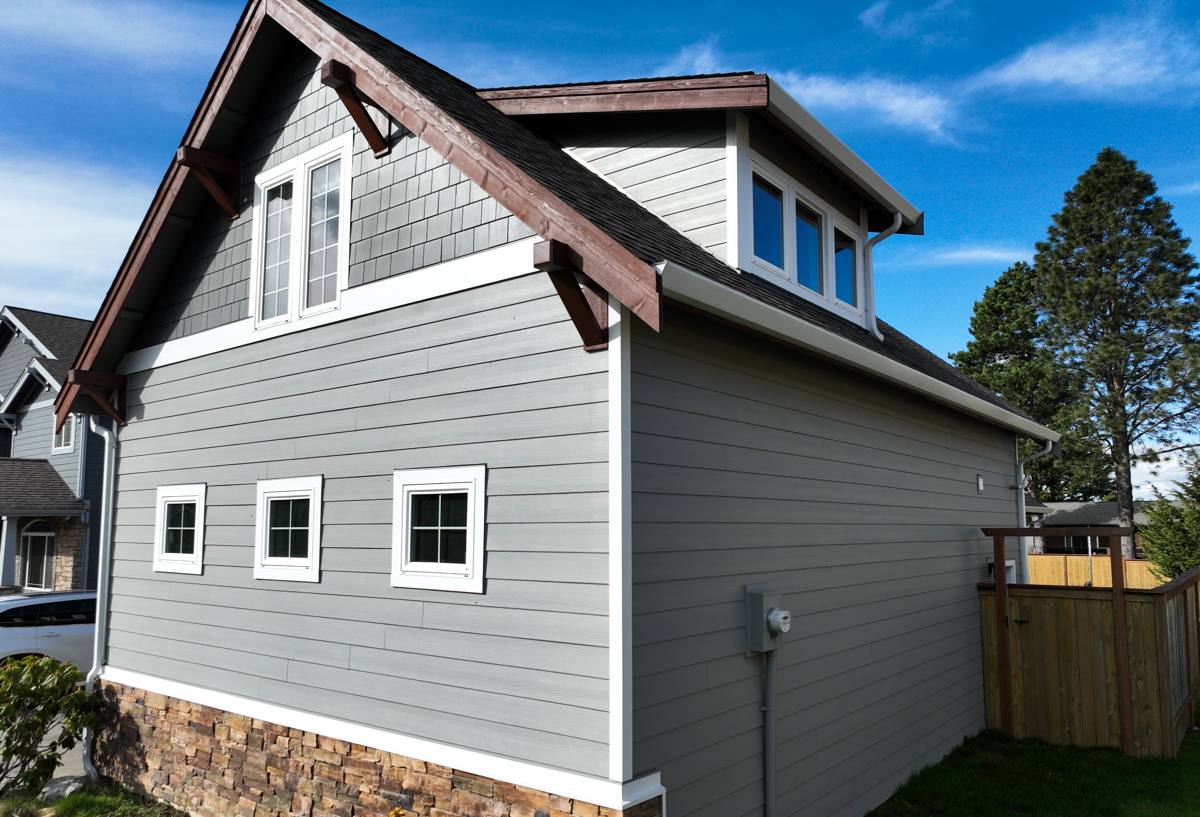
What Port Gardner's Climate Does to Board & Batten Siding
Board and batten isn't a single flat plane like lap siding — it's a series of vertical boards with narrow battens covering the seams, which means more edges, more seams, and more places for water and salt air to find a weakness. In a neighborhood exposed to Puget Sound weather, three things do the most damage over time:
- Salt air corrosion — airborne salt accelerates the breakdown of fasteners, caulk, and any exposed wood grain, and it's harder on cheap or under-spec hardware than most homeowners expect.
- Driving rain — wind off the water pushes rain up and sideways, not just straight down, which means vertical seams and batten joints need real flashing and drainage detail, not just caulk.
- Extended moss season — shaded, north-facing, or tree-covered walls in this area can stay damp for months, and moss holds moisture against whatever siding it grows on.
None of this is unique to Port Gardner, but the combination — salt exposure plus sustained moisture plus a long moss window — is more concentrated near the water than it is a few miles inland, and it's why we treat board and batten jobs here a little differently than a similar job elsewhere in Everett.
Why We Only Install Board & Batten in James Hardie Fiber Cement
Board and batten can be built out of several materials, and each one has a real case for it. We only install James Hardie fiber cement, and it's worth being straightforward about why, rather than just saying our competitors' materials are bad.
Wood (cedar or primed spruce)
Real wood board and batten looks great when it's new, and traditionalists like it for a reason. But it's the material that struggles most with everything Port Gardner throws at it: it absorbs moisture at the seams, it's a food source for moss and mildew, and it needs re-caulking, spot sanding, and repainting on a cycle that most homeowners underestimate. In a neighborhood with this much sustained dampness, wood board and batten is a maintenance commitment more than a one-time project.
Vinyl
Vinyl vertical siding is inexpensive and low-maintenance in the sense that it doesn't need painting, but it isn't rigid enough to hold the crisp, deep-shadow look that makes board and batten distinctive — it reads as flatter and more plastic up close. It also expands and contracts with temperature swings, which stresses the seams over time, and it isn't rated to stand up to salt air the way fiber cement is.
LP SmartSide and other engineered wood products
Engineered wood siding is a genuine step up from raw lumber, and some homeowners like the lighter weight and lower material cost. Where it falls short for a site like this is at the cut edges and seams — if moisture gets into the engineered wood core, it can swell and doesn't recover the way fiber cement does. In a marine climate with this much wind-driven rain, that's a real trade-off, not a hypothetical one.
James Hardie fiber cement
Fiber cement doesn't absorb water the way wood-based products do, it doesn't expand and contract the way vinyl does, and it's inherently resistant to moss and mildew because it isn't an organic food source. It holds paint and factory finish for far longer than wood, and it's non-combustible. It costs more up front than vinyl and often more than engineered wood — but for a neighborhood dealing with salt air, driving rain, and a long moss season all at once, it's the material that actually matches the conditions instead of fighting them.
What a Correct Board & Batten Installation Involves
Board and batten is unforgiving of shortcuts because every seam is a potential water path. A correct installation isn't just nailing boards to the wall — it's a system:
Panel and batten selection
We install James Hardie's vertical panel siding with battens sized and spaced to match the home's proportions, not just whatever spacing is fastest to install. Panel thickness and batten width both affect how deep the shadow lines read and how the assembly sheds water.
Moisture management behind the siding
A weather-resistant barrier and properly integrated flashing go behind every panel — this is the layer that actually keeps water out of the wall assembly if any gets past the siding itself. Rainscreen furring is often the right call on Port Gardner homes specifically, because it gives any moisture that does get behind the panel a path to drain and dry instead of sitting against the sheathing.
Fastening and seams
Corrosion-resistant fasteners matter more here than in a drier, inland neighborhood — salt air is genuinely harder on hardware. Vertical seams need to be planned and flashed, not just butted and caulked, because caulk alone degrades faster under UV and salt exposure than most homeowners assume.
Trim, corners, and transitions
Outside corners, window and door transitions, and the base of the wall where it meets grade or a foundation are the highest-risk points on any board and batten job. These get the most attention on our jobs, because they're also the points that fail first when a lesser install cuts corners.
The James Hardie Products We Use
James Hardie builds region-specific product lines through its HZ5 and HZ10 engineering, and for Pacific Northwest homes — including Port Gardner and the rest of Snohomish County — that means siding engineered for a climate that's wet more months of the year than it's dry. Combined with the factory-applied ColorPlus finish, the result is a board and batten look that holds its color and resists the moss and mildew staining that plagues repainted wood siding, along with a transferable warranty that follows the house if it's sold.
| Material | Moisture Resistance | Salt Air Durability | Maintenance Over Time | Typical Cost Position |
|---|---|---|---|---|
| James Hardie fiber cement | High — does not swell or rot | High, with corrosion-resistant fasteners | Low; factory finish holds color for years | Higher upfront, lower lifetime cost |
| Cedar / primed spruce | Low — absorbs water at seams | Low to moderate; needs diligent sealing | High; regular repainting and caulking | Moderate upfront, high lifetime cost |
| Engineered wood (LP SmartSide, etc.) | Moderate; vulnerable at cut edges | Moderate | Moderate; edge sealing is critical | Moderate upfront |
| Vinyl | Moderate; doesn't rot but seams flex | Low; not built for this exposure | Low, but appearance flattens over time | Lowest upfront |
Our Process for Port Gardner Homes
Every board and batten job starts with a walk-around of the exterior, not just a measurement. We're looking at sun and shade exposure on each wall, existing moisture or moss patterns, the condition of the sheathing underneath the current siding, and how exposed the home is to wind off the water. That assessment shapes decisions like whether rainscreen furring makes sense on a particular wall, where extra flashing attention is warranted, and how the batten layout should work with the home's existing window and trim lines.
From there, the process is straightforward: remove and dispose of the old siding, inspect and repair any sheathing damage found underneath, install the weather-resistant barrier and flashing package, hang the Hardie panels, set the battens, finish the trim and corners, and do a final walk-through before cleanup. We don't cover up a moisture problem behind new siding — if we find rot or damage during tear-off, we tell the homeowner before we close it back up.
What Homeowners in Port Gardner Should Watch For
- Green or black staining along the base of walls or on north-facing sides — early moss and mildew growth
- Soft spots or slight give when pressing on old wood siding, especially near the ground
- Caulk that's cracked, shrunk, or pulling away at seams and corners
- Paint that's chalking, peeling, or fading unevenly across different walls
- Visible gaps at batten joints or corner trim where daylight or drafts are noticeable
- Efflorescence (white, chalky residue) near the foundation line, which can indicate moisture getting behind the siding
None of these are emergencies on their own, but any one of them is worth a look before it's paired with the next wet Snohomish County winter.
Why Hiring a Crew That Already Works Port Gardner Matters
A crew that regularly works this part of Everett already knows which walls tend to hold moisture longest, how the local moss pattern behaves across a full season, and what level of flashing and rainscreen detail actually earns its keep this close to the water. That's not something you get from a general contractor who does one job in the neighborhood every few years — it's the difference between an installation that's technically up to code and one that's actually built for the site conditions in front of it.
Local permitting familiarity matters too. Snohomish County and City of Everett requirements are consistent, but knowing them cold means fewer surprises and delays once work starts.
Get a Free, No-Pressure Estimate
If you're considering board and batten siding for a home in Port Gardner, we're happy to walk the exterior with you, talk through what your specific walls need, and give you a straightforward estimate — no pressure, no sales script. Use the form below to get started.