 Everett
 Why Port Gardner's Location Puts Extra Demands on Siding
Port Gardner sits close to the water, and that proximity changes what a home's exterior has to deal with year-round. Salt-laden air off Port Gardner Bay accelerates corrosion on fasteners and trim, wind-driven rain pushes moisture into joints and seams that would stay dry on a more sheltered lot, and the long gray stretch of fall through spring keeps exterior surfaces damp enough, long enough, for moss and algae to take hold. None of this is unique to one house on one block — it's the baseline condition for siding anywhere near this stretch of Everett's waterfront, and it's the reason siding choice and installation quality matter more here than they would in a drier inland climate.
Cheap or poorly installed siding doesn't fail dramatically in this environment. It fails quietly — a little moisture behind a panel here, a soft spot developing there — until a homeowner is looking at rot repair instead of routine maintenance. The right product, installed the right way, is what keeps that slow failure from ever starting.
Why We Only Install James Hardie in This Neighborhood
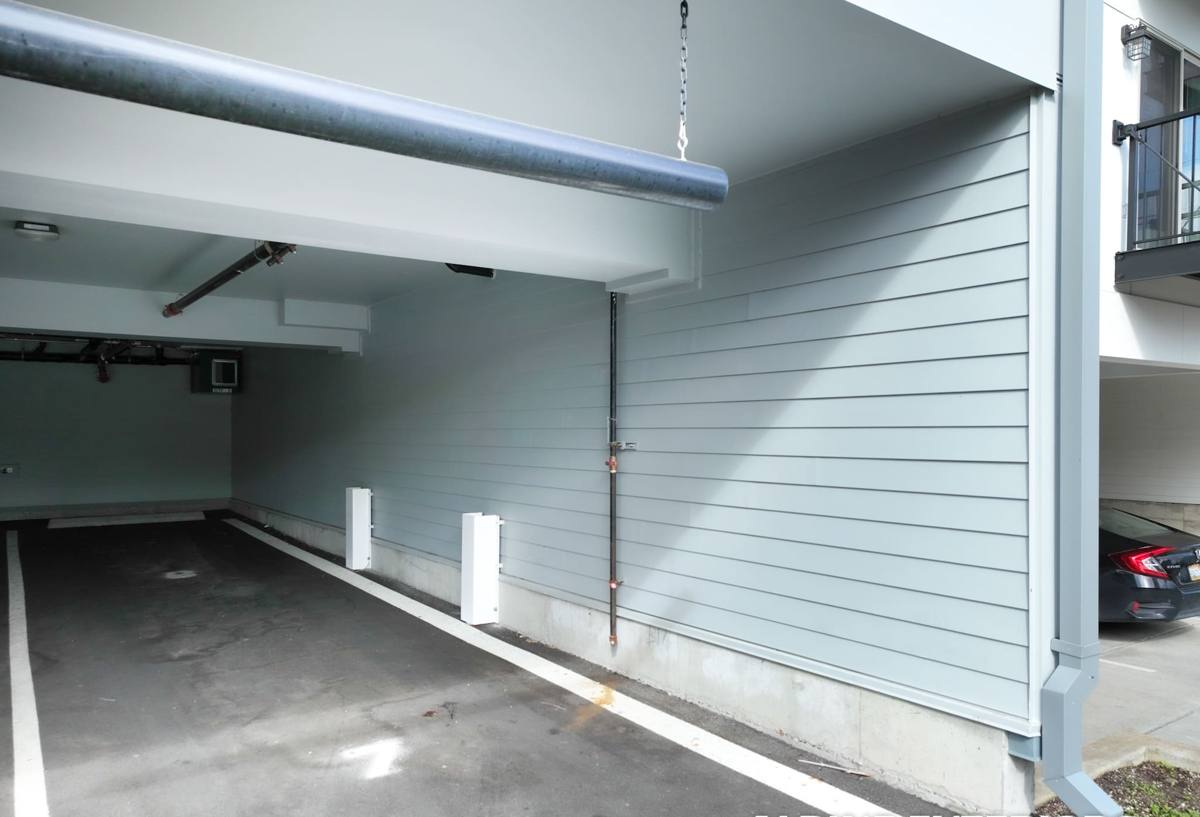
We standardized on James Hardie fiber cement siding company-wide, and Port Gardner is exactly the kind of environment that decision was made for. Fiber cement doesn't absorb water the way wood-based products can, it doesn't provide the organic surface that mold and moss prefer, and it holds paint and color far more consistently under UV and salt exposure than vinyl or wood siding does over time. Hardie also engineers its siding by climate zone — homes in this region get specified with the HZ10 product line, built for the Pacific Northwest's combination of moisture and temperature swings, rather than a generic national formulation.
That climate-specific engineering matters in a place like Port Gardner because the siding isn't just dealing with rain — it's dealing with rain plus salt air plus prolonged damp periods that give moss and algae time to establish. A product that isn't built for that combination will show it faster here than almost anywhere else in Snohomish County.
ColorPlus Factory Finish vs. Field-Applied Paint
Most James Hardie siding we install goes on with a ColorPlus factory finish rather than being painted on-site. The finish is baked on under controlled conditions, which gives it better adhesion and more consistent UV and color-fade resistance than paint applied in the field after installation. In a salt-air environment, that difference shows up as color holding evenly across the wall instead of fading unevenly on the sides that catch the most wind and moisture. It also means far less repainting over the life of the siding, which matters to anyone who doesn't want to be back up on a ladder every few years.
What a Correct James Hardie Installation Involves
The siding material is only half the equation. How it's installed determines whether it actually performs the way it's designed to, especially in a wetter, salt-exposed setting. A correct installation on a Port Gardner home includes several details that are easy to skip and hard to notice until something goes wrong years later.
Moisture Management and Flashing
Every window, door, and horizontal trim transition is a potential entry point for wind-driven rain. Proper flashing, house wrap integration, and weather-resistant barrier detailing behind the siding are what actually keep water out — the siding itself is the last line of defense, not the only one. This is the step most likely to be rushed on a fast, low-bid job, and it's the one most likely to cause hidden problems in a climate where rain comes in sideways as often as it comes straight down.
Fastening and Clearances
James Hardie specifies exact fastener types, spacing, and penetration depth, along with minimum clearances from grade, roofing, decks, and other transitions. Those clearances aren't cosmetic — they control how quickly moisture that does reach the siding can drain and dry. Panels installed too close to the ground or butted too tightly against trim hold moisture longer, which is exactly the condition that lets moss and mildew get a foothold on a shaded, damp-prone lot.
Joint and Seam Treatment
Where panels meet, at corners, and around penetrations, sealant and caulking need to be applied to Hardie's specification, not just wherever a crew decides it looks finished. Gaps or under-caulked joints are a common source of slow water intrusion that doesn't show up as a visible problem for a year or more.
Common Issues We See on Homes Near the Water
The problems that show up on siding near Port Gardner Bay tend to follow a pattern, and almost all of them trace back to installation shortcuts rather than the siding material itself.
| What Homeowners Notice | Usual Cause | Why It Happens Here |
|---|---|---|
| Dark streaking or green film on north-facing walls | Moss and algae growth on siding that stays damp too long | Long shaded, low-sun periods plus consistent moisture keep surfaces wet longer than in drier climates |
| Soft or discolored trim near windows | Water intrusion from missing or poor flashing | Wind-driven rain pushes moisture into gaps that would stay dry in calmer conditions |
| Corroded or rust-staining fasteners | Standard fasteners used instead of corrosion-resistant hardware | Salt air accelerates corrosion on lower-grade metal much faster than inland exposure |
| Cracked or gapped caulk lines | Under-specified sealant or rushed joint work | Repeated wet-dry cycling stresses joints more here than in stable, drier regions |
Every one of these is preventable with correct material selection and installation practice — they're not inevitable outcomes of living near the water, they're the result of siding that wasn't specified or installed for this environment.
Our Process for Port Gardner Projects
The steps don't change from house to house, but how carefully each one is executed is what separates siding that lasts decades from siding that needs early repair.
- On-site assessment — we look at existing siding condition, exposure to wind and water, drainage around the foundation, and any trouble spots like shaded north walls or areas with poor airflow.
- Product and color selection — matching the correct Hardie panel style and HZ10 specification to the home, along with ColorPlus color selection.
- Tear-off and substrate check — removing old siding and inspecting sheathing for hidden moisture damage before anything new goes up.
- Weather barrier and flashing installation — the moisture-management layer that does the real work of keeping water out.
- Hardie panel installation — fastened, spaced, and cleared to manufacturer specification.
- Joint sealing and finish detail — caulking, trim, and final inspection for gaps or exposed fastener heads.
- Walkthrough — reviewing the finished work and basic care expectations with the homeowner.
What Affects the Cost of a Project Like This
Every home is different, so we won't quote a number without seeing the house, but these are the factors that generally move a Port Gardner siding project up or down in scope and cost.
| Factor | Why It Matters |
|---|---|
| Extent of existing moisture or rot damage | Hidden sheathing repair found during tear-off adds labor and material beyond the siding itself |
| Home size and wall complexity | More corners, dormers, and trim transitions mean more flashing and detail work per square foot |
| Siding profile and finish selection | Different Hardie panel styles and ColorPlus color options carry different material costs |
| Access and site conditions | Tight lots, slopes, or limited equipment access near the water can affect labor time |
| Trim and accessory scope | Full trim replacement alongside siding adds cost but improves long-term consistency and moisture protection |
Why Local Experience in This Area Matters
A crew that regularly works Port Gardner and the surrounding Everett waterfront knows which walls take the worst weather exposure, where moss tends to establish first, and which flashing and clearance details actually matter in this specific climate — not just in a manufacturer's general installation guide. That familiarity shows up in small decisions on the job: extra attention to a north-facing wall that stays shaded most of the day, or corrosion-resistant fastener choices that a crew unfamiliar with salt-air exposure might not think twice about. It's the difference between a technically correct install and one that's actually built for where the house sits.
Simple Maintenance That Extends the Life of Your Siding
James Hardie siding is low-maintenance compared to wood or vinyl, but "low-maintenance" isn't "no-maintenance" — especially this close to the water. A little routine attention goes a long way.
- Rinse siding periodically to remove salt residue and organic buildup before it becomes visible staining
- Keep gutters clear so overflow doesn't run directly down siding surfaces
- Trim back vegetation and tree cover that keeps walls shaded and slow to dry
- Check caulking at joints, windows, and trim annually for cracking or gaps
- Address any soft trim, discoloration, or persistent moss patches early rather than waiting
None of this requires special products or a contractor visit — it's the kind of upkeep any homeowner can handle, and it's what keeps correctly installed Hardie siding performing the way it's designed to for the long haul.
If you're weighing a siding project for a home near Port Gardner Bay, we're happy to take a look and talk through what your house actually needs — no pressure, no obligation. Use the form below to request a free estimate.