 Everett
 New Roof Installation Built for Riverside's Conditions
Riverside sits close to the Snohomish River on the edge of Everett, and that location shapes what a roof needs to survive here. Homes in this part of Snohomish County deal with a mix that's tougher than it looks on paper: salt-tinged marine air moving up from Puget Sound, long stretches of driving rain that hits roofs at an angle instead of straight down, and a moss season that can run eight or nine months out of the year thanks to shade, humidity, and mild temperatures. A new roof installation here isn't just about swapping old shingles for new ones — it's about building an assembly that's matched to those specific stresses from the deck up.
We've installed roofs across Everett and Snohomish County long enough to know that a roof that performs perfectly in a drier inland climate can underperform in Riverside if the underlayment, ventilation, and flashing details aren't adjusted for what this neighborhood actually experiences year-round.
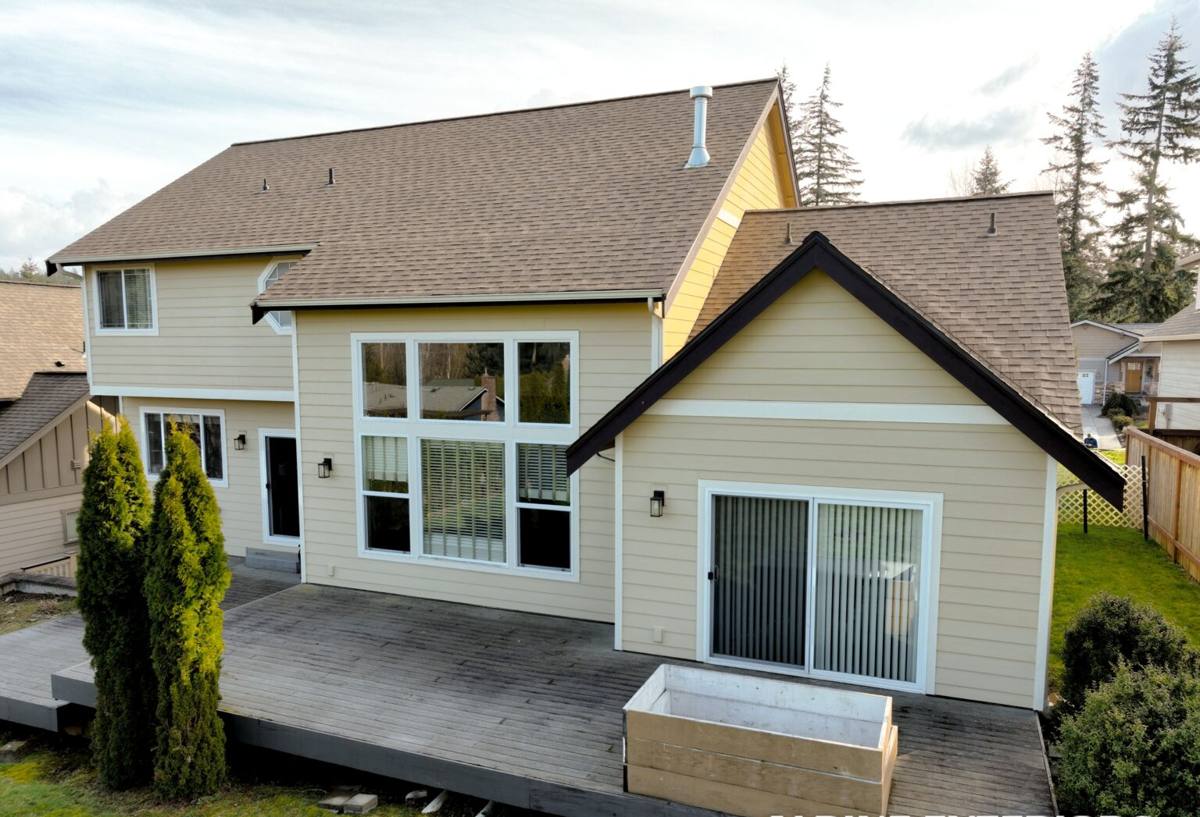
What Riverside's Climate Actually Does to a Roof
Salt Air and Corrosion
Riverside isn't right on saltwater, but Everett's proximity to Puget Sound means airborne salt still reaches inland neighborhoods, especially during storms with onshore wind. Salt-laden moisture accelerates corrosion on exposed metal — nails, flashing, vent stacks, and fasteners — faster than it would in a landlocked town. Roofs here need corrosion-resistant hardware throughout, not just at the parts you can see from the ground.
Driving Rain
Western Washington's rain isn't always gentle. Wind-driven storms push water sideways and upward under shingle edges, around chimneys, and into valleys — areas where a roof is most likely to leak if it wasn't detailed correctly. A roof built for Riverside has to assume water will find its way under the surface layer at some point, and be built to shed it anyway.
Moss and Shade
Riverside's mature trees and river-adjacent humidity create ideal moss conditions. Moss holds moisture against the roof surface, lifts shingle edges, and works its way under tabs over time. Left unmanaged, it shortens the life of even a well-installed roof. Moss control has to be designed into the installation, not treated as an afterthought.
What a Correct New Roof Installation Involves
A new roof is more than the visible layer. Every component underneath affects how long it lasts and how well it holds up to Everett's weather:
- Deck inspection and repair — any soft, delaminated, or water-damaged sheathing gets replaced before anything new goes down. Installing new roofing over a compromised deck just hides a bigger problem.
- Ice-and-water shield at eaves, valleys, and around penetrations — critical in a climate where wind-driven rain and occasional freeze events both occur.
- Synthetic underlayment across the full deck as a secondary moisture barrier, since shingles alone are the first line of defense, not the only one.
- Balanced ventilation — intake at the eaves, exhaust at the ridge — so moist air doesn't get trapped in the attic and condense against the underside of the deck.
- Corrosion-resistant flashing and fasteners at every valley, chimney, sidewall, and vent penetration, sized and installed for this region's salt exposure.
- Proper shingle or material fastening to the manufacturer's wind-rating specifications, not just "enough nails to hold it down."
Skip any one of these and the roof may look fine for a year or two before problems show up — usually as a leak, premature granule loss, or moss that keeps coming back no matter how often it's cleaned.
Choosing the Right Roofing Material for Riverside
There's no single "best" roofing material for every home — the right choice depends on your roof's pitch, your home's style, your budget, and how much long-term maintenance you're willing to take on. Here's how the common options compare for a home in this specific setting:
| Material | Moss Resistance | Salt Air Durability | Typical Lifespan | Maintenance |
|---|---|---|---|---|
| Architectural asphalt shingle | Moderate (improves with zinc strips) | Good with corrosion-resistant flashing/fasteners | 25–30 years | Periodic moss treatment recommended |
| Standing seam metal | High — sheds moisture, little surface for moss to grip | Good with coated/marine-grade fasteners | 40–50+ years | Low; occasional fastener/seam check |
| Synthetic/composite shingle | High — dense material resists moss intrusion | Good | 30–50 years | Low to moderate |
| 3-tab asphalt shingle | Lower — thinner profile holds moisture longer | Fair | 15–20 years | More frequent moss/algae treatment needed |
We generally steer Riverside homeowners away from thinner, budget-tier shingles as a primary defense against this climate — not because the product is unusable everywhere, but because the thinner profile and shorter warranty period mean the maintenance burden and replacement frequency end up costing more over the life of the roof than a mid-tier or better material would.
Moss Prevention Built Into the Installation
Chemical moss treatments help, but they're a maintenance task, not a fix for a roof that's set up to grow moss in the first place. During installation, we address moss at the source:
- Zinc or copper control strips near the ridge, which release trace metals with each rain that inhibit moss and algae growth downslope.
- Adequate roof ventilation, since a warmer, drier deck surface is less hospitable to moss than one trapping attic moisture underneath.
- Material selection that accounts for shade exposure — homes under heavy tree cover benefit from denser, moss-resistant materials over thinner ones.
None of this eliminates the need for occasional cleaning, especially on heavily shaded sections of roof, but it significantly reduces how often that maintenance is needed and how much damage moss can do between cleanings.
Flashing, Fasteners, and Ventilation Details That Matter Here
This is where a lot of roofs fail early, and where it's hardest for a homeowner to check the work after the fact — because most of it is hidden once the roof is finished.
Flashing
Valleys, chimneys, skylights, and sidewalls all need step flashing or valley metal sized and lapped correctly for wind-driven rain. In Riverside's climate, we treat every roof-to-wall and roof-to-vertical-surface transition as a place water will actively try to get behind, not just a place it might.
Fasteners
Standard fasteners corrode faster in salt-influenced air. We use corrosion-resistant nails and screws throughout, including at flashing and vent attachment points, so the roof's weak points aren't hidden behind a coat of paint or a bead of sealant.
Ventilation
Riverside's river-adjacent humidity means attic moisture management matters more here than in drier parts of Snohomish County. Balanced intake and exhaust ventilation keeps the attic closer to outdoor temperature and humidity, which protects both the roof deck from below and the shingles from below-surface condensation damage.
Our New Roof Installation Process
- Inspection and estimate — we assess your current roof, attic ventilation, and any problem areas specific to your lot (tree cover, low spots, prior leak history) before recommending a material and scope.
- Tear-off — complete removal of old roofing material so we can inspect the deck directly, rather than installing over unknown conditions.
- Deck repair — any damaged sheathing is replaced and documented before new roofing goes down.
- Underlayment and ice-and-water shield — installed per the details above, adjusted for your roof's specific valleys, eaves, and penetrations.
- Flashing and ventilation components — installed or upgraded to current standards, not just matched to whatever was there before.
- Material installation — shingles, metal, or composite installed to manufacturer wind and nailing specifications.
- Cleanup and magnetic sweep — full site cleanup, including a check for stray fasteners in the yard and driveway.
- Final walkthrough — we go over the finished roof and answer questions before considering the job complete.
What a New Roof Typically Costs in Riverside
Every roof is different, but these are the main factors that move the price up or down for homes in this area:
| Cost Factor | Why It Matters Here |
|---|---|
| Roof size and pitch | Steeper pitches and larger roof areas require more material and labor time |
| Number of tear-off layers | Older Riverside homes sometimes have more than one layer of roofing to remove |
| Deck condition | Hidden water damage from past moss or leak issues can add sheathing repair costs |
| Material choice | Asphalt, metal, and composite options span a wide price range with different lifespans |
| Tree cover and access | Heavy canopy can mean more cleanup and care during tear-off |
| Permit requirements | Local permitting adds a modest, predictable cost to the project |
Rather than quote a number that won't reflect your specific roof, we walk each home individually and provide a detailed written estimate before any work begins.
Why Hiring a Crew That Already Works in Riverside Matters
A roofing crew that regularly works in this part of Everett already knows which details tend to get overlooked on river-adjacent, tree-shaded lots — where moss builds up fastest, which flashing details take the most wind-driven rain, and how to sequence a tear-off around Snohomish County's wetter stretches of the year. That local familiarity translates into fewer surprises mid-project and a roof that's built for the conditions it will actually face, not a generic installation dropped into a climate it wasn't planned for.
Signs Your Riverside Home May Be Due for a New Roof
- Granules collecting in gutters or at the base of downspouts
- Moss or dark streaking that returns quickly after cleaning
- Curling, cracked, or missing shingles, especially on shaded slopes
- Daylight visible through the attic roof deck
- Soft spots or sagging when walked on (inspected by a professional, not a homeowner)
- A roof approaching or past the expected lifespan of its material
If you're seeing any of these signs, or simply want an honest assessment of where your roof stands, we're happy to take a look. Reach out for a free, no-pressure estimate using the form below.