 Everett
 Riverside Roofs Take a Different Kind of Beating
Riverside sits close enough to the water and the tree canopy that its roofs age differently than roofs a few miles inland. Homes here deal with a combination most Snohomish County neighborhoods don't get in equal measure: salt-laden air drifting up from Port Gardner Bay and the Snohomish River corridor, long stretches of driving, wind-pushed rain off the Sound, and shaded lots that stay damp long after the rest of Everett has dried out. That combination is exactly what shortens roof life and makes a roof replacement in Riverside a different job than the same work done in a drier, more open part of town.
None of this means Riverside is a bad place to own a roof. It means the roof needs to be built and installed with those specific conditions in mind, not just installed to a generic manufacturer spec sheet. That's the difference between a roof that looks fine for a few years and one that actually holds up through a decade or two of Everett winters.
What Salt Air, Driving Rain, and Moss Actually Do
Each of these stresses attacks a roof in its own way, and Riverside homes usually deal with all three at once.
Salt Air and Corrosion
Airborne salt speeds up corrosion on anything metal — flashing, fasteners, vent stacks, gutter hangers. Standard galvanized fasteners and thin flashing can start showing rust streaks and pinholing years before they would inland. Once flashing corrodes, water finds its way behind it, and that's where hidden rot starts.
Driving Rain
Wind-driven rain doesn't just fall straight down — it gets pushed sideways and upward under shingle tabs, around valleys, and into any gap in flashing or underlayment. A roof that's fine in a light, vertical rain can still leak in a Riverside windstorm if the underlayment and flashing details weren't built for lateral water intrusion.
The Long Moss Season
Shaded, tree-lined lots near the river stay damp for months at a time. That's exactly what moss and algae need to take hold. Moss doesn't just look bad — it lifts shingle edges, holds moisture against the roof deck, and accelerates granule loss. Left unaddressed, a moss-covered roof loses years off its expected lifespan.
Signs a Riverside Roof Needs Replacement, Not Another Repair
Repairs make sense for isolated damage. Replacement makes sense once the roof's overall condition — not just one spot — is compromised. Here's what we look for during an inspection:
- Granule loss heavy enough that shingles look bald or patchy, especially on south- and west-facing slopes
- Moss or algae covering more than a small area, or moss that keeps coming back after cleaning
- Curling, cupping, or cracked shingles, particularly on older architectural or three-tab roofing
- Rust streaking or visibly corroded flashing around chimneys, skylights, and vent stacks
- Soft spots or sagging when walked, which usually means deck damage underneath
- Daylight visible through the attic roof deck, or water stains on attic sheathing or insulation
- A roof approaching or past 20–25 years old (asphalt) or showing widespread wear well before that age, which is common in shaded, damp lots
- Interior ceiling stains that reappear after rain, even if a prior repair addressed one leak
If a roof is only showing one or two of these in a limited area, a repair is often the honest recommendation. We'll tell you that. Replacement gets recommended when the underlying materials — deck, underlayment, flashing — are wearing out as a system.
What a Correct Roof Replacement Involves Here
Tear-Off and Deck Inspection
Full tear-off lets us see the roof deck directly, which is the only reliable way to catch soft, rotted, or delaminated sheathing before it's covered back up. In Riverside's damp microclimates, deck rot around valleys and eaves is common enough that we budget time for it rather than treat it as a surprise.
Ice-and-Water Shield Where It Matters Most
Eaves, valleys, and roof penetrations get a self-adhering waterproof membrane underneath the primary underlayment. This is the layer that stops wind-driven rain and any ice-dam backup from reaching the deck, and it's non-negotiable on a roof exposed to Riverside's rain patterns.
Synthetic Underlayment Across the Field
A high-quality synthetic underlayment resists moisture absorption far better than old-style felt, and it holds up through the wet install windows that are unavoidable in Everett's climate.
Corrosion-Resistant Flashing and Fasteners
Given the salt air exposure, we specify flashing and fastener materials rated for coastal-adjacent conditions rather than the cheapest standard-grade hardware. It costs a little more up front and pays for itself by not rusting out in eight years.
Moss and Algae Resistant Roofing Materials
Where the material allows it, we use algae-resistant shingles (rated with copper or zinc granule technology) and, on request, install zinc or copper strips near the ridge, which release trace metal ions in rainwater runoff that inhibit moss regrowth down the slope.
Proper Ventilation Tie-In
A roof that can't breathe traps moisture in the attic, which feeds both deck rot and moss from underneath. We check and correct intake and exhaust ventilation as part of every replacement — not as an upsell, but because skipping it undermines everything else we just installed.
Choosing a Roofing Material for Riverside's Conditions
Every material has trade-offs. Here's how the common options actually perform under Riverside's specific mix of moisture, shade, and salt exposure:
| Material | Moss/Algae Resistance | Salt Air Durability | Typical Lifespan | Maintenance Needs |
|---|---|---|---|---|
| Architectural asphalt shingle (algae-resistant) | Good, with periodic cleaning | Good with corrosion-resistant flashing/fasteners | 25–30 years | Moderate — periodic moss checks |
| Standard three-tab asphalt shingle | Fair — more prone to moss in shade | Fair | 15–20 years | Higher — more frequent moss treatment |
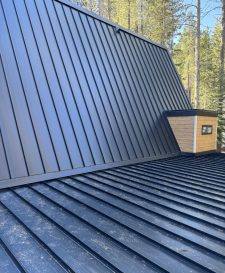
| Standing seam metal | Excellent — moss struggles to grip | Very good with proper coating/fasteners | 40–50+ years | Low |
| Synthetic/composite shake | Good | Good | 30–50 years | Low to moderate |
For most Riverside homes we recommend algae-resistant architectural asphalt as the practical middle ground — it holds up well against moss and salt exposure when installed correctly, and the cost fits most budgets. Standing seam metal is worth the higher upfront cost on heavily shaded lots where moss has been a recurring, expensive problem, since it essentially removes moss from the equation. We'll walk through the honest trade-offs for your specific roof rather than push one option.
Our Roof Replacement Process
- Inspection and estimate. We walk the roof, check the attic, and document deck condition, flashing, and ventilation before quoting anything.
- Material selection. We go over the trade-offs above based on your home's shade, exposure, and budget — no pressure toward the priciest option.
- Scheduling around the weather. We plan install windows to minimize exposed deck time, which matters more here than in drier parts of the state.
- Tear-off and deck repair. Old roofing comes off, damaged sheathing gets replaced, not patched over.
- Underlayment and flashing installation. Ice-and-water shield at vulnerable points, synthetic underlayment across the field, corrosion-resistant flashing throughout.
- Roofing material installation. Installed to manufacturer spec, with attention to nailing pattern and exposure — details that directly affect wind and rain performance.
- Ventilation and final details. Ridge and soffit ventilation checked and corrected, moss-inhibiting strips installed where applicable.
- Cleanup and walkthrough. Magnetic sweep for nails, full debris cleanup, and a walkthrough so you understand what was done and why.
Ventilation, Gutters, and the Parts People Forget
A roof replacement that stops at shingles and flashing is only half the job. Gutters that are undersized, clogged, or pitched wrong will dump water back against the fascia and roof edge no matter how good the new roofing is — and Riverside's tree cover means gutters clog faster than average. We check gutter condition and drainage as part of every roof estimate and flag it honestly if it needs attention alongside the roof itself, rather than let it undercut a new roof from day one.
Why a Crew That Already Works Riverside Matters
A roofing crew that regularly works this neighborhood already knows which streets sit under heavy tree cover, how close certain lots are to the water, and which older Riverside homes tend to have deck or ventilation issues hiding under the shingles. That familiarity shows up in faster, more accurate estimates and fewer surprises mid-project. It also means we're not guessing at Everett permitting requirements or scheduling around the region's rain patterns for the first time — we do this here, regularly, and we build every roof accordingly.
What This Costs
Roof replacement cost depends on more than square footage. The factors below move the price up or down more than most homeowners expect:
| Cost Factor | Why It Matters |
|---|---|
| Roof pitch and complexity | Steep or cut-up roofs (multiple valleys, dormers) take longer and need more safety setup |
| Layers to remove | Tear-off of multiple existing layers adds labor and disposal cost |
| Deck condition | Rotted sheathing found during tear-off adds material and labor not visible in a surface estimate |
| Material choice | Asphalt, metal, and composite carry different material and labor costs, see comparison above |
| Access and tree cover | Tight lots or heavy canopy near the house can slow staging and material handling |
We give a real number after seeing the roof and attic in person — not a rough phone estimate — because the deck condition alone can swing the price meaningfully once tear-off starts.
Get an Honest Look at Your Riverside Roof
If your roof is showing moss, granule loss, or you're just past due for an inspection given its age, we're glad to take a look and give you a straight answer — repair, replacement, or wait another season. Reach out for a free, no-pressure estimate using the form below.