 Everett
 Board & Batten Siding in the Silver Lake Neighborhood
Silver Lake sits in south Everett, close enough to Puget Sound and the lake itself that homes here deal with a specific mix of weather: salt-tinged air drifting in off the Sound, long stretches of driving rain through fall and winter, and shaded, damp yards that grow moss on anything that holds moisture. Board and batten siding is one of the more popular exterior styles we get asked about in this part of Snohomish County — it has a clean, vertical-line look that works on both traditional and modern homes, and it reads well against the wooded, lake-adjacent lots common in this neighborhood. Done right, it's also a genuinely durable siding style. Done wrong, it's one of the styles most likely to trap water where you can't see it.
This page is about doing it right, specifically for Silver Lake conditions, and specifically with the one product line we install: James Hardie fiber cement.
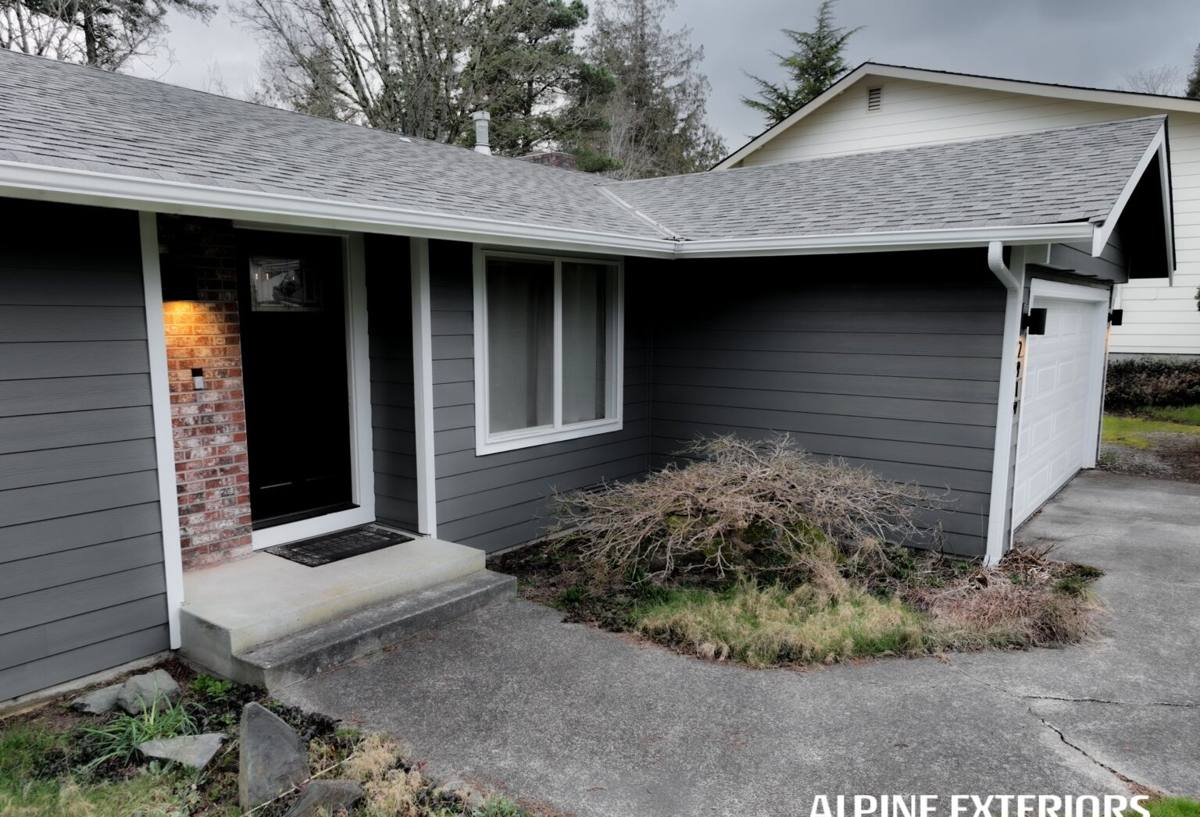
What Silver Lake's Climate Actually Does to Vertical Siding
Board and batten is a vertical siding pattern — wide boards with narrow battens covering the seams. That vertical orientation is part of the appeal, but it also means every seam and batten edge is a potential path for water to travel straight down the wall if it isn't detailed correctly. In a climate like Everett's, that matters more than it would in a dry region.
Salt Air
Proximity to Puget Sound means a steady low-level exposure to salt-laden moisture, even well inland from the water. Salt air accelerates corrosion on fasteners, flashing, and any metal trim, and it degrades cheap or poorly sealed paint finishes faster than a dry climate would. Fastener choice and finish quality aren't cosmetic details here — they're the difference between siding that holds up for decades and hardware that starts staining or failing within a few years.
Driving Rain
Everett gets sustained periods of wind-driven rain, not just steady drizzle. Wind-driven rain pushes water sideways and upward into seams that would stay dry in a calm rainfall. On a vertical board and batten wall, that means the horizontal joints between panels (if the design has any) and the drainage plane behind the boards need to actually work, not just look finished.
Moss and Shade
Many Silver Lake lots have mature trees and partial shade from the lake and surrounding growth. Shaded, damp wall sections stay wet longer after a storm, and that's exactly where moss and mildew take hold on siding, trim, and especially on horizontal surfaces like sills and batten tops. Moss holds moisture against the material it's growing on, which is a slow but real problem for anything that isn't inherently rot-resistant.
What a Correct Board & Batten Installation Involves
The look of board and batten is simple. The installation that keeps it performing for 30-plus years is not. A correct job includes:
- A functioning drainage plane — a weather-resistant barrier behind the siding, installed shingle-style so water sheds outward and down, not into the wall assembly.
- A rainscreen gap — furring strips or a drainage mat that create an air space behind the siding, so any moisture that does get past the outer layer can drain and dry instead of sitting against the sheathing.
- Correct batten spacing and fastening — battens need to land over solid backing and be fastened per the manufacturer's engineering, not just wherever looks even.
- Proper flashing at every penetration — windows, doors, hose bibs, light fixtures, and vents all need flashing details that direct water back out, not behind the cladding.
- Sealed and primed cut edges — every field cut on fiber cement needs to be sealed before installation; an unsealed cut edge is the single most common source of early moisture damage in fiber cement siding, and it's invisible once the piece is up.
- Corrosion-resistant fasteners — given the salt air exposure in this area, fastener spec isn't optional.
Skipping any one of these doesn't usually show up in year one. It shows up in year five or eight, as staining, soft spots, or paint failure at the seams — after the wall assembly behind the siding has already been absorbing moisture for years.
James Hardie Board & Batten Options We Install
We install James Hardie fiber cement exclusively, and board and batten is one of the profiles where that decision matters most, because the material has to survive constant wetting and drying cycles without swelling, cupping, or rotting. Hardie's fiber cement is non-combustible and engineered to hold paint and resist moisture intrusion far better than wood-based alternatives, which is exactly what a wet, shaded, salt-air neighborhood like Silver Lake needs.
| Option | How It's Built | Best Fit |
|---|---|---|
| HardiePanel + battens | Large-format vertical panels with separate battens fastened over the seams | Full board and batten look on gables, accent walls, or whole-home elevations |
| Hardie Artisan Vertical Siding | Factory-finished, deeper reveal profile with a more dimensional, high-end look | Homeowners wanting a premium finish on street-facing elevations |
| Board and batten as an accent | Vertical panels on a gable end or entry feature, paired with lap siding elsewhere | Budget-conscious updates that still change the home's street presence |
All of these come with James Hardie's factory-applied ColorPlus finish where applicable, which resists fading and chipping better than field-applied paint — a real advantage in a climate where repainting is a multi-day job you'd rather not repeat often.
Our Process on a Silver Lake Home
Every home in this neighborhood is a little different depending on how close it sits to the lake, how much tree cover it has, and what condition the existing siding and sheathing are in. Our process starts with an honest look at what's actually there:
- On-site assessment — we check the existing siding, sheathing, and trim for hidden moisture damage before quoting anything, since board and batten replacement often uncovers issues that weren't visible from the ground.
- Tear-off and sheathing inspection — old siding comes off, and any soft or water-damaged sheathing gets flagged and repaired before anything new goes up.
- Weather barrier and rainscreen installation — the drainage plane and furring go on next, sized and installed to manufacturer spec.
- Flashing at every opening — windows, doors, and penetrations get flashed before the siding covers them.
- Hardie panel and batten installation — fastened, sealed at cuts, and finished per James Hardie's installation instructions.
- Final walkthrough — we go over the finished work with the homeowner before calling the job done.
Why a Crew That Already Works Silver Lake Matters
Board and batten failures in this area are rarely about the product — they're almost always about installation shortcuts that don't account for local conditions. A crew that regularly works Silver Lake and the surrounding Everett neighborhoods already knows:
- Which wall orientations on lake-adjacent lots take the worst of the driving rain and shaded moisture, and where extra flashing attention matters most.
- How Snohomish County permitting and inspection typically runs for re-siding projects, so there are no surprises mid-job.
- What fastener and flashing corrosion actually looks like a few years into salt-air exposure, because they've seen it on other homes in the area.
- How to sequence work around the wetter months so the wall assembly isn't left exposed longer than necessary.
That local repetition is worth more than it sounds like. It's the difference between a crew guessing at best practices and one that's already made the adjustments this specific climate requires.
Living With Board & Batten in a Moss-Prone Climate
James Hardie fiber cement doesn't rot or feed moss the way wood-based siding can, but moss and mildew can still grow on any exterior surface that stays damp, including painted fiber cement in heavily shaded spots. A little seasonal attention keeps a board and batten exterior looking sharp for the long haul:
- Rinse siding with a garden hose once or twice a year, especially on shaded, north-facing walls near tree cover.
- Keep gutters clear so overflow isn't running down the wall face during heavy rain.
- Trim back branches and shrubs that keep a wall section shaded and damp longer than the rest of the house.
- Check caulking at trim and penetrations every couple of years and recaulk where it's cracked or pulled away.
- Avoid pressure washing directly at seams and batten edges — a soft wash is enough and won't drive water behind the siding.
What Board & Batten Siding Typically Costs
Board and batten involves more labor than flat lap siding — more cuts, more fasteners, more flashing detail work — so it generally runs somewhat higher per square foot than a standard lap installation. The real cost drivers on a Silver Lake project are usually these:
| Factor | Why It Moves the Price |
|---|---|
| Wall condition underneath | Rotten or moisture-damaged sheathing found during tear-off adds repair scope |
| Full-home vs. accent application | Board and batten on gables or feature walls costs less than a full elevation |
| Height and access | Two-story walls, steep grades, or limited access near trees add labor time |
| Product line chosen | Artisan-tier panels cost more than standard HardiePanel and batten setups |
| Trim and detail work | Window casings, corner boards, and custom trim add material and labor |
We'd rather give you a real number after seeing the house than a broad range that doesn't mean much — every Silver Lake property is different enough that a walk-through estimate is worth the time.
If you're weighing board and batten for a Silver Lake home, we're happy to come take a look, tell you honestly what your existing siding and sheathing are dealing with, and put together a free, no-pressure estimate using the form below.