 Everett
 Siding Repair Built for Riverside's Weather, Not a Generic Climate
Riverside sits close to the Snohomish River and within a few miles of Puget Sound salt air, which means the siding on these homes takes a combined beating that a lot of repair estimates don't account for. It isn't just rain — it's rain that sits, salt-laced air that speeds up corrosion on fasteners and trim, and long stretches of low sun angle and shade from mature trees that keep north- and east-facing walls damp for days at a time. Any siding repair here has to solve for that combination, not just patch the visible crack or gap.
We work Everett and greater Snohomish County regularly, and Riverside comes up often enough that we've developed a good sense of where problems start on these homes: behind downspouts that discharge too close to the wall, at trim joints that were caulked instead of properly flashed, and low on the wall where splash-back from hardscaping or landscaping beds keeps the bottom courses wet longer than the rest of the house.
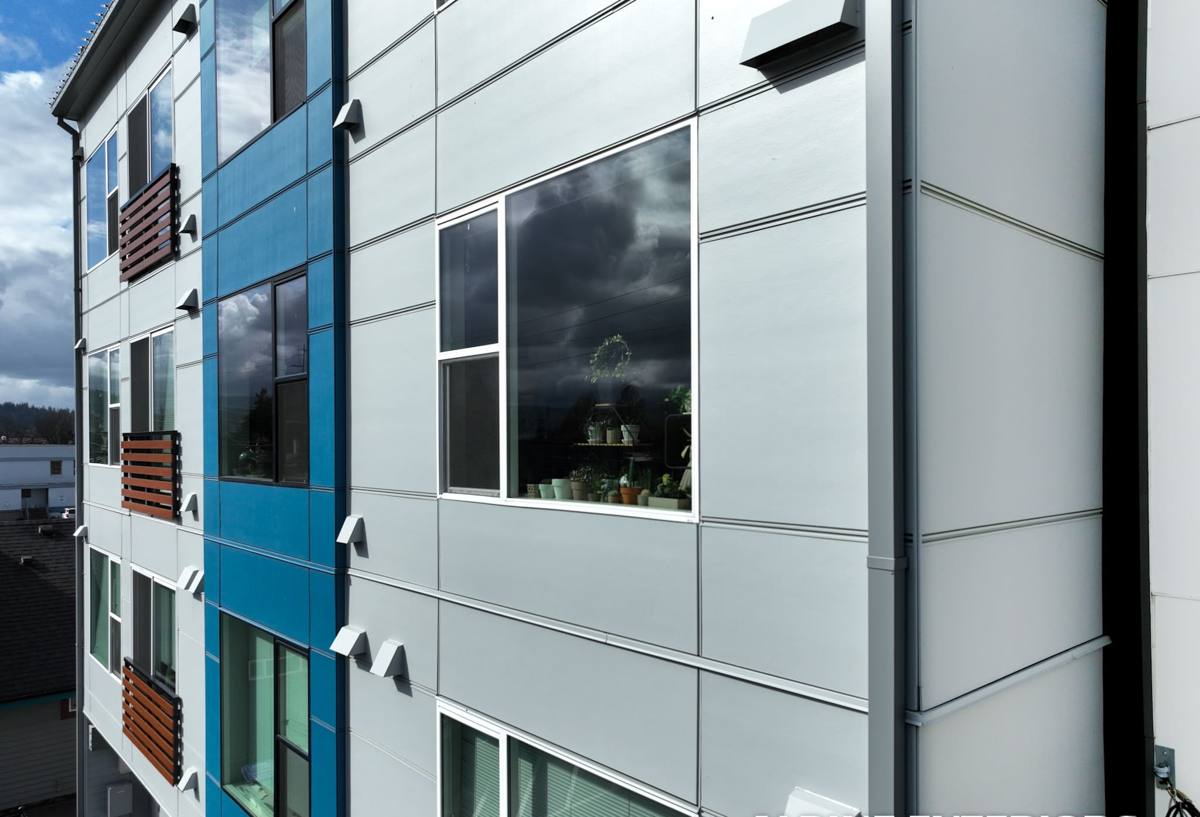
Why This Climate Is Hard on Siding Specifically
Salt Air and Metal Fasteners
Homes within a few miles of Puget Sound get a steady, low-grade dose of salt-laced moisture in the air. It doesn't corrode siding panels directly if they're the right material, but it accelerates rust on exposed nail heads, flashing seams, and any steel components that weren't properly coated or covered. Rust streaks bleeding down a wall are usually a fastener problem, not a panel problem — but if ignored, the expanding rust can eventually crack the material around it.
Driving Rain
Western Washington rain isn't always gentle. Storms off the Sound push rain sideways into walls, which finds every gap in flashing, trim, and old caulk. Driving rain is what turns a small installation flaw into a slow leak — water gets behind the siding at a joint and then travels down inside the wall assembly before it ever shows up as a visible stain.
The Long Moss Season
Shaded walls, fences, and roofs in this area grow moss for most of the year, not just in deep winter. Moss holds moisture directly against whatever it's growing on. On siding, that means constant dampness at seams and butt joints, which is exactly where poor-quality material swells, cups, or delaminates first. Moss on siding is a maintenance issue worth taking seriously, not just a cosmetic one.
Signs Riverside Homeowners Should Watch For
Most siding damage in this area doesn't show up as an obvious hole or crack. It shows up as small, easy-to-dismiss signs that point to moisture getting somewhere it shouldn't:
- Soft or spongy spots when you press on the siding, especially near the bottom of the wall or under windows
- Dark streaking or staining that follows a seam, joint, or the underside of trim
- Visible gaps or separation at butt joints, corners, or where siding meets trim, doors, and windows
- Bubbling, peeling, or flaking paint in one localized area while the rest of the wall looks fine
- A musty smell near an exterior wall on the interior of the home
- Moss or persistent green growth directly on the siding surface, not just nearby surfaces
- Rust streaks running down from nail heads or trim fasteners
Any one of these on its own might be minor. Two or three in the same area usually means water has been getting in for a while and the repair needs to address the cause, not just the symptom.
What a Correct Siding Repair Actually Involves
A repair that only replaces the damaged board without checking what's underneath is a repair that fails again in a season or two. On homes in a wet, shaded area like Riverside, we treat every repair as a small investigation:
1. Diagnose the Water Path, Not Just the Damage
Before anything gets removed, we trace where the water is actually coming from. Damage two feet from the leak source is common — water travels along studs and sheathing before it pools or shows through the surface. Removing the wrong board fixes nothing.
2. Check the Weather-Resistive Barrier and Flashing
Once siding is off, we inspect the house wrap or building paper and the flashing at windows, doors, and penetrations. If the barrier is torn, improperly lapped, or the flashing was missing or reversed, that gets corrected before anything new goes back on. Reinstalling siding over a compromised barrier just delays the same failure.
3. Replace with Matching, Climate-Rated Material
We repair with James Hardie fiber cement, matched to the existing HZ5 climate-engineered product line and ColorPlus finish where the home already has Hardie installed. Fiber cement doesn't absorb water the way wood-based products do, and it holds up to the freeze-thaw and saturation cycles this climate produces far better than materials that swell or delaminate when wet.
4. Reinstall to Spec — Gaps, Fasteners, and Caulk Joints
Correct clearances at the bottom of the wall, proper fastener placement and depth, and sealant only where sealant belongs (not as a substitute for flashing) are what keep a repair from becoming a callback. This is the step that gets rushed most often on repair jobs, and it's the one that determines whether the repair lasts five years or twenty.
Repair or Replace? A Practical Comparison
Not every repair call ends in a repair — and not every homeowner needs a full re-side. Here's how we think through it:
| Situation | Usually a Repair | Usually Points to Replacement |
|---|---|---|
| Damage location | Isolated to one wall section or a few boards | Spread across multiple walls or the whole exterior |
| Underlying material | Sheathing and framing are sound once opened up | Rot or soft sheathing found in multiple areas |
| Siding material | Existing Hardie or comparable fiber cement | Aging wood, LP SmartSide, or vinyl nearing end of service life |
| Age of siding | Under roughly 15 years old | Original siding is 20+ years old with widespread wear |
| Root cause | Fixable flashing, caulk, or drainage issue | Systemic moisture problem tied to grading, ventilation, or barrier failure |
We'll always tell you honestly which category your home falls into. A repair-only recommendation costs us less work than a replacement — we're not going to talk you into more than your house needs, and we're not going to patch something that's going to fail again next winter either.
How the Process Works
We keep siding repair visits straightforward:
- Inspection: We walk the exterior, check the areas you've flagged, and look at drainage, grading, gutters, and trim while we're there — problems in those systems often explain why the siding failed where it did.
- Written scope: You get a clear explanation of what we found, what caused it, and what the repair involves — before any work starts.
- Repair work: Damaged material comes out, the barrier and flashing get inspected and corrected as needed, and new James Hardie material goes back in, matched for color and profile where possible.
- Cleanup and check: We clear debris and walk the repair with you so you can see exactly what was done.
Why a Crew That Already Works Riverside Matters
Siding repair isn't just carpentry — it's diagnosing water behavior specific to a site. A crew that's already worked on homes in this part of Everett has a head start: we know which orientations tend to hold moisture longer because of tree cover and river-valley humidity, which trim details on older Snohomish County homes tend to fail first, and what correct Hardie repair looks like on the product lines commonly installed in this area. That local pattern recognition shortens the diagnosis step and reduces the chance of missing a second problem hiding near the one you called about.
It also means straightforward logistics — material matching, scheduling around this area's weather windows, and a crew that isn't guessing at how this climate behaves.
Why We Only Repair and Install James Hardie
We standardized on James Hardie fiber cement because it's the product we trust to hold up to exactly the conditions Riverside deals with: sustained moisture, salt air, and heavy shade. It's non-combustible, it doesn't absorb and swell with water the way wood-based composite sidings can, and its ColorPlus factory finish holds color without the repainting cycle other materials need. When we repair a wall, we want confidence that the patch will perform as long as the rest of the siding — that's a much easier promise to make with fiber cement engineered for this exact climate than with materials that were never rated for it.
A Quick Homeowner Checklist
Before you call anyone about siding repair, a few minutes outside can help you describe the problem accurately and get a faster, more accurate estimate:
- Walk the exterior and note which walls or areas show staining, gaps, or soft spots
- Check whether the issue lines up with a downspout, roof valley, or shaded area
- Look at nearby caulk joints — cracked or missing caulk is an easy early clue
- Note whether you've seen or smelled dampness on the interior wall behind the affected area
- Take photos if you can, especially of staining patterns — they help us prep before the visit
If you're seeing any of these signs on a Riverside-area home, we're happy to take a look and give you a straight answer about what's going on and what it'll take to fix it. Reach out for a free, no-pressure estimate — there's a form right below this section.