 Everett
 Roof Repair Built for Lynnwood's Climate
Lynnwood sits in a stretch of Snohomish County that gets hit with a specific combination of weather stress: salt-tinged marine air drifting in off Puget Sound, long stretches of driving rain through fall and winter, and a moss season that can run eight months or more if a roof gets shaded by mature fir and cedar trees. None of these factors is dramatic on its own, but stacked together year after year, they wear on a roof in ways that homeowners in drier climates never have to think about. A roof repair here isn't just patching a leak — it's addressing the specific chain of events that caused the leak in the first place.
We work on roofs throughout Lynnwood and the surrounding Everett area regularly, which means we're not guessing at how local homes age. We know which roof styles trap moisture, which valleys clog first, and which north-facing slopes stay damp long after the rest of the roof has dried out. That local pattern recognition is what separates a repair that actually holds from one that reopens in a year.
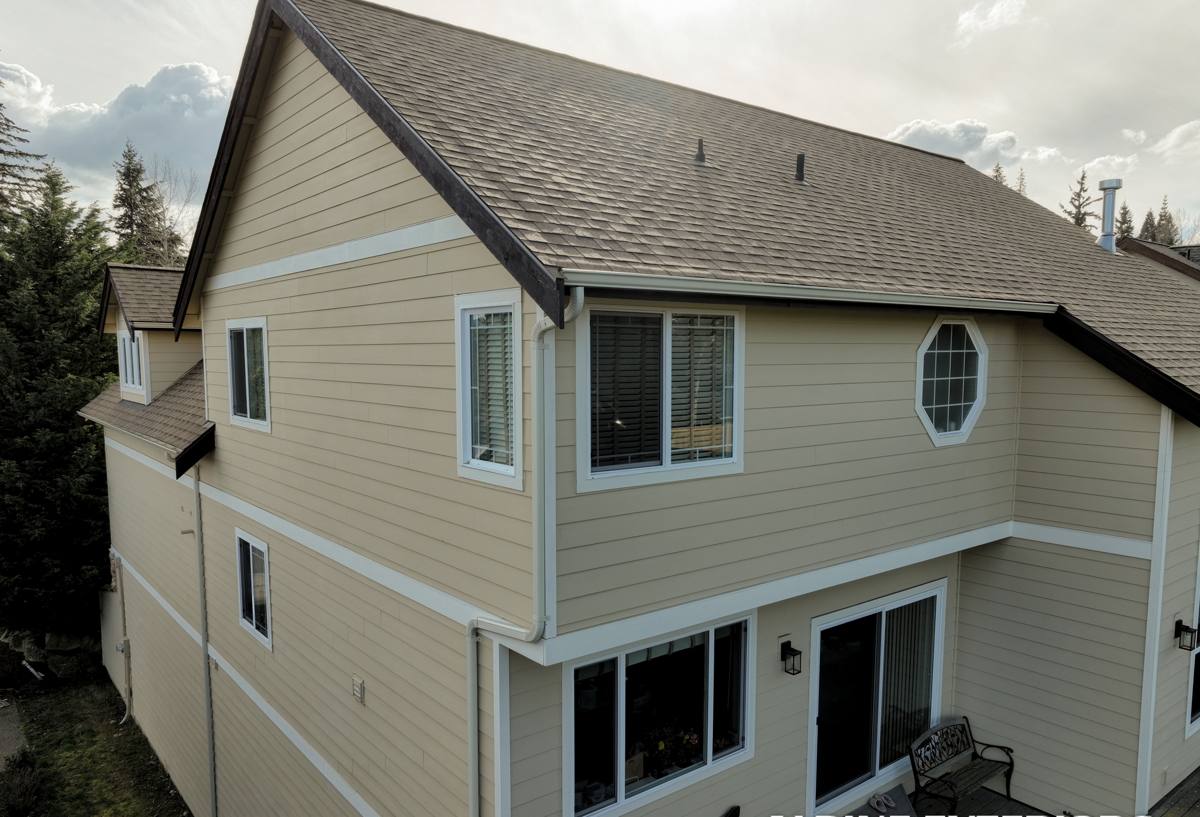
What Lynnwood's Weather Actually Does to a Roof
Moss and Organic Growth
Lynnwood's tree cover and consistent moisture create ideal conditions for moss, algae, and lichen to take hold on roofing surfaces. Moss isn't just cosmetic — it holds water against shingles or shakes far longer than open air would, and its root structure works into seams and granule surfaces over time. On composition shingles, this accelerates granule loss. On wood or older roofing, it can trap enough moisture to promote rot in the decking underneath.
Driving Rain and Wind-Driven Moisture
Storms moving in off the Sound don't always arrive straight down. Wind-driven rain gets pushed sideways under shingle tabs, around flashing edges, and into any gap that wouldn't be a problem in calmer weather. This is why so many Lynnwood roof leaks show up at flashing details — chimneys, skylights, vent pipes, and wall-to-roof transitions — rather than in the open field of the roof.
Salt Air and Metal Fatigue
Even a few miles inland from Puget Sound, salt-laden air accelerates corrosion on exposed metal components: flashing, fasteners, gutter hardware, and vent caps. Corroded fasteners back out or lose their grip over time, and corroded flashing thins until it no longer sheds water reliably. This is a slower process than moss growth, but it's a real factor in why older metal roof components in this area fail before their rated lifespan would suggest.
Signs a Lynnwood Roof Needs Repair
- Water stains on interior ceilings or upper walls, especially after a windy rainstorm
- Visible moss patches, particularly on north-facing or shaded slopes
- Granules collecting in gutters or at downspout outlets
- Curling, cupping, or lifted shingle tabs
- Soft or spongy decking felt underfoot in the attic near valleys or penetrations
- Rust streaks below metal flashing or vent caps
- Daylight visible through roof boards from inside the attic
- Gaps or cracked sealant around chimneys, skylights, or pipe boots
Any one of these on its own might not be urgent. Two or three together, especially heading into the wet season, is usually a sign it's time for a closer look.
What a Correct Roof Repair Involves
A repair that actually solves the problem starts with figuring out why the damage happened, not just where it's visible. Water often travels along the underside of decking or down a rafter before it shows up as a stain on drywall, so the point where you see damage inside the house is rarely the point where water is entering the roof.
Our Typical Repair Process
- Roof and attic inspection. We look at the roof surface, flashing details, and vent penetrations, and we check the attic from the inside for water tracks, staining, and decking condition.
- Source diagnosis. We trace the leak path back to its actual entry point — often a flashing seam, a cracked pipe boot, or a valley that's been holding debris and moss.
- Decking assessment. If water has been getting in for a while, we check whether the plywood or plank decking underneath is still sound or has softened and needs replacing before new roofing goes over it.
- Repair execution. Depending on what we find, this might mean replacing a section of shingles, resealing or replacing flashing, swapping a failed pipe boot, or rebuilding a valley.
- Moss and debris treatment. Where moss or heavy debris contributed to the problem, we clear it and discuss options to slow regrowth, since removing moss without addressing why it grew back there just buys a year or two.
- Final check. We confirm the repair area sheds water correctly and matches the surrounding roofing as closely as possible.
Repair vs. Replacement: How We Help You Decide
Not every roof problem calls for a full replacement, and not every leak can be responsibly patched. The honest answer depends on the roof's age, how widespread the damage is, and whether the decking underneath is still structurally sound.
| Factor | Leans Toward Repair | Leans Toward Replacement |
|---|---|---|
| Roof age | Under 15 years, or well-maintained | Near or past its expected lifespan |
| Damage extent | Isolated to one area or detail | Spread across multiple slopes |
| Decking condition | Solid, no soft spots | Soft, delaminated, or rotted in multiple spots |
| Moss/algae history | Recent or first occurrence | Long-term, granule loss is significant |
| Shingle condition elsewhere | Still flexible, granules intact | Brittle, curling, widespread granule loss |
We'll walk you through which category your roof falls into and explain our reasoning in plain terms, not just hand you an estimate. If a repair is the honest answer, we'll say so — a roof that doesn't need full replacement shouldn't get sold one.
Flashing, Valleys, and the Details That Actually Fail
Most roof leaks in this region don't come from the shingles themselves failing in the open field — they come from the details around penetrations and transitions. Chimney flashing, skylight curbs, valleys where two roof planes meet, and the step flashing where a roof meets a wall are the highest-risk points, especially under the wind-driven rain conditions common here. When we repair these areas, we're not just resealing the surface; we're checking that the underlying flashing geometry is still shedding water the way it was designed to, and rebuilding it if it isn't.
Why Sealant Alone Isn't a Fix
A bead of sealant over a gap can stop a leak temporarily, but it's not a substitute for correct flashing. Sealant degrades faster than metal, especially with UV exposure and temperature swings, and it doesn't address the underlying reason water was finding its way to that spot. We use sealant as a finishing detail on proper flashing work, not as the repair itself.
Materials We Repair With
We match repairs to what's already on the roof wherever possible, since mixing incompatible materials or mismatched profiles can create new leak points instead of solving old ones. That includes composition (asphalt) shingles, cedar shake and shingle roofing common on older Snohomish County homes, and metal roofing components. For flashing and valley work, we use corrosion-resistant metal suited to this area's salt air exposure rather than materials that will simply repeat the failure that caused the original problem.
Preventive Steps Between Repairs
- Keep gutters and valleys clear of needles and debris, especially before the fall rains start
- Trim back tree limbs that keep sections of the roof shaded and damp
- Have moss addressed before it spreads across an entire slope
- Check attic ventilation — poor airflow traps moisture and accelerates decking damage from the inside
- Walk the roofline after major windstorms to spot lifted shingles or dislodged flashing early
None of these replace a professional inspection, but they reduce how often small issues turn into interior water damage between visits.
Why Hire a Crew That Already Works in Lynnwood
Roofing crews unfamiliar with this specific microclimate sometimes underestimate how much moss and moisture stress this area sees compared to drier parts of the state, or they apply repair approaches that work fine in a dry climate but don't hold up against sustained Puget Sound rain. Working in and around Everett and Snohomish County regularly means we see the same failure patterns repeat across similar homes, and that pattern recognition shortens the time it takes to correctly diagnose a leak instead of chasing it.
We also know the practical side of working here — permitting expectations, typical roof styles built during Lynnwood's various development periods, and how to schedule repair work around the wetter months so it doesn't get delayed by weather it should have been planned around.
Get a Straight Answer on Your Roof
If you're dealing with a leak, visible moss, or just want a second opinion before winter rains set in, we're happy to take a look. We'll give you a clear read on what's actually happening with your roof and what it will take to fix it right — no pressure, no inflated scope. Reach out using the form below to schedule a free estimate for your Lynnwood home.