 Everett
 Roof Repair Built for Silver Lake's Conditions
Silver Lake sits close enough to Puget Sound and the lake itself that homes here take on a specific mix of weather stress: salt-laden air moving in off the water, long stretches of driving rain through the fall and winter, and a moss season that seems to start earlier and last longer every year. None of that is unique to any one house in the neighborhood — it's a shared condition, and it means roof repair here isn't quite the same job as roof repair in a drier, inland part of Snohomish County. A patch that would hold fine somewhere with less moisture exposure can fail within a season or two on a Silver Lake roof if it doesn't account for how water, salt, and organic growth actually behave in this specific environment.
Salt Air and Corrosion
Homes closer to the water pick up fine salt particulate in the air, and over time it accelerates corrosion on exposed metal roofing components — flashing, fasteners, vent caps, and gutter hardware. Standard fasteners and unprotected metal edges corrode faster here than they would further inland, which is why the metal we use for flashing and trim on repairs matters as much as the shingles themselves.
Driving Rain and Wind-Driven Leaks
A lot of the leaks we get called out for in this area aren't simple roof-surface failures — they're wind-driven rain finding its way in sideways, through gaps in flashing, under lifted shingle edges, or around penetrations that were sealed but never properly flashed. Everett gets enough sustained rain, especially paired with wind off the Sound, that water is pushed uphill under materials that would keep out a straight-down rain just fine.
The Long Moss Season
Shaded, moisture-retentive roof sections — north-facing slopes, areas under overhanging trees, valleys that don't get much sun — grow moss for a large part of the year in this climate. Moss holds moisture against the roofing material, lifts shingle edges as it grows, and channels water sideways instead of letting it shed downhill. A roof that looks intact from the ground can have real moisture damage building underneath a moss mat that's been there for a year or two.
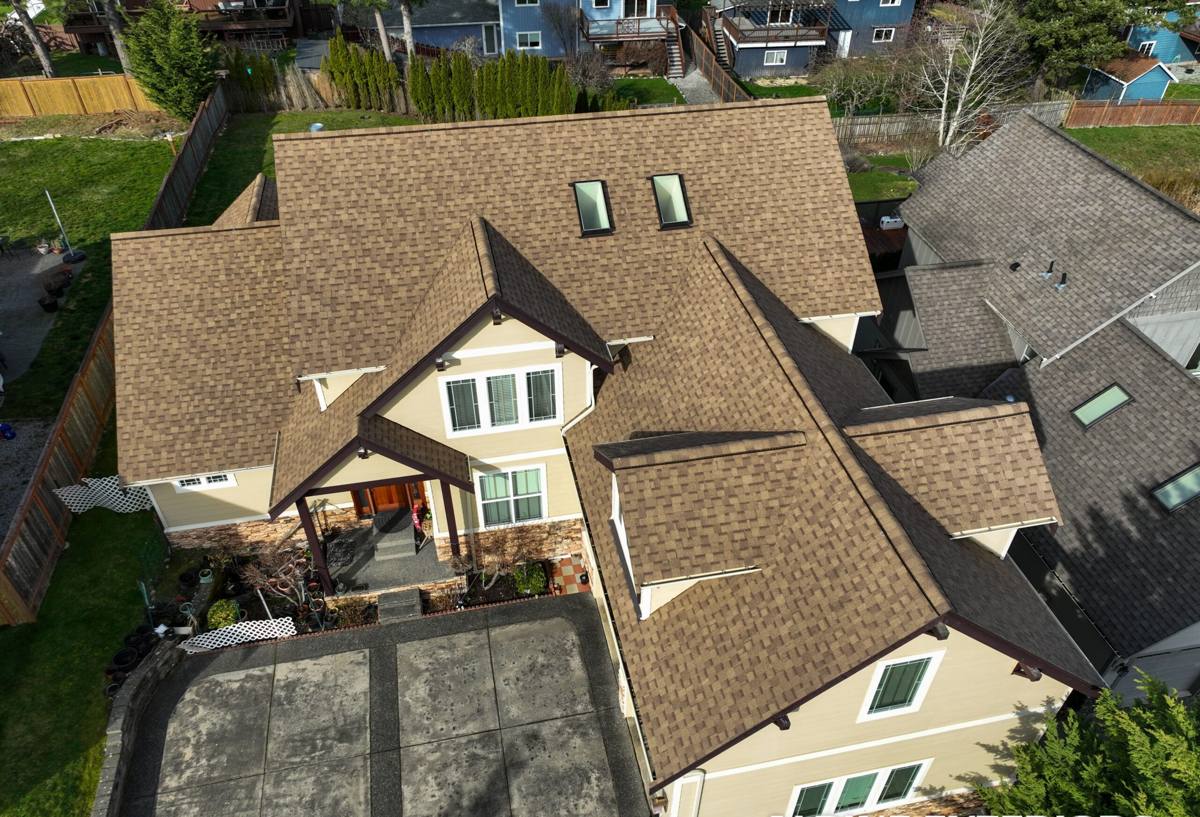
Common Roof Problems We See on Silver Lake Homes
The repair calls we run in this neighborhood follow a fairly consistent pattern, shaped directly by the conditions above:
- Lifted or cracked shingles along moss-covered north slopes and valleys
- Corroded or failing flashing around chimneys, skylights, and roof-to-wall transitions
- Wind-driven leaks at ridge caps and exposed roof edges
- Clogged or damaged gutters contributing to water backing up under the roof edge
- Soft or discolored roof decking discovered once shingles are pulled back for repair
- Nail pops and fastener corrosion on older roofs closer to the water
What a Proper Roof Repair Actually Involves
A roof repair done right starts with figuring out where the water is actually getting in — not just where it's showing up inside the house. Interior stains and exterior leak points are often several feet apart, because water travels along the underlayment or decking before it finds a gap to drip through. That's why we don't quote a repair off a photo or a description over the phone; we get on the roof, trace the path, and confirm the cause before we talk about the fix.
Diagnosis Before Patching
Surface patching over a symptom — caulking a stain, replacing one obviously cracked shingle — without finding the real entry point is one of the most common reasons a "repaired" roof leaks again within a year. We check flashing integrity, underlayment condition, decking for soft spots, and the surrounding shingle field, not just the one spot that's visibly failing.
Matching Materials and Proper Flashing
Repairs need to match the existing roofing material in type, profile, and where possible, color, so the patch performs the same as the surrounding roof and doesn't stand out as an obvious repair. Flashing gets rebuilt or replaced with corrosion-resistant metal rather than just resealed with caulk, since caulk is a short-term fix and metal flashing is the long-term one — especially given the salt exposure closer to the water.
Decking Repair When Needed
If moisture has been sitting under a section of roofing for a while, the decking underneath can go soft. Shingling over soft decking doesn't fix anything — it just hides a structural problem under new material. Any repair we do includes replacing damaged decking before new roofing goes back down.
Our Roof Repair Process
- Inspection and diagnosis — We get on the roof, identify the actual water path, and check flashing, decking, and surrounding material condition, not just the visible symptom.
- Written explanation and estimate — You get a plain-English explanation of what's actually wrong, what it takes to fix it correctly, and a clear price before any work starts.
- Repair — Damaged material is removed, decking is repaired if needed, flashing is rebuilt with corrosion-resistant metal, and matching roofing material is installed and properly tied into the surrounding roof.
- Moss and debris cleanup — Where moss or heavy debris contributed to the problem, we clear it from the repair area and surrounding roof so it isn't sitting against new material on day one.
- Final check — We walk the repair and the roof edges around it before we call the job done.
Repair vs. Replace: How We Help You Decide
Not every roof problem in Silver Lake needs a full replacement, and not every leak can be fixed with a small patch. The honest answer usually falls somewhere in between, based on the roof's age, how much of it is affected, and what we find once we're actually up there.
| Situation | Usually points to |
|---|---|
| Isolated leak, roof under 12-15 years old, decking sound | Targeted repair |
| Multiple leak points across different roof sections | Broader repair or partial re-roof of affected slopes |
| Widespread moss damage with lifted shingles in several areas | Repair plus moss treatment, or replacement if shingles are brittle throughout |
| Roof near or past its expected material lifespan | Replacement — repairs become short-term fixes on aging material |
| Soft decking found in multiple areas during inspection | Replacement likely more cost-effective than repeated deck repairs |
We'll tell you honestly which category your roof falls into. If a repair genuinely solves the problem, that's what we'll recommend — a full re-roof isn't the answer just because it's the bigger job.
Roofing Materials and Repair Considerations
What your roof is made of changes how a repair is done and what it costs, especially with the salt air and moss exposure in this part of Everett.
| Material | Repair considerations in this climate |
|---|---|
| Composition/asphalt shingle | Most common; individual shingles are replaceable, but matching older, sun-faded shingle color can be difficult |
| Metal roofing | Long-lasting, but fastener and flashing corrosion near the water needs monitoring; repairs require metal-specific technique |
| Cedar shake | Requires more frequent moss management; individual shake replacement is more labor-intensive than shingle replacement |
| Flat or low-slope sections | More vulnerable to standing water and moss; often needs membrane-specific repair rather than shingle patching |
Why a Crew That Already Works Silver Lake Matters
A roofer who works this neighborhood regularly already knows which slopes tend to hold moss the longest, how wind off the Sound tends to drive rain into certain roof orientations, and which older Silver Lake homes are more likely to have flashing that was never upgraded from the original build. That local pattern recognition shortens the diagnosis part of the job and reduces the odds of guessing wrong about what's actually causing a leak. It also means we're not learning the neighborhood's roofing quirks on your roof — we've already seen them on the one down the street.
Maintenance Checklist for Silver Lake Homeowners
Between repairs, a few habits go a long way toward keeping small issues from turning into bigger ones in this climate:
- Have moss treated or removed before it spreads across a full slope, not after
- Keep gutters clear so water isn't backing up under the roof edge during heavy rain
- Trim back tree limbs that shade roof sections and keep them damp longer than the rest of the roof
- Check attic spaces after major storms for water staining, even if there's no visible ceiling leak yet
- Have flashing around chimneys and skylights inspected every few years, since it fails quietly before it fails visibly
- Address small leaks promptly — a slow drip in this climate has more months of rain to work with than in drier regions
If you're dealing with a leak, moss buildup, or a roof that's just due for an honest look, we're happy to come out, inspect it, and give you a straightforward, no-pressure estimate for the repair — use the form below to get started.