 Everett
 Roof Repair Built for South Everett's Weather
South Everett homes sit close enough to Puget Sound and Possession Sound that salt-laden air is a constant, low-grade stress on every exposed roofing material. Add in the long, wet stretch of driving rain that Snohomish County sees from fall through spring, plus a moss season that can run nearly year-round in shaded, north-facing sections of a roof, and you have a climate that quietly wears roofs down faster than homeowners expect. None of these factors cause dramatic, sudden failures on their own. Instead, they work slowly — a lifted shingle edge here, a soft spot in the underlayment there — until a homeowner notices a stain on a ceiling and realizes the damage has been building for a while.
Roof repair in this area isn't about patching whatever is leaking today. It's about understanding how salt air, sustained moisture, and organic growth interact with the specific roofing material on your house, then addressing the actual cause instead of just the symptom.
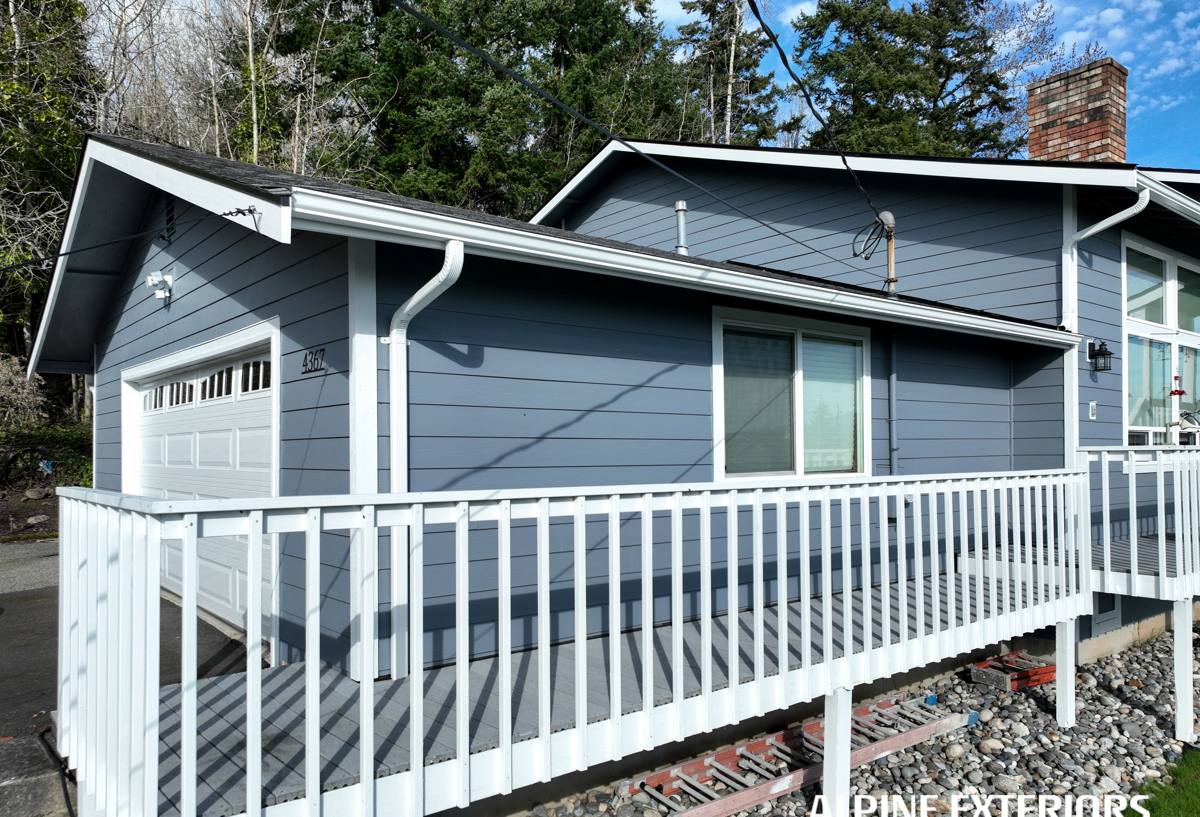
Why Local Roofs Fail the Way They Do
Salt Air and Metal Fatigue
Anything metal on a roof — flashing, nails, vent caps, gutter fasteners — is vulnerable to accelerated corrosion when it's exposed to salt-influenced coastal air over years. Corroded flashing is one of the most common root causes of "mystery" leaks, because the shingles above it can look perfectly fine while water is finding its way in underneath.
Driving Rain and Wind-Driven Water
Straight-down rain rarely causes problems on a roof in reasonable condition. The issue is wind-driven rain, which pushes water sideways and upward under shingle edges, around vent boots, and into any gap that a calmer rain would never reach. Roofs here need details — laps, seals, flashing — that are built to handle water coming from an angle, not just from above.
Moss, Shade, and Trapped Moisture
Moss doesn't just look bad. As it spreads across shingles, it holds moisture against the roofing material far longer than the surface would otherwise stay wet, which softens shingles, lifts edges, and accelerates granule loss. On shaded slopes — the north side of a house, or areas under overhanging trees — moss can become a repeat problem within a year or two of being cleared if the underlying moisture pattern isn't addressed at the same time.
Signs a South Everett Roof Needs Repair
Most roof problems give warning signs well before they become an active leak. Catching them early is what keeps a repair a repair, instead of letting it turn into a much larger project.
- Shingles that are cracked, curling at the edges, or missing granules in patches
- Dark streaking or thick moss growth, especially on shaded or north-facing slopes
- Soft or spongy spots when the roof surface is walked (a sign of underlayment or decking damage)
- Rust staining or visibly deteriorated flashing around chimneys, skylights, and vent pipes
- Granules collecting in gutters or at the base of downspouts
- Water stains on interior ceilings or in the attic, particularly near roof valleys or penetrations
- Daylight visible through the roof deck when viewed from inside the attic
- Sagging in the roofline or along a valley
What a Correct Roof Repair Actually Involves
A repair that's done right addresses three layers, not just the visible one:
1. The Surface Layer
This is the shingle, shake, or roofing material itself. Damaged pieces need to be removed and replaced with matching material, properly integrated into the surrounding courses so the repair sheds water the same way the original installation did.
2. The Flashing and Transitions
Leaks concentrate at transitions — chimneys, skylights, roof-to-wall junctions, valleys, and vent penetrations — far more often than they occur in the open field of a roof. Flashing at these points has to be inspected and, where corroded or improperly lapped, replaced and re-sealed correctly. Because we also work on siding, we pay particular attention to where the roofline meets the wall assembly, since a gap or corroded flashing at that junction can send water into the siding and framing below, not just the attic.
3. The Underlayment and Decking
If water has been getting past the surface layer for any length of time, the underlayment or the wood decking beneath it may be compromised. A repair that only replaces shingles over a soft or water-damaged deck is a repair that will fail again, often within a season.
Repair vs. Replacement: How We Help You Decide
Not every roof problem needs a full replacement, and not every leak can be permanently solved with a patch. The honest answer depends on the roof's age, how widespread the damage is, and what's happening underneath the surface.
| Factor | Leans Toward Repair | Leans Toward Replacement |
|---|---|---|
| Roof age | Within the material's expected service life | At or beyond expected lifespan for the material |
| Extent of damage | Isolated to one area, flashing, or a few shingles | Widespread granule loss, curling, or multiple leak points |
| Decking condition | Solid, no soft spots | Soft, spongy, or visibly water-damaged decking |
| Moss/moisture history | First occurrence or easily addressed shading issue | Chronic, recurring moss despite repeated cleaning |
| Underlayment condition | Intact where inspected | Deteriorated or original underlayment near end of life |
We'll always tell you plainly which side of that line your roof falls on, and why — including when a repair is genuinely the right call and a full replacement would be spending money you don't need to spend.
Our Roof Repair Process
- On-site assessment. We inspect the roof surface, flashing, valleys, and visible attic areas to find the actual source of the problem, not just where water is showing up inside the house.
- Plain-language explanation. We walk you through what we found, what's causing it, and what it will take to fix — including whether it's a true repair or something larger.
- Written scope and estimate. You get a clear description of the work and materials before anything starts, with no surprise add-ons partway through.
- The repair itself. Damaged material is removed, decking is checked and replaced where needed, new material is integrated to match the surrounding roof, and flashing is corrected and sealed.
- Site cleanup. Old material, debris, and fasteners are cleared from the roof and the ground around the house before we consider the job finished.
- Final walkthrough. We review the completed work with you so you know exactly what was done and what to watch for going forward.
Materials We Use for Roof Repairs
We match repairs to the roofing material already on your home whenever possible, since mismatched materials age differently and can create their own long-term problems. For flashing and fasteners, we favor corrosion-resistant materials given how much salt-influenced air this area gets over the life of a roof — using anything less durable at those transition points tends to shorten the time before the same spot needs attention again. Where moss has been a recurring issue, we'll talk through options like zinc or copper strip treatments alongside the physical repair, since removing moss without addressing why it keeps coming back is a short-term fix at best.
Why Hire a Crew That Already Works South Everett
Roofing problems in this part of Snohomish County follow patterns that are different from roofs inland or in drier climates. A crew that regularly works South Everett homes has already seen how salt air corrodes flashing on houses of a certain age, which slopes tend to hold moss because of tree cover and sun exposure, and where wind-driven rain during a coastal storm tends to find its way in. That local pattern recognition means a faster, more accurate diagnosis instead of a generic inspection that treats every roof the same way regardless of climate.
It also means straightforward communication about your options, without pressure toward the most expensive fix. A repair should solve the actual problem — no more, no less.
Keeping Your Roof Healthy Between Repairs
A few habits go a long way toward stretching the time between repairs on a South Everett roof:
- Clear debris and needles from valleys and gutters at least twice a year, especially before the fall rains start
- Have moss physically removed rather than just chemically killed and left in place, since dead moss still holds moisture against shingles
- Keep overhanging branches trimmed back to reduce shade and let roof surfaces dry out between rain events
- Walk the attic occasionally to check for daylight, staining, or musty odors, which often show up before a ceiling stain does
- Have flashing around chimneys, skylights, and vents checked every few years, since it typically fails well before the surrounding shingles do
Get an Honest Look at Your Roof
If you're seeing moss buildup, a stain on a ceiling, or shingles that look worse for wear after another wet Snohomish County winter, it's worth having someone take a real look before the damage spreads further into the decking or the walls below. We offer free, no-pressure estimates for roof repair work in South Everett — you'll get a straight answer about what's actually going on and what it will take to fix it. Fill out the form below to get started.