 Everett
 Why Lynnwood Siding Wears Out the Way It Does
Lynnwood sits close enough to Puget Sound that homes here deal with a mix of moisture problems most inland siding never sees. There's the salt-tinged air off the water, the long stretches of driving rain that come sideways off the west-facing exposures, and a moss season that can run eight or nine months out of the year on north-facing walls and anything shaded by mature trees. None of these alone is unusual for Western Washington. Together, over years, they explain most of the premature siding failures we get called out to look at in this area.
Wood-based sidings — cedar, primed spruce, and engineered wood products like LP SmartSide — are the ones that struggle hardest with this combination. Moisture that gets behind or into the panel doesn't dry out quickly here, because the air itself stays damp for so much of the year. Vinyl holds up against moisture but doesn't stop the moss and algae staining, and it can't compete with fiber cement on impact resistance during wind-driven storms. Snohomish County's climate isn't harsh in the way a hurricane zone is harsh — it's harsh in the slow, cumulative way that rewards materials built for sustained dampness and punishes anything that isn't.
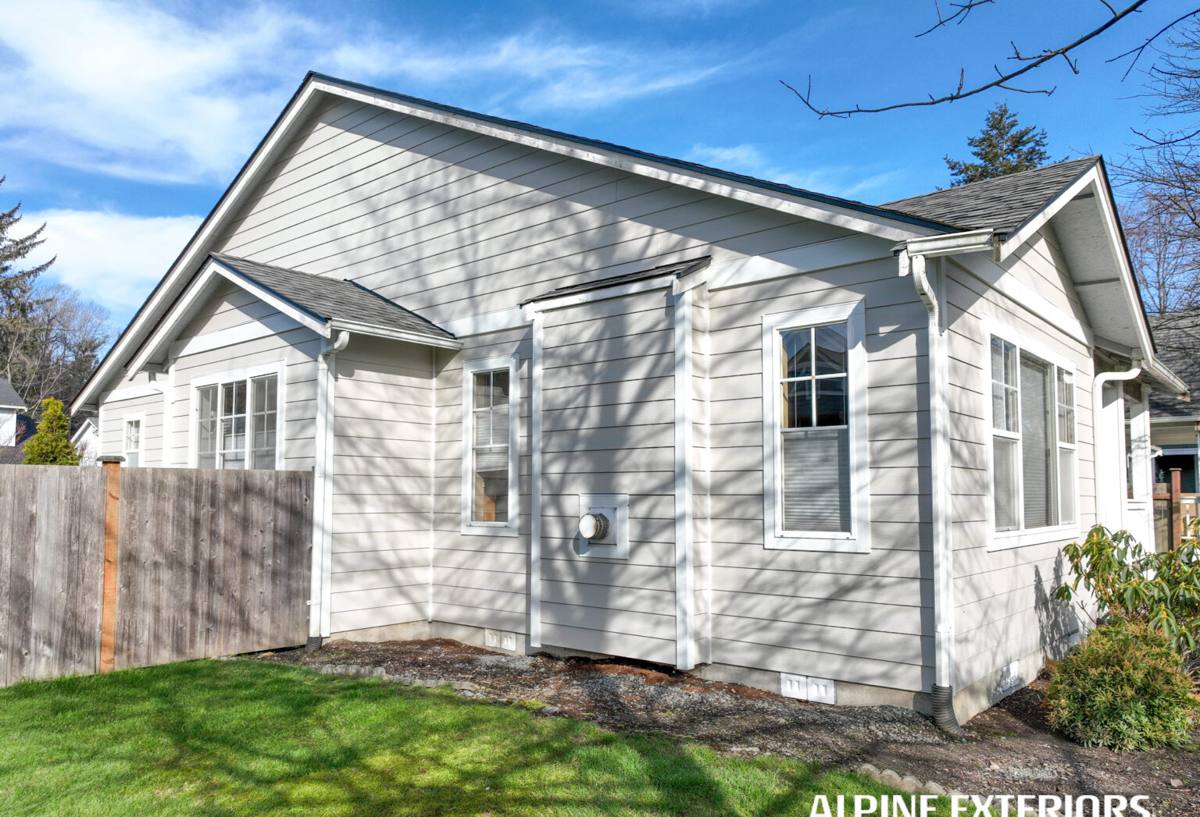
Signs a Lynnwood Home Needs Siding Replacement
Not every siding problem means a full replacement — some are caulking or flashing repairs. But certain signs point to the underlying material or installation having failed, which repair alone won't fix.
- Soft or spongy spots when you press on the siding, especially near the bottom courses and around windows
- Paint that won't hold — bubbling, peeling, or needing repainting every 2-3 years instead of holding for a decade
- Persistent moss or black streaking that comes back within months of cleaning
- Visible warping, buckling, or panels pulling away from the wall
- Cracked or delaminating panels, common on older cedar and some engineered wood products once the factory coating breaks down
- Rising energy bills with no other explanation, which can point to moisture-saturated sheathing behind the siding
- Interior signs — musty smell, staining on interior walls near exterior corners, or trim that's rotting from the inside out
Why "Just Repaint It" Doesn't Always Work in This Climate
We get asked often whether a fresh coat of paint can buy a few more years. Sometimes it can, if the siding itself is still sound. But in a climate that stays wet as long as ours does, paint on a failing substrate is a short-term fix — the moisture problem underneath keeps working regardless of what's on the surface, and repainting every couple of years usually costs more over time than one correct replacement.
What a Correct Siding Replacement Job Actually Involves
Siding replacement done right isn't just removing old panels and nailing up new ones. In a wet climate like Lynnwood's, most of what determines whether the new siding lasts happens underneath it, before a single new piece goes up.
Tear-Off and Inspection
Once the old siding is off, the sheathing underneath gets a real inspection — not a glance. This is where we find out if moisture has already gotten into the wall assembly. Soft sheathing, rot around window and door openings, and compromised framing all need to be addressed before new siding goes on, or the new material is just covering up the same problem that caused the old siding to fail.
Water-Resistive Barrier and Flashing
A correctly installed weather-resistive barrier, properly lapped and taped, along with flashing at every window, door, and roof-to-wall intersection, is what actually keeps water out of the wall long-term — the siding itself is the second line of defense, not the first. This detail work is where a lot of corner-cutting happens on rushed jobs, and it's exactly the detail that matters most in a region with as much sustained rainfall as ours.
Rainscreen Gap
For a climate with Lynnwood's rainfall and humidity pattern, a rainscreen gap between the barrier and the siding gives any moisture that does get past the outer layer a path to drain and dry out, instead of sitting trapped against the wall. It's a detail that costs little to add during a full replacement and pays off across the life of the siding.
Installation to Manufacturer Spec
Fastener spacing, joint treatment, and clearances above grade, decks, and roof lines all have manufacturer specifications for a reason — following them is what keeps a warranty valid and keeps water from finding a way in at the seams.
Why We Install Only James Hardie Fiber Cement
We've made a deliberate call not to install vinyl, LP SmartSide, Cemplank, Allura, primed spruce, or cedar. It's not that these products have no place anywhere — it's that for the moisture load and moss exposure typical of homes in this part of Snohomish County, we don't think they hold up as consistently as fiber cement engineered for this exact climate.
James Hardie's HZ10 product line is formulated specifically for the wetter, more humid regions of the country, which includes the Pacific Northwest. It's non-combustible, resists moisture-driven swelling and rot in a way wood-based products structurally can't, and comes with a factory-applied ColorPlus finish that's baked on rather than field-painted — which means better color retention and fewer repaint cycles over the life of the siding. It also carries a strong, transferable warranty, which matters to a lot of homeowners who plan to sell within the time they own the house.
What Siding Replacement Costs Depend On
There's no honest flat price for siding replacement — too many variables affect it. Here's what actually moves the number on a typical Lynnwood project:
| Factor | Why It Matters Here |
|---|---|
| Home size and number of stories | More wall area and taller walls mean more material and more scaffolding/staging time |
| Condition of existing sheathing | Rot repair found during tear-off is common in older homes with a history of wood siding and moisture intrusion |
| Amount of trim and detail work | Corners, window trim, and fascia work add labor time beyond flat wall panels |
| Removal and disposal of old siding | Cedar and older wood sidings are heavier and more labor-intensive to strip than vinyl |
| Accessibility of the site | Tight lots, slopes, and limited driveway access common in some Lynnwood neighborhoods can add setup time |
| Product line and color selection | Hardie's various HZ lines and ColorPlus color options carry different material costs |
Our Process for a Lynnwood Siding Replacement
We keep the process straightforward and try to remove guesswork for the homeowner:
- On-site assessment — we look at the current siding, check for moisture damage, and talk through what you're seeing and what's driving the decision to replace.
- Written estimate — a clear scope of work and price, with any likely sheathing or trim repair called out as a possibility rather than buried as a surprise later.
- Scheduling around weather — in this climate, we plan tear-off and dry-in around forecasted rain windows so open wall sections aren't exposed longer than necessary.
- Tear-off and inspection — old siding comes off, sheathing gets checked, and any needed repairs are addressed before moving forward.
- Barrier, flashing, and rainscreen installation — the parts of the job that don't show once the new siding is up, but determine how it performs for the next few decades.
- Hardie siding installation — installed to manufacturer spec, with attention to fastening, joints, and clearances.
- Final walkthrough — we go over the finished work with you before calling the job done.
Why It Matters to Hire a Crew That Already Works This Area
A lot of siding problems in Lynnwood trace back to installation practices that work fine in drier climates but weren't adjusted for ours — missing rainscreen gaps, undersized flashing, or fastener schedules that don't account for how much this region's humidity and rain load actually stress a wall assembly over time. A crew that regularly works Snohomish County homes has already seen where those shortcuts show up years later, and builds around them from the start.
There's also a practical side: local crews know the permitting requirements for the jurisdictions in this area, are familiar with typical home construction from the different eras of Lynnwood's growth, and aren't guessing at material lead times or weather windows the way an out-of-area crew might be.
Living With Hardie Siding After Replacement
Correctly installed fiber cement siding is low-maintenance, not no-maintenance. In this climate, that means an occasional soft wash to keep moss and algae from taking hold, keeping gutters clear so water isn't sheeting down the siding face, and keeping an eye on caulking at trim joints over the years. None of this is heavy work — it's a fraction of what wood siding demands — but a few minutes of attention a couple of times a year keeps the siding looking and performing the way it's meant to for the long haul.
If your siding is showing signs of wear, or you're just trying to figure out whether repair or replacement makes more sense for your situation, we're happy to take a look and give you a straight answer. The estimate is free, there's no pressure, and you'll walk away with a clear picture of what your home actually needs.