 Everett
 Why Silver Lake Siding Wears Out Faster Than Homeowners Expect
Silver Lake sits in south Everett, close enough to Puget Sound to catch the same marine air that moves through the rest of Snohomish County, but with its own microclimate layered on top. The lake itself keeps humidity high year-round, and the mature tree canopy around many of the older lots means siding stays shaded and damp long after a storm has passed. That combination — salt-tinged marine air, driving rain that comes in sideways during winter storms, and a moss season that can stretch from October through May — is a tough environment for exterior siding, and it doesn't treat every material the same way.
Homeowners who moved here from drier climates are often surprised at how fast paint fades, caulk fails, or moss creeps up from the bottom of a wall. It's not bad luck. It's the combination of moisture that never fully dries out, UV exposure in the brief sunny stretches, and organic growth that thrives in shaded, damp conditions. Siding that isn't engineered for this climate — or wasn't installed with the right moisture management details — shows the wear years before it should.
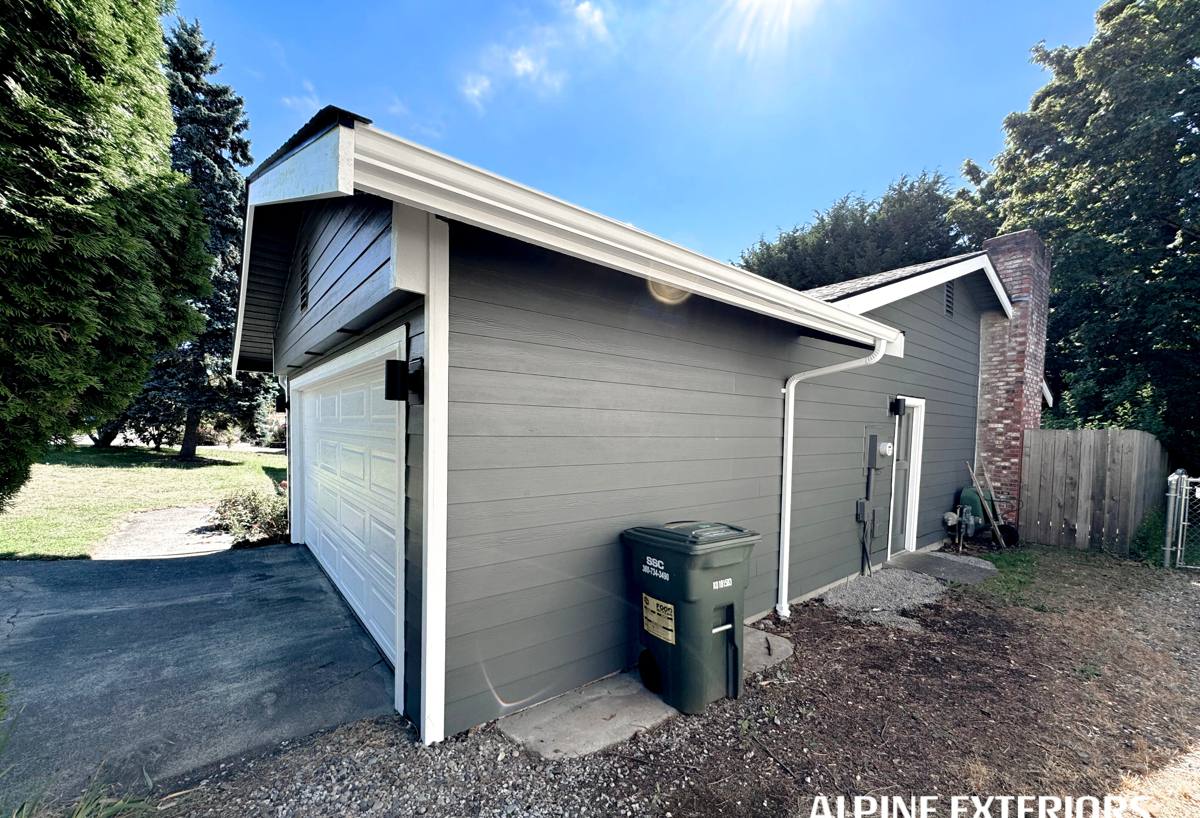
Signs a Silver Lake Home Is Due for Siding Replacement
Most siding failure doesn't show up as a dramatic problem. It shows up as small, easy-to-ignore signs that compound over a few wet seasons. Worth checking for:
- Soft or spongy spots when you press on the siding, especially near the bottom courses and around window trim
- Paint that's bubbling, peeling, or chalking faster than a normal repaint cycle would explain
- Persistent moss or dark algae streaking that comes back within weeks of being cleaned
- Visible warping, cracking, or cupping in individual boards or panels
- Gaps opening up at trim boards, corner boards, or butt joints
- A noticeable jump in heating bills, which often points to moisture-compromised insulation behind the siding
- Musty smells in interior rooms along an exterior wall
Any one of these on its own might just call for a repair. Several at once, especially on a home more than 15-20 years old, usually means the siding system as a whole — not just the visible surface — has reached the end of its useful life.
What a Correct Siding Replacement Actually Involves
The part of a siding job homeowners see is the new material going up. The part that determines whether that siding lasts 10 years or 40 happens underneath it, and it's where corners get cut on rushed jobs.
Tear-off and sheathing inspection
Old siding has to come off entirely so the sheathing underneath can be inspected. In a lake-adjacent, high-moisture area like this, it's common to find soft or rotted sheathing behind old siding that looked fine from the outside — usually at the bottom of walls, around old window flashing, or wherever moss had been trapping moisture against the wall for years. That damaged wood needs to be cut out and replaced before anything new goes up, not covered over.
Weather-resistive barrier and flashing
A correctly lapped weather-resistive barrier (WRB), sealed seams, and properly integrated flashing at every window, door, and roofline intersection are what actually keep water out of the wall assembly. This is the least visible part of the job and the most important — most siding failures we see trace back to a flashing detail that was skipped or done wrong, not to the siding material itself.
Rainscreen gap and ventilation
Given how much moisture this area holds in the air, a ventilated rainscreen gap between the WRB and the siding gives any incidental moisture a way to drain and dry out instead of sitting against the back of the boards. This detail matters more here than it would in a dry climate, and it's one we don't skip.
Correct fastening and joint treatment
Fiber cement has specific fastening patterns, nail placement, and joint treatment requirements. Installed off-spec — nails too close to an edge, joints left unsealed, boards butted too tight with no room to move — it will crack, warp, or let water in regardless of how good the material is.
Why We Install Only James Hardie Fiber Cement
We don't install vinyl, LP SmartSide, primed spruce, or cedar, and it's worth being upfront about why. Vinyl is affordable and low-maintenance, but it expands and contracts significantly with temperature swings and can warp or crack in impact; in a climate with this much moisture cycling, sealing details around it are unforgiving. LP SmartSide and primed wood products perform reasonably when perfectly maintained, but they're wood-based, and wood-based siding is more sensitive to the exact kind of sustained moisture exposure Silver Lake gets — the maintenance burden to keep them ahead of moss, rot, and repainting is real and ongoing. Cedar is a beautiful, legitimate material, but it demands a maintenance commitment (staining, sealing, moss treatment) that most homeowners underestimate when they choose it.
James Hardie fiber cement is non-combustible, dimensionally stable across our temperature range, and doesn't feed moss or rot the way wood-based products can. Its ColorPlus factory finish is baked on rather than field-applied, which matters in a marine climate where field-applied paint tends to fail faster. Hardie's HZ5 product line is engineered specifically for climates like ours — freeze-thaw cycling, high moisture, and coastal exposure — and it carries a strong transferable warranty when installed to Hardie's specification. That's why it's the only product we put on homes.
Our Silver Lake Siding Replacement Process
| Step | What Happens |
|---|---|
| Inspection & estimate | We walk the exterior, check for moisture damage and problem areas, and give you a written scope and price — no pressure, no upsell tactics |
| Tear-off & sheathing check | Old siding comes off; any soft, rotted, or damaged sheathing is identified and replaced before moving forward |
| WRB & flashing | New weather-resistive barrier installed, all seams sealed, flashing integrated at every window, door, and roof intersection |
| Rainscreen & Hardie install | Ventilated gap set, then Hardie boards or panels installed to manufacturer fastening spec |
| Trim, caulk & paint touch-up | Corner boards, trim, and joints finished; any field-cut edges sealed and touched up to match ColorPlus finish |
| Final walkthrough | We walk the job with you, cover care and warranty registration, and address anything you flag before we consider it done |
What Siding Replacement Costs — And What Actually Drives the Price
Every home is different, and we won't quote a number without seeing the house, but the factors below are what actually move a bid up or down. Broad ranges vary widely by square footage, complexity, and existing damage — we'll give you a firm number after inspection.
| Cost Factor | Why It Matters |
|---|---|
| Total square footage | Larger wall area means more material and labor hours, the most direct driver of overall cost |
| Sheathing/rot damage found at tear-off | Hidden moisture damage behind old siding adds repair scope that can't be fully known until tear-off |
| Number of stories and roof pitches | Second-story walls and steep or complex rooflines require more scaffolding, staging, and time |
| Siding profile chosen | Lap siding, shingle-style panels, and board-and-batten each have different material and labor costs |
| Trim and architectural detail | Corner boards, window trim, and accent details add labor even when wall area stays the same |
| Access and site conditions | Tight lots, mature landscaping, or lake-adjacent slope can affect staging and add time |
Why a Crew That Already Works Silver Lake Matters
Siding installed by a crew unfamiliar with this specific area tends to miss the details that this climate punishes. A contractor who works this pocket of south Everett regularly already knows where moss tends to build up fastest, how much rainscreen ventilation a lake-adjacent lot actually needs, and what Snohomish County and City of Everett permitting and inspection requirements apply to an exterior siding job. That familiarity isn't a marketing point — it shows up in fewer callbacks and siding that's still performing well a decade in, because the crew wasn't guessing at how the local climate would behave against the details they chose.
It also means faster, more accurate estimates. We're not learning the neighborhood's quirks on your job; we've already seen how homes around the lake age and where problems tend to start.
Caring for Your New Hardie Siding
Fiber cement siding is low-maintenance compared to wood or vinyl, but "low-maintenance" isn't "no-maintenance" in a climate like this. A little seasonal attention keeps it performing for decades:
- Rinse off moss, algae, or dirt buildup with a garden hose and soft brush once or twice a year — avoid high-pressure washing directly at seams
- Keep gutters and downspouts clear so water isn't sheeting down the wall face
- Trim back trees and shrubs that keep siding shaded and damp longer than necessary
- Inspect caulk lines at trim and joints annually; recaulk any cracked or separated seams before winter
- Watch fascia, trim, and any wood elements around the siding for early rot signs, since these can fail before the fiber cement itself does
- Address any impact damage or cracked boards promptly rather than letting water get behind them
If your Silver Lake home is showing any of the wear signs above, or you're just planning ahead, we're happy to take a look and give you a straight, no-pressure estimate — use the form below to get started.