 Everett
 Metal Roofing Built for Silver Lake's Climate
Silver Lake sits inland from Port Gardner Bay, but it still catches the same weather pattern that defines roofing work across Everett and the rest of Snohomish County: long stretches of low-intensity rain broken up by wind-driven storms, salt-tinged air rolling in off Puget Sound, and a wet season that stretches from October well into April. That combination is hard on any roofing material, but it's especially hard on roofs that aren't detailed correctly. Moss doesn't care whether a house is on the lake or a few blocks off it — if there's shade, moisture, and organic debris sitting on a roof surface, moss will find it.
Metal roofing holds up better than most materials against this pattern, but only when it's installed with the right panel system, the right fasteners, and flashing that actually accounts for how water moves across a roof in a wet climate. A metal roof cut corners on installation will fail in the same places asphalt shingles do — just more expensively, and often with less warning.
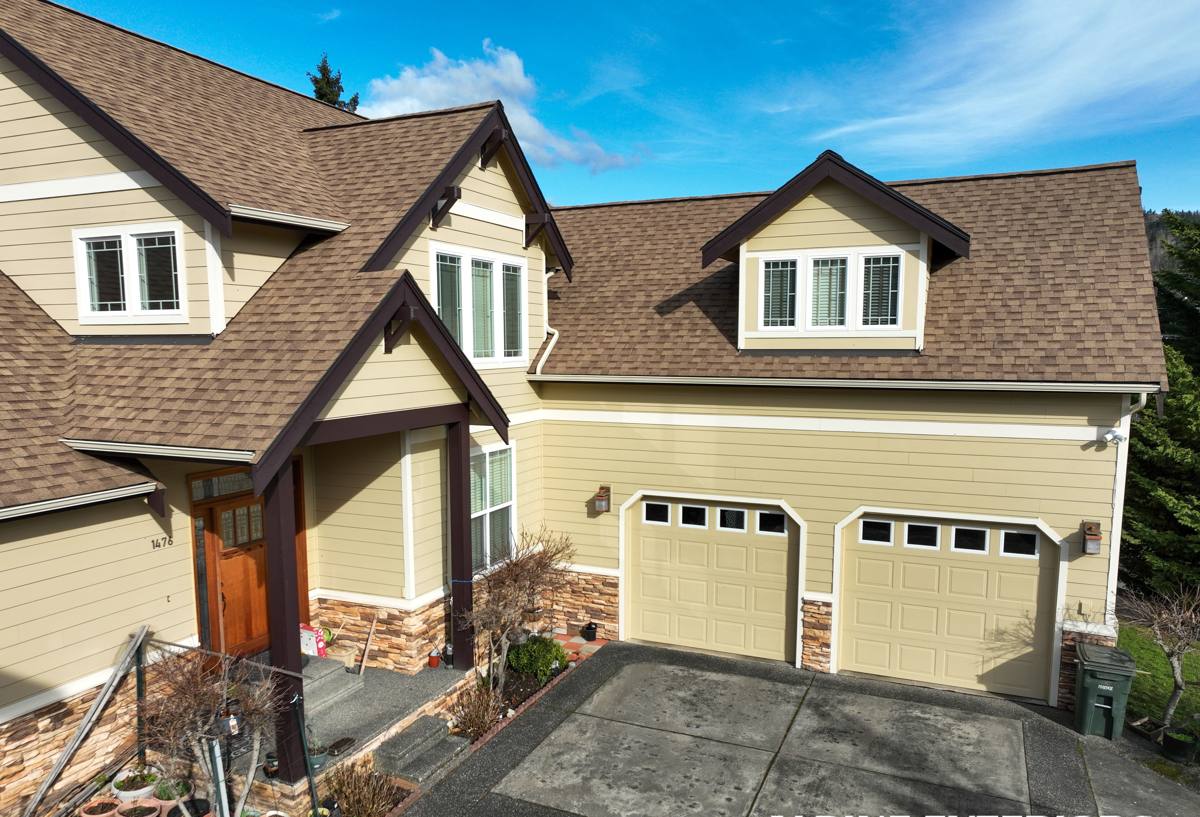
What a Correct Metal Roof Installation Actually Involves
"Metal roof" covers a wide range of quality. The panel is only one part of the system. What determines whether it performs for decades in this climate — or starts leaking in five years — is everything underneath and around it.
Underlayment and Deck Prep
Before any panel goes down, the deck needs to be sound, dry, and free of rot — a real concern on older Silver Lake homes where original sheathing may have taken on moisture over the years. We use a synthetic or self-adhered underlayment rated for the climate, with extra attention at eaves and valleys where standing water and ice-adjacent moisture are most likely to find a way in.
Panel Type and Gauge
Panel thickness (gauge) and profile affect both appearance and long-term performance. Thinner, lower-cost panels can oil-can (show visible waviness) and are more prone to denting. We spec panel gauge based on the home and the budget, not just the lowest bid.
Fastening and Sealants
Exposed-fastener systems rely on screws with rubber washers that compress against the panel. Those washers are a wear item — they harden and shrink over time, especially with UV and salt-air exposure, and eventually need replacing or resealing. Concealed-fastener systems (standing seam) avoid this problem almost entirely because the fasteners are hidden under the seam and never see direct weather. That difference matters more here than in a dry climate, because Everett's rain volume means any weak seal gets tested constantly.
Flashing and Penetrations
Most metal roof leaks don't come from the panels — they come from flashing around chimneys, vents, skylights, and wall transitions. Correct step flashing, counterflashing, and properly lapped valleys are what keep water out during a driving rain, when wind pushes water sideways instead of letting it run straight off.
Ventilation
A metal roof needs balanced intake and exhaust ventilation just like any other roof type. Without it, moisture gets trapped in the attic, which leads to condensation on the underside of the deck — a slow, hidden problem that's more common in our humid climate than homeowners expect.
Comparing Metal Panel Options for a Silver Lake Home
Not every metal roofing product is the right fit for every house. Here's how the common options compare for a climate like ours:
| Panel Type | Fastening | Typical Lifespan | Best Fit |
|---|---|---|---|
| Standing seam | Concealed clips, no exposed screws | 40–60+ years | Homes where long-term, low-maintenance performance is the priority |
| Exposed-fastener panel | Screws with rubber washers, visible | 25–40 years | Budget-conscious projects, outbuildings, some roof pitches |
| Stone-coated steel | Nailed, interlocking panels | 30–50 years | Homeowners who want the look of shingle or tile with steel's durability |
We'll walk through which of these makes sense for your roof's pitch, your budget, and how long you plan to stay in the home — there's no single right answer for every property.
Cost Factors Worth Understanding
| Factor | Why It Matters |
|---|---|
| Panel type and gauge | Standing seam costs more upfront than exposed-fastener but needs far less maintenance over its life |
| Roof complexity | Valleys, dormers, and multiple roof planes add labor and flashing work |
| Tear-off vs. overlay | Removing old roofing adds cost but lets us inspect and repair the deck underneath |
| Ventilation upgrades | Older homes often need vent additions to meet modern airflow requirements |
As a broad range, metal roofing installed in this region typically runs somewhere in the neighborhood of $9–$16 per square foot depending on the factors above — a wide spread, which is exactly why an in-person estimate matters more than a number from the internet.
Moss, Algae, and Salt Air: What Actually Helps
Moss season in Snohomish County isn't a minor seasonal nuisance — on a shaded lot, moss can establish itself on a roof surface within a single wet season if conditions allow it. Metal roofing has a real advantage here: its smooth, non-porous surface gives moss and algae far less to grip onto compared to the textured surface of asphalt shingles or wood. That doesn't mean a metal roof is immune, though. Moss and algae can still build up in areas where debris collects — behind chimneys, in valleys, or under overhanging branches.
Salt air is a different concern. It accelerates corrosion on unprotected or poorly coated metal, particularly at cut edges, fastener heads, and anywhere the factory finish has been scratched during installation. This is one of the biggest reasons panel and coating quality matter more here than in an inland, dry climate — a properly coated and finished panel system resists this; a bargain product with a thin finish will show it years sooner.
- Keep gutters and valleys clear of needles and leaf litter so water doesn't pool against panel seams
- Trim back overhanging branches to reduce shade and debris buildup
- Avoid pressure washing metal panels directly — it can drive water under seams and damage the finish
- Have flashing and fastener condition checked periodically, especially after major windstorms
- Address any scratched or exposed metal promptly to prevent localized corrosion
How Our Process Works
We keep the process straightforward because most homeowners are dealing with a roof for the first or second time in their lives, not something they do regularly.
- On-site inspection — we look at your existing roof, deck condition, ventilation, and any problem areas before recommending anything
- Written estimate — a clear breakdown of panel type, scope of work, and price, with no pressure to decide on the spot
- Scheduling around weather — we plan installation windows with our wet season in mind rather than rushing work into a rain gap
- Tear-off and deck check — if we're removing old roofing, we inspect the sheathing underneath and flag any repairs before covering it up
- Installation — underlayment, panels, flashing, and ventilation installed to spec, not just "good enough to pass"
- Final walkthrough — we go over the finished roof with you before calling the job done
Signs Your Roof May Need Attention
Whether your current roof is metal, asphalt, or something else, these are worth a look before they turn into a bigger repair:
- Visible moss or dark streaking on north-facing or shaded roof sections
- Rusty streaking near fasteners or flashing on an existing metal roof
- Ceiling stains or musty attic smell after a heavy rain event
- Loose, lifted, or missing panels or shingles after a windstorm
- Sagging in valleys or around chimneys and vent penetrations
- Granule buildup in gutters (a sign an asphalt roof is aging and worth comparing against a metal replacement)
Why It Matters to Hire a Crew That Already Works in Silver Lake
A roofing crew that works regularly in Everett and the surrounding Snohomish County neighborhoods already knows how local roofs age — which details tend to fail first in this climate, how permitting and inspection typically go with the local jurisdiction, and what pitch and drainage patterns are common on the housing stock here. That's different from a crew that mostly works dry-climate jobs and treats every metal roof the same way regardless of rainfall or salt exposure.
It also means faster response if something needs a follow-up look after a storm, and a crew that isn't guessing at how much ventilation or flashing detail your specific roof needs. Local experience isn't a marketing line — it directly affects how a roof performs in year five, ten, and twenty, not just how it looks on installation day.
Get a Free, No-Pressure Estimate
If you're weighing a metal roof for your Silver Lake home — whether you're replacing an aging asphalt roof or comparing metal panel options — we're happy to take a look and walk you through what your specific roof needs. There's no obligation and no pressure to decide on the spot. Use the form below to request a free estimate.