 Everett
 Snohomish sits within the wider Everett service area, which means homes here take on the same year-round exposure that shapes exterior work across Snohomish County: salt-tinged air moving inland off Port Gardner Bay and Puget Sound, driving rain that comes in sideways as often as it comes straight down, and a moss season that runs long because the region rarely gets a real dry stretch to let a wall recover. At some point, patching and repainting stop being enough to keep that exposure out, and a home needs a full siding replacement rather than another round of caulk and touch-up paint. This page walks through what that point looks like, what a correct replacement actually involves, and how we approach the job for homes in and around Snohomish.
What Snohomish's Climate Does to Aging Siding
Three conditions do most of the damage here, and they work on a house at the same time rather than one at a time. Salt-laden air corrodes exposed fasteners and breaks down lower-grade finishes faster than it would further from the water. Wind-driven rain doesn't fall straight onto a roof and run off — it gets pushed sideways into wall assemblies, finding any gap in flashing or any seam that wasn't lapped correctly the first time. And moss, which thrives on the shaded, damp wall faces common on tree-lined Snohomish lots, holds moisture against siding long after a storm has passed, keeping that section of wall wet far longer than a sunnier, more exposed elevation ever gets.
None of that shows up as a single dramatic failure. It accumulates over years — a fastener that starts to bleed rust, a seam that lets in just enough water to soften the substrate behind it, a north wall that never quite dries out between storms. By the time it's visible from the street, the damage underneath is usually further along than it looks.
Why Replacement, Not Just Repair, Becomes the Right Call
Repair makes sense when the problem is isolated — a cracked board, a damaged corner, a section behind a downspout that failed early. Replacement becomes the right call when the siding material itself has reached the end of its service life across most of the house, or when water has been getting behind it long enough to compromise the sheathing underneath. Patching a home in that condition just delays the real fix and can hide a bigger problem behind a fresh coat of paint. Part of a fair estimate is telling a homeowner honestly which situation they're actually in.
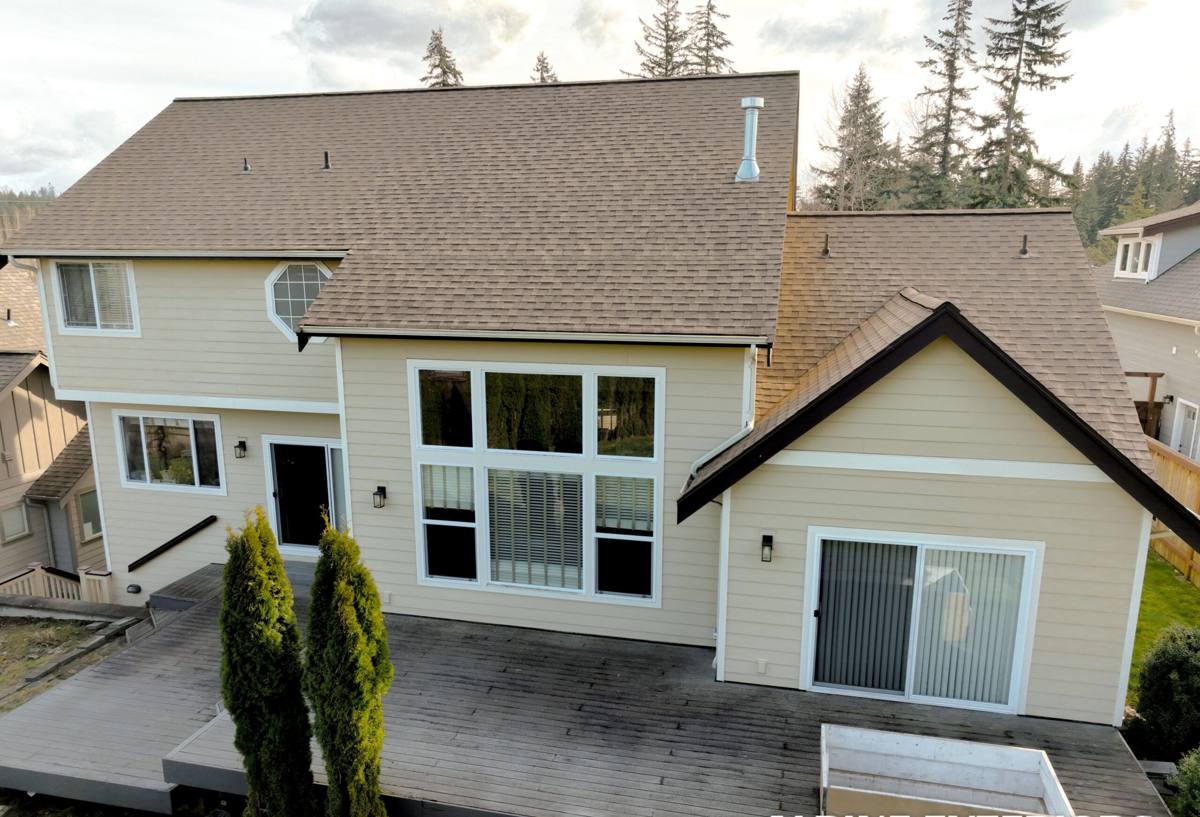
Signs Your Siding Has Reached the End of Its Service Life
Some of these signs are obvious from the driveway. Others only show up once you look closely or step inside. Either way, this is the checklist we run through on an initial inspection:
- Boards that feel soft, spongy, or crumble at the edges when pressed
- Paint that won't hold anymore, no matter how recently or how well it was applied
- Moss or algae staining that comes back within a season of being cleaned off
- Visible gaps, warping, or bowing at seams, corners, and butt joints
- Rot concentrated at the bottom courses near grade or around window and door trim
- A noticeable jump in heating costs that points to a compromised weather barrier, not just an old furnace
- Interior clues — peeling paint, a musty smell, or staining on interior walls near an exterior corner
One or two of these, isolated to a small area, usually points to a repair. Several of them spread across multiple walls is a strong sign the whole system has aged out and a full replacement is the more honest recommendation.
What a Correct Siding Replacement Involves
A siding replacement isn't just pulling off old boards and nailing up new ones. Done correctly, it's a full rebuild of the wall's weather-resistant system, and the siding itself is really the last layer of that system, not the whole thing.
The Step Most Crews Skip: What's Underneath
Once the old siding comes off, the sheathing underneath gets inspected — not glanced at, inspected — for rot, delamination, or soft spots, especially near grade, under windows, and at any point where the old siding was visibly failing. Any compromised sheathing gets cut out and replaced before anything new goes back up. Skipping this step is the single most common shortcut we see on homes that had siding "replaced" a few years earlier and are already showing problems again. A new weather-resistant barrier goes over the repaired sheathing, and flashing gets correctly lapped and sealed at every window, door, and roofline transition — not caulked over after the fact, which is a patch, not a fix. Only once that underlying system is right does the new siding go on.
Why We Replace With James Hardie Fiber Cement
We install one siding product on every replacement job: James Hardie fiber cement. We don't offer vinyl, LP SmartSide, Cemplank, Allura, primed spruce, or cedar. That's a deliberate standard, not a limited lineup — each of those products gets something right, but each carries a trade-off that matters too much in this climate for us to put our name behind it. Vinyl is inexpensive but can warp with age and temperature swings, and its seams are exactly where wind-driven rain works its way in over time. Wood-based products depend on flawless field priming and caulking at every cut edge to keep moisture out, which is a demanding standard to hold across a full crew and a full job. Cedar has genuine character but is organic and asks for ongoing upkeep — refinishing, sealing, moss control — in a climate that doesn't offer much of a dry season to recover in between storms.
Fiber cement handles the core problem differently because it isn't organic. There's no wood substrate for moisture to work into, and it doesn't feed moss and mildew growth the way wood-based siding can. James Hardie builds climate-specific HZ5 product lines engineered around the sustained moisture and coastal exposure this region sees, and pairs that with a factory-applied ColorPlus finish that holds color and resists cracking longer than most field-applied paint manages here.
Our Siding Replacement Process, Step by Step
- On-site assessment: we inspect the existing siding, look for signs of moisture behind it, and give a straight answer on whether the home needs repair or full replacement.
- Tear-off and sheathing inspection: old siding comes off and the sheathing underneath gets checked for rot or damage before anything new is installed.
- Sheathing and framing repair: any compromised material is cut out and replaced, not painted over or left in place.
- Weather-resistant barrier and flashing: a new barrier goes on with flashing correctly lapped at every window, door, and penetration.
- Hardie installation: siding goes up to manufacturer-specified clearance, fastening patterns, and joint treatment for this climate.
- Trim, color match, and detail work: trim and accent pieces are finished to match the ColorPlus color selected, with attention to sun-exposed versus shaded wall faces.
- Final walkthrough and cleanup: we walk the finished job with the homeowner and clear the site of old material and debris.
What Drives the Cost of a Snohomish Siding Replacement
Every home is different, and we don't quote a job without seeing it, but the factors below are what actually move a siding replacement estimate up or down. Broad ranges vary widely by home size and condition, so an accurate number always comes from an in-person look at the specific house.
| Cost Factor | Why It Matters |
|---|---|
| Square footage and wall complexity | More wall area, more corners, dormers, and gables all add material and labor time |
| Number of existing siding layers | Homes with a layer of old siding under a newer layer take longer to tear off and dispose of |
| Sheathing and framing condition | Rot discovered once tear-off starts has to be repaired before new siding goes up; this is the most variable cost item |
| Product line and texture | HardiePlank lap, HardiePanel, and HardieShingle differ in material and install time |
| Trim and accent detail | Custom trim, accent panels, and color-matched detailing add labor beyond a straightforward field replacement |
| Site access and conditions | Steep lots, mature landscaping, and tight side yards can slow staging and material handling |
Permitting, Timeline, and What to Expect During the Project
Siding replacement typically requires a permit through the local jurisdiction, and we handle that process rather than leaving it to the homeowner. Scheduling in this region works around the weather more than it does in drier climates — tear-off exposes bare sheathing to the elements, so we plan around dry stretches and move quickly once a wall is opened up rather than leaving it exposed longer than necessary. A full replacement on an average home typically runs a few weeks from tear-off to final trim, though that timeline shifts with home size, sheathing repairs, and weather delays that are common in a wet-season climate. Landscaping near the walls gets protected before work starts, and debris is hauled off as the job progresses rather than left to pile up.
Why Hiring a Crew That Already Works Snohomish Matters
A crew that only occasionally works this area treats every job like a generic install. A crew that works Snohomish regularly already knows which wall orientations take the worst of the driving rain, which lots hold moss longest under mature tree canopy, and how to sequence a tear-off around a weather window instead of gambling on one. That local pattern recognition shows up in small decisions — where to add extra flashing attention, which wall gets the more moisture-resistant detailing, how to talk a homeowner through an HOA's siding requirements if the neighborhood has one — that don't show up on a spec sheet but make a real difference in how the finished job holds up ten years out. It also means straightforward answers about permitting, timeline, and what a fair price actually looks like for a house like yours, because it's the same kind of house and the same climate we work in every week.
If your siding is showing its age or you're just not sure whether you're looking at a repair or a full replacement, we're happy to take a look. The estimate is free, there's no pressure, and you'll get a straight answer either way.