 Everett
 When a Storm Turns Into a Roofing Problem
Most storm damage in this part of Snohomish County doesn't announce itself with a hole in the roof. It shows up as a shingle in the yard after a windy night, a damp patch on a bedroom ceiling, or a gutter that's suddenly overflowing where it never used to. By the time water is visibly coming through, the roof has usually been compromised for a while — a storm just finished the job that moss, wind, and years of rain started.
That's the pattern we see over and over in the Snohomish area: damage that's gradual until a storm event makes it obvious. Treating storm damage repair as a one-time patch job, without looking at what let the water in, is how homeowners end up calling us again in a year for the same leak in a slightly different spot.
What This Area's Weather Actually Does to a Roof
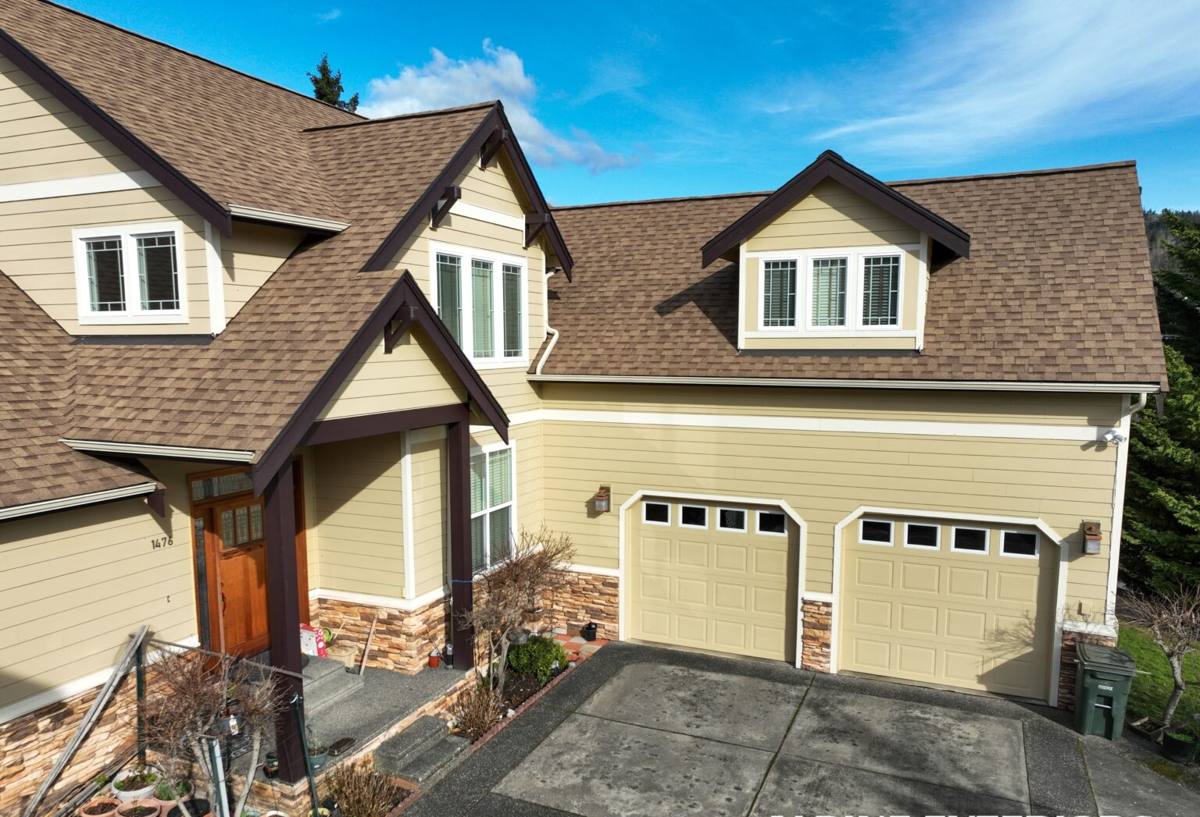
Homes near Everett deal with a specific combination of conditions that's harder on roofing than people expect. Salt-laden air off Puget Sound accelerates corrosion on exposed metal — flashing, fasteners, gutter hardware — especially on roofs facing west or south where wind carries moisture furthest inland. Driving rain, pushed sideways by wind rather than falling straight down, finds its way under shingles and around flashing that would be perfectly fine in a calmer climate. And moss season here isn't a minor cosmetic issue; on north-facing slopes and shaded sections, moss holds moisture against the roofing material for months at a time, working its way under shingle edges and lifting them just enough for wind and rain to get underneath.
None of these three things — salt air, driving rain, moss — usually causes a roof to fail on its own. It's the combination, repeated year after year, that turns a roof that should have another decade of life into one that fails in a storm it should have handled easily.
Common Storm Damage We Find on Snohomish Roofs
When we inspect a roof after a wind or rain event in this area, the damage tends to fall into a few recurring categories:
- Lifted or missing shingles — often starting at moss-affected edges where the seal was already compromised before the wind hit
- Flashing failures around chimneys, vents, and roof-to-wall transitions, where corroded or loosely fastened metal separates just enough to let wind-driven rain in
- Gutter and downspout damage from wind-thrown debris or ice, causing water to back up under the roof edge instead of draining away
- Soft or delaminating decking discovered under lifted shingles, where trapped moisture has been sitting for longer than the storm alone would explain
- Granule loss on asphalt shingles from wind-driven rain and debris, which shows up as bald-looking patches and premature aging in sun-exposed areas
- Moss intrusion at the ridge and in valleys, holding water against the deck and accelerating rot in exactly the spots that are hardest to inspect from the ground
What a Correct Storm Damage Repair Actually Involves
Inspection Before Anything Else
A repair is only as good as the inspection behind it. That means getting on the roof, not just looking from the driveway, and checking not only the obvious damage but the areas around it — because storm damage rarely stays contained to one shingle or one section. We also check the attic side when accessible, since staining, wet insulation, or daylight through the decking tells us things the exterior alone won't.
Decking and Structure
If water has been getting in for any length of time, the decking underneath is often soft, delaminated, or starting to rot. Replacing shingles over damaged decking is a shortcut that fails within a season or two. A correct repair means cutting out and replacing any decking that doesn't hold a fastener properly, not just the section that's visibly stained.
Underlayment and Flashing
Underlayment is the roof's backup layer, and it matters more here than in drier climates because it's what stands between the shingles and the deck when wind-driven rain gets past the surface layer. Flashing gets replaced, not just re-caulked, wherever it's corroded or was clearly the entry point for water — caulk is a temporary fix, not a repair.
Matching the Existing Roof
A repair should blend in, not stand out as a patch. We match shingle style, color, and where possible manufacturer to the existing roof, and we're upfront when an exact match isn't available — sometimes older roofing has weathered enough that new shingles will look slightly different no matter what, and it's better to know that before the work starts than to be surprised after.
Emergency Tarp vs. Full Repair: Matching the Fix to the Damage
Not every storm-damaged roof needs the same response. Part of doing this honestly is telling a homeowner when a temporary measure is enough for now versus when the damage needs a full repair right away.
| Situation | What We'd Recommend | Why |
|---|---|---|
| Active leak, storm still passing through | Emergency tarp-over | Stops water intrusion immediately; buys time for a proper repair once weather clears |
| Isolated missing/lifted shingles, deck intact | Targeted shingle and flashing repair | Fixes the actual failure point without disturbing sound roofing nearby |
| Soft decking or repeated leaks in the same area | Section replacement (deck, underlayment, shingles) | A surface patch won't hold once the substrate underneath has already failed |
| Widespread granule loss, multiple failure points, roof near end of service life | Full roof replacement discussion | Repeated storm repairs on an aging roof often cost more over time than one replacement |
Cost ranges vary a lot depending on how much decking needs replacing and how accessible the roof is, but a targeted repair is typically a few hundred to a couple thousand dollars, while a section replacement with deck repair runs higher. We'll always give you the actual number for your roof, not a generic estimate, before any work starts.
Our Process for Snohomish Storm Repairs
On-Site Inspection
We come out, get on the roof, and document what we find — both the damage and its likely cause. If the damage looks storm-related but the underlying cause is years of moss buildup or aging flashing, we'll tell you that directly rather than framing it as purely storm-caused.
Documentation for Insurance
If you're planning to file a claim, we provide photos and a written scope of the damage that your adjuster can use. We're not a public adjuster and don't handle the claim itself, but clear documentation from the contractor doing the physical inspection tends to make that conversation with your insurer go more smoothly.
The Repair
Once you approve the scope, we do the work — deck repair where needed, proper underlayment and flashing, and matched shingles — and we don't consider a storm repair finished until we've checked the surrounding area for related damage that wasn't part of the original complaint.
Cleanup and Follow-Up
We clear debris, including old material and fasteners that can puncture tires or feet in the yard, and we're available afterward if you have questions about how the repair is holding up through the next round of weather.
Storm Damage and Insurance Claims: What Homeowners Should Know
Most homeowner's insurance policies cover sudden storm damage — wind, falling debris, hail — but they typically don't cover damage that resulted from years of deferred maintenance, like a roof that failed because moss had been left to grow unchecked for a long time. That distinction matters, and it's why an honest inspection report matters too: it should describe what actually happened, not just what gets a claim approved. We'd rather tell you the truth about a roof's condition and help you plan for what it actually needs than write a report that oversells storm causation and creates problems for you later.
Why Hiring a Crew That Already Works in Snohomish Matters
A roofing crew that mostly works drier inland climates can still do competent work, but they're less likely to instinctively check the things that matter most here — how moss has undermined a shingle seal, whether flashing has started corroding from years of salt-laden air, whether an underlayment choice is actually suited to sustained wind-driven rain rather than occasional showers. Crews who work this area regularly have seen the same failure patterns enough times to know where to look first, which usually means a faster, more accurate inspection and a repair that's built for what this climate will keep throwing at it, not just for what caused this particular storm's damage.
If a recent storm left you with a leak, missing shingles, or just a nagging feeling that something's not right up there, we're happy to take a look. We offer free, no-pressure estimates and will give you a straight answer about what your roof actually needs — use the form below to get started.