 Everett
 Composite Decking in South Everett: Why the Build Matters More Than the Brand
South Everett sits close enough to Puget Sound and the Snohomish River valley that decks here deal with a specific combination of stressors: salt-tinged air drifting in off the water, long stretches of driving rain from fall through spring, and shade pockets under mature trees and roof overhangs that stay damp long after the rain stops. None of that is dramatic on its own, but stacked together over a Northwest winter, it's exactly the kind of slow, steady exposure that finds every weak point in a deck — the fastener that wasn't set right, the board that wasn't spaced for drainage, the ledger connection that was never properly flashed.
Composite decking exists partly to solve the rot and splinter problems of wood, but composite only performs as well as the frame and drainage plan underneath it. We've built and repaired enough decks around South Everett to know that most composite deck complaints — soft spots, staining, boards that cup or gap unevenly — trace back to installation shortcuts, not the material itself. This page is about what a correct composite deck installation looks like for a South Everett home, not a generic rundown of composite decking in general.
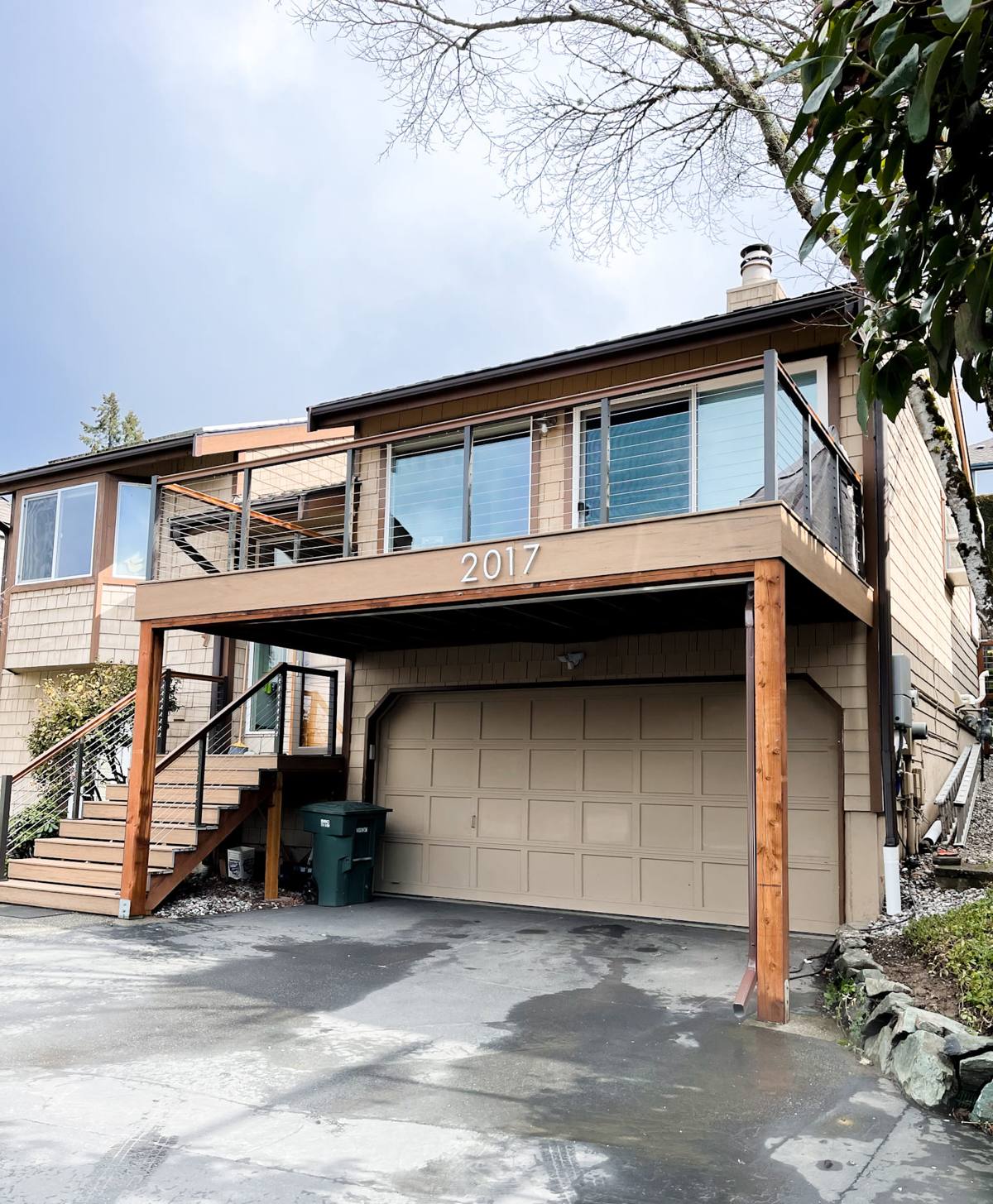
What South Everett's Climate Actually Does to a Deck
Moisture That Doesn't Let Up
Snohomish County doesn't get flash floods, it gets months of steady, low-intensity rain. That's harder on a deck in some ways than a hard downpour, because water sits and soaks rather than sheeting off quickly. Any spot where water can pool — low framing, tight board spacing, a picture-frame border with poor drainage underneath — stays wet for days at a time during the winter.
Moss and Algae Season
Shaded, north-facing, or tree-covered sections of a deck in this area grow moss and algae almost every winter if the surface can't shed water and get airflow. On composite boards this shows up as green-black staining in the board's grain pattern, and on the substructure it shows up as slick, soft-feeling joists if wood framing was never protected.
Salt Air and Metal Fatigue
Being close to the Sound means fasteners, brackets, and hidden clips are exposed to a mild but constant salt content in the air, especially on decks with any western or water-facing exposure. Standard interior-grade hardware corrodes faster here than it would further inland, which is why fastener selection is not a place to cut corners on a South Everett deck.
Temperature Swings, Just Enough to Matter
Everett doesn't see extreme heat, but summer sun on a dark composite board can still push surface temperatures well above ambient air temperature, and boards expand and contract seasonally. A deck built without the manufacturer's specified gapping will telegraph that movement as buckling or uneven seams within a few years.
What a Correct Composite Deck Build Involves
The Frame Comes First
Composite boards are only as good as what's underneath them. We build or inspect the substructure — joists, beams, posts, and footings — to current code span tables for the specific composite product being installed, since composite typically requires tighter joist spacing than wood decking. In our climate, we also treat or protect any wood framing against moisture, because a composite deck with a rotting frame underneath is still a failed deck, regardless of what the walking surface looks like.
Ledger and House Connection
Where a deck attaches to the house, the ledger board and its flashing are the single most important detail on the entire project. A poorly flashed ledger lets water track behind the siding and into the wall assembly — a problem that can go unnoticed for years in a climate that's damp most of the year. We flash this connection properly and use appropriate structural fasteners rated for exterior, moist-climate use.
Drainage and Airflow Underneath
Because South Everett gets sustained rain rather than quick storms, drainage planning matters as much as the decking material itself. That means correct board spacing, attention to grade and slope away from the house, and keeping the underside of low or ground-level decks ventilated so trapped moisture has somewhere to go instead of sitting against the joists all winter.
Fastening System
We use hidden fastener systems or manufacturer-approved face-screwing designed for coastal and marine-adjacent climates — stainless steel or coated hardware rated for corrosion resistance, not standard interior-grade screws. This is a small line-item cost that prevents rust streaking and loosening boards years down the road.
Board Layout for Moss-Prone Areas
On shaded sections, tree-covered yards, or the north side of a house, we plan board direction and gapping specifically to help water and debris move off the deck rather than collect in the board grooves, which is where moss gets its first foothold.
Composite vs. Wood for a South Everett Deck
| Factor | Composite Decking | Wood Decking |
|---|---|---|
| Moss/algae resistance | Resists rot but can still grow surface moss in shaded, wet spots without airflow | More prone to staining, softening, and rot in same conditions |
| Maintenance | Periodic cleaning; no annual staining or sealing | Needs regular sealing/staining to hold up to PNW rain cycles |
| Fastener/hardware needs | Requires corrosion-resistant hidden fasteners for coastal air | Requires similar corrosion-resistant fasteners plus more frequent replacement |
| Upfront cost | Higher material cost | Lower material cost, higher lifetime upkeep cost |
| Appearance over time | Consistent color if properly ventilated and cleaned | Grays and weathers, needs refinishing to maintain look |
Neither material is maintenance-free in this climate. Composite reduces the rot and refinishing burden, but it doesn't eliminate the need for a correctly built, well-drained frame or for periodic cleaning to keep moss from taking hold in shaded areas.
Cost Factors for a South Everett Composite Deck
Composite decking projects vary based on a handful of factors that matter more here than in drier climates:
| Cost Factor | Why It Matters Locally |
|---|---|
| Deck height and ground clearance | Low decks need extra attention to ventilation and drainage to avoid trapped moisture underneath |
| Sun/shade exposure | Shaded decks may need different board layout or more frequent cleaning to manage moss |
| Proximity to water or open exposure | Homes with more direct salt-air exposure benefit from upgraded fastener and hardware packages |
| Existing frame condition | Older wood framing in wetter yards more often needs repair or replacement before new decking goes down |
| Railing and fascia choices | Composite fascia and railing systems add cost but reduce long-term maintenance to match the decking |
We'll walk your specific property and give you a straightforward range once we've seen the site — broad estimates without seeing the framing, grade, and exposure aren't useful to you.
Our Process for South Everett Deck Projects
- Site walk and assessment — we look at existing framing, drainage, shade patterns, and how the deck ties into the house before quoting anything.
- Frame evaluation or build — repair, reinforce, or build new framing to the correct span and spacing for the composite product chosen.
- Ledger flashing and structural connections — done to code, with attention to keeping water out of the wall assembly.
- Composite installation — board layout planned for drainage and airflow, corrosion-resistant fastening throughout.
- Final walkthrough — we go over basic care so the deck stays looking right through its first few Northwest winters.
Caring for a Composite Deck in a Snohomish County Winter
Composite decking cuts down on maintenance, but "low-maintenance" isn't "no-maintenance" in a climate this wet. A few habits make a real difference in how a South Everett deck looks after several winters:
- Sweep leaves and needles off the deck regularly in fall — trapped organic debris holds moisture and feeds moss growth.
- Rinse shaded or north-facing sections periodically through winter, even without a full cleaning, to keep moss from establishing.
- Check that gaps between boards stay clear of debris so water keeps draining as designed.
- Confirm underdeck ventilation isn't blocked by stored items, planters, or added skirting that seals off airflow.
- Inspect visible fasteners and hardware once a year for early signs of corrosion, especially on decks with more open water exposure.
- Follow the manufacturer's recommended cleaning method — some composite finishes are sensitive to certain pressure-washer settings or cleaning chemicals.
Why a Local South Everett Crew Makes a Difference
A lot of composite deck problems we get called to fix weren't caused by bad material — they were caused by a crew that built the deck the same way they'd build one in a dry, inland climate. Framing that would be fine in eastern Washington doesn't hold up the same way in South Everett's rain and shade patterns. A crew that already works this area knows which yards need extra drainage attention, which exposures need upgraded hardware, and how to lay out boards so moss doesn't get a foothold by the second winter.
Working locally also means we're not guessing at seasonal patterns — we've seen how a South Everett deck looks in July and how the same deck looks in February, and we build with both in mind from the start.
Signs Your Existing Deck Needs Attention
If you already have a deck and are weighing repair versus replacement with composite, a few warning signs are worth a professional look rather than a guess:
- Soft or spongy spots when walking the deck, especially near the house connection.
- Persistent green or black staining that returns quickly after cleaning.
- Visible gaps or unevenness where boards meet, suggesting frame or fastener movement.
- Rust streaking around screw heads or brackets.
- Standing water anywhere on the surface more than a few minutes after rain stops.
Any of these point to a frame or drainage issue that a new composite surface alone won't fix — the substructure needs to be corrected first.
If you're planning a new composite deck or replacing an aging one in South Everett, we're happy to take a look and give you a straightforward, no-pressure estimate based on your actual property, not a generic quote. Use the form below to get started.