 Everett
 Why South Everett Decks Wear Out Faster Than You'd Expect
A deck in South Everett doesn't fail because the owner neglected it. It fails because of what the deck sits under nine months out of the year. This part of Snohomish County gets long stretches of steady, driving rain rather than short downpours, which means water has more time to work into every joint, screw hole, and board gap before anything has a chance to dry out. Add in the salt-tinged air that drifts inland off Puget Sound and you get faster corrosion on fasteners and hardware than homeowners in drier inland climates ever deal with. Then there's moss — South Everett's mix of shade, moisture, and mild temperatures gives moss and algae a season that runs most of the year, not just a few weeks in spring.
None of that means a deck is doomed. It means a deck built or repaired for this climate needs different details than one built somewhere dry and sunny — better drainage, better fastener choices, and more attention to the connections you can't see from the surface.
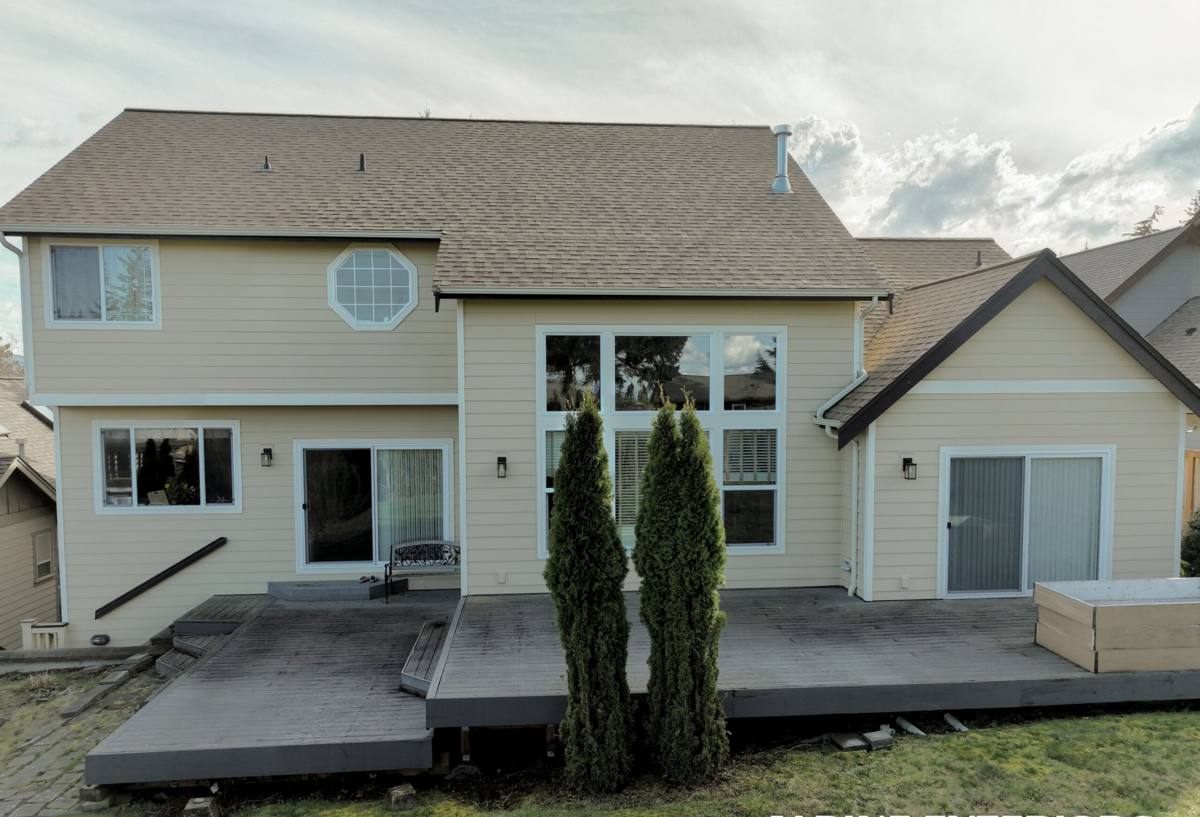
Signs Your Deck Needs Repair, Not a Full Rebuild
Most decks we look at in South Everett don't need to be torn out. They need targeted repair to the parts that actually take the abuse — ledger connections, stair stringers, railing posts, and the framing closest to grade. Here's what tells us a repair is realistic:
- Soft or spongy spots in specific boards, while the rest of the deck feels solid underfoot
- Rust streaks bleeding from screw heads or joist hangers, but the wood around them is still sound
- A railing or post that wiggles, while the deck surface itself is stable
- Moss or algae buildup that's making the surface slick, without deep rot underneath
- Gaps opening up between boards near the house where the deck meets the siding
- Stairs that feel bouncy or have a stringer showing visible splitting
If instead you're seeing widespread rot across multiple joists, a ledger board pulling away from the house, or posts that have lost structural connection to their footings, that's a different conversation — and we'll tell you honestly if repair isn't the safer or more cost-effective path.
The One Spot Every South Everett Deck Owner Should Check
The ledger board — where the deck attaches to the house — is the single most important connection on the entire structure, and it's also the one most exposed to the kind of sustained wet weather this region gets. Water that gets behind the ledger, between the deck and the siding, can sit there for weeks without ever being visible from outside. We check this connection on nearly every repair call, because a failure here isn't cosmetic — it's a safety issue.
What a Correct Deck Repair Actually Involves
A repair that just replaces the boards you can see and calls it done is a repair that will need to be redone in a few years. A correct repair addresses the framing and connections underneath, not just the surface.
Structural First
Before any decking board gets touched, we check the ledger flashing, joist hangers, beam connections, and post bases. These are the parts holding the deck together, and in a wet climate they're usually where the real damage is — even when the surface boards look fine.
Then Surface and Drainage
Once the structure is sound, we address decking boards, gaps for water to drain through, and grading or landscaping issues near the deck that keep moisture trapped against the framing longer than it should be.
Fasteners and Hardware Matched to the Climate
Standard fasteners corrode faster near Puget Sound's salt air than most homeowners expect. We use fasteners and hardware rated for the exposure they'll actually face, not just what's cheapest at the counter.
Common Problem Areas We See on South Everett Decks
| Deck Area | What Typically Goes Wrong | Why It Happens Here |
|---|---|---|
| Ledger board / rim joist | Hidden rot behind flashing | Trapped moisture from prolonged rain, poor original flashing detail |
| Fasteners & joist hangers | Rust, corrosion, loosened connections | Salt-influenced air accelerates metal fatigue |
| Deck surface | Moss, algae, slick footing | Shade and sustained damp conditions most of the year |
| Stairs & stringers | Splitting, bounce, soft treads | High foot traffic combined with standing water at the base |
| Railing posts | Loose or rotted post bases | Water pooling at grade-level connections |
| Board gaps near siding | Water intrusion toward the house | Undersized or clogged drainage gaps |
Repair vs. Replacement: How We Help You Decide
Homeowners often assume any deck problem means a full replacement. Often it doesn't. Here's the honest breakdown of how we make that call.
| Factor | Favors Repair | Favors Replacement |
|---|---|---|
| Structural framing | Sound, isolated damage only | Widespread rot across multiple joists or beams |
| Ledger connection | Solid, properly flashed | Failing or pulling away from the house |
| Age of the deck | Under 15-20 years, quality original build | Older deck nearing the end of its practical service life |
| Footings and posts | Stable, no movement | Settling, shifting, or undersized footings |
| Scope of visible damage | Limited to specific boards or railings | Damage spread across most of the surface |
We'll walk the whole structure with you and explain what we find in plain terms — including when repair is genuinely the smarter, less expensive choice, and when it isn't.
Our Deck Repair Process
- On-site inspection. We check the ledger, framing, posts, footings, and surface, not just what's visible from the top.
- Honest scope and estimate. You get a clear explanation of what's actually wrong, what it takes to fix it correctly, and what it costs — no upsell to a full rebuild you don't need.
- Structural repairs first. Framing, flashing, and hardware get addressed before anything cosmetic.
- Surface and detail work. Damaged boards, railings, and stair components get replaced or repaired to match the rest of the deck as closely as possible.
- Final check. We confirm the deck is solid, properly drained, and ready for another Northwest wet season before we call the job done.
Materials We Use, and Why
For structural framing repairs, we use pressure-treated lumber rated for ground contact where appropriate, because the difference in rot resistance matters in a climate this wet. For surface boards, the right choice depends on the homeowner's priorities — traditional wood offers a lower upfront cost but needs regular maintenance to fight moss and moisture in this climate, while composite decking costs more initially but resists moisture absorption and cuts down on the moss and algae problem significantly. We'll talk through the real maintenance trade-offs of each rather than pushing whichever is easiest for us to install.
For fasteners and connectors, we use hardware rated for the corrosion exposure this area sees — this isn't optional in our book, since undersized or mismatched hardware is one of the most common reasons we get called out to fix a deck that's only a few years old.
Keeping a South Everett Deck Healthy Between Repairs
A repaired deck stays repaired longer with a little seasonal attention. This is the same checklist we give our repair customers:
- Sweep debris and standing water off the surface after major storms, especially in shaded corners
- Clean moss and algae off the surface before it gets slick and before it starts holding moisture against the wood
- Check that gaps between boards near the house haven't clogged with debris
- Look at fasteners and hardware once a year for early rust staining
- Confirm gutters and downspouts aren't dumping extra water directly onto or under the deck
- Reseal or re-stain wood decking on the manufacturer's recommended schedule, not just when it looks faded
Why a Crew That Already Works South Everett Makes a Difference
Deck repair isn't one-size-fits-all across Snohomish County. A crew that regularly works South Everett has already seen how the local combination of rain patterns, shade cover, and proximity to the Sound plays out on real decks — which connections fail first, which materials hold up, and which shortcuts from a deck's original build tend to cause problems years later. That local pattern recognition means a faster, more accurate inspection and a repair plan built around how this specific area actually treats a deck, not a generic checklist.
If your deck has soft spots, rust stains, a wobbly railing, or just isn't draining the way it used to, we're happy to take a look. Reach out for a free, no-pressure estimate using the form below, and we'll give you a straight answer on what it needs.