 Everett
 Why South Everett Roofs Wear Out Faster Than the Warranty Says
Every asphalt shingle sold in the Pacific Northwest carries a lifespan estimate that assumes average conditions. South Everett doesn't get average conditions. Sitting close to Possession Sound and the broader Puget Sound, homes here take on salt-laden air that slowly breaks down granule adhesion on shingles and accelerates corrosion on exposed metal fasteners, flashing, and vents. Add in driving rain that comes sideways off the water during winter storms, and you've got moisture finding its way into laps and seams that would stay dry in a calmer climate.
Then there's moss. Snohomish County's wet season runs long — often October through May with only short breaks — and that extended damp period is exactly what moss spores need to take hold on north-facing slopes and shaded areas under mature trees. Once moss establishes itself, it holds water against the roof surface, lifts shingle edges, and works its way under flashing. A roof that looks fine from the ground can be losing years of service life to moss you'd only spot up close.
None of this means South Everett homes need exotic materials or constant babysitting. It means the roof has to be installed correctly the first time, with attention to the details that matter in this specific climate — ventilation, underlayment choice, flashing work, and moss-resistant details — rather than a generic install that would pass fine in a drier region.
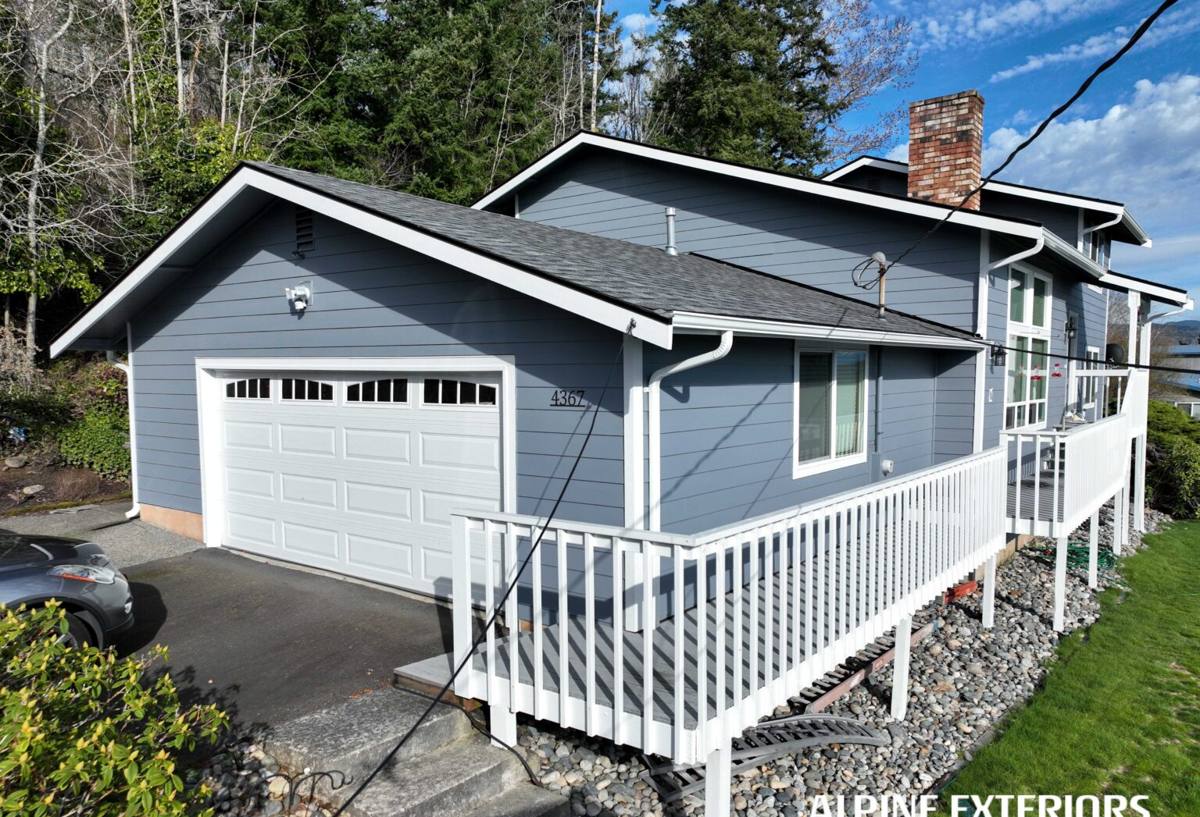
Signs Your Roof Has Crossed From "Repair" to "Replace"
A lot of roofs get patched for years past the point where patching still makes financial sense. Knowing where that line sits saves you money and stress.
- Granules collecting in gutters or at downspout outlets in noticeable amounts, not just a light dusting
- Shingles that are cupping, curling at the edges, or cracking when you look closely
- Moss or dark streaking covering more than isolated patches, especially on shaded slopes
- Soft spots or sagging when walked on, which usually points to decking damage underneath
- Daylight visible through the roof deck from inside the attic
- Multiple past repairs in different areas rather than one contained problem
- Roof is nearing or past the manufacturer's rated lifespan for its material
- Rising energy bills alongside poor attic ventilation, suggesting heat and moisture are being trapped
One or two of these on their own might mean a targeted repair is still reasonable. Several at once, or damage that's spread across multiple roof planes, usually means you're paying repair prices for a roof that's already decided it's done.
What a Correct Roof Replacement Actually Involves
A roof replacement isn't just stripping old shingles and nailing down new ones. Done right, it's a sequence where each layer depends on the one before it being correct.
Tear-Off and Deck Inspection
Full tear-off to bare decking is the only way to see what's actually happening underneath. Roofing over an existing layer hides rot, soft spots, and improperly flashed penetrations — problems that don't go away just because they're covered. Any damaged or delaminated plywood or OSB gets replaced before anything new goes down.
Underlayment
This is the roof's backup layer, and in a region with this much sustained rain it earns its keep. Self-adhered ice-and-water shield at eaves, valleys, and around penetrations gives you a sealed barrier where water pressure and wind-driven rain are most likely to find a way in. Synthetic underlayment across the rest of the field holds up better than old-style felt against extended wet exposure during and after installation.
Flashing
Flashing around chimneys, skylights, walls, and roof-to-roof transitions is where most leaks actually originate — not in the field of the shingles themselves. New step flashing, counter-flashing, and properly lapped valley metal matter more to long-term dryness than the shingle brand you choose.
Ventilation
Balanced intake and exhaust ventilation keeps the attic close to outdoor temperature, which reduces condensation, extends shingle life from the underside, and helps prevent ice damming during cold snaps. A roof can be installed perfectly on top and still fail early if the attic underneath is trapping heat and moisture.
Materials That Hold Up in This Climate
There's no single "best" roofing material — the right choice depends on your roof's exposure, your home's style, and how much long-term maintenance you want to take on. Here's how the common options compare for a coastal, wet, moss-prone climate like South Everett's.
| Material | Typical Lifespan | How It Handles Local Weather | Maintenance Notes |
|---|---|---|---|
| Architectural (dimensional) asphalt shingle | 25–30 years | Good wind and rain resistance; algae-resistant granule options help with moss and staining | Periodic soft-wash cleaning on shaded slopes recommended |
| 3-tab asphalt shingle | 15–20 years | Thinner profile, less wind resistance than architectural | More prone to curling and granule loss over time |
| Standing seam metal | 40–60 years | Excellent water shedding on steeper pitches; sheds moss more easily than shingles | Requires correct fastener and underlayment detailing to avoid galvanic corrosion near salt air |
| Synthetic/composite shingle | 30–50 years | Resists moisture absorption and moss growth well | Higher upfront cost; fewer local installers familiar with the product |
For most South Everett homes, a quality architectural shingle with algae-resistant granules is the practical middle ground — proven installation methods, competitive pricing, and enough resistance to moss and moisture to perform well through the region's wet stretch. Metal earns its higher cost on steep-pitch roofs or homes where long-term, low-maintenance performance is the priority.
Moss Prevention Built Into the Install
You can't eliminate moss risk in a climate this wet, but you can reduce it significantly with a few details at install time. Zinc or copper strips near the ridge release trace metal ions with each rain that inhibit moss and algae growth on the slopes below. Keeping roof planes clear of overhanging branches where possible reduces shade and debris buildup — the two things moss needs most. And a roof with proper ventilation dries out faster after rain than one trapping heat and moisture underneath, which matters because moss thrives on surfaces that stay damp longest.
None of this replaces occasional gentle cleaning, but it meaningfully stretches the time between cleanings and reduces how aggressively moss can take hold in the first place.
Our Process, Start to Finish
- On-site inspection. We walk the roof and attic, note the material, ventilation setup, flashing condition, and any deck damage before recommending anything.
- Written estimate. You get a clear scope of work and price — what's included, what materials, and why, not just a bottom-line number.
- Permitting. Most jurisdictions in Snohomish County, including Everett, require a permit for a full roof replacement. We handle that paperwork as part of the job.
- Material delivery and site protection. Landscaping, siding, and outdoor living areas get covered before tear-off begins.
- Tear-off and deck repair. Old roofing comes off down to the deck; any damaged sheathing is replaced and documented.
- Underlayment, flashing, and ventilation install. The layers that actually keep water out go in with the attention described above.
- Shingle or material installation. Installed to manufacturer specifications to keep your warranty valid.
- Cleanup and magnetic sweep. Debris and stray nails are cleared from the yard and driveway before we consider the job done.
- Final walkthrough. We go over the finished roof with you and answer any questions before wrapping up.
What Affects the Cost of Your Roof Replacement
Every roof is priced individually — there's no honest flat rate — but the same handful of factors drive most of the variation between one South Everett home and the next.
| Factor | Why It Matters |
|---|---|
| Roof size and number of planes | More square footage and more complex geometry mean more material and labor time |
| Pitch and access | Steep or hard-to-access roofs require more safety setup and take longer to work |
| Existing deck condition | Rot or soft spots found at tear-off mean added sheathing replacement |
| Material choice | Architectural shingle, metal, and composite options carry different material and labor costs |
| Number of penetrations | Chimneys, skylights, and vents each require individual flashing work |
| Layers to remove | Tearing off multiple existing layers takes more labor than a single-layer tear-off |
We walk through each of these with you during the estimate so you understand exactly what's driving the number, not just what the total is.
Why a Crew That Already Works South Everett Matters
Roofing crews that work across a wide, varied territory tend to install the same way everywhere, because they don't have time to think locally on every job. A crew that regularly works South Everett already knows which slopes in this area tend to hold moss the longest, how the exposure near the water affects flashing choices, and what inspectors in Snohomish County and the City of Everett expect to see at permit sign-off. That familiarity shows up in fewer surprises during the job and fewer callbacks after it — not because the materials are different, but because the details are handled with local conditions already factored in.
After Your New Roof Is Installed
A correctly installed roof still benefits from basic upkeep, especially given how long this region's wet season runs.
- Have gutters cleared at least twice a year so water isn't backing up under the eaves
- Keep overhanging branches trimmed back to reduce shade and debris on the roof surface
- Schedule a visual check after major windstorms to catch any lifted or displaced shingles early
- Address any moss growth with gentle, low-pressure cleaning rather than power washing, which can strip granules
- Keep an eye on attic ventilation, since blocked soffit or ridge vents undo a lot of the protection built into the install
If you're seeing signs of wear on your current roof or just want an honest read on how much life it has left, we're happy to take a look. Fill out the form below for a free, no-pressure estimate — we'll walk the roof, tell you what we actually see, and give you a clear price if replacement makes sense.