 Everett
 South Everett Roofs Face a Different Kind of Wear
South Everett sits close enough to Puget Sound that salt-laden air is a constant, low-grade stress on every exposed roof surface. Add Snohomish County's long wet season, frequent wind-driven rain off the water, and the deep shade that mature evergreens throw over so many South Everett lots, and you get a roofing environment that ages materials faster than drier, calmer parts of the state. Storm damage here rarely announces itself with a single dramatic event. More often it's a windstorm that lifts a few shingle tabs, followed by months of rain finding that opening before anyone notices a stain on the ceiling.
That combination — salt air, driving rain, and a moss season that can run from fall through spring — is why storm damage repair in this neighborhood needs to be approached differently than a generic patch job. A repair that only addresses the visible damage and ignores what the climate did to the roof around it tends to fail again within a season or two.
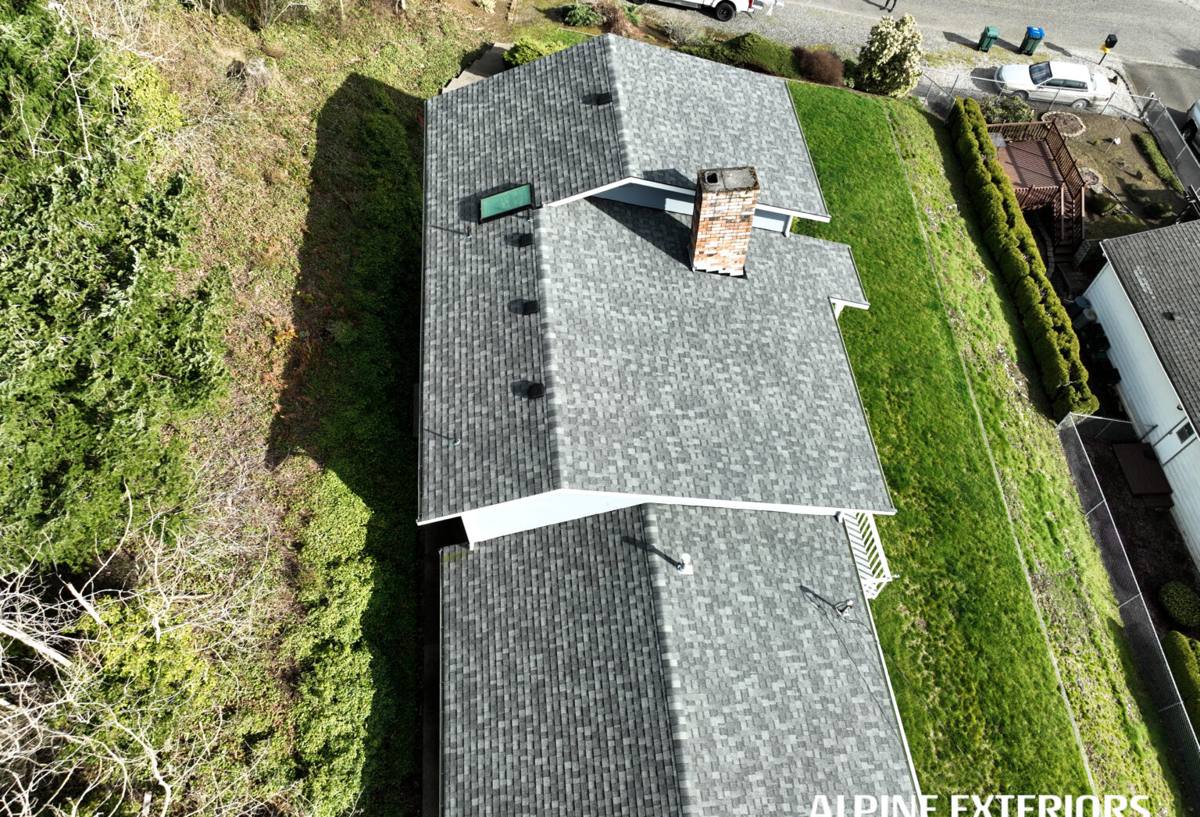
What Actually Counts as Storm Damage
Homeowners often picture storm damage as a tree limb through the roof deck, and sometimes it is. But most of the storm-related roof repair calls we get in South Everett trace back to less dramatic causes that add up over time:
- Wind-lifted or creased shingle tabs that break the seal strip and let wind-driven rain work underneath
- Granule loss from repeated gusts, which thins the shingle's protective layer and speeds up UV and moisture damage
- Flashing knocked loose or bent around chimneys, vents, and skylights during high wind
- Moss and organic buildup that traps moisture against shingles and, over a wet winter, works into the mat itself
- Small punctures or bruising from wind-blown branches and debris that don't show up until a leak develops weeks later
Signs You Might Have Storm Damage
- Shingle granules collecting in gutters or at downspout outlets after a windstorm
- Curled, cracked, or missing shingle tabs visible from the ground
- Daylight or water stains around chimney and vent flashing from inside the attic
- New or worsening ceiling stains after a period of heavy rain
- Thick moss growth, especially on north-facing slopes or areas shaded by trees
- Soft spots or sagging in the roof deck when walked, a sign damage has reached the structure
Why Moss Deserves Its Own Conversation
Moss is not just cosmetic. In this climate, moss holds moisture against the shingle surface for days after a storm has passed, keeping the roof wetter for longer than an open, sun-exposed roof ever would. Over a full moss season, that trapped moisture works its way under shingle edges, lifts tabs, and accelerates the same granule loss and mat breakdown that wind and rain cause on their own. A storm damage repair that patches the wind-lifted section but leaves heavy moss growing untouched nearby is only solving half the problem, because the moss keeps working on the roof year-round, storm or no storm.
Salt Air's Toll on Roof Metal and Fasteners
Living close to Puget Sound means the roof isn't just fighting rain and wind — it's fighting slow corrosion too. Salt-laden air accelerates rust on exposed metal: flashing, roof vents, nail heads, and gutter hardware all corrode faster here than they would twenty or thirty miles inland. A storm can expose fastener heads or bend flashing just enough to let that corrosion process start somewhere it wasn't before, and once metal starts rusting under a shingle, it stops shedding water properly long before it looks obviously bad from the ground.
This is one reason we don't treat storm repairs as a simple like-for-like swap. Where flashing or fasteners are being replaced anyway, using corrosion-resistant materials suited to a coastal-influenced climate is a small upgrade at repair time that saves a callback a few years down the road.
What a Correct Storm Damage Repair Actually Involves
Start With a Real Assessment, Not a Guess From the Ground
A proper repair starts with someone on the roof, not someone looking at it through binoculars from the driveway. That means checking the full slope the damage is on, not just the spot the homeowner pointed to, because wind damage is rarely confined to one shingle. It also means checking the attic from the inside where accessible, since water intrusion often travels sideways under the deck before it shows up as a ceiling stain in a completely different room.
Matching Materials and Proper Layering
Mismatched shingles are an easy shortcut that shows up as a visible patch and, more importantly, can leave a weak seal between old and new material. A correct repair matches the existing shingle profile and color as closely as possible, replaces damaged underlayment rather than shingling over it, and re-flashes any disturbed penetration instead of just re-caulking it. In a climate this wet, self-adhering underlayment at vulnerable areas such as valleys, eaves, and around penetrations matters more than it would in a drier region, because it's the backup layer protecting the deck if wind-driven rain gets past the shingles again.
Repair vs. Replacement: How We Tell the Difference
| Situation | Repair Usually Makes Sense | Replacement Usually Makes Sense |
|---|---|---|
| Age of roof | Roughly under 12-15 years, otherwise in good condition | Nearing or past the shingle's expected service life |
| Extent of damage | Isolated to one slope or a small area | Spread across multiple slopes or recurring in different spots |
| Underlying deck | Solid, dry, no soft spots | Soft, delaminating, or showing rot at the damaged area |
| Moss and granule condition | Localized, roof otherwise holding up well | Widespread moss staining and heavy granule loss roof-wide |
| Insurance scope | Adjuster scopes a targeted repair | Adjuster or contractor documents damage affecting the full roof system |
We'll tell you honestly which category your roof falls into. Pushing a full replacement on a roof that only needs a targeted repair wastes your money; patching a roof that's structurally past its useful life just delays a bigger bill.
Temporary Protection While You Wait for Repair
If a storm has left an active leak or exposed roof deck, the priority isn't a permanent fix on day one — it's stopping water from getting further into the house. A properly installed tarp, weighted and secured rather than just draped over the damage, can buy time until a full repair can be scheduled without making the eventual repair harder. What we try to avoid is a rushed, permanent-looking patch that seals in trapped moisture or covers up damage that still needs a proper look once the weather clears.
If you're dealing with an active leak, say so when you call. We'll talk through whether a temporary measure makes sense before your full repair, especially during a stretch of back-to-back storms when scheduling every roof in the area at once isn't realistic.
Our Process for South Everett Storm Repairs
- Inspection and documentation. We walk the roof, photograph the damage from multiple angles, and check the attic where accessible, so you have a clear record of what happened and when.
- Written scope and honest recommendation. You get a plain-language explanation of what's damaged, what caused it, and whether repair or replacement is the right call, before any work starts.
- Insurance coordination, if applicable. If you're filing a claim, we can walk the adjuster through what we found and make sure the scope reflects the actual damage, not just what's visible from the ground.
- Repair or tear-off, done to code. Matching materials, correct underlayment and flashing, and cleanup so debris and old granules don't end up in your landscaping or gutters.
- Final check and photos. We confirm the repair holds a proper seal and share before and after documentation for your records.
Insurance Claims for Storm Damage: What to Expect
Most homeowner's policies cover sudden storm damage such as wind, falling debris, and the resulting water intrusion, though coverage details, deductibles, and what counts as storm-caused versus wear and tear vary by policy. Moss damage and gradual granule loss are the gray area: an insurer may cover the wind event that lifted the shingles but push back on damage that clearly built up over years of neglect. This is exactly why documentation matters. A written scope that separates storm-caused damage from pre-existing wear gives you a stronger, more honest claim, and it's the kind of thing an adjuster takes seriously coming from a contractor who's done the same kind of assessment on other South Everett roofs.
We're not a public adjuster and won't promise a claim outcome, but we will document what we find accurately and answer an adjuster's questions directly if you'd like us to.
Cost Factors for Storm Damage Roof Repair
| Factor | Why It Moves the Price |
|---|---|
| Size and location of the damage | A single lifted shingle section costs far less to fix than damage spread across a valley or multiple slopes |
| Roof pitch and accessibility | Steep slopes, high roofs, and limited access for ladders or equipment add labor time |
| Underlayment and deck condition | If water reached the deck, replacing rotted sheathing adds material and labor beyond the shingle repair itself |
| Shingle availability and match | Older or discontinued shingle colors can be harder to match, sometimes requiring a larger repair area to blend properly |
| Moss and debris removal | Heavy moss growth needs careful removal before a repair can be properly sealed |
Because of this range of variables, we don't quote storm damage repairs over the phone. A brief on-roof inspection tells us — and you — what's actually involved, and we'll give you honest numbers before any work begins.
Why Hiring a Crew That Already Works South Everett Matters
Storm damage repair isn't just a shingle-replacement skill — it's a judgment call about what a given roof, in a given climate, actually needs to hold up through the next wet season. A crew that works South Everett regularly already knows which slopes in this neighborhood tend to hold moss longest, how local wind patterns off the Sound tend to lift shingles on certain roof orientations, and what a properly weathered versus storm-damaged shingle actually looks like in this climate. That local pattern recognition is the difference between a repair that's cosmetic and one that actually lasts through the next round of driving rain.
It also means faster response. When a windstorm moves through Snohomish County, a contractor who's already local and already scheduling in the area can typically get eyes on a roof sooner than a crew traveling in from farther away, and a small leak addressed quickly stays small.
Keeping the Repair Working
A good storm repair should reduce, not just fix, future risk. A few habits make a real difference in this climate:
- Keep gutters clear so wind-driven rain has somewhere to go instead of backing up under the eaves
- Trim back branches that overhang the roof — they're both a moss source and a future storm-debris risk
- Have moss treated before it gets heavy rather than after, since removal gets more damaging to shingles the longer it's left
- Do a quick visual check after any significant windstorm, especially looking for lifted tabs or granules in the gutters
- Keep documentation and photos from any repair in case a related issue comes up during a future claim
If you're dealing with storm damage on a South Everett roof, or you're just not sure whether what you're seeing is storm-related or ordinary wear, we're happy to take a look. Fill out the form below for a free, no-pressure estimate, and we'll tell you honestly what we find.