 Everett
 Storm Damage Roof Repair Built for Eastmont's Weather
Eastmont homes sit close enough to Puget Sound and the Snohomish River valley to catch salt-laden air off the water and the full force of the wind and rain systems that roll through Snohomish County most of the year. That combination is hard on roofs in ways that homeowners further inland don't deal with. A single windstorm can lift shingle tabs, drive rain sideways under flashing, and knock loose granules that took years to wear down naturally. When that happens, the fix needs to match the problem, not just patch what's visible from the ground.
We repair storm-damaged roofs for homes in and around Eastmont as part of our regular service area, not as a one-off call. That matters because storm damage here isn't a single event you deal with once. It's an ongoing relationship between your roof and a climate that includes driving rain, coastal salt exposure, and a moss season that can run half the year.
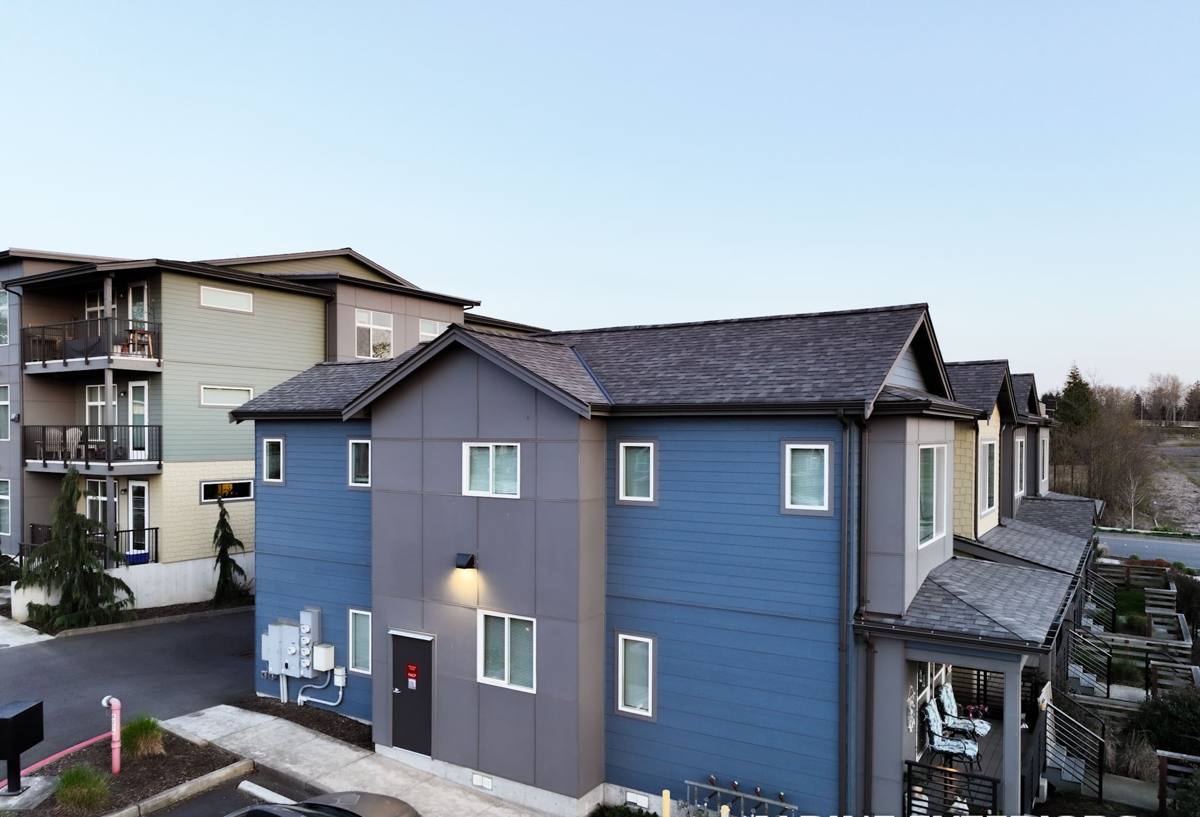
What This Climate Does to a Roof Over Time
Salt Air and Metal Fatigue
Salt in the air accelerates corrosion on exposed metal — flashing, fasteners, vent caps, gutter hardware. A storm doesn't need to be severe to finish off metal components that have already been weakened by years of salt exposure. What looks like storm damage after a windstorm is sometimes the storm simply exposing corrosion that was already underway.
Driving Rain and Wind-Driven Water
Everett-area storms frequently bring rain at an angle, not straight down. Wind-driven rain finds its way under shingle edges, around chimney flashing, and into any gap that a calm-weather rain would never reach. This is the single biggest reason storm-damaged roofs leak weeks after the storm has passed — water gets pushed into a seam during the event, then works its way down through decking over time.
Moss Season
Snohomish County's long wet season keeps roofs damp for extended stretches, which is exactly what moss needs to establish itself. Moss holds moisture against shingles, lifts tabs as it grows under the edges, and adds weight. A roof already carrying a moss load is more vulnerable when a storm hits — wind gets more leverage on shingles that moss has already loosened.
Signs Your Eastmont Roof Has Storm Damage
Some storm damage is obvious from the ground. Much of it isn't. Here's what we look for and what you can check yourself before calling anyone out.
- Shingles that look creased, curled, or lifted at the edges, especially on the side of the roof that faces prevailing wind
- Granules collecting in gutters or at downspout outlets after a storm
- Bent, dented, or missing flashing around chimneys, vents, and roof-to-wall joints
- Water stains on interior ceilings or upper walls that appeared after a storm
- Soft or spongy spots when the roof is walked, which usually means decking has already absorbed water
- Moss or debris buildup in valleys, which can hide damage underneath and trap water after wind events
- Gutters pulling away from the fascia or showing new dents from wind-blown debris
If you see any of these after a storm, the roof should be looked at even if there's no visible leak yet. Water intrusion from storm damage often shows up inside the house weeks later, after it has had time to travel through the decking and framing.
What a Correct Storm Damage Repair Actually Involves
Inspection Before Anything Else
We start on the roof itself, not just from the ground with binoculars. That means checking every flashing point, the full field of shingles, valleys, and the attic side of the decking where accessible. A repair based only on a curbside look tends to miss the damage that causes callbacks — a loose flashing seam or soaked decking board that wasn't visible from the street.
Decking Comes First
If wind or water has compromised the decking underneath the shingles, that gets addressed before any new shingles go down. Laying new shingles over damaged decking just hides the problem and shortens the life of the repair. This is one of the most common shortcuts we see in storm repairs done elsewhere, and it's the reason a "repaired" roof leaks again during the next storm.
Flashing and Water-Path Details
Given how much of our storm damage comes from wind-driven rain rather than straight-down rain, flashing detail work matters more here than in drier climates. Chimney flashing, step flashing along walls, and valley flashing all get inspected and replaced where corroded or bent, not just resealed with caulk over a failing piece of metal.
Matching Materials
Where a repair is patching into an existing roof rather than replacing a full section, we match shingle profile, color, and where possible, manufacturer, so the repair doesn't stand out as a visibly different patch. Exact color matching isn't always possible on an older roof that has weathered and faded — we'll tell you honestly if that's the case before starting.
Cleanup and Debris Removal
Storm repairs generate more debris than routine maintenance — old shingles, damaged flashing, and any moss or organic material that gets cleared out during the process. That all comes off the property, including magnetic sweeps for nails and fasteners around the work area.
Repair or Replace: What Determines the Right Call
Not every storm-damaged roof needs full replacement, and not every roof that looks bad from the street is actually a repair job. The right call depends on the roof's age, how widespread the damage is, and what condition the decking is in underneath.
| Factor | Favors Repair | Favors Replacement |
|---|---|---|
| Roof age | Under 10-12 years, otherwise in good shape | Nearing or past expected shingle lifespan |
| Extent of damage | Isolated to one section or slope | Spread across multiple slopes or the whole roof |
| Decking condition | Solid, no rot or soft spots found | Widespread soft decking or rot discovered |
| Prior moss/water history | Minimal history of moss or leaks | Long-term moss buildup or repeated past leaks |
| Material availability | Matching shingles still available | Discontinued product, poor match likely |
We'll always give you our honest read on which category your roof falls into, along with the reasoning, so the decision is yours to make with real information rather than a sales push in either direction.
Our Process for Eastmont Storm Repairs
- Inspection and documentation: We assess the roof and document damage with photos, useful both for your own records and for insurance if you're filing a claim.
- Written scope and estimate: You get a clear breakdown of what needs repair, what it involves, and the cost — no vague line items.
- Scheduling around weather: Storm repairs get prioritized when there's active water intrusion, but we also work around Snohomish County's rain patterns to do the work in a dry window whenever possible.
- Repair work: Decking, flashing, and shingle work performed in that order, with attention to the wind-driven-rain details that matter most in this area.
- Final walkthrough: We show you the completed work and explain what was done and why.
Working With Your Insurance Claim
Many storm repairs in this area get filed through homeowners insurance, especially after a named windstorm or significant weather event. We document damage thoroughly enough to support a claim and can walk an adjuster through what we found on the roof. We're not a public adjuster and don't negotiate your claim for you, but we'll give you an honest, detailed assessment that holds up to scrutiny either way.
Why a Crew That Already Works Eastmont Makes a Difference
A contractor who regularly works this part of Everett has already seen how the local wind patterns hit different roof orientations, which flashing details tend to fail first in this salt-air, high-rainfall environment, and how aggressive moss growth gets on shade-heavy lots. That's not something you can fully substitute with general roofing experience from a drier or more inland region. It also means faster response after a storm, since we're not routing a crew across the county for a single job.
Reducing Future Storm Damage
A storm repair is a good moment to address the conditions that made the damage worse in the first place. A few things worth checking or doing on any Eastmont roof:
- Clear moss and debris from valleys and roof edges at least once a year
- Check flashing condition every year or two given the corrosive effect of salt air
- Keep gutters and downspouts clear so wind-driven rain has somewhere to go
- Trim back tree limbs that could come down on the roof in high wind
- Address small leaks or lifted shingles before the next storm season, not after
None of this eliminates storm risk, but it reduces how much damage a given storm actually causes, and that adds years to the roof's usable life.
If your Eastmont roof took damage in a recent storm, or you just want an honest read on its condition before the next one hits, we're glad to come take a look. The estimate is free, there's no pressure, and you'll get a clear explanation of what we find using the form below.