 Everett
 Windows Built for Delta's Climate, Not a Showroom
Delta sits close enough to the water and the industrial waterfront that homes here take a different kind of weather beating than houses further inland in Snohomish County. Salt-laden air off the estuary and Possession Sound corrodes hardware and finishes faster than dry-climate products expect. Add Everett's long stretch of driving rain each fall and winter, plus a moss season that can run from October well into spring, and you get a set of conditions that punishes cheap window installs in ways that don't show up until year three or four. By then the caulk has failed, the frame has taken on moisture, and the homeowner is looking at rot repair instead of a simple glass upgrade.
We install windows in Delta on a regular basis, so this isn't a page written from a manufacturer's brochure. It's written from what we actually see when we pull old sashes out of houses in this neighborhood: swollen wood jambs, rusted-through weep holes, and interior sills stained from years of slow leaks nobody noticed until the drywall went soft.
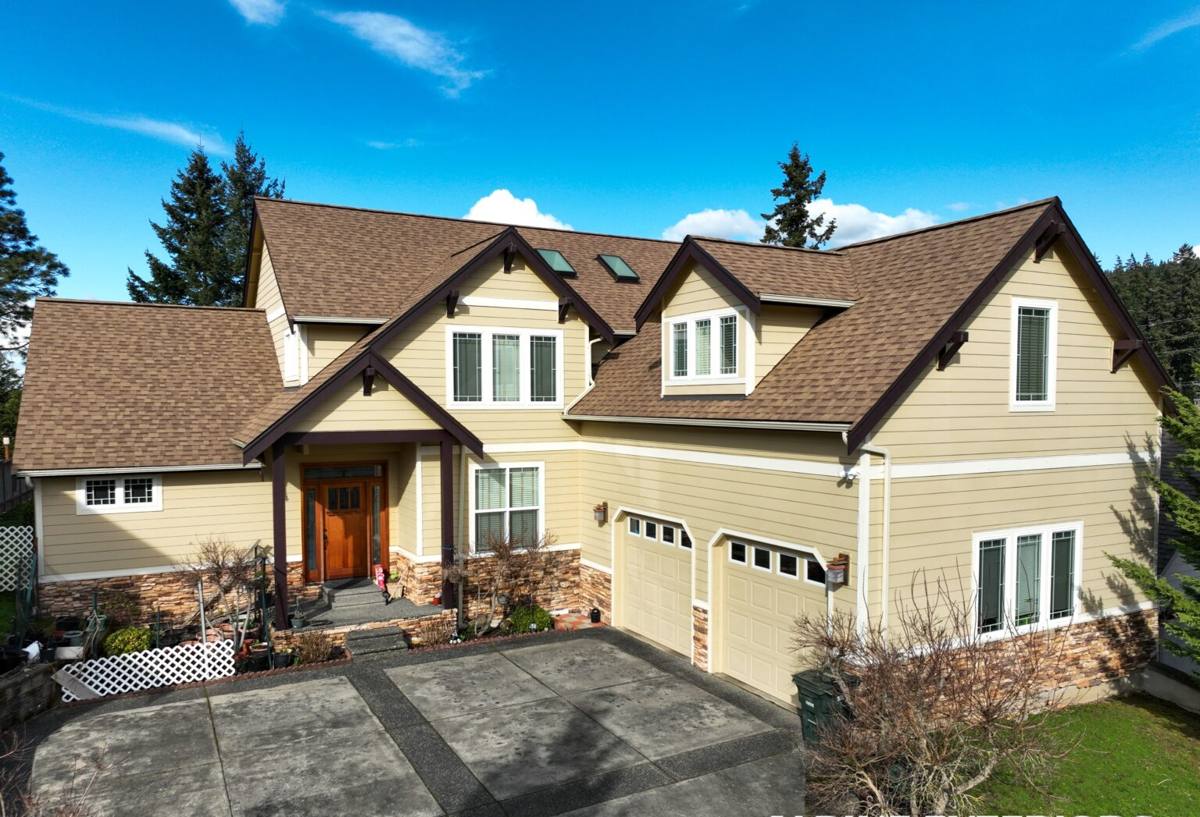
What Delta Homes Actually Need From a Window
Not every window on the market is a good fit for a neighborhood this close to salt water and this exposed to sideways rain. A few things matter more here than they would on a dry side of the state:
- Corrosion-resistant hardware. Cheap zinc or bare steel fasteners and cranks pit and seize within a few seasons near the water. We spec hardware rated for coastal exposure.
- Real weep system design. Every window needs a clear path for wind-driven rain that gets past the outer seal to drain back out instead of pooling in the sill track.
- Flashing that actually sheds water downhill. In driving rain, water moves sideways as much as it moves down. Flashing laps have to be sequenced correctly or wind will push water straight up and under.
- Low-maintenance exterior finish. Moss and algae growth on window trim isn't just cosmetic — sustained dampness against wood trim accelerates rot. Materials and finishes that don't hold moisture against the substrate last longer here.
- Proper insulation and air sealing. A tight, well-insulated frame keeps the interior sill and jamb dry by reducing condensation, which is a bigger issue in our damp, mild winters than most homeowners realize.
The Real Cost of Getting It Wrong
Most window failures we get called out for in this part of Everett aren't glass failures — they're installation failures. The window itself might be a perfectly fine product, but if it wasn't flashed correctly or the old rough opening wasn't checked for hidden rot before the new unit went in, the problem was baked in from day one.
Common Signs of a Bad Prior Install
- Soft or discolored drywall or trim below a window, especially on the side of the house that takes the worst weather
- Visible daylight or drafts around the frame even though the window "looks" new
- Fogging or moisture between double-pane glass — a sign the seal has already failed
- Paint or caulk that's cracked and pulling away from the frame within a few years of install
- Moss or dark streaking building up on the sill or trim faster than on the rest of the house
If any of that sounds familiar, it's worth having someone actually pull trim and look at the framing before assuming a simple recaulk will fix it. Sometimes it will. Sometimes there's already rot behind the wall that needs to be addressed before a new window goes in, or the new window will just fail the same way the old one did.
Our Window Replacement Process
1. On-Site Assessment
We look at each opening individually — not every window on a house fails the same way or needs the same fix. We check the condition of the existing frame, the rough opening, the sheathing behind it, and how exposed that particular wall is to prevailing wind and rain.
2. Removal Without Guesswork
When we pull the old window, we're also checking the framing underneath for hidden water damage. This is the point where problems that have been building for years actually get found — and it's much cheaper to deal with them now than after a new window is sealed in over rotten wood.
3. Correct Flashing and Air Sealing
This is the step that separates a window that lasts twenty-plus years from one that fails in five. Flashing tape, sill pans, and house wrap integration all get sequenced so water is directed out and down, never trapped behind the new unit. We seal for air infiltration too, not just water — a drafty window wastes energy year-round in a climate where the heat and the furnace are both working overtime for much of the year.
4. Setting and Leveling
A window that isn't shimmed level and square will bind, won't lock tight, and will develop gaps at the corners over time — exactly where wind-driven rain finds its way in. We take the time to get this right rather than rushing to the next job.
5. Interior and Exterior Finish
Trim, caulk joints, and touch-up work get done to match the rest of the house, inside and out, with materials chosen to hold up against our damp winters rather than crack and open up after one season.
Comparing Window Materials for a Coastal-Adjacent Neighborhood
There's no single "best" window material for every house — it depends on the home's age, exposure, and budget. Here's how the common options generally perform under Delta's conditions specifically:
| Material | Coastal air / salt exposure | Maintenance | Typical trade-off |
|---|---|---|---|
| Vinyl | Handles it well; won't corrode or rust | Low — occasional cleaning | Frame color/finish options are more limited than wood or fiberglass |
| Fiberglass | Very good; dimensionally stable in temperature swings | Low | Higher upfront cost than vinyl |
| Wood | Needs consistent upkeep to resist moisture and rot near the water | High — regular repainting/sealing | Best classic appearance, but real maintenance commitment in this climate |
| Aluminum | Prone to corrosion and condensation without a thermal break | Moderate | We generally steer clients away from bare aluminum frames here for that reason |
We'll walk through which option makes sense for your specific house and budget — this table is a starting point, not a recommendation for every home.
Timing the Job Around Everett's Weather
Window replacement can be done most of the year here, but scheduling matters. We plan installs to minimize the time an opening sits without a window in it, and we watch the forecast closely rather than working through active driving rain, which can compromise a fresh flashing and sealing job before it's had a chance to set. During the wettest stretch of the year, that sometimes means a tighter install window per house, but it's a better outcome than a rushed job done in the wrong conditions.
Moss Season and Exterior Trim
Moss growth on north-facing trim and siding is common in this part of Snohomish County, and it's worth addressing at the same time as a window replacement if it's present. Moss holds moisture against wood and painted surfaces, which shortens the life of new trim and caulk lines faster than direct rain exposure alone.
What to Check Before You Hire Anyone
Window replacement is one of those jobs where a bad install can look fine for a year or two before problems show up — so it's worth asking a few direct questions before signing a contract:
- Will you check the framing and sheathing for hidden water damage before installing the new window, not just after?
- What's your flashing sequence, and can you explain it in plain terms?
- Are you licensed and insured to do exterior work in Washington, and can you provide proof?
- What's covered under warranty — labor, product, or both — and for how long?
- Do you have experience with homes in this specific area and its weather exposure?
A contractor who can answer these clearly and without hesitation is usually one who does this work correctly and often. A contractor who gets vague about flashing or framing checks is one to be cautious about.
Why a Local Crew Matters for This Job
A window that's correctly installed for a house in a drier part of the state can still be under-built for a house in Delta. Crews who work this neighborhood regularly already know which walls take the worst of the weather, how moss and moisture behave on the older housing stock common here, and where salt air tends to shorten the life of hardware and finishes fastest. That local pattern recognition is hard to replace with a generic install checklist, and it's the difference between a window that's still performing well in fifteen years and one that's already showing problems in five.
If you're weighing a window replacement for your Delta home, we're happy to come take a straightforward look and walk you through what we'd actually recommend for your specific house — no pressure, no upsell script. Request a free estimate through the form below and we'll get back to you to schedule a time to come out.