 Everett
 Delta's Roof Climate Is Tougher Than It Looks
Delta sits close enough to the water and open enough to weather that roofs here take a different kind of beating than roofs ten miles inland. It's not one dramatic storm that wears out a shingle roof in this part of Snohomish County — it's the steady combination of salt-laden air, driving rain that comes in sideways off Puget Sound, and a moss season that can run eight or nine months out of the year. Any one of those on its own is manageable. All three, year after year, is what actually shortens a roof's life if the original install cut corners.
We work on roofs in this neighborhood regularly, which means we're not guessing at what fails first here. We know which slopes hold shade and grow moss fastest, which roof lines take the worst of the wind-driven rain, and where salt air tends to accelerate corrosion on exposed metal. That local pattern-recognition changes real decisions on a reroof — underlayment choice, flashing metal, ventilation layout, and where we spend extra time versus where a standard approach is genuinely fine.
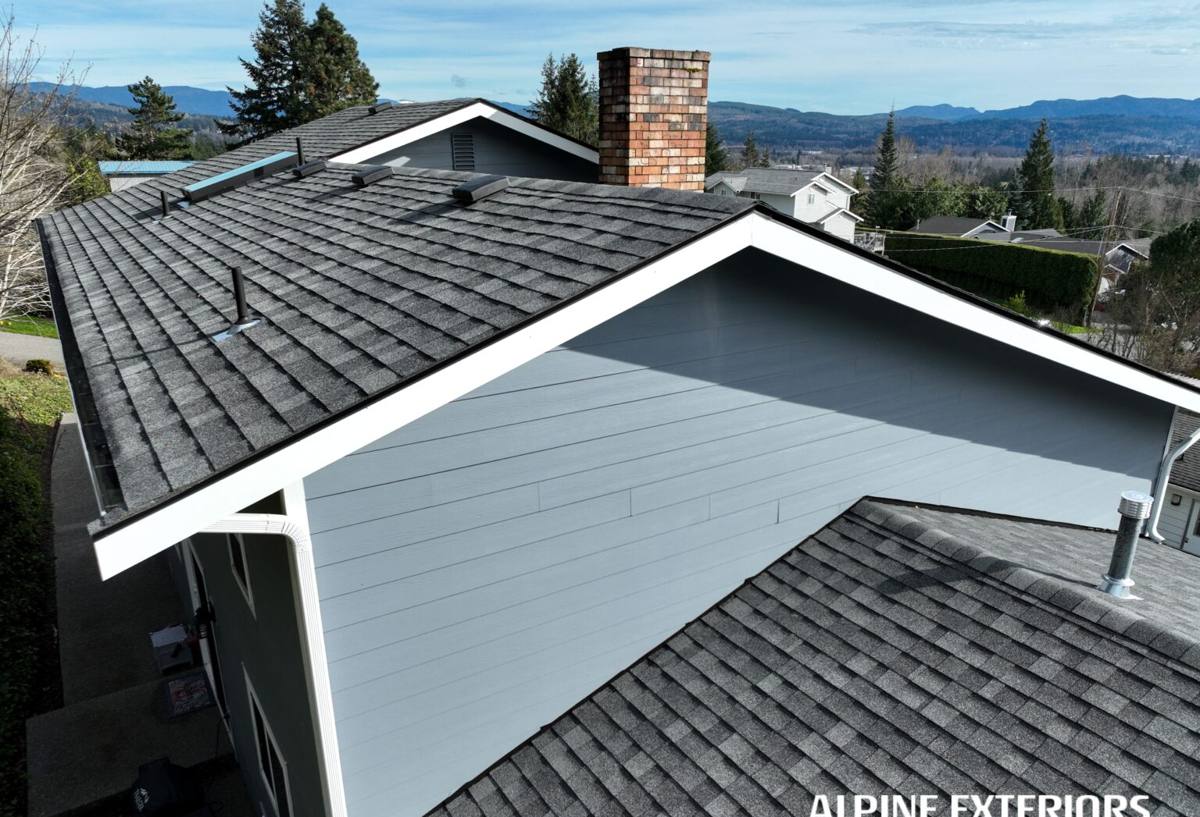
What "Correct" Asphalt Shingle Roofing Actually Involves
A shingle roof is a system, not a single product. The shingles are the visible layer, but the roof's actual performance against Everett's weather depends just as much on what's underneath and around them.
The Deck
Before anything goes down, the roof deck needs to be sound — no soft spots, no delaminating plywood, no hidden water damage from a prior leak. We check this at tear-off, not after the new shingles are already on. Skipping this step is one of the most common shortcuts in cheap reroofs, and it's invisible until the new roof starts failing early from the inside.
Underlayment
In a climate with this much sustained rain, underlayment is doing more work than most homeowners realize. A synthetic underlayment with a self-adhered ice-and-water membrane at eaves, valleys, and around penetrations gives the roof a real second line of defense if wind-driven rain ever works past the shingles.
Flashing
Flashing around chimneys, skylights, walls, and valleys is where most leaks actually start — not in the field of the shingles themselves. Salt air speeds up corrosion on lower-grade metal, so we pay attention to flashing material and installation detail, not just the shingle brand on the quote.
Ventilation
Balanced intake and exhaust ventilation keeps the attic dry and temperature-stable, which protects the shingles from below and helps prevent the ice-dam and condensation issues that come from trapped moisture in a wet climate.
The Problems We See Most Often on Delta Roofs
When we're called out to look at an existing shingle roof in this area, the same handful of issues show up again and again:
- Moss colonization on north-facing and shaded slopes, which holds moisture against the shingle surface and accelerates granule loss
- Algae streaking — the dark streaks that come from airborne algae, worsened by consistent moisture and humidity
- Nail pops and lifted tabs from wind-driven rain finding any gap in fastening or sealing
- Corroded flashing at chimneys and valleys where salt-air exposure has outpaced a lower-grade metal's lifespan
- Granule loss from age combined with sustained rain exposure, which shows up as thinning color and exposed asphalt on older roofs
None of these are unusual for the Pacific Northwest. What matters is whether the original installation anticipated them or just used a generic approach better suited to a drier climate.
Choosing the Right Shingle for This Neighborhood
Not every asphalt shingle product is built the same way, and the right choice depends on the roof's exposure, the home's roofline, and the homeowner's budget and expectations.
| Shingle Type | Typical Lifespan | Best For | Trade-Offs |
|---|---|---|---|
| 3-Tab Asphalt | 15–20 years | Budget-focused reroofs, simpler rooflines | Thinner profile, less wind resistance, shows moss and algae staining faster |
| Architectural (Laminated) | 25–30 years | Most homes in this climate | Higher upfront cost, but better wind rating and more durable in sustained rain |
| Algae-Resistant (AR) Shingles | 25–30 years | Shaded or north-facing roofs prone to streaking | Slight cost premium; resistance fades gradually over the shingle's life, it isn't permanent |
| Premium/Designer Laminate | 30+ years | Homeowners prioritizing appearance and longevity | Highest cost; benefit is mostly aesthetic and warranty length rather than performance |
For most Delta homes, we steer people toward architectural shingles with algae-resistant granules as the practical baseline — not because 3-tab shingles are a bad product, but because the extra durability and staining resistance tends to pay for itself over the life of the roof in a climate this consistently wet.
Our Process, Start to Finish
Inspection and Estimate
We start with an honest look at the existing roof — deck condition, ventilation, flashing, and any signs of the moss or moisture issues common in this area. The estimate reflects what we actually find, not a generic per-square number.
Tear-Off and Deck Check
We remove the old roofing down to the deck rather than layering over it, which lets us catch soft or damaged sheathing before it's covered up again.
Underlayment and Ice-and-Water Membrane
Synthetic underlayment goes down across the field, with self-adhered membrane at the vulnerable points — eaves, valleys, and roof penetrations — where wind-driven rain is most likely to test the system.
Flashing and Ventilation
New flashing at chimneys, walls, and valleys; ventilation checked and corrected if intake or exhaust is undersized or blocked.
Shingle Installation
Shingles installed to manufacturer spec for nailing pattern and exposure — the details that determine whether a roof holds up to sustained wind and rain or starts lifting within a few seasons.
Cleanup and Final Walkthrough
Magnetic sweep for nails, full site cleanup, and a walkthrough so the homeowner sees exactly what was done and why.
Ventilation and Moisture: The Part Homeowners Don't See
A shingle roof can look perfect from the ground and still be failing from the attic side. In a climate where the air is consistently humid and rain is frequent, poor attic ventilation traps moisture that condenses on the underside of the deck, encourages mold, and shortens the shingles' effective life from below — independent of anything happening on the surface. Part of a correct reroof is confirming intake at the eaves and exhaust at the ridge are actually balanced, not just present. This is easy to skip because it doesn't show up in a driveway photo, but it's often the difference between a roof that reaches its full expected lifespan and one that needs early repairs.
What Drives the Cost of a Delta Reroof
| Factor | Why It Matters |
|---|---|
| Roof size and complexity | More valleys, dormers, and roof planes mean more flashing, cutting, and labor time |
| Number of tear-off layers | Removing multiple existing layers costs more than a single-layer tear-off |
| Deck repair | Soft or damaged sheathing found at tear-off adds material and labor |
| Shingle grade selected | 3-tab, standard architectural, and premium laminate carry different material costs |
| Ventilation upgrades | Adding or correcting intake/exhaust vents is inexpensive relative to the roof but easy to underbid or skip |
| Access and pitch | Steeper or harder-to-access roofs take longer and require more safety setup |
We don't publish flat per-square pricing because these factors genuinely change the number — but every estimate breaks the cost down by category so it's clear what's driving the price, not just a single lump sum.
Why a Crew That Already Works Delta Matters
Roofing companies that mostly work drier or more inland areas sometimes install to a generic spec that doesn't account for how much sustained rain and salt air this part of Snohomish County actually gets. A crew that regularly works Delta roofs already knows which details aren't optional here — the ice-and-water membrane at eaves, the flashing metal that holds up to salt exposure, the ventilation balance that keeps moisture from building up in a nine-month-a-year damp climate. That's not marketing — it's the difference between a roof that needs attention again in eight years and one that reaches its full expected lifespan.
Keeping a Shingle Roof Healthy After Installation
A correctly installed roof still needs basic upkeep in this climate. A short annual routine catches small issues before they become expensive ones:
- Check for moss growth on shaded or north-facing slopes each spring and address it before it spreads
- Clear gutters and downspouts of debris so water isn't backing up under the shingle edge
- Look for lifted or missing shingles after major windstorms
- Have flashing around chimneys and skylights inspected every few years for corrosion or gaps
- Confirm attic ventilation isn't blocked by insulation or debris
- Trim back overhanging branches that keep sections of the roof shaded and damp
None of this requires a professional visit every year, but a periodic check — especially after the wetter winter months — goes a long way toward protecting the investment.
If you're weighing a repair versus a full reroof, or just want an honest read on where your current roof stands, we're glad to come take a look. The estimate is free, there's no pressure to move forward, and you'll get a straight answer either way — use the form below to get started.