 Everett
 Asphalt Shingle Roofing Built for Port Gardner's Waterfront Climate
Port Gardner sits close enough to the water that its homes take a different kind of weather beating than houses just a few miles inland. Salt-tinged air off the bay, wind-driven rain that comes in sideways during winter storms, and a long, damp moss season all put steady pressure on a roof year after year. Asphalt shingle roofing can absolutely hold up here — it's still the most practical, cost-effective roofing material for most Everett homes — but only if it's installed with this specific climate in mind. A shingle roof detailed for a dry inland suburb and one detailed for a Port Gardner lot near the Sound are not the same job, even if the shingle bundle looks identical.
This page is about that one job: asphalt shingle roofing for houses in and around Port Gardner. What the climate actually does to a roof here, what a correct installation includes, how we approach the work, and why it matters to hire a crew that already understands this part of Snohomish County rather than one working from a generic checklist.
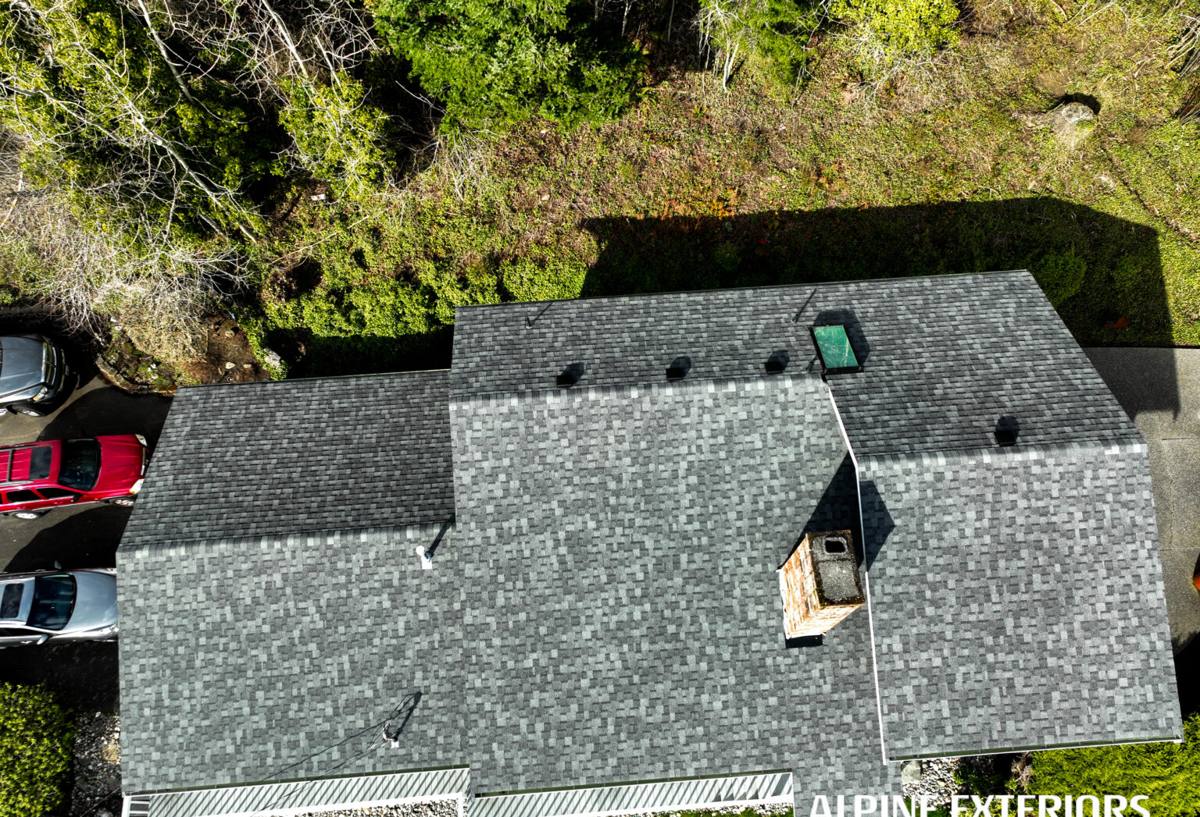
What Salt Air, Driving Rain, and Moss Season Actually Do to a Shingle Roof
None of these three factors are dramatic on their own. Together, over several winters, they're what separates a roof that quietly does its job for its full warranty life from one that starts causing problems in year eight or ten.
Salt Air
Salt-laden air doesn't hurt the shingles themselves much — it's harder on the metal. Nail heads, flashing, drip edge, and any exposed fasteners are what corrode fastest when they're regularly exposed to moist, salt-carrying air off the bay. Corroded flashing at a valley or chimney is a leak waiting to happen, and it usually fails quietly, inside the wall or attic, well before anyone sees a stain on the ceiling.
Driving Rain
Everett gets plenty of straight-down rain, but the storms that do damage are the ones with wind behind them — rain pushed sideways under shingle tabs, into exposed nail lines, and up under ridge caps. A roof that would shed water fine in calm rain can still leak in a wind-driven storm if the underlayment, starter strip, and sealant lines weren't installed to account for it.
Moss Season
Western Washington's moss season runs long — basically any stretch of cool, damp weather with limited direct sun, which describes a good chunk of the year here. Moss holds moisture against the shingle surface far longer than the shingle was designed to tolerate, and as it spreads it lifts shingle edges, which is exactly where wind-driven rain gets its opening. North-facing slopes and roof sections shaded by mature trees are usually the first to show it.
Individually, each of these is manageable. Combined, they're why we see roofs in this part of Everett age faster at the flashing and fastener points than the shingle field itself — which is also why a correct installation puts extra attention on those exact details rather than treating the whole roof as one uniform surface.
What a Correctly Installed Shingle Roof Includes Here
A shingle roof is a system, not just a layer of shingles nailed to plywood. Every layer underneath and around the shingles matters as much as the shingles themselves, and in a climate like this, a couple of those layers deserve more attention than they'd get on a standard build in a drier region.
- Ice-and-water shield at eaves and valleys — a self-adhering waterproof membrane in the spots most exposed to wind-driven rain and standing moisture, not just the code-minimum amount.
- Synthetic underlayment over the full deck as a second line of defense if wind ever drives moisture past the shingle surface.
- Corrosion-resistant flashing and fasteners at valleys, chimneys, skylights, and any wall-to-roof transitions, selected with the salt-air exposure in mind rather than the cheapest available metal.
- Proper starter strip and nailing pattern along eaves and rakes, since these edges are the first place wind-driven rain tries to get under a shingle.
- Balanced attic ventilation — intake at the eaves, exhaust at the ridge — so moist air isn't trapped against the underside of the deck, which accelerates rot and helps moss get a foothold from below as well as above.
- Sealed, correctly lapped ridge caps, one of the more common failure points on roofs that otherwise look fine.
Skipping or shortcutting any one of these doesn't usually cause an immediate problem. It shows up two, five, or eight years later as a leak that seems to come from nowhere, because the actual cause was a detail buried under the shingles from day one.
Signs a Port Gardner Roof Needs Attention
Most asphalt shingle roofs don't fail all at once — they show warning signs first. Here's what we look for, and what homeowners can watch for themselves between inspections.
| What You See | What It Usually Means |
|---|---|
| Dark streaking or green/black patches | Algae or early moss growth — cosmetic at first, but it traps moisture if left alone |
| Visible moss clumps, especially north-facing slopes | Active moss lifting shingle edges; needs removal and treatment before it spreads further |
| Granules collecting in gutters or downspouts | Shingle surface wearing down; accelerates with age and sun/moisture cycling |
| Curling, cupping, or lifted shingle edges | Aging shingles or wind/moisture damage — an entry point for driving rain |
| Rust streaks near flashing or fasteners | Salt-air corrosion at metal components — often the actual source of a leak, not the shingle above it |
| Soft spots or sagging when walked (by a professional) | Deck damage from long-term moisture intrusion — needs repair, not just a shingle patch |
None of these on their own means a full replacement is needed. But they're worth a real inspection rather than a guess, because the fix for moss is very different from the fix for corroded flashing, and the fix for worn granules is different again from deck damage.
Choosing the Right Shingle for This Climate
Not every asphalt shingle product is built the same, and in a location dealing with salt air and a long wet season, the differences matter more than they would in a milder climate. We walk homeowners through the realistic trade-offs rather than just upselling the most expensive option.
| Shingle Type | Typical Lifespan | Good Fit for Port Gardner When... |
|---|---|---|
| 3-tab | 15–20 years | Budget is the priority and the roof isn't heavily shaded or exposed to constant wind |
| Architectural / laminate | 25–30 years | Most Port Gardner homes — better wind rating and thicker profile hold up better to driving rain and moss pressure |
| Premium / designer laminate | 30–50 years | Homeowners planning to stay long-term or wanting the strongest algae/moss-resistant granule treatment available |
For this area specifically, we generally steer homeowners toward architectural shingles with algae-resistant (often copper- or zinc-infused) granules as the practical baseline, not the upsell. The extra granule treatment measurably slows moss and algae growth, and the higher wind rating matters more here than it would a few miles inland. It's a modest cost difference over 3-tab that pays for itself in fewer moss treatments and a longer real-world lifespan.
Our Asphalt Shingle Roofing Process
The steps are the same for most shingle jobs, but where we spend extra time reflects everything above.
- Inspection and honest assessment. We look at the deck, flashing, ventilation, and existing moss/algae condition before recommending replacement, repair, or a maintenance plan — not every roof that looks rough needs a full tear-off.
- Tear-off and deck check. Old shingles come off down to the deck so we can actually see the plywood or OSB underneath. Any soft or water-damaged sections get replaced before anything new goes down — covering over a bad deck is how good-looking roofs fail early.
- Underlayment and ice-and-water shield. Full synthetic underlayment plus reinforced membrane at eaves, valleys, and other vulnerable transitions.
- Flashing and ventilation work. New corrosion-resistant flashing where needed, and a check that intake and exhaust ventilation are actually balanced — a lot of older Everett homes have exhaust vents but not enough intake, which we correct as part of the job rather than leaving for later.
- Shingle installation. Correct starter course, nailing pattern, and exposure per manufacturer spec — this is also where wind rating gets protected or quietly undermined, depending on how carefully it's done.
- Ridge, cleanup, and final walk-through. Ridge caps sealed and lapped correctly, magnetic sweep and cleanup of the property, and a walk-through so the homeowner sees exactly what was done and why.
Homeowner Maintenance Checklist Between Inspections
A well-installed shingle roof still benefits from basic upkeep in this climate, especially through moss season. None of this requires getting on the roof yourself.
- Keep gutters and downspouts clear — pooling water backs up under the shingle edge and accelerates both rot and moss growth.
- Trim back tree limbs that shade the roof or drop debris onto it, especially on north-facing slopes.
- Watch for granule buildup in gutters as an early sign of shingle wear.
- Have visible moss or algae treated before it spreads rather than waiting for a full moss removal job.
- After a significant windstorm, do a visual check from the ground for lifted or missing shingles.
- Schedule a professional inspection every few years, or sooner after any major storm — catching a flashing or ventilation issue early is far cheaper than repairing the deck damage it eventually causes.
What Affects the Cost of a Shingle Roof in This Area
We don't publish a flat price because roofs vary too much, but the same handful of factors drive most of the difference between bids, and homeowners deserve to know what they're actually paying for.
| Factor | Why It Matters |
|---|---|
| Roof pitch and access | Steeper roofs and difficult access take longer and require more safety setup |
| Number of existing layers | Tear-off of multiple old layers takes more labor than a single-layer removal |
| Deck condition | Rot or soft spots found during tear-off require plywood/OSB replacement before shingles go on |
| Shingle tier chosen | 3-tab vs. architectural vs. premium laminate — material cost and lifespan both scale together |
| Ventilation upgrades | Adding proper intake vents on an older home with none is a worthwhile add-on, not just an expense |
| Roof complexity | Valleys, dormers, skylights, and chimneys each add flashing detail and labor time |
Any honest bid should walk through these line by line rather than handing over a single number with no breakdown. If a bid looks unusually low, it's worth asking specifically what underlayment, flashing material, and ventilation work is or isn't included.
Why It Matters to Hire a Crew That Already Works Port Gardner
A lot of roofing problems in this area aren't the result of bad shingles — they're the result of a roof built to a generic spec instead of the actual conditions on that lot. A crew that regularly works Port Gardner and the surrounding Everett neighborhoods already knows which slopes tend to hold moss longest, where wind exposure off the bay is worse than it looks on paper, and which flashing and fastener choices actually hold up to salt air over time instead of just meeting code minimums. That's not a marketing point — it changes what gets specified on the job before a single shingle goes down.
It also means knowing the local permitting process for Everett and Snohomish County, working efficiently with the area's older housing stock and roof framing, and being someone homeowners can actually reach if a question comes up two years after the job is done. Roofing work rewards local, repeat familiarity more than most trades — the mistakes worth avoiding are usually specific to the site, not generic to the material.
Get a Straight Answer About Your Roof
If you're noticing moss, granule loss, or a leak that seems to come and go with the weather, it's worth getting an honest look before deciding whether you need a repair or a full replacement. We offer free, no-pressure estimates for asphalt shingle roofing in Port Gardner and the surrounding Everett area — fill out the form below and we'll walk the roof, explain what we find, and give you a straightforward recommendation.