 Everett
 Decks in Bayside Face a Different Set of Problems
A deck in Bayside doesn't fail the same way a deck in a dry inland climate does. Out here, the combination of salt-laden air off the water, sideways driving rain, and a moss season that can run most of the year works on a deck constantly, not just during a few wet months. Wood that would hold up fine forty miles inland can start showing trouble in half the time near the water. Fasteners corrode faster. Board gaps clog with organic debris that holds moisture against the wood. Shaded, north-facing sections of a deck can stay damp for days after a storm passes through.
None of this means a deck in Bayside can't last — it means it has to be built with that reality in mind from the footings up, not patched around later. That's the difference between a deck that needs major work in eight years and one that's still solid in twenty-five.
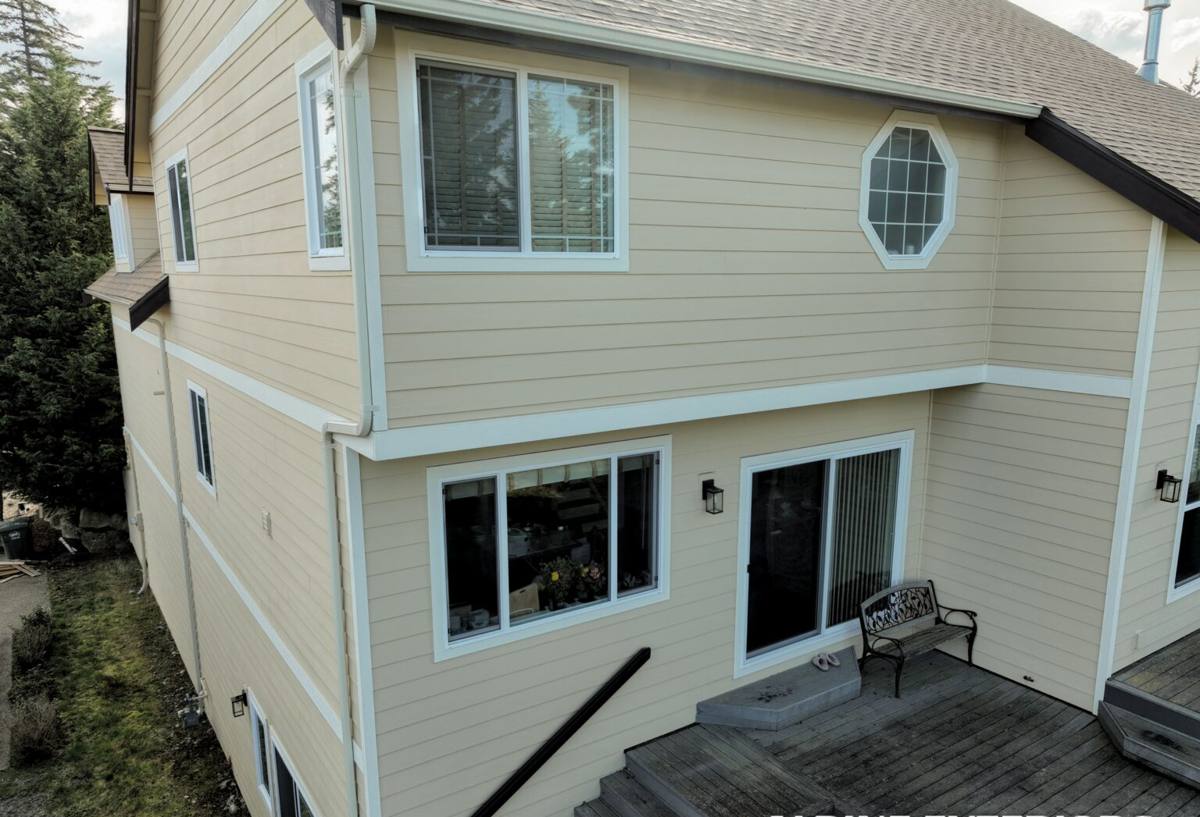
What Salt Air, Rain, and Moss Actually Do to a Deck
Salt Air and Corrosion
Airborne salt accelerates corrosion on any exposed metal — nails, screws, joist hangers, structural bolts, railing hardware. Standard galvanized fasteners that are fine elsewhere in Snohomish County can start rusting noticeably faster in a coastal-influenced neighborhood like Bayside. Once a fastener corrodes, it loses holding strength long before it looks obviously bad, and rust stains bleeding through decking boards are usually a sign that's already happening below the surface.
Wind-Driven Rain and Hidden Water Paths
Everett gets a lot of rain that doesn't fall straight down — wind pushes it sideways and up under things. On a deck, that means water finds its way behind ledger boards, under poorly lapped flashing, and into end grain that isn't sealed. The damage from wind-driven rain is rarely visible from the top of the deck; it shows up later as soft framing, staining on the siding above the ledger, or a deck that starts to feel spongy near the house.
Moss and Algae on Deck Surfaces
Shade, moisture, and mild temperatures are exactly what moss and algae need, and Bayside has all three for most of the year. On decking, moss isn't just an appearance issue — it holds water against the board surface, and on wood it accelerates rot. On any decking material, a mossy surface gets slick and genuinely dangerous underfoot, especially on stairs. Deck orientation, spacing between boards, and how much airflow gets underneath the structure all affect how fast moss takes hold.
Decking Material Comparison for Bayside Conditions
There's no single "best" decking material — the right choice depends on how much maintenance a homeowner actually wants to keep up with, budget, and how exposed the deck is to shade and moisture. Here's how the common options compare specifically for a coastal-influenced, high-rain climate:
| Material | Moisture & Salt Air Resistance | Moss/Algae Resistance | Maintenance | Typical Lifespan |
|---|---|---|---|---|
| Pressure-treated pine | Good if detailed and sealed correctly | Low — needs regular cleaning | Annual cleaning, periodic sealing | 15–20 years with upkeep |
| Cedar | Naturally decent, degrades if not maintained | Moderate | Cleaning and re-oiling every 1–2 years | 15–20 years with upkeep |
| Composite decking | Very good — won't rot or absorb water | Moderate to good, varies by brand/finish | Periodic washing, no sealing needed | 25–30+ years |
| PVC/cellular decking | Excellent — fully synthetic | Good, easiest to keep clean | Occasional washing | 25–30+ years |
In shaded or heavily rain-exposed sections of a Bayside lot, we often steer homeowners toward composite or PVC for the walking surface, even when the frame underneath is standard pressure-treated lumber for structural framing. That combination — a durable, low-maintenance surface on a properly built and flashed frame — tends to be the most honest balance of upfront cost and long-term performance in this climate.
What a Correctly Built Deck Involves Here
The parts of a deck nobody sees are the parts that determine whether it survives a Pacific Northwest winter without problems. A deck built correctly for Bayside includes:
- Footings set below frost depth and sized for the actual load and soil conditions on the lot, not a generic minimum.
- Properly lapped ledger flashing where the deck attaches to the house — this single detail is the most common source of hidden rot on decks in wet climates.
- Corrosion-resistant fasteners and hardware — stainless or coated hardware rated for treated lumber, sized appropriately for salt-air exposure.
- Joist tape or flashing tape on top of framing members to keep standing water out of end grain and fastener holes.
- Consistent board spacing that lets water drain through instead of pooling, without gaps so wide they become a hazard.
- Airflow underneath the deck so the structure can dry out between storms instead of staying damp for days.
Any one of these can be shortcut and the deck will still look fine at handoff. The problems show up years later, usually as rot near the ledger or corroded hardware that's already lost strength — which is why we build to the standard above every time, not just when it's requested.
Design Choices That Make Sense for This Neighborhood
Beyond the structural basics, a few design decisions matter more in Bayside than they would somewhere drier:
Covered or Partially Covered Sections
Given how much of the year brings rain, a partial roof or pergola over at least part of the deck extends how many months a year it actually gets used, and it protects the decking directly underneath from the worst UV and moisture cycling.
Railing and Baluster Choices
Snohomish County follows standard residential guardrail requirements — generally 36 to 42 inches depending on the structure, with baluster spacing that prevents a small child from passing through. Beyond code minimums, cable or metal railing systems tend to shed water and moss better than solid wood balusters, which matters more on a deck that stays damp for long stretches.
Layout for Sloped or Water-Adjacent Lots
A number of lots in and around Bayside have grade changes or sit close enough to water that drainage planning matters as much as the deck footprint itself. Multi-level decks and proper grading beneath the structure keep water moving away from the house instead of pooling near the foundation.
Our Process for a Bayside Deck Project
- On-site assessment — we look at drainage, sun/shade exposure, existing structure (for replacements), and any site-specific issues before recommending anything.
- Material and design consultation — honest trade-offs between wood, composite, and PVC based on your budget, maintenance preference, and the deck's exposure.
- Permitting — we handle the permit application with the applicable jurisdiction and make sure the design meets current guardrail, footing, and setback requirements.
- Construction — framing, ledger flashing, and structural work done to the standard above, followed by decking, railing, and finish work.
- Final walkthrough — we go over the completed deck with you, including what maintenance it actually needs and on what schedule.
Keeping a Deck Ahead of Moss Season
Whatever material a deck is built from, a little seasonal attention goes a long way in this climate. A practical maintenance checklist for Bayside homeowners:
- Sweep leaves and debris off the deck and out of board gaps regularly through fall — trapped organic material is what feeds moss and holds moisture.
- Rinse the deck surface periodically during the wet months to keep algae and moss from establishing before it takes hold.
- Trim back overhanging branches or shrubs that keep sections of the deck shaded and slow-drying.
- Check and clear any drainage paths or gaps under the deck so water isn't pooling against framing.
- Inspect ledger flashing and fastener heads once a year for staining, rust, or gaps in caulking.
- Re-seal or re-stain wood decking on the manufacturer's recommended schedule — don't wait until it's visibly gray and dry.
Permits, Setbacks, and Inspections
Most new deck construction and many deck replacements in Everett and unincorporated Snohomish County require a building permit, with requirements tied to the deck's height, size, and attachment to the house. Property line setbacks apply, and if a lot is close to water, shoreline-related regulations may come into play depending on the specific parcel. Requirements can vary by exact location and change over time, so we confirm current setback, height, and guardrail requirements with the applicable jurisdiction as part of the permitting step rather than assuming — and we handle that process as part of the project.
Why Hire a Crew That Already Works in Bayside
A contractor who's built decks throughout Everett and the surrounding Snohomish County area has already seen how the local conditions play out over time — which ledger details actually leak, which hardware holds up near the water, which shaded corners of a lot need extra attention to drainage and airflow. That's different knowledge than general deck-building experience from a drier region. It also means fewer surprises during permitting, since the process and the local requirements aren't new territory.
A deck is a significant investment, and in a climate like this one, the build quality you can't see is what determines whether that investment holds up. We'd rather walk a Bayside property, look at the actual exposure and drainage on your specific lot, and give you a straight answer about what it needs.
If you're considering a new deck or need to address one that's showing its age, we're happy to come take a look and put together a free, no-pressure estimate — just fill out the form below.