 Everett
 Building Decks in Marysville: What the Climate Actually Demands
Marysville sits close enough to Puget Sound and the Snohomish River delta that salt-laden air, near-constant fall and winter rain, and a moss season that can run from October through May are just part of owning a home here. A deck built the way it might be built in a drier inland climate will show problems within a few years in this environment — soft spots at the ledger board, black streaking on the decking, corroded fasteners bleeding rust into the wood, and moss carpeting any surface that doesn't dry out fast. None of that is inevitable. It's a function of how the deck was designed and built, not just what it's built from.
A correctly built deck in Snohomish County has to manage three things at once: keep water moving off every horizontal surface, keep the framing ventilated so it can dry between rain events, and use hardware and fasteners that don't corrode when they're sitting in salt-influenced humidity for years. Get those three right and the material choice on top becomes a matter of budget and looks. Get them wrong and even a premium composite deck will have problems underneath that you can't see until they're expensive.
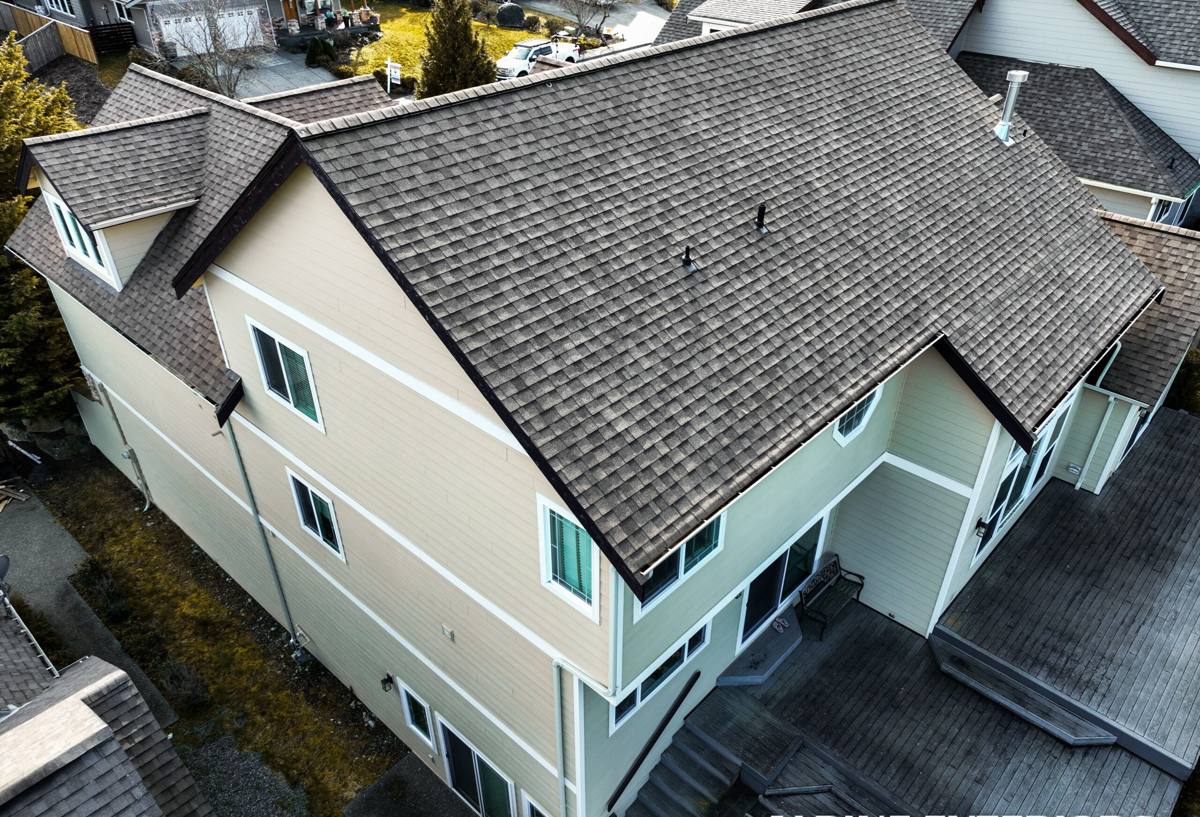
Where Decks Actually Fail in This Area
We see the same failure points on older decks around Marysville and the rest of Everett's service area over and over:
- Ledger board rot — the beam that attaches the deck to the house is the single most common failure point when it wasn't flashed correctly against the siding or sheathing behind it.
- Fastener corrosion — standard galvanized screws and nails break down faster near salt air, leaving rust streaks and eventually losing their grip in the wood.
- Moss and algae buildup — shaded decks or decks with poor airflow underneath stay damp long enough for moss to take hold, which makes the surface slick and holds moisture against the wood or composite cap.
- Undersized or poorly vented substructure — joists and beams that can't dry out between storms stay wet for weeks at a time through the winter, which is when rot organisms do the most damage.
- Footings that shift — footings poured too shallow or without accounting for the site's drainage can heave or settle over time, especially on the wetter, lower-lying lots common around Marysville.
Almost all of these are avoidable with the right details at the framing stage — which is also the stage most homeowners never see, since it's covered up by the time the deck looks finished.
What a Correct Build Involves
Ledger Attachment and Flashing
Where the deck ties into the house, the ledger board needs proper flashing integrated with the existing siding or sheathing so water sheds outward and down, never behind the ledger. This is also where deck work and siding work overlap directly — get it wrong and you're not just risking the deck, you're risking rot in the wall structure behind it.
Framing and Footings
Footings need to be sized and set to the depth required for the soil and frost conditions on the specific lot, not just poured to a generic minimum. Joists and beams should be sized for the actual load and span, with structural screws or approved connectors rather than relying on nails alone at critical connections.
Ventilation and Drainage
Space under the deck should allow air to move and water to drain away from the house foundation, not pool underneath. On lower decks or ground-level platforms, this often means grading or a gravel bed under the structure so moisture doesn't sit against the framing.
Fasteners and Hardware
In a salt-air environment, hardware grade matters more than it does further inland. Stainless steel or high-grade coated fasteners rated for exterior and coastal-adjacent use cost more up front but avoid the rust streaking and premature failure that cheaper fasteners show within a few seasons.
Decking Material: What Holds Up Here and What the Trade-Offs Are
There's no single "best" decking material — there's a best material for a given budget, sun exposure, and how much upkeep a homeowner actually wants to do. Here's how the common options compare specifically for a moist, moss-prone, salt-adjacent climate like Marysville's:
| Material | Moisture Behavior | Moss/Algae Resistance | Maintenance | Typical Lifespan |
|---|---|---|---|---|
| Pressure-treated lumber | Absorbs and releases moisture; can cup or warp if not sealed regularly | Moderate — needs regular cleaning and sealing to resist buildup | Annual cleaning and re-sealing recommended | 15-20 years with upkeep |
| Cedar | Naturally moisture-resistant but still needs sealing to hold color and prevent graying | Better natural resistance, but still grows moss if shaded and damp | Sealing every 1-2 years | 15-25 years with upkeep |
| Composite decking | Doesn't rot or absorb water into the board itself; capped boards resist staining | Surface can still grow algae/moss film in shaded, damp spots — needs occasional washing | Periodic washing, no sealing or staining | 25-30+ years |
| PVC decking | Fully synthetic, essentially impervious to moisture absorption | Similar surface film risk in shade; cleans easily | Low — occasional washing | 25-30+ years |
Composite and PVC decking cost more upfront but remove the annual sealing/staining cycle, which matters in a climate where you get a narrow dry-weather window each year to do that kind of maintenance. Wood costs less to install but only holds up if the homeowner keeps up with sealing — and in our experience, decks that get neglected for even two or three winters here start showing real damage. We'll talk through what fits your budget and how much upkeep you actually want to sign up for, honestly, without pushing a specific brand.
Railings, Stairs, and the Details That Get Overlooked
Railings and stair stringers see the same moisture exposure as the deck surface but often get built with lighter-duty material since they're smaller. Stair stringers in particular need the same fastener and flashing attention as the main structure — a stringer that sits directly on a concrete pad without a moisture break will wick water into the wood from below, even if the rest of the deck is in good shape. Baluster spacing, railing height, and guard requirements are also governed by code, and it's easier to build these correctly the first time than retrofit later during an inspection.
Permits and Local Code Considerations
Most decks above a certain height or attached to the house require a permit through Snohomish County or the City of Everett, depending on where the property falls, and inspections typically check footing depth, ledger attachment, and guard/railing compliance at different stages of the build. Setback requirements from property lines also apply and vary by lot and zoning. We handle the permit process as part of the job rather than leaving it to the homeowner to sort out — it's one less thing to manage, and it protects you if you ever sell the house and a buyer's inspector asks whether the deck was permitted.
What Drives the Cost of a Deck Project
Deck pricing swings widely based on a handful of factors, and it's worth understanding them before you get quotes so you can compare apples to apples:
| Cost Factor | Why It Matters |
|---|---|
| Size and shape | Larger decks and multi-level or angled designs need more framing material and labor hours |
| Decking material | Pressure-treated lumber sits at the lower end; composite and PVC cost more per square foot but reduce long-term upkeep |
| Height off the ground | Taller decks need deeper footings, more substructure bracing, and often stairs |
| Railing style | Basic wood railing costs less than metal cable, glass panel, or composite railing systems |
| Site access and prep | Sloped or hard-to-access lots, or removal of an old deck, add labor time |
| Permit and engineering needs | Larger or higher decks may need engineered plans, which adds to both cost and timeline |
We give a written estimate that breaks these out so you know what you're paying for, rather than one lump number.
How Our Process Works
- On-site walkthrough — we look at the house's siding and structure where the deck will attach, the lot's drainage and sun exposure, and talk through what you actually want to use the space for.
- Design and material selection — we lay out size, layout, decking and railing material, and go over the trade-offs honestly based on your budget and how much maintenance you want long-term.
- Written estimate and permit filing — we handle the permit application and any required setbacks or engineering review.
- Demolition and framing — old structure removed if applicable, footings poured, framing built with correctly flashed ledger attachment and corrosion-resistant hardware throughout.
- Decking, railing, and finishing — surface material and railing installed, with attention to drainage gaps and airflow underneath.
- Final walkthrough and inspection — we go over the finished deck with you and coordinate final permit inspection.
Maintenance Checklist for Marysville Homeowners
Whatever material your deck ends up being, a few habits go a long way toward keeping it in good shape through our wet season:
- Sweep leaves and debris off the deck surface regularly in fall — trapped wet leaves are one of the fastest ways to grow moss and stain boards
- Wash the deck surface at least once a year with a deck-safe cleaner to remove algae film before it gets slick
- Check the area under the deck once a season to make sure water isn't pooling against the house foundation or framing
- Inspect fasteners and hardware periodically for rust streaking, especially on older wood decks
- Re-seal or re-stain wood decking on the schedule recommended for the product — don't stretch it because the weather didn't cooperate that year
- Trim back overhanging vegetation that keeps parts of the deck shaded and damp longer than the rest
Why a Crew That Already Works Marysville Matters
A deck built by a crew that hasn't worked this specific area before is guessing at footing depth, drainage behavior, and how much moss and algae exposure a given lot's sun pattern will produce. We already work Marysville and the surrounding Everett area regularly, which means we know how the local soil drains, what the permit process actually requires from Snohomish County and the City of Everett, and which material and hardware choices hold up against this specific mix of salt air, rain, and shade. That's not a marketing line — it's the difference between a deck that needs real repair work in five years and one that just needs the maintenance every deck needs.
If you're thinking about a new deck, or an existing one has started showing soft spots, rust streaks, or moss you can't keep ahead of, we're happy to come take a look. Reach out for a free, no-pressure estimate using the form below.