 Everett
 Building a Deck That Actually Holds Up in Snohomish
Snohomish sits close enough to Puget Sound and the Snohomish River basin that decks here take a beating most inland homeowners never have to think about. Between the salt-tinged air drifting in off the water, the long stretches of driving rain that define our fall through spring, and the moss season that seems to start earlier every year, an ordinary deck build doesn't last. We've built and repaired decks throughout the Everett area long enough to know which materials, fasteners, and details matter here and which ones are just marketing.
This page covers what a custom deck project in Snohomish actually involves — not a generic overview, but the specific decisions that separate a deck that looks good for one summer from one that holds up through a decade of Snohomish County weather.
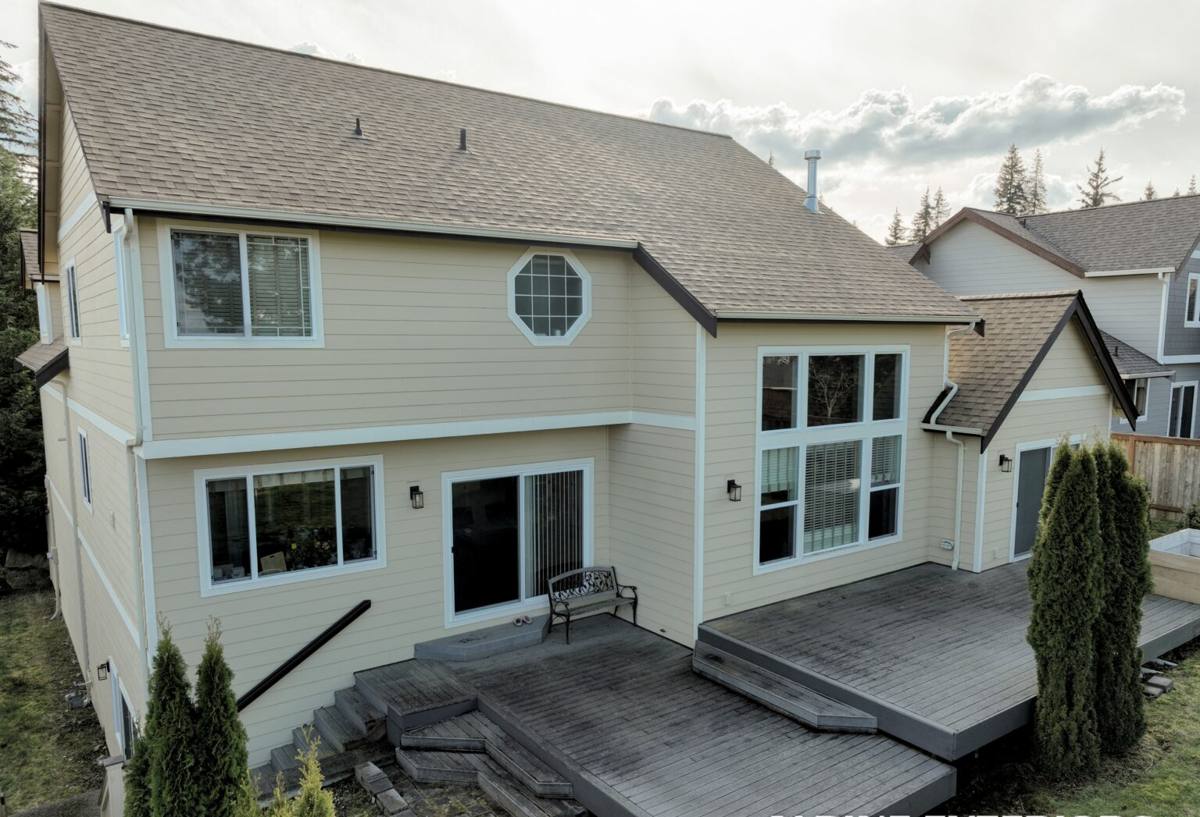
What the Local Climate Actually Does to a Deck
Three factors drive almost every deck failure we see in this area:
Salt Air
Snohomish isn't oceanfront, but the marine air that moves up the Sound and river corridors carries enough salt to accelerate corrosion on any exposed metal — nails, screws, joist hangers, railing brackets. Fasteners rated for general outdoor use start rusting within a few seasons. Once a fastener corrodes, it loses holding strength long before it's visibly failing, which is why so many "sturdy-looking" old decks have soft spots homeowners don't discover until someone leans on the railing.
Driving Rain
Our rain doesn't just fall — it comes in sideways during winter storms, which means water gets pushed into joints, ledger connections, and post bases that a calmer climate would leave dry. Any gap in flashing or any spot where water can pool instead of shed becomes a rot starting point.
Moss Season
Shaded yards, moisture, and mild temperatures are a perfect combination for moss and algae growth on deck surfaces, and Snohomish's tree cover means most yards have at least some shade for part of the day. Moss doesn't just look bad — it holds moisture against the decking surface and turns boards slick, which is both a maintenance headache and a safety issue on stairs.
Choosing the Right Decking Material
There's no single "best" decking material — the right choice depends on budget, how much upkeep you're willing to do, and how much sun or shade the deck gets. Here's how the common options actually perform under Snohomish conditions:
| Material | How It Handles Our Climate | Maintenance | Typical Lifespan |
|---|---|---|---|
| Pressure-treated wood | Affordable, but needs consistent sealing to resist moss and moisture absorption | Annual cleaning and re-sealing recommended | 10-15 years with upkeep |
| Cedar | Naturally rot- and insect-resistant; still needs sealing against constant rain exposure | Periodic cleaning, re-oiling every 1-2 years | 15-20 years with upkeep |
| Composite decking | Resists moisture absorption well; still needs cleaning to keep moss from gripping the surface texture | Occasional wash, no sealing/staining | 25-30 years |
| PVC/capped polymer | Best moisture resistance of the group; smooth-cap versions shed moss more easily than wood-textured composites | Occasional wash | 25-30+ years |
We'll walk through these trade-offs honestly during your estimate rather than steering you toward whatever has the best margin. Composite and PVC cost more up front but save real money in maintenance time over a Snohomish deck's life; wood costs less initially but only performs well if the sealing schedule is kept up — and we'll tell you straight if that's not realistic for your household.
Structural Details That Matter More Here Than Elsewhere
A deck's structure is what determines whether it's safe and long-lasting — and it's also the part most homeowners never see, which is exactly why it's where shortcuts happen most often.
Ledger Board Flashing
The ledger board — where the deck attaches to the house — is the single most common failure point on decks in wet climates. Without proper flashing, water gets pushed behind the ledger by driving rain and rots the rim joist and house sheathing from the inside, often for years before it's visible. We flash every ledger connection correctly, every time, regardless of whether it adds a step.
Fasteners and Hardware
Given the salt air issue described above, we use stainless steel or heavy hot-dip galvanized fasteners and connectors rated for coastal exposure, not standard zinc-coated hardware. It costs more per piece and makes no visible difference on installation day — the difference shows up eight years later when the hardware is still solid instead of streaking rust down your siding.
Footings and Post Bases
Snohomish's clay-heavy soils hold water, and frost heave is a real (if occasional) concern in colder winters. Footings need to be set below frost depth and post bases need to keep the wood post off the concrete and off standing water — a detail that's easy to skip and expensive to fix later.
Joist Spacing and Drainage
Tighter joist spacing than the material's minimum rating reduces bounce and extends board life, and proper gapping between boards lets water drain instead of sitting and feeding moss growth.
Design Considerations for Snohomish Yards
Beyond materials and structure, a few local realities shape good deck design here:
- Shade mapping matters: If your lot has mature trees, we look at where shade falls through the day — the shadiest zones are where moss will be the most persistent problem, and that can influence board choice or railing style in that area.
- Roof runoff and drainage paths: Deck placement relative to your roofline and gutters affects how much water lands on or near the structure during Snohomish's heavy rain events.
- Covered vs. open decks: A partial roof or pergola over part of the deck can meaningfully cut down on moss buildup and UV fading in the covered zone, at the cost of some open-sky feel.
- Stair and railing traction: Given how slick moss-affected surfaces get, we talk through grooved, brushed, or textured surface options for stairs and high-traffic areas specifically.
Our Custom Deck Process
Every deck we build in Snohomish follows the same disciplined process, adjusted for your specific yard and goals:
- On-site assessment: We walk the yard, check sun/shade patterns, drainage, soil, and how the deck will tie into your home's structure.
- Design and material selection: We go through layout, size, railing style, and material trade-offs together — no pressure toward the most expensive option.
- Permitting: Most custom decks require a Snohomish County or City of Everett-area building permit depending on your jurisdiction and deck height/size. We handle that process.
- Structural build: Footings, framing, ledger flashing, and fastener selection done to the standards described above — not just to pass inspection, but to actually last.
- Decking, railing, and finish work: Surface installation, railing, stairs, and any sealing or finishing the material requires.
- Final walkthrough: We go over care and maintenance specific to the material you chose so you know exactly what upkeep looks like going forward.
Living With a Deck in a Moss-Prone Climate
No deck material is entirely maintenance-free in Snohomish's climate — the differences are in how much maintenance and how forgiving the material is if you fall behind. A simple seasonal routine keeps most decks in good shape:
- Sweep debris (leaves, needles) off the deck regularly — trapped debris holds moisture and speeds moss growth
- Clean the surface with a deck-safe cleaner at least once a year, more often in heavily shaded areas
- Check and clear gaps between boards so water can drain instead of pooling
- Inspect railings and stair connections annually for looseness, which can signal fastener corrosion underneath
- Re-seal or re-stain wood decking on the schedule the product calls for — don't wait until it looks dry and gray
- Watch for soft spots near the ledger board or post bases, the two most common rot locations
Why a Local Crew Makes a Real Difference
Deck-building advice that works in Arizona or even inland Washington doesn't always hold up here. A crew that already works Snohomish and the greater Everett area knows which fasteners actually resist our salt air over time, which sealers hold up through our wet season instead of peeling after one winter, and how the permitting process runs locally. That local track record isn't a marketing line — it's the difference between a deck that's designed for a climate on paper and one that's built by people who've watched decks succeed and fail in this exact climate for years.
We also know the practical side: coordinating around our rain patterns to protect structural lumber before it's sealed in, and building in the drainage details that this specific climate demands rather than following a generic national spec sheet.
Get an Honest Look at Your Project
If you're weighing a new custom deck or replacing one that's showing its age, we're happy to come take a look, walk your yard, and give you straight answers on material options and realistic costs — no pressure, no pushy sales pitch. Use the form below to request a free estimate.