 Everett
 Building Decks for Forest Park's Specific Conditions
Forest Park sits close enough to the water and tucked under enough tree canopy that a deck here has to deal with two things at once: salt-tinged air moving in off Puget Sound and heavy shade from mature trees that keeps surfaces damp long after the rain stops. That combination is harder on a deck than either factor alone. A deck built the way you'd build one in a drier, sunnier part of Snohomish County will show problems in Forest Park years before it should — soft spots, black streaking, slick boards, corroded hardware. A deck built for these specific conditions holds up the way it's supposed to.
This page is about custom deck construction specifically for Forest Park homes — what the climate actually does to a deck here, what a correctly built one involves, and how we approach the job differently because of where it's going.
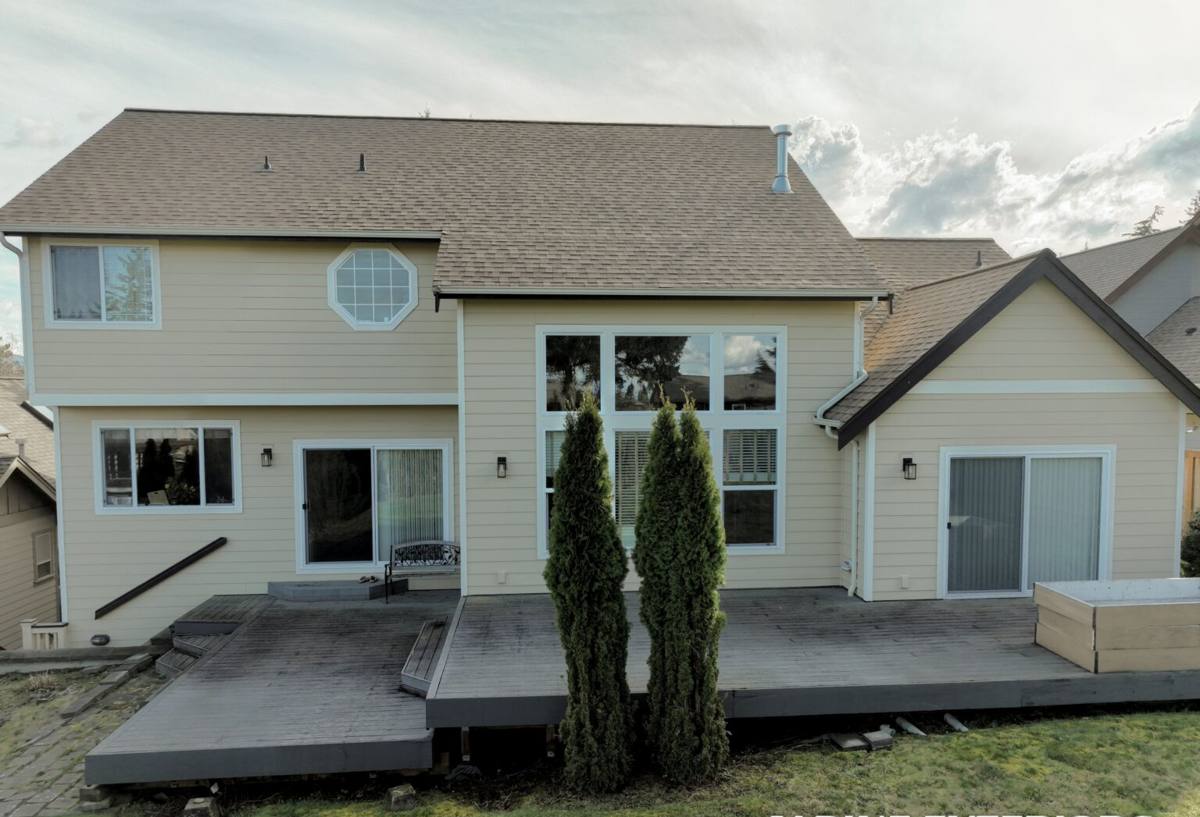
What Salt Air, Rain, and Moss Actually Do to a Deck
Salt Air and Metal Hardware
Everett's proximity to the Sound means the air carries fine salt content, especially on windy days. That salt settles on exposed metal — joist hangers, screws, bolts, railing brackets — and accelerates corrosion. Standard galvanized fasteners can start rusting years ahead of schedule in a coastal-influenced setting like this. Once a fastener corrodes, it loses holding strength long before it looks bad enough to notice from the surface.
Driving Rain and Water Intrusion
Snohomish County rain isn't always gentle. Wind-driven rain finds gaps at ledger boards, railing posts, and stair stringers that would stay dry in a calmer climate. Water that gets into a connection point and can't drain back out is the single biggest cause of hidden rot in decks around here — the surface boards can look fine for years while the framing underneath is failing.
Moss and Shade
Forest Park's tree cover is a mixed blessing. It's a big part of what makes the neighborhood pleasant, but it also means many decks get filtered or partial shade most of the day. Combined with our long wet season, that shade keeps deck surfaces damp far longer than a deck out in the open. Damp, shaded wood or composite is exactly what moss and algae need to take hold, and once established, moss holds moisture against the surface and makes boards slick and dangerous underfoot.
Choosing a Decking Material That Fits This Environment
There's no single "best" decking material — there's a best material for a given lot, budget, and how much upkeep you actually want to do. Here's how the common options hold up under Forest Park's conditions specifically:
| Material | How It Handles Shade & Moss | Maintenance | Typical Lifespan Here |
|---|---|---|---|
| Pressure-treated wood | Prone to moss and algae in shaded spots without regular cleaning | Annual cleaning, periodic staining/sealing | 15-20 years with upkeep |
| Cedar | Naturally more rot-resistant but still needs care in damp shade | Periodic sealing to hold color and resist moisture | 15-25 years with upkeep |
| Capped composite | Resists moss better than wood; still needs occasional washing in heavy shade | Low — occasional washing | 25-30+ years |
| PVC decking | Best moisture resistance of common options; least hospitable surface for moss | Lowest — occasional washing | 30+ years |
For heavily shaded Forest Park lots, we lean toward steering homeowners away from uncapped or budget composite products, since the exposed wood fiber in some of those boards can absorb moisture in damp shade almost like wood does, undermining the low-maintenance benefit that's the whole reason to choose composite in the first place. That's a professional judgment call based on how the material behaves in wet, shaded conditions — not a claim about any specific brand failing.
Structural Details That Matter More Here Than Elsewhere
The framing and connection points are what actually determine how long a deck lasts — the decking on top is largely cosmetic by comparison. In a climate like this, a few details deserve extra attention:
- Ledger board flashing: Where the deck attaches to the house needs proper flashing that sheds water away from the band joist, not just caulk, which fails over time.
- Fastener grade: Corrosion-resistant, coastal-rated hardware belongs on every Forest Park deck, not just the ones closest to the water.
- Footing depth and drainage: Footings need to sit below frost depth and on ground that actually drains, not in a low spot that holds water against the concrete.
- Joist spacing and blocking: Tighter joist spacing and proper blocking reduce bounce and give the deck boards more support, which matters more once boards are absorbing extra moisture from shade.
- Airflow underneath: A deck built too close to the ground or against solid skirting traps moisture underneath. Ventilation gaps let the structure dry out between rain events.
Designing Around Forest Park's Wooded Lots
Many Forest Park properties have mature trees close to the house, which shapes design decisions beyond just material choice. Deck height and railing placement can be planned to catch a bit more afternoon light where possible, which helps dry the surface faster after rain. Board orientation and gap spacing also matter — slightly wider gaps between boards, laid with the direction of water flow in mind, help the deck shed water and debris instead of holding onto damp leaf litter, which is a real contributor to moss growth under tree cover.
Stairs and multi-level decks are common on Forest Park's sloped lots. Every added level and stair run is another set of ledger connections and exposed framing, so we plan those connections with the same coastal-grade hardware and flashing details as the main structure — corners get cut here more than almost anywhere else on a deck project, and they're the corners that cost the most to fix later.
How We Approach a Forest Park Deck Project
- On-site assessment: We look at sun exposure, tree cover, slope, and how water currently moves across the yard before we design anything.
- Design and material selection: We walk through material trade-offs honestly, based on how much shade and moisture your specific lot deals with.
- Permitting: Deck permits and inspections through Everett or Snohomish County are handled as part of the project, not left to the homeowner.
- Framing built for coastal exposure: Corrosion-resistant fasteners, proper ledger flashing, and footings set for local soil and drainage conditions.
- Decking installation: Boards installed with spacing and orientation that account for shade and water flow, not just a straight visual line.
- Final walkthrough: We go over what the deck needs from you going forward — cleaning schedule, what to watch for — before we consider the job done.
Maintenance a Forest Park Deck Actually Needs
Even a well-built deck needs some ongoing attention in this environment. A shaded, coastal-influenced lot asks more of a deck than a dry, sunny one does, so the maintenance schedule should reflect that rather than following generic advice.
- Sweep leaves and debris off the deck regularly during fall — trapped debris holds moisture against the boards.
- Wash the surface at least once a year (twice in heavily shaded areas) to remove moss and algae before it establishes.
- Check railing posts, stair connections, and the ledger board area annually for soft spots or rust staining.
- Reseal or restain wood decking on the manufacturer's recommended schedule — don't wait until it looks obviously weathered.
- Keep gutters and downspouts near the deck clear so roof runoff isn't dumping extra water onto or under the structure.
- Trim back overhanging branches where practical to let more light and air reach the deck surface.
What a Custom Deck Runs in This Area
Costs vary with size, material, height off the ground, and how much structural work a sloped lot requires, but these are the general factors that move the number:
| Factor | Effect on Cost |
|---|---|
| Material choice | Pressure-treated wood is the entry point; composite and PVC cost more upfront but less over the deck's life |
| Height and stairs | Multi-level decks and stairs on sloped Forest Park lots add framing, footings, and labor |
| Railing style | Cable, glass, or custom railing systems cost more than standard baluster railing |
| Ledger and flashing work | Extra care at the house connection point is non-negotiable here and factors into labor time |
| Footings and drainage | Poor soil drainage or a sloped lot can require deeper or additional footings |
We give straight numbers based on your actual lot and design, not a generic square-footage estimate, because the site conditions here move the price more than they would on a flat, open lot.
Why It Matters That We Already Work Forest Park
A crew that hasn't worked this specific pocket of Everett will build a deck to a general code minimum and call it done. A crew that's worked Forest Park's shaded, sloped lots knows which corners of a project need the extra attention — the ledger flashing, the fastener grade, the drainage under the structure — because they've seen what happens when those details get skipped in this exact climate. That's the difference between a deck that needs real repair work in year eight and one that's still solid at year twenty-five.
If you're planning a new deck or replacing one that's showing its age, we'd be glad to take a look at your property and talk through what makes sense for your lot. Reach out for a free, no-pressure estimate using the form below.