 Everett
 Why Edmonds Decks Wear Out Faster Than the Warranty Says
If you own a home in Edmonds, you already know the deck out back isn't fighting the same battle as one in Spokane or Boise. You're close enough to Puget Sound that salt-laden air reaches siding, railings, and fastener heads year-round, and Snohomish County's long wet season means a deck can stay damp for days at a stretch between storms. Add in shade from mature trees on many Edmonds lots, and you get the ingredients for moss, algae, and slow rot that show up long before a deck should be due for replacement.
None of that means your deck is doomed. It means the materials, fasteners, and drainage details matter more here than they would in a drier climate, and a deck built or repaired without those details in mind will fail early — usually at the ledger board, the joists closest to the house, or wherever water collects and can't get away.
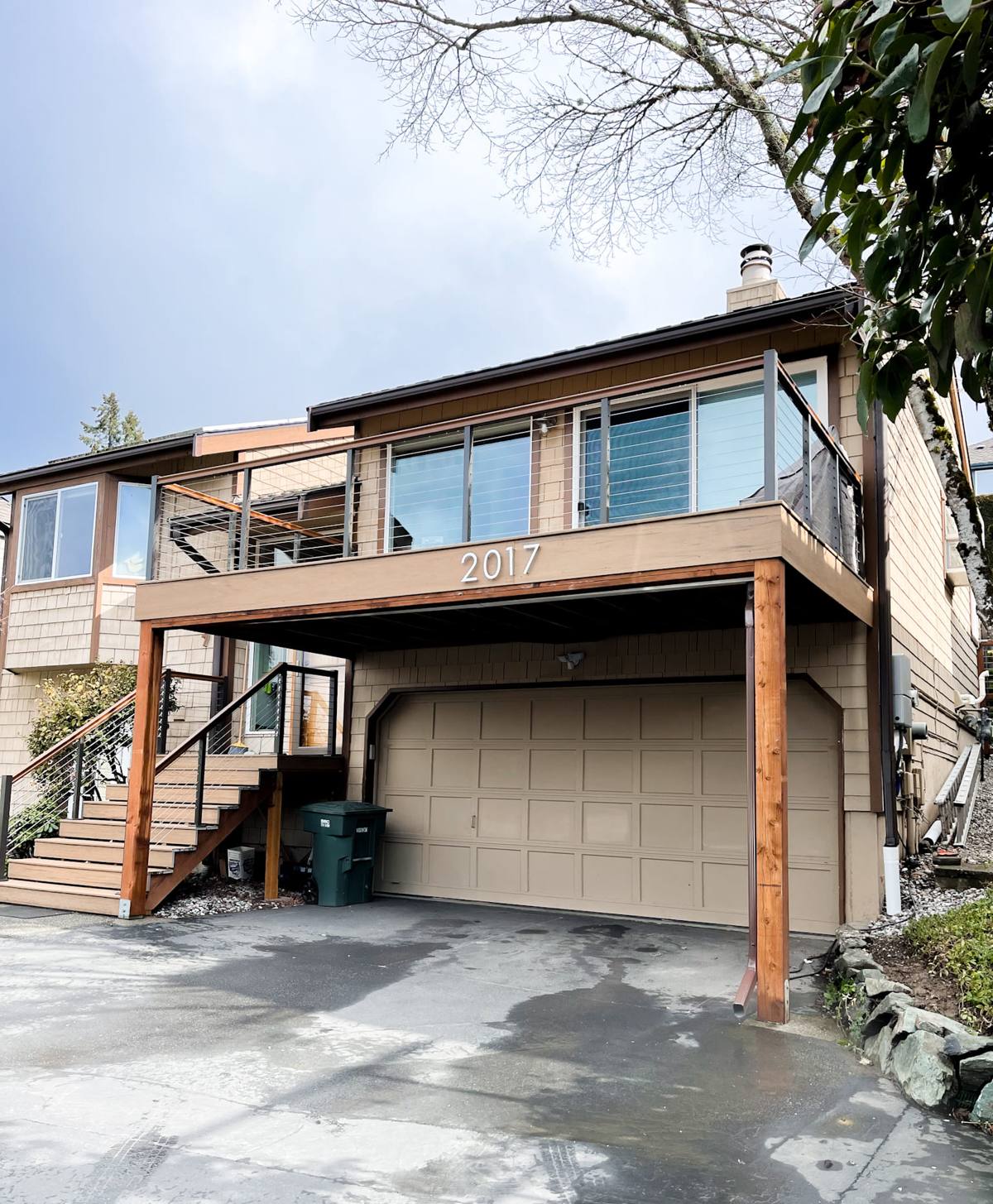
The Signs an Edmonds Deck Needs Replacing, Not Patching
Not every tired-looking deck needs to come out. But there's a point where board-by-board repair stops making sense and full replacement becomes the honest recommendation. We look for a combination of these signs, not just one:
- Soft or spongy decking boards, especially near the house or under planters and furniture that trap moisture
- Persistent moss or black-green staining that comes back within weeks of cleaning
- A ledger board (where the deck attaches to the house) that's discolored, soft, or pulling away — this is the single most common structural failure point we see locally
- Rust streaks around fasteners, or fasteners backing out on their own
- Visible sag between joists, or a deck surface that no longer feels level
- Railings that flex or wiggle when leaned on
A deck with one or two of these issues, caught early, might only need targeted repair. A deck with several of them — particularly ledger or joist damage — is usually cheaper to replace than to keep patching, because the labor to properly access and repair structural framing often costs close to what a full rebuild would.
What Correct Deck Replacement Looks Like Here
Starting Below the Surface
A deck replacement that's done right in this climate starts with what you can't see once it's finished. That means checking and, where needed, replacing footings and posts, confirming the ledger connection is properly flashed and sealed against the house, and making sure joists are spaced and sized for the actual load the deck will carry — not just matched to whatever was there before.
Flashing and Drainage Come First
Ledger flashing is where most deck failures in this region actually begin. Water works its way behind an improperly flashed ledger board, soaks into the rim joist and sometimes the house's own framing, and rot spreads from there — often invisibly, from the inside out. We treat ledger flashing as a non-negotiable step, not an add-on, and we detail it to shed water away from the house rather than trap it against the wall.
Fasteners That Match the Climate
Standard hot-dip galvanized fasteners can corrode faster near the Sound, especially in combination with certain treated lumber chemicals. We use stainless steel or coated fasteners rated for coastal exposure on connections that matter — hangers, ledger bolts, structural screws — because a $40 upgrade in hardware shouldn't be the reason a deck needs work again in eight years.
Ventilation Underneath
A deck built low to the ground or over poorly draining soil holds moisture underneath long after the surface has dried, which accelerates rot in joists and posts from below. Where grading and height allow, we build in airflow and address drainage under the deck itself, not just on top of it.
Choosing Decking Material for Edmonds Conditions
There's no single "best" decking material — there's a best fit for your budget, your maintenance appetite, and how much shade and moss exposure your specific yard gets. Here's how the common options actually perform in this climate:
| Material | Moss/Moisture Resistance | Maintenance | Typical Lifespan Here |
|---|---|---|---|
| Pressure-treated lumber | Good if sealed regularly | Annual cleaning + resealing recommended | 10-15 years |
| Cedar | Naturally decay-resistant, still needs sealing in shade | Sealing every 1-2 years | 15-20 years |
| Composite decking | Very good; won't rot, but can still grow surface algae in constant shade | Periodic washing, no sealing/staining | 25-30+ years |
| PVC/capped composite | Excellent; fully moisture-sealed board | Occasional rinse | 25-30+ years |
For yards with heavy shade or a north-facing deck that rarely gets direct sun, we usually steer clients toward composite or capped composite, simply because wood in those spots needs more upkeep than most homeowners realistically keep up with — and a neglected wood deck in constant shade is exactly the scenario that grows moss fastest. For decks with better sun exposure, cedar or well-maintained treated lumber remains a solid, more budget-friendly choice.
Structural Framing: The Part That Actually Determines Lifespan
The decking boards are what you see and touch, but the framing underneath — joists, beams, posts, and the ledger connection — determines how long the deck actually lasts and whether it's safe. We frame every replacement to current code requirements for the span and load, which sometimes means a rebuild ends up with a slightly different joist layout than the deck it's replacing, especially on older Edmonds homes where the original deck predates current fastening and flashing standards.
For framing lumber, pressure-treated is standard, but we pay attention to the treatment rating — lumber in ground contact or close to grade needs a higher retention level than lumber that stays elevated and dry. Using the wrong-rated lumber in the wrong location is a common shortcut that shows up as premature rot five to seven years later.
Our Process for an Edmonds Deck Replacement
- On-site assessment — we look at the existing deck's framing, ledger condition, grading, drainage, and sun/shade exposure before recommending anything
- Written estimate — clear scope, material choice, and price, with any structural surprises flagged as possibilities up front rather than sprung on you mid-project
- Demo and disposal — full removal of the old deck, including footings if they're being relocated or replaced
- Framing and flashing — new footings/posts as needed, properly flashed ledger, code-compliant joist layout
- Decking and railing installation — your chosen material, installed to manufacturer spec so warranties stay valid
- Final walkthrough — we check the whole deck with you before calling the job done
Cost Factors Worth Understanding Before You Get Quotes
Every deck is different, so we won't quote a number without seeing the site, but these are the variables that move the price most:
| Factor | Why It Matters |
|---|---|
| Decking material | Composite/PVC costs more upfront than wood but less over 20+ years in maintenance |
| Deck size and height | Taller decks need more substantial framing, railing, and often stairs |
| Ledger and framing condition | Hidden rot found during demo can add scope — we flag likely risk areas during the estimate |
| Site access | Sloped yards, tight side access, or removal of an old deck built over difficult terrain add labor |
| Railing style and code requirements | Height and spacing requirements vary by deck height above grade |
If a quote you've received seems unusually low, it's worth asking specifically whether it includes ledger flashing, code-compliant railing, and disposal of the old structure — those are the line items that sometimes get left out to win a lower bid, then show up as extras later.
Why Hiring a Crew That Already Works in Edmonds Matters
A contractor who works this part of Snohomish County regularly already knows which details can't be skipped here — proper ledger flashing for a wet climate, fastener choices for salt-air exposure, and decking that won't turn into a moss farm under tree cover. That's not something you can fully verify from a written estimate; it comes from having done the work in these conditions before. We also carry the required permits and inspections for deck replacement in the area, which protects you if you ever sell the home and a buyer's inspector checks the deck's history.
Get a Straight Answer on Your Deck
If your deck is showing soft spots, persistent moss, or just feels past its prime, we're happy to take a look and give you an honest read on whether it needs full replacement or just targeted repair. Reach out for a free, no-pressure estimate using the form below — we'll walk the deck with you and explain exactly what we find.