 Everett
 Why South Everett Windows Take More Punishment Than People Expect
South Everett sits close enough to Puget Sound and the Snohomish River lowlands that homes here deal with a specific combination of weather most window manufacturers don't design around by default: salt-laden air pushing in off the water, long stretches of driving, wind-blown rain, and a gray season that can run eight months of the year. Add in mature tree cover on a lot of South Everett streets, and you get near-constant shade and moisture that feeds moss, algae, and mildew on anything that stays damp too long — including window frames, sills, and the trim around them.
None of that is dramatic on its own. But it's relentless, and relentless is what wears out a window. Vinyl frames that aren't UV- and moisture-stabilized chalk and go brittle. Wood sills that don't get properly primed and flashed rot from the inside out, often before the paint even looks bad. Cheap weatherstripping compresses and stops sealing within a few winters. In Snohomish County, a window doesn't have to be poorly made to fail early — it just has to be slightly wrong for this climate.
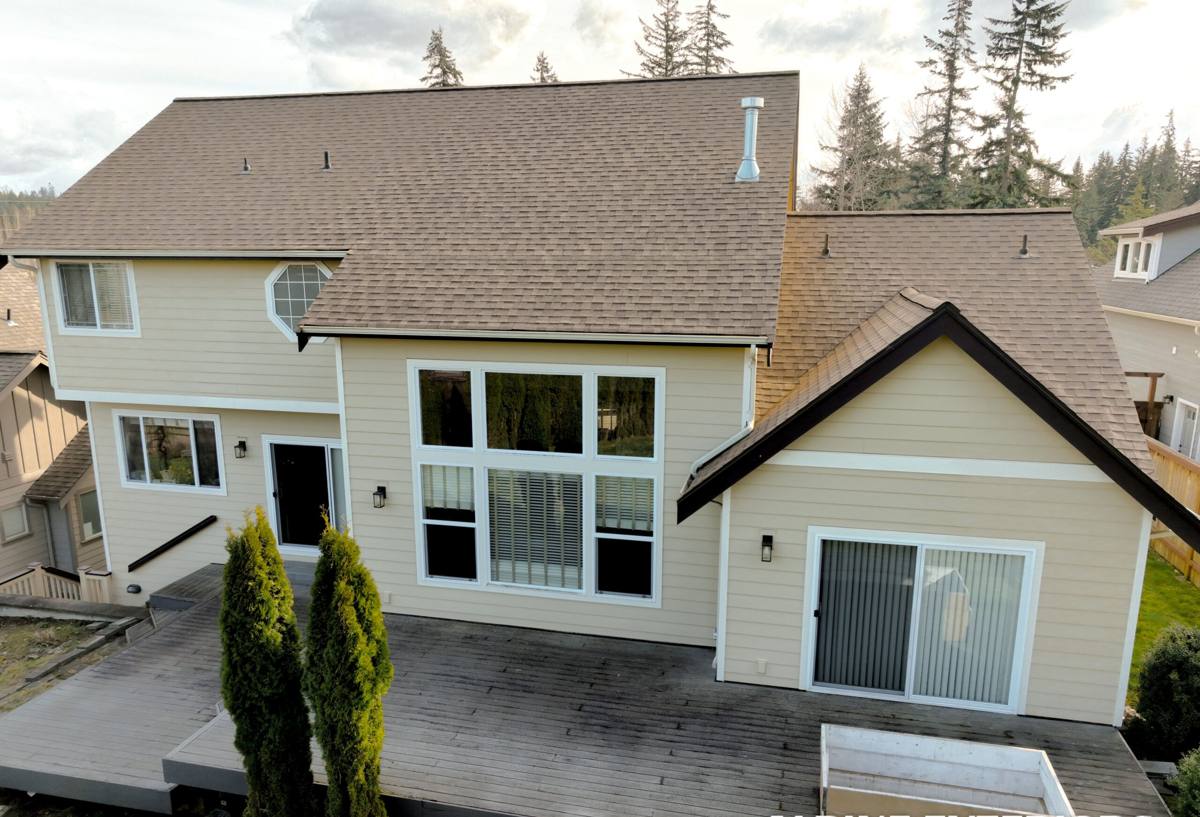
What "Custom" Should Actually Mean
"Custom windows" gets used loosely in this trade. For a South Everett home, it should mean three specific things, not just a made-to-order size.
1. True-to-opening sizing
Older South Everett homes — especially the mid-century and 1970s-80s stock common in this area — rarely have perfectly square, standard-size openings after decades of settling. A correct custom job measures each opening individually rather than forcing a catalog size and shimming the gaps, which is where drafts and water intrusion usually start.
2. Material and glass matched to exposure
A window facing prevailing weather on the west or southwest side of a South Everett house needs a different glass package and frame material consideration than one tucked under an eave on the north side. Custom means we look at each elevation, not just pick one spec for the whole house.
3. Flashing and sealing detail specific to the wall assembly
Vinyl siding, lap siding, and stucco all flash differently around a window opening. A custom install accounts for what's already on the wall instead of using one generic installation method everywhere.
Signs Your Current Windows Are Already Losing the Fight
- Visible fogging or a hazy film between panes — the seal on the insulated glass unit has failed
- Soft or spongy wood at the sill or lower corners of the frame
- Black or green staining at the bottom corners, especially on shaded, tree-covered lots
- Noticeable draft or cold spot near the frame on windy days
- Difficulty opening, closing, or locking — frames swelling from moisture or warping
- Visible daylight or gap around the frame from outside
- A jump in heating bills without any other explanation
Any one of these is worth a look. Several at once usually means the window has been slowly failing for a few years and full replacement will cost less long-term than another round of caulk and patch.
Frame Material Comparison for This Climate
We install several frame materials, and each has a real trade-off in a marine, high-moisture climate like South Everett's. Our standard is to explain the honest maintenance and moisture behavior of each option up front rather than push whatever has the best margin.
| Material | How it handles salt air & rain | Maintenance | Typical lifespan here |
|---|---|---|---|
| Vinyl (quality, UV-stabilized) | Good — won't rot or corrode; low sensitivity to salt exposure | Low — occasional wash | 20-30+ years |
| Fiberglass | Excellent — very stable in temperature swings and moisture, minimal expansion/contraction | Low | 30-40+ years |
| Wood (clad exterior) | Good if cladding and flashing are correct; the wood core is protected from direct weather | Moderate — interior wood may need attention over time | 20-30+ years with proper detailing |
| Solid wood (unclad) | Poor in direct rain and salt exposure without diligent repainting | High — repaint/reseal on a regular cycle | Highly dependent on upkeep |
| Aluminum | Fair — durable but conducts cold and can be prone to condensation without thermal breaks | Low | 20-30 years |
For most South Everett homes we recommend vinyl or fiberglass on weather-exposed elevations, with clad-wood as a good option where the homeowner wants a traditional wood interior look and the opening is reasonably protected.
Glass Packages Worth Paying For in Snohomish County
The glass matters as much as the frame, sometimes more, given how many gray, wet months this area gets.
Double vs. triple pane
Double-pane, low-E glass with argon fill is the practical standard for most South Everett homes and performs well against our moderate-but-persistent cold and damp. Triple-pane adds cost and weight and is worth it mainly for homes closer to busy roads (extra sound dampening) or owners chasing the lowest possible heating bills — it's not a requirement for our climate the way it might be in a harsher inland winter.
Low-E coatings
A low-E coating tuned for our climate keeps interior heat in during the wet season without overdoing solar heat gain in the short summer — the coating spec should match our climate zone, not a generic national default.
Condensation resistance
Given how much moisture sits in South Everett's air for much of the year, we pay attention to the whole unit's condensation resistance rating, not just the U-factor, since interior condensation on a poorly rated window is a common complaint we hear about on older installs.
How Our Installation Process Works
- On-site assessment — we measure each opening, check the existing wall assembly and siding type, and note sun/wind exposure per elevation.
- Product selection — we walk through frame material and glass package options based on that elevation's exposure and your budget, not a one-size-fits-all package.
- Removal — old units come out carefully to check the condition of the framing and sheathing behind them, since this is often the first real look anyone's had at that area in years.
- Repair if needed — any soft framing, rot, or prior water damage gets addressed before a new window goes in. Installing a new window over a hidden problem just hides it longer.
- Flashing and weather barrier integration — new flashing tape and pan flashing are integrated with the existing weather-resistive barrier, sequenced correctly (shingle-lapped) so water sheds outward, not into the wall.
- Setting and shimming — the unit is set plumb, level, and square, then shimmed and fastened per manufacturer spec.
- Sealing — appropriate sealant is used at the exterior joint, with a backer rod where the gap calls for it, and interior air-sealing is completed separately from exterior weatherproofing.
- Trim and finish — exterior trim and interior casing are finished to match the home.
- Final check — operation, locking, and a visual weatherproofing check before we call it done.
The Flashing and Sealing Detail Most Installers Skip
This is the part of a window job nobody sees once it's finished, and it's also the part that determines whether the window lasts 25 years or leaks in 5. A window can be an excellent product and still fail if it's set into an opening without proper pan flashing at the sill, correctly lapped house wrap or building paper above the head flashing, and sealant used only where it belongs — sealant is not a substitute for correct flashing sequencing, it's a backup layer. In a climate that gets driving, wind-blown rain like ours, water finds any shortcut in that sequence eventually. We treat this step as the actual core of the job, not a formality between "install window" and "add trim."
What Drives the Cost
| Factor | Why it matters |
|---|---|
| Frame material | Fiberglass and higher-end vinyl cost more upfront but need less maintenance over time |
| Glass package | Double vs. triple pane, and coating/gas-fill options, shift price per unit |
| Opening condition | Rot or framing repair discovered during removal adds labor but prevents a bigger problem later |
| Window size and configuration | Larger units, bays, or operable-plus-fixed combinations cost more than a standard single unit |
| Number of windows | Whole-house replacement typically has a better per-unit cost than one-off replacements |
| Trim and siding tie-in | Matching existing exterior trim or siding profile can add finish work |
Costs for quality custom windows in this area commonly range from around $700 to $1,800+ per window installed, depending on the factors above — a broad range because the right answer really does depend on your specific openings and goals. We give you an itemized number after the on-site assessment, not a phone-quote guess.
A Checklist Before You Hire Anyone for Window Work in South Everett
- Are they licensed and insured to do exterior work in Washington State?
- Do they explain flashing and sealing detail, or only talk about the window brand?
- Will they inspect the framing behind the old window before quoting a final price?
- Do they offer more than one frame material and explain the trade-offs honestly?
- Can they point to work they've actually done in Snohomish County or South Everett specifically?
- Is the warranty on both the product and the labor, in writing?
- Do they give you a written, itemized estimate rather than a vague lump sum?
Why It Matters That We Already Work South Everett
A crew that installs windows across a lot of different climates tends to default to whatever spec sheet ships with the product. A crew that works South Everett regularly already knows which elevations catch the worst of the driving rain, which older home styles tend to have hidden rot around original openings, and how badly moss and algae take hold on shaded, tree-covered lots if trim isn't detailed to shed water. That local pattern recognition is the difference between a window that's technically installed correctly and one that's installed correctly for this specific place. We're not guessing at Snohomish County weather from a manual — it's what we deal with on every job here.
If your windows are drafty, fogged, hard to operate, or just original to a home that's due, we're happy to take a look and give you a straight, no-pressure estimate — fill out the form below and we'll get back to you.