 Everett
 Why Mukilteo's Waterfront Climate Is Hard on Decks
Mukilteo sits right on Puget Sound, and that location cuts both ways. The water views are part of why people want a deck in the first place, but the same water is what wears a deck out faster than it would a few miles inland. Salt-laden air off the Sound, driving winter rain that comes in sideways, and a moss season that can run from October into May all put steady stress on wood, fasteners, and the framing underneath. A deck built to a generic national spec often looks fine for a year or two, then starts showing corrosion streaks, soft spots at the ledger, or a green film on every horizontal surface. A deck built for this specific stretch of Snohomish County doesn't.
Salt Air and Corrosion
Airborne salt doesn't need direct spray to do damage — it travels on wind and settles on metal, where it accelerates rust and pitting. Fasteners, joist hangers, and railing hardware that would last decades in a drier inland climate can start corroding visibly within a few seasons on a home closer to the water. Once a fastener starts rusting, it weakens, stains the wood around it, and eventually needs replacing — which usually means partially disassembling the deck to get at it.
Moss, Algae, and a Long Wet Season
Western Washington's wet season is long, and Mukilteo's tree cover and marine humidity add to it. Moss and algae need moisture, shade, and time — this area supplies all three for most of the year. On a deck, that growth isn't just cosmetic. It holds moisture against the decking surface, makes boards slick and dangerous underfoot, and speeds up rot in any wood that isn't well-sealed or naturally resistant.
The Most Common Failure Point: Where the Deck Meets the House
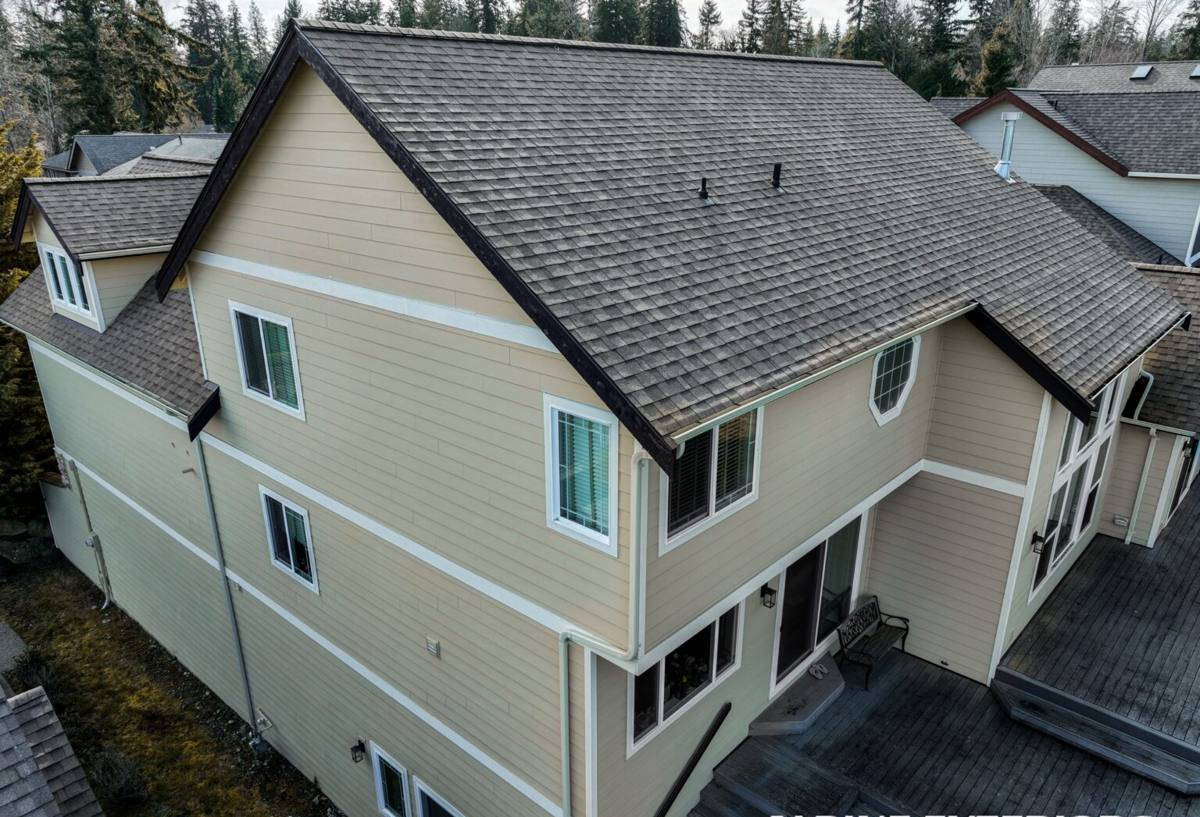
As a siding contractor, this is the connection we care about most, because it's also where your home's water management and your deck's structure overlap. The ledger board — the piece that attaches the deck framing to the house — has to be flashed correctly so that water running down the siding or off the deck surface can't work its way behind the cladding and into the wall framing. We see this go wrong more than almost anything else on older decks: a ledger bolted straight to the sheathing with no flashing, or flashing that was installed but doesn't actually shed water past the housewrap. In a low-rain climate that mistake might take years to show up. Here, with the rain volume Snohomish County sees, it shows up faster, usually as soft siding, staining, or rot discovered only when the deck boards themselves are pulled up for a rebuild.
Choosing a Decking Material That Holds Up Near Puget Sound
There's no single "right" decking material for every homeowner — it depends on budget, how much upkeep you're willing to do, and how much of the year the deck sits in shade. What matters is picking with the local climate in mind rather than picking on looks alone.
| Material | Upfront Cost | Upkeep Near the Water | Moss/Algae Resistance |
|---|---|---|---|
| Pressure-treated lumber | Lowest | Needs regular cleaning and re-sealing to resist moisture and mildew | Low — moss takes hold quickly if not maintained |
| Cedar | Moderate | Naturally more rot-resistant, but still needs periodic sealing to hold its color and resist splitting | Moderate |
| Composite / capped polymer | Highest | Occasional washing; no sealing or staining required | Highest — solid-surface caps shed moisture instead of absorbing it |
Pressure-treated lumber is the budget option and can perform fine if you're realistic about the maintenance — it needs to be cleaned and re-sealed on a schedule, not just when it starts looking rough. Cedar splits the difference: it's naturally more resistant to rot than plain PT lumber and looks better untreated, but it still needs attention over time, especially in a shaded, moisture-heavy yard. Composite decking costs more upfront but handles this climate with the least ongoing work, since the boards don't absorb water the way wood does, which also means less surface for moss and algae to grip.
Fasteners, Framing, and Hardware for a Marine Environment
Fasteners
This is where a lot of decks quietly fail early. Standard galvanized screws and hangers are fine in many parts of the country, but in a marine-influenced climate like Mukilteo's, we spec stainless steel or heavy-duty coated fasteners rated for contact with modern treated lumber, which is more corrosive to metal than older treatment chemicals were. It costs a little more at build time. It's a lot cheaper than re-decking a structure whose bones are still sound but whose hardware has rusted through.
Framing Lumber
The framing underneath — joists, beams, posts — should always be pressure-treated lumber rated for the exposure it'll see, and any cut ends or drilled holes need field-treated with sealant before they go up. An untreated cut end is an open door for moisture, and in a climate that stays damp for months at a stretch, that door gets used.
Footings, Drainage, and What's Underneath
Building on Mukilteo's Slopes and Bluff Lots
A fair number of properties in and around Mukilteo sit on sloped ground or bluff-adjacent lots, which changes how footings and support posts get engineered compared to a flat backyard. Footings need to be sized and placed for the actual soil and slope conditions on your lot, not just a standard spacing pulled from a plan book. We look at grade, drainage, and access before we ever pour concrete.
Keeping Water Moving
Ground-level and low-clearance decks trap moisture underneath if the grading doesn't let water drain away. Standing water under a deck is exactly the environment moss, algae, and rot organisms want. Proper grading, a gap for airflow, and keeping soil from piling up against posts all matter more here than they would in a drier region.
Permits and Code Basics for a Mukilteo Deck
Most attached decks, and any deck platform built above a certain height off grade, need a permit through the City of Mukilteo's building department before work starts. Plan review typically covers footing size and depth, how the ledger attaches to the house, and guardrail and stair requirements once the deck is high enough off the ground to need them. As a general rule under the codes we build to, a walking surface more than 30 inches above grade needs a guardrail, and baluster spacing has to be tight enough that a small child can't pass through. Code details and local amendments do shift over time, so we pull current requirements before designing rather than working off an old assumption — that's part of what you're paying a permitted, established crew for.
How We Build a Deck in Mukilteo
- Site visit to look at grade, drainage, sun/shade exposure, and how the deck will attach to your existing siding and framing.
- Design and material discussion — decking type, railing style, and layout, priced honestly against your budget and how much upkeep you want long-term.
- Permit submittal to the City of Mukilteo, including footing and ledger attachment details.
- Demolition of any existing structure, if applicable, with a check for hidden rot at the ledger and framing before we build over it.
- Footings and framing, using fasteners and treated lumber specified for this climate, not a generic national spec.
- Ledger flashing integrated properly with your home's water management — this step gets extra attention given what's at stake if it's done wrong.
- Decking, railing, and stair installation, followed by a final walkthrough and cleanup.
Keeping a Deck Sound Through Moss Season
A well-built deck still needs some seasonal attention in this climate. Here's a basic maintenance checklist worth following whether we built your deck or not:
- Sweep debris off the deck regularly — wet leaves and needles trap moisture and feed moss growth.
- Wash the surface at least once a year with a cleaner made for the decking material you have; pressure washing wood too aggressively can damage the surface fibers.
- Check fastener heads and any visible hardware for early rust or staining, especially near railings and stair stringers.
- Inspect the ledger area where the deck meets the house for staining, soft wood, or gaps in flashing.
- Reseal wood decking on a schedule rather than waiting until it looks gray and dry.
- Keep gutters and downspouts near the deck clear so roof runoff isn't dumping extra water onto or under the structure.
Why Local Experience in Mukilteo Matters
A crew that only occasionally works this close to Puget Sound tends to build to whatever spec they use everywhere else, and the deck ages accordingly. We're based in Everett and work Mukilteo and the surrounding Snohomish County waterfront regularly, so the fastener grade, the flashing detail at the ledger, and the material recommendations aren't an afterthought — they're the default. That local familiarity also means fewer surprises with permitting, site access on tighter or sloped lots, and knowing which details actually matter for a deck that's going to sit a few blocks from saltwater for the next twenty-plus years.
If you're planning a new deck or need an honest look at one that's already showing its age, we're glad to come take a look. Fill out the form below for a free, no-pressure estimate — we'll tell you what we actually see and what it would take to get it right.