 Everett
 Why Mukilteo Decks Take a Beating
Mukilteo sits right on Possession Sound, and that waterfront position is a mixed blessing for anything built outdoors. The same salt air that makes the views worth the price also accelerates corrosion on fasteners, hinges, and structural hardware. Combine that with Snohomish County's long, wet fall-through-spring stretch and a shoulder season where moss and algae get a foothold on any shaded or north-facing surface, and you have a climate that is genuinely harder on decks than most of the country deals with. We see the pattern constantly: a deck that looks fine from the yard but has soft framing underneath, rusted-through connectors, or boards that have been quietly trapping moisture against the house for years.
None of this means Mukilteo decks are doomed — it means they need to be built and repaired with the local conditions in mind, not with a generic approach borrowed from a drier climate. That's the difference between a repair that lasts a few seasons and one that holds up for the long haul.
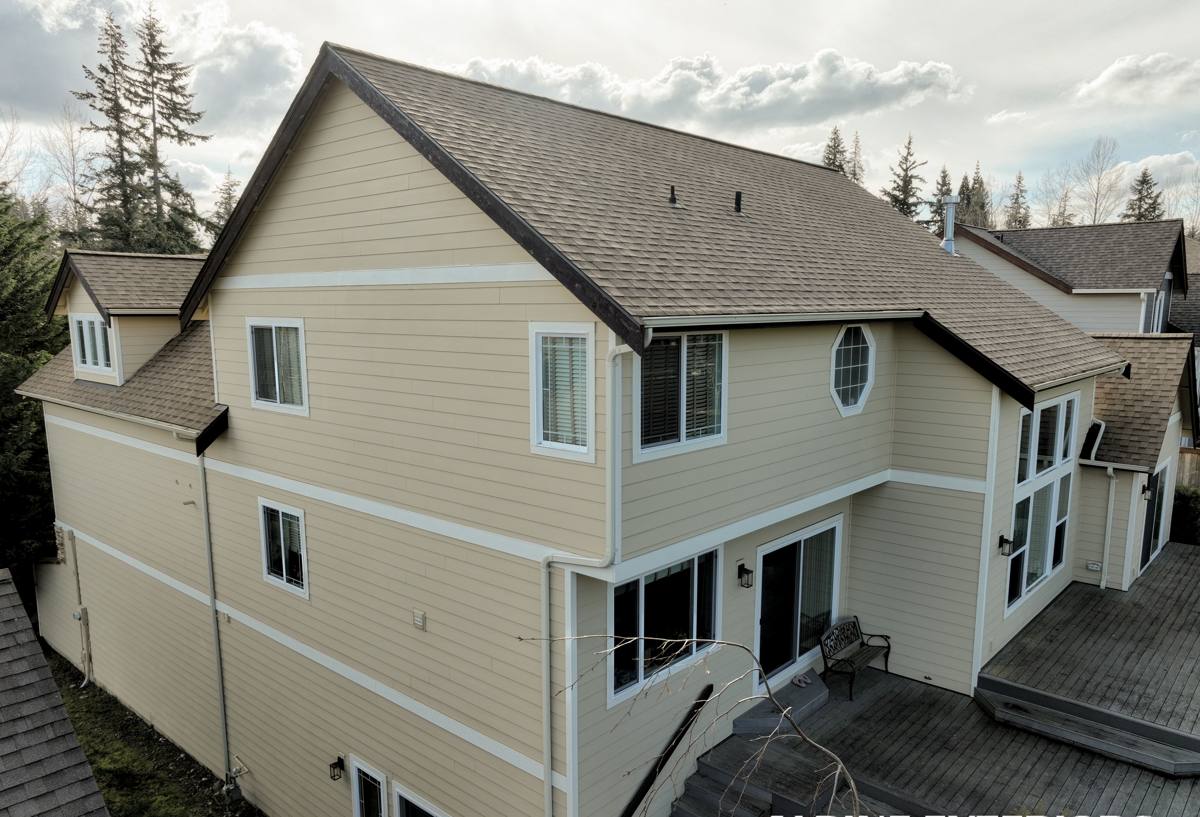
Common Deck Problems We See in Mukilteo
Every deck is different, but certain failure patterns show up again and again in this part of Snohomish County:
- Rot at the ledger board where the deck attaches to the house — usually from a missing or failed flashing detail
- Rusted or corroding joist hangers, screws, and bolts from prolonged salt-air exposure
- Soft, spongy, or discolored decking boards, especially in shaded or low-airflow areas
- Moss and algae buildup on boards and stair treads that makes surfaces slick and holds moisture against the wood
- Loose, wobbly, or leaning railings and posts from years of moisture cycling through the base connections
- Gaps opening up between boards, or boards cupping and splitting from repeated wet-dry swings
- Stair stringers or footings showing movement, which is often a sign of deeper structural fatigue
Some of these are cosmetic and easy to fix. Others — particularly ledger rot and hardware corrosion — are structural and worth taking seriously even if the deck still feels solid underfoot.
What a Correct Deck Repair Actually Involves
A deck repair done right isn't just swapping out the boards that look bad. It starts underneath, where the problems usually originate.
Structural Framing
We check joists, beams, and the ledger connection for soft spots, cracking, and moisture damage before touching the surface. A deck can have brand-new-looking boards on top of framing that's failing underneath — replacing the boards without addressing that is a cosmetic fix on a structural problem, and it doesn't hold.
Fasteners and Hardware
In a salt-air environment, hardware quality matters more than it does inland. We use corrosion-resistant fasteners and connectors rated for exterior and coastal-adjacent use, and we replace anything showing rust bleed or pitting rather than reusing it. Mixing metals (say, an old galvanized hanger with new stainless screws) can actually accelerate corrosion through galvanic reaction, so we match hardware types deliberately.
Flashing and the Ledger Connection
This is where most serious deck failures start. If the ledger board isn't properly flashed where it meets the house siding, water works its way behind the deck and into the house framing — a problem that's invisible until it's expensive. Any ledger repair we do includes checking and correcting the flashing, not just re-bolting the board.
Railings and Stairs
Loose railings are a safety issue, not just an inconvenience. We check post connections down to the framing, not just the visible railing hardware, since a railing can look tight at the top while the post base has already rotted.
Repair vs. Replace: How We Decide
Not every deck problem calls for a full rebuild, and not every deck is worth patching. We walk through a few honest questions before recommending either path.
| Factor | Leans Toward Repair | Leans Toward Replacement |
|---|---|---|
| Framing condition | Solid, dry joists and beams; isolated soft spots | Widespread rot, sagging, or movement in the structure |
| Age of the deck | Under 12-15 years, decent original construction | Original build is older or was undersized to begin with |
| Extent of damage | Limited to specific boards, a rail section, or fasteners | Damage is spread across framing, decking, and connections |
| Ledger/flashing condition | Flashing intact or easily corrected | Long-term water intrusion behind the ledger into the house |
| Code and permit status | Existing footings and structure meet current standards | Original build predates current code requirements |
Our job is to give you a straight answer here, not to steer every job toward the bigger scope. A well-built deck with isolated damage is often a strong repair candidate, and we'll tell you that plainly.
Materials: What We Use and Why
Material choice matters more in this climate than in drier parts of the state, because everything sits under more moisture pressure for more of the year.
Pressure-treated lumber remains the standard for structural framing — joists, beams, posts — because it's engineered specifically to resist ground contact and moisture, and it's cost-effective for parts of the deck that won't be visible.
Cedar is a strong choice for visible decking and railings where appearance matters, with natural resistance to rot and insects, but it needs consistent maintenance — cleaning, sealing, and moss prevention — to hold up through Snohomish County's wet season. We're upfront that cedar is a higher-maintenance material, not a set-it-and-forget-it one.
Composite decking trades that maintenance burden for a higher upfront material cost. It won't rot, splinter, or need refinishing, but it's not immune to moss and algae growth on shaded sections, and it requires attention to manufacturer installation specs (spacing, fastening, ventilation underneath) to perform the way it's supposed to. Installed wrong, composite can trap moisture just as badly as wood — the material isn't a substitute for correct technique.
For hardware, we standardize on corrosion-resistant, coastal-rated fasteners and connectors regardless of which decking material you choose, since that's the part most exposed to salt air and most often overlooked in budget repairs.
Our Deck Repair Process
- On-site inspection. We check framing, ledger, flashing, hardware, and surface condition — not just what's visible from the top.
- Honest scope and estimate. You get a clear picture of what actually needs repair, what's optional, and what we'd recommend leaving alone.
- Structural repairs first. Any framing, ledger, or flashing issues get addressed before surface work begins.
- Hardware replacement. Corroded or undersized fasteners and connectors are swapped for coastal-rated hardware.
- Surface and railing repair. Damaged boards, rail sections, and stair components are replaced or rebuilt to match the existing deck where possible.
- Final check. We walk the deck with you, test railings and stairs, and confirm everything is solid before calling the job done.
Moss, Mildew, and Long-Term Maintenance in a Marine Climate
Even a freshly repaired deck needs upkeep in this part of Washington. Moss and algae thrive in the shaded, low-airflow spots that most decks have somewhere, and left alone they hold moisture against the surface long after the rain has stopped. A few habits go a long way toward stretching the life of any repair:
- Sweep leaves and debris off the deck regularly through fall — they trap moisture underneath
- Clean moss and algae off boards and stairs before they build up a slick surface
- Check that gaps between boards stay clear so water can drain instead of pooling
- Re-seal or re-stain wood decking on the schedule the product calls for, not just when it looks worn
- Look under the deck once a year for signs of moisture, rust streaks, or soft framing
None of this requires a contractor — it's just the reality of owning a deck in a marine climate. A deck that gets this basic attention will need far less structural repair down the line than one that doesn't.
Why Hire a Crew That Already Works Mukilteo
A contractor who works across Snohomish County regularly already knows what a Mukilteo deck is up against — the salt exposure off Possession Sound, the specific spots where moss takes hold fastest, the way driving rain finds gaps in flashing that would go unnoticed in a milder climate. That's not something you can fully substitute with a generic checklist. It shows up in which hardware gets specified, where extra attention goes during inspection, and what maintenance advice actually applies to this area versus advice written for a different part of the country.
It also matters for straightforward practical reasons: familiarity with local permitting expectations, realistic scheduling around the wet season, and knowing which repairs are worth doing now versus which can reasonably wait a season. We'd rather tell you a repair can hold for another year than talk you into work that isn't needed yet.
If your deck has soft spots, rust streaks, loose railings, or just doesn't feel as solid as it used to, we're happy to take a look. The estimate is free, there's no pressure to book anything on the spot, and you'll get a straight answer about whether you're looking at a repair or something bigger — use the form below to get started.