 Everett
 Why North Everett Decks Wear Out Faster Than You'd Expect
A deck in North Everett lives a harder life than the same deck would in a drier inland climate. Snohomish County's marine air carries salt and moisture that settles into every joint, fastener, and end grain on an exposed structure. Add driving rain that comes in sideways off Puget Sound during fall and winter storms, and a moss season that can stretch from October well into spring, and you've got a structure that's under near-constant moisture pressure for most of the year. Wood doesn't have to be soaked to rot — it just has to stay damp long enough, often enough, and North Everett's climate is very good at providing exactly that.
None of this means a deck is doomed. It means the parts of a deck that manage water — flashing, fasteners, ledger connections, and the gaps between boards — matter more here than they would in a milder climate. When those details are done right, a deck holds up for decades. When they're not, problems show up early and they show up in the structure, not just the surface.
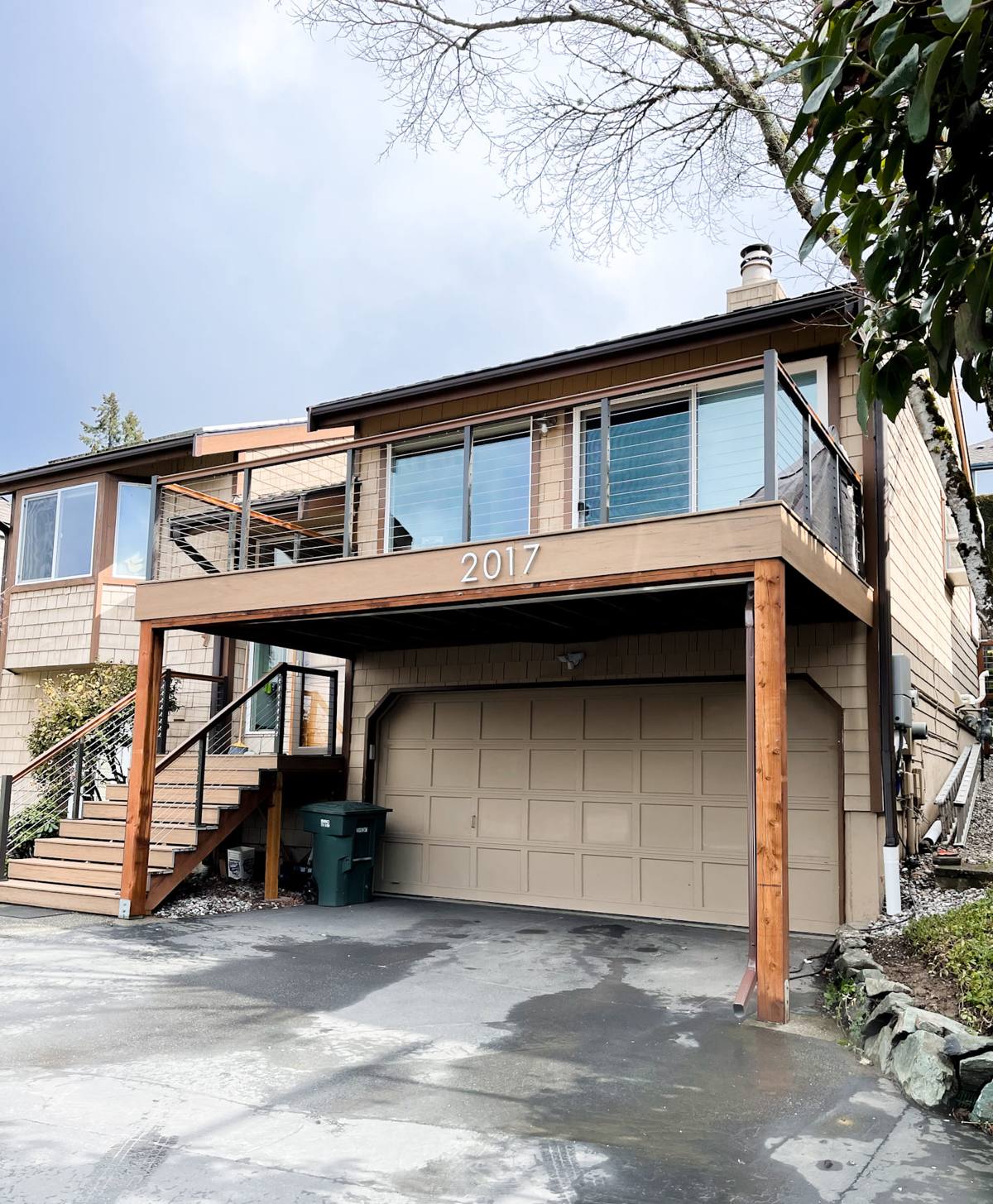
Signs a North Everett Deck Needs Repair
Most homeowners notice a deck problem long after it started, because the early stages are hidden underneath, behind railings, or under a coat of paint or stain that's still holding together cosmetically. Worth checking for:
- Soft, spongy, or springy spots when you walk across the decking
- Green or black staining that keeps coming back within weeks of cleaning
- Gaps or rust streaks around joist hangers and structural fasteners
- A ledger board (where the deck attaches to the house) with visible gaps, staining, or soft wood
- Railing posts that wiggle or flex more than they used to
- Stair stringers that feel spongy at the base, where they sit closest to grade
- Standing water or slow drainage between boards after a rain
Any one of these can be a minor fix. Several at once, or anything involving the ledger connection or main support posts, usually means it's time for a proper structural look before someone's foot goes through a board.
What a Correct Deck Repair Actually Involves
A repair that only replaces what's visibly broken often misses what caused the damage in the first place — and in a climate like Everett's, that failure point usually comes back within a season or two. A repair done right starts with figuring out why that section failed, not just swapping the board.
Structural Assessment First
Before any lumber comes off, we check the ledger board attachment, the condition of the joists and beams, post bases, and any spots where water has been sitting or draining onto wood instead of away from it. Surface rot is easy to see. Structural rot in a joist or ledger is not, and it's the part that actually holds the deck up.
Fixing the Water Path, Not Just the Board
If a section failed because flashing was missing or installed wrong, replacing the board without correcting the flashing just resets the clock on the same failure. Proper flashing at the ledger, proper gapping between boards, and drainage that actually moves water off the structure are what make a repair last through another wet Snohomish County winter instead of just through the next dry season.
Matching Fasteners and Hardware to the Exposure
In a marine-air environment, standard fasteners corrode faster than they would inland. We match hardware to the exposure the deck actually sees — which matters more for a deck with any water or wind exposure toward the Sound than it would for a fully sheltered, inland deck.
Common Problem Areas We Find on North Everett Decks
The failure points tend to repeat from deck to deck, because they're driven by the same climate conditions across the whole area, not by anything unusual about one specific property.
Ledger Board Connections
This is where the deck meets the house, and it's the single most common source of hidden rot. Without correct flashing, water runs down the siding, behind the ledger, and sits there — invisible from outside, but slowly rotting the connection that holds the entire deck to the building.
Post Bases and Footings
Posts that sit in standing water, in soil contact, or on deteriorated post bases wick moisture upward into the wood over time. This is a slower failure but a serious one, since it affects the deck's main vertical support.
Stair Stringers
Stairs sit closer to grade, catch more splash-back from rain, and often get less airflow underneath than the main deck surface. Combined with a long moss season, stringers are frequently the first structural member to show real wear.
Board-to-Board Gaps and Fastener Pattern
Boards installed tight together, or fastened in a pattern that traps water, hold moisture against the wood far longer than boards with correct spacing. In this climate, that difference shows up as accelerated rot within a few years rather than a decade or more.
Repair or Replace? What Actually Drives That Decision
Not every deck problem calls for a full rebuild, and not every deck problem should be patched. The honest answer depends on how much of the structure — not just the surface — is affected.
| Condition | Typical Approach | Rough Cost Range |
|---|---|---|
| A few soft or stained boards, sound structure underneath | Board replacement + fastener/flashing correction | $400–$1,200 |
| Rotted ledger board, otherwise sound framing | Ledger removal, flashing correction, reinstall | $1,200–$3,000 |
| Multiple joists or beam sections compromised | Partial structural rebuild | $2,500–$6,000 |
| Failing posts, footings, or widespread rot across the structure | Full deck replacement | $6,000–$15,000+ |
These are broad ranges, not quotes — actual cost depends on deck size, height, access, and what we find once we're into the structure. That's why we look before we price.
Our Deck Repair Process
- On-site inspection. We walk the full deck, check the ledger, probe suspect boards and posts, and look at drainage and flashing.
- Honest scope. We tell you what's cosmetic, what's structural, and what we'd genuinely recommend if it were our own deck — including when repair makes more sense than replacement, or vice versa.
- Correct the cause, not just the symptom. Flashing, drainage, and fastener choices get fixed alongside the visible damage so the same failure doesn't return in a year or two.
- Rebuild to hold up in this climate. Materials and hardware are chosen for what a North Everett deck actually faces — sustained moisture, salt air, and a long wet season — not for the lowest-moisture-exposure scenario.
- Walkthrough. Before we call it done, we walk it with you so you know what was repaired, what to watch, and what ordinary maintenance looks like going forward.
Material and Hardware Choices That Matter Here
What a deck is built or repaired with matters more in a wet marine climate than in most parts of the country, and the right choice depends on your priorities as much as ours.
Wood vs. Composite Decking
Treated or cedar decking is a proven, cost-effective choice, but it needs regular cleaning and refinishing to shed water and resist the moss and algae growth that Snohomish County's damp season encourages. Composite decking costs more upfront and doesn't need staining, but it still needs correct spacing, ventilation underneath, and proper flashing at the structure — composite resists rot in the board itself, but it doesn't fix a bad ledger connection or poor drainage underneath it. Neither material is a shortcut around good structural work.
Fastener and Hardware Grade
We use hardware rated for the exposure the deck actually sees. On a deck with real weather exposure — open to wind-driven rain or closer to the water — that generally means stainless steel fasteners and connectors sized up from what a fully sheltered, inland deck would need. It costs more than standard galvanized hardware, but replacing rusted-through connectors in five years costs more than that.
Deck Maintenance Between Repairs
A repaired deck still needs upkeep — the climate doesn't stop once the work is done. A few habits go a long way in this area specifically:
- Sweep debris out of board gaps before it decomposes and holds moisture
- Clean moss and algae off the surface at least once during the wet season, not just in spring
- Check the ledger flashing and any spots where the deck meets siding once a year
- Keep gutters and downspouts clear so roof runoff isn't dumping onto or near the deck
- Re-stain or reseal wood decking on the schedule the product actually needs in a marine climate — usually more often than the label assumes for a drier region
- Address soft spots or rust staining as soon as you notice them, not at the end of the season
Why Hire a Crew That Already Works North Everett
Deck repair looks straightforward from the outside, but the failure modes that show up in this part of Snohomish County — ledger rot from driving rain, corroded hardware from salt air, moss-driven surface breakdown — are specific to this climate. A crew that repairs decks here regularly recognizes those patterns quickly instead of treating every deck like a generic textbook case. That means less exploratory demolition, a more accurate scope up front, and repairs built for the weather this deck will actually face, not a milder average.
If your deck has soft spots, staining that won't clean off, or you just want an honest read on whether it needs repair or replacement, we're glad to take a look. Reach out for a free, no-pressure estimate using the form below.